I’ve been a DJ for thirty years. Not thirty years of trying to become a DJ, or thirty years of occasionally playing music at parties, thirty years of regularly standing behind a set of decks and trying to move rooms full of people with music I care about. That’s the job. Everything else that gets said about it, the lifestyle, the glamour, the culture, the technology, is context for the job.
I started The DJ Diaries because I’ve never found writing about electronic music that treats the job with the specificity it deserves. There’s plenty of journalism about the industry, about the culture, about specific artists and scenes. There’s plenty of tutorial content about how to beat-match and which mixer to buy. What there isn’t much of is writing from inside the booth, honest, specific, first-person writing about what it actually feels like to play music for rooms full of people, what you’re thinking about when you’re doing it, what you learn over decades that you couldn’t learn any other way.
That’s what I’m trying to do here.
Who This Is For
I’m writing for DJs who play regularly and want to think harder about what they’re doing. For people who go out to dance and want to understand what’s happening from the other side of the booth. For people who grew up in club culture and want to read about it from someone who was in the rooms rather than writing about them from the outside. For aspiring DJs who want an honest account of what the career actually involves rather than the aspirational version.
The DJ Diaries is not a beginner’s guide, though beginners are welcome. It’s not a gear review site, though equipment comes up when it’s relevant to the larger questions I’m interested in. It’s not a music review outlet, though I write about specific music when it helps me illustrate something about the craft or the culture.
I write from my specific experience, which is thirty years of DJing across Canada and South Korea, in rooms ranging from small bars to mid-size clubs, in genres that broadly fall under house, disco, and deeper electronic music. My perspective is formed by that experience and no other. I try to be clear about where I’m speaking from experience and where I’m generalising beyond it.
What You’ll Find Here
Essays about the craft of DJing, how sets work, how rooms work, how the relationship between music and movement operates when someone is doing the job properly. These are the pieces I’m most interested in writing and the ones I’d most want to read.
Writing about music culture, the history of the rooms and scenes that produced the music I play, the DJs and producers whose work shaped my taste, the specific moments in electronic music history that feel worth understanding in depth. The pieces on 90s rave culture and on specific artists come from genuine interest rather than assignment.
Practical pieces about the professional reality of DJing, how bookings work, how fees work, how you build a reputation over years of consistent work rather than overnight through a viral moment. I try to write about these things without either the naivety of a guide that assumes everything is straightforward or the cynicism of a guide that assumes everything is broken.
My own mixes, with the context that makes them worth listening to. Not just “here’s a recording” but what I was trying to do, what the room was like, what the music means to me.
A Word About Seoul
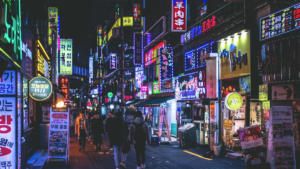
I’ve lived in Seoul for the better part of two decades, which makes this as much a Seoul music blog as a Canadian one. The electronic music scene here is genuinely underwritten in English-language music media. There are rooms and DJs and promoters doing work that deserves the same attention that scenes in Berlin or London or Chicago receive, and don’t get it simply because the language gap means the writing doesn’t travel.
I write about Seoul’s scene because I’m in it, because I know it from the inside, and because it deserves better coverage than it gets. If you’re curious about what’s happening in Korean electronic music culture, this is one of the few places writing about it from a position of actual experience rather than observation from the outside.
The Founding Premise
DJing is a serious practice with a serious history, and it deserves to be written about as such. The music that flows through this culture, house, techno, disco, the entire extended family of electronic and dance music, is among the most important music produced in the second half of the twentieth century and the first decades of the twenty-first. The rooms where that music lives, the communities that form around it, the craft involved in delivering it well. These things matter, and they’re worth sustained, serious attention.
That’s what The DJ Diaries is for. I’m glad you’re here.
Written from Seoul, by someone who has been in the booth for more than 25 years. More on the site, or book a DJ.
Stay in the Loop
New writing on DJ culture, electronic music, and the Seoul underground — delivered when it matters.