Questions about the night, answered from the booth.
Where to go in Seoul and why the night works, from a DJ with twenty years in the booths.
-
Latest
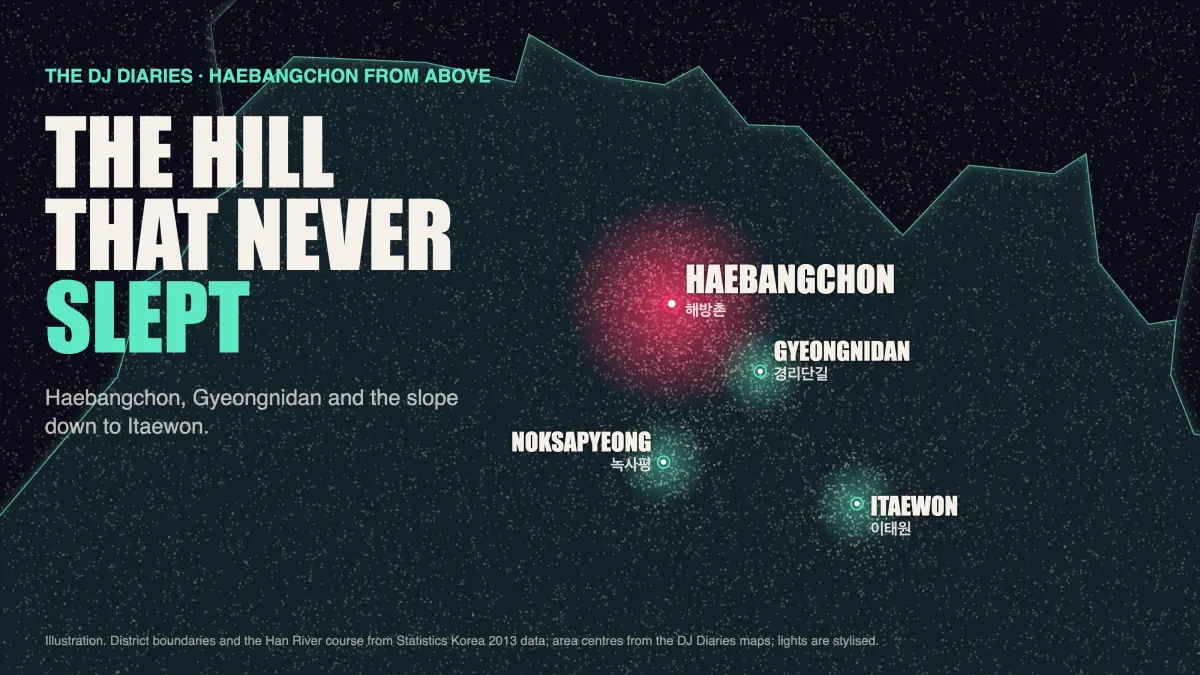
Haebangchon: Seoul’s Neighbourhood That Never Fully Slept
Haebangchon never had a venue with a 300 person capacity and an international headline booking. What it had instead was a community that used its bars and basements better than most cities use their main stages. Twenty years of playing this city has convinced me that HBC, not any single club, is the load bearing…

Start here
The DJ Diaries Nightlife Report
Our bilingual survey of how Seoul actually goes out, run in early 2025: where people go, what they dance to, what they spend, how they get home and what keeps them away. Free to cite.
Latest Reads
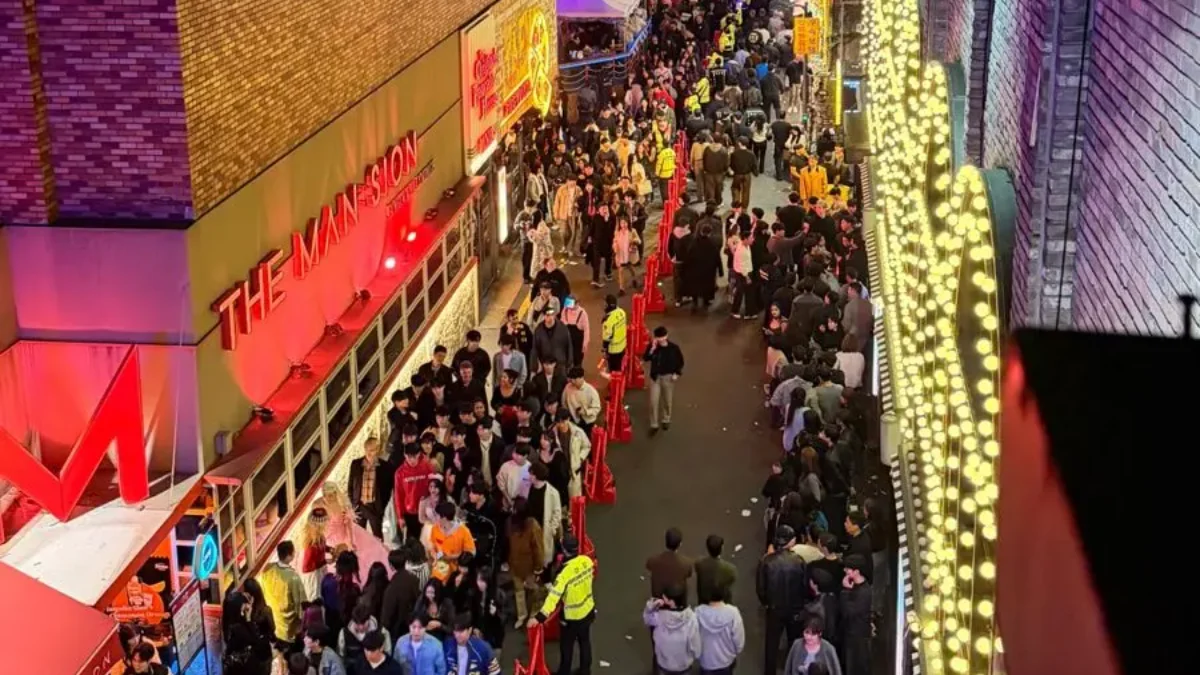
Halloween in Seoul 2026: Clubs, Raves, Costume Rules and Getting Home
Quick answer: Halloween falls on a Saturday in 2026, so the big club nights are Friday 30 and Saturday 31…
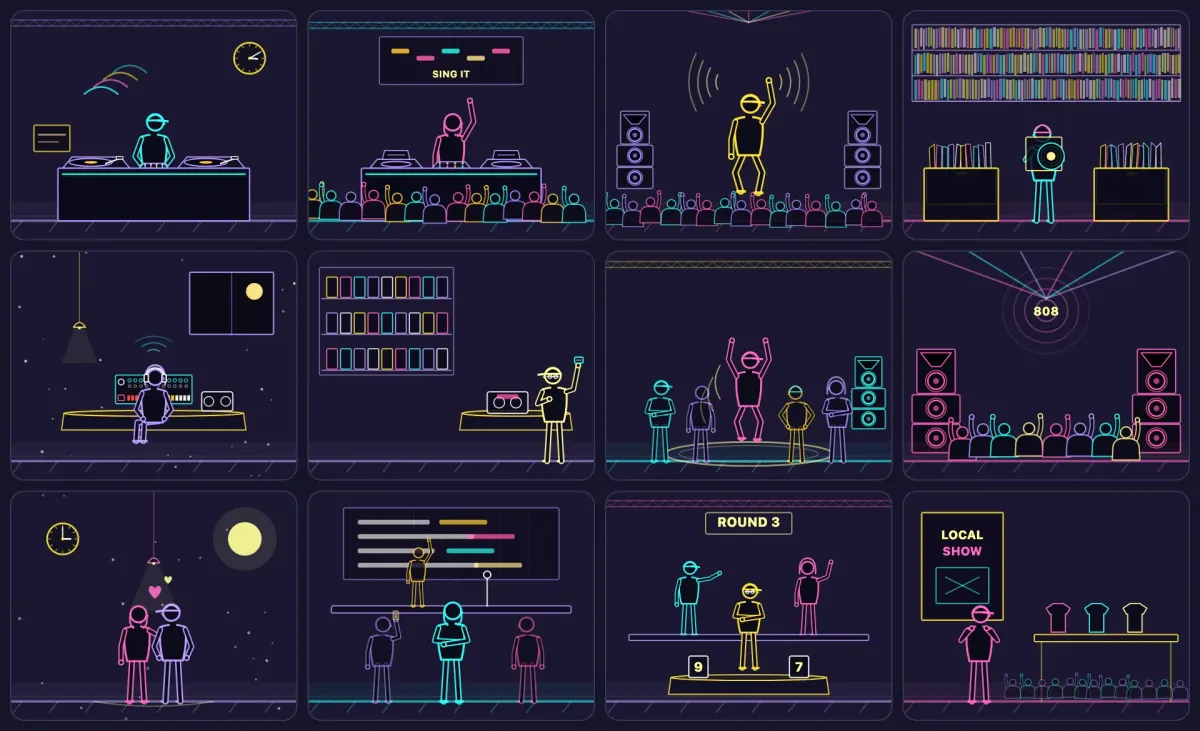
The Twelve Hip Hop Head Types: Every Result In The Hip Hop Quiz
The twelve hip hop types from the DJ Diaries quiz, from the Turntablist to the Scene Loyalist, with what each…
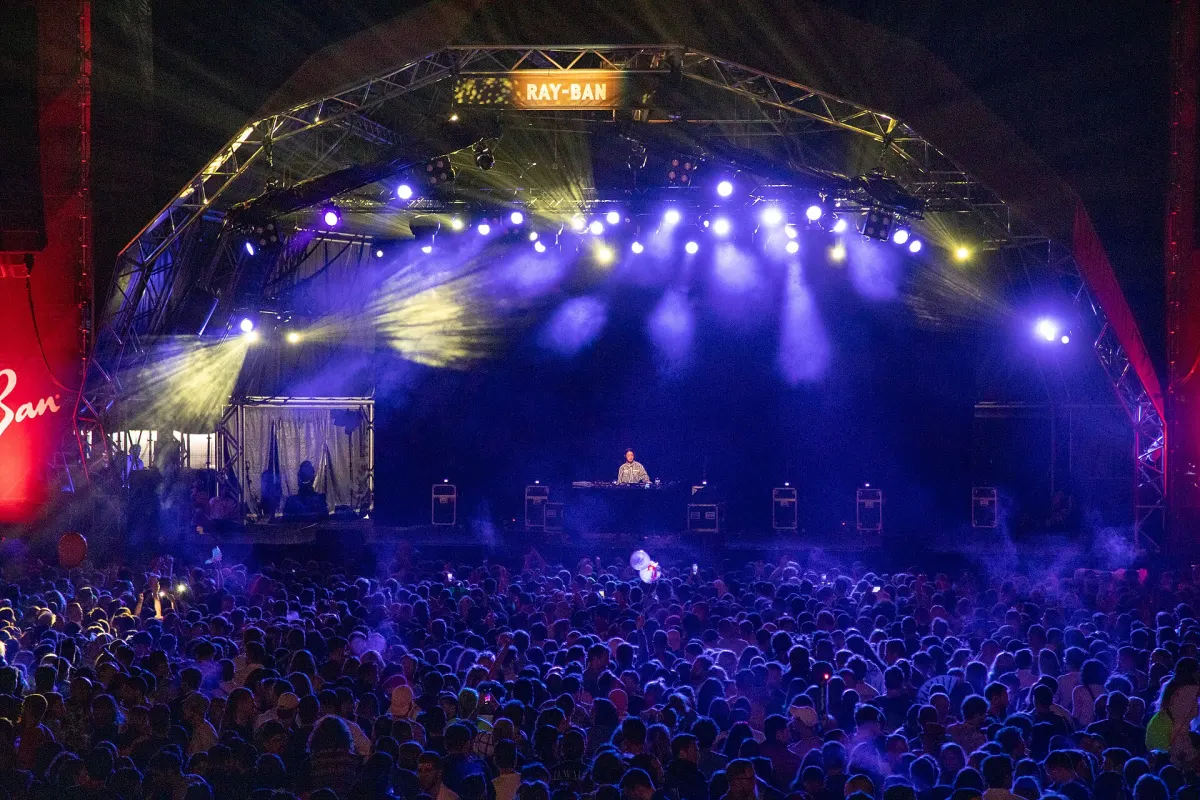
Peggy Gou: From Incheon to Berghain to Daytime Radio
How one Korean-born DJ broke through Berlin’s underground to become a global dance music icon, and what it means for…
Play with the history
127 genres, 11 machines and thirteen face-offs. Press play.
The Seoul Scene
Documented from inside, since the early 2000s. Nobody else is writing this down.
How Seoul’s Club Scene Came Through COVID, and What It Left Behind
On 8 May 2020, Seoul ordered more than 2,100 clubs and bars to close. A few days earlier, during a…
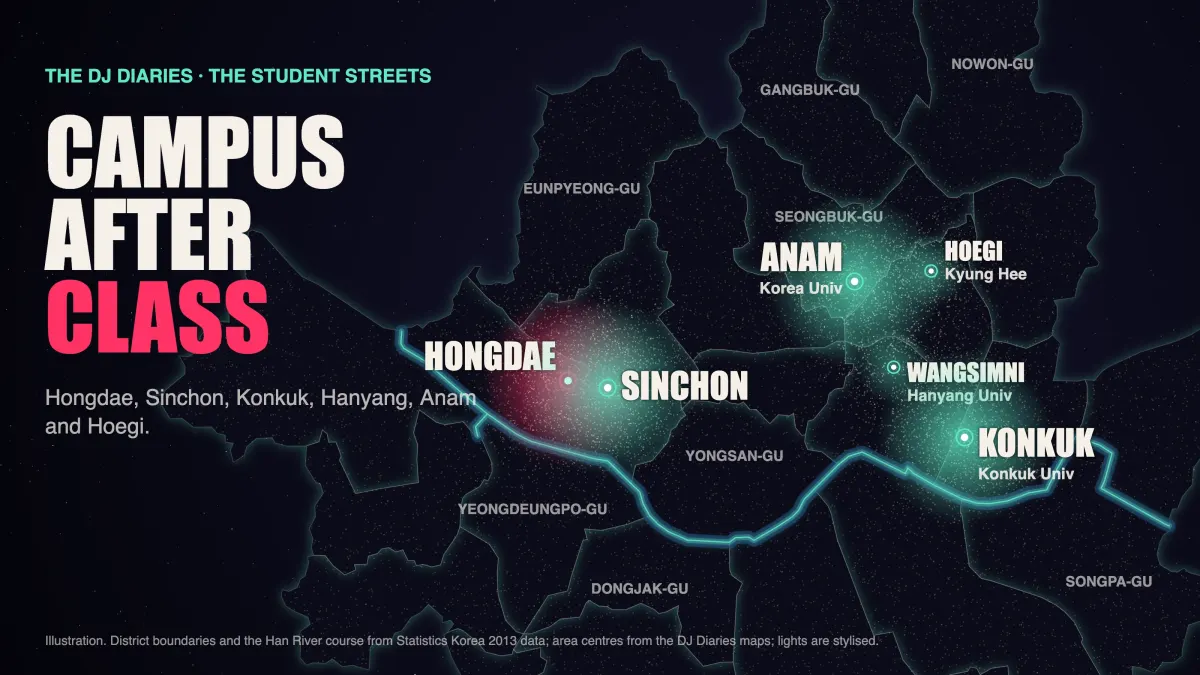
Seoul’s University Drinking Streets: Who’s Emptying, Who’s Still Busy
Sinchon, Konkuk, Anam, Nokdu-geori, Sharosu-gil and Hoegi: where Seoul’s university districts are, what makes each one different, and why some…
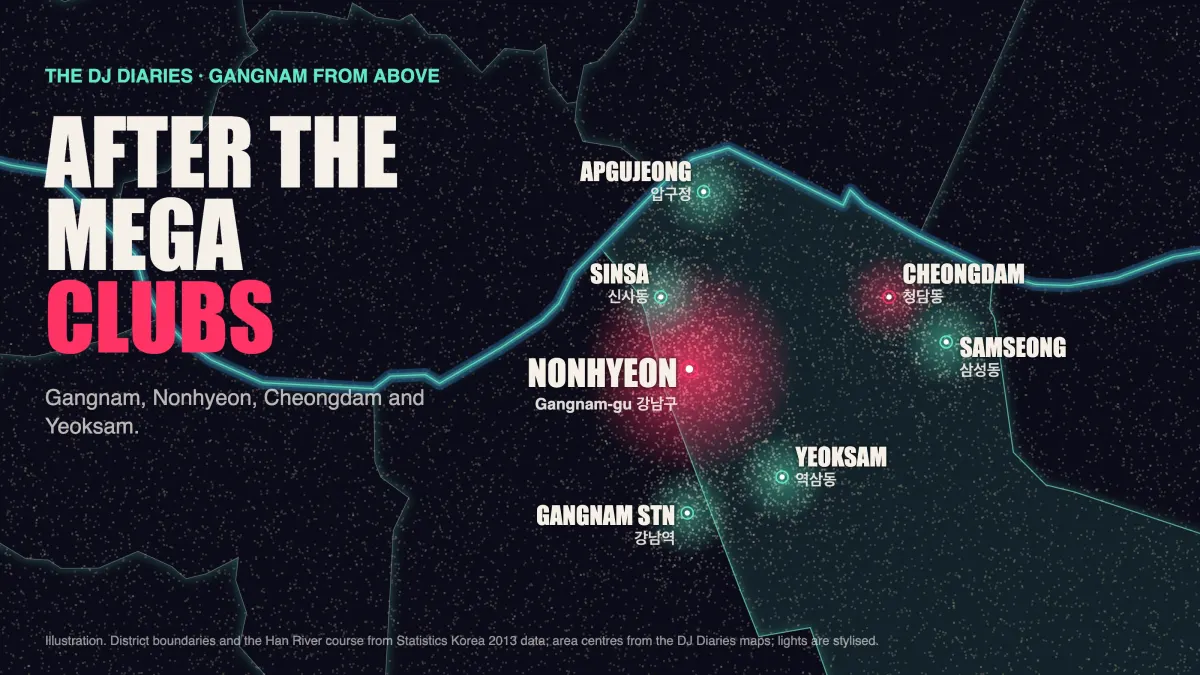
The Fall of the Gangnam Megaclub: Burning Sun, COVID and a Generation That Left
From the booth of a Gangnam (강남) club in 2016 you saw purple lasers and a crowd that ran back…
The Quizzes
Thirty-six questions, about ten minutes, twelve possible results each. English or Korean. Share yours, argue with ours.
What Kind of DJ Are You?
Blueprint, Closer or Digger. Twelve DJ archetypes, scored on six hidden traits.
What Kind of Clubber Are You?
Front row or back bar, first in or last out. Twelve ways to be on a dance floor.
Your Perfect Venue and Trip
Warehouse, basement, rooftop, listening bar. The room you were actually built for.
Which Era of Dance Music Are You?
The Paradise Garage years through the lockdown streams. Which era of dance music you belong to.
What Festival Are You?
Field, forest, beach or city block. The festival that fits how you really behave.
New: Find Your Sound places you among twelve sound types, or matches you to one of 127 genres in a quick eight-question round. Every result across the five quizzes, with its trait axes and type code, is listed in the full directory. Or start from all quizzes.
The Dig: Tools and Maps
Timelines, trees, machines and maps, all built on the same archive of 127 genres. The row drifts on its own and holds still under a cursor or a thumb.
Dance Music Timeline
Every genre on one line, from disco and Chicago house to amapiano and 3-step, each with a track to play.
Into the timeline →Dance Music Tree
The family tree, from soul, funk and dub to house, techno, jungle and garage. Every branch opens.
Along the branches →Festival Atlas
Fifty-four festivals, eleven in Korea, past and present, with founders, headliners, next dates and official links.
Across the atlas →Genre Face-Offs
Thirteen pairs, from house against techno to amapiano against afro house, with ear tests.
To the face-offs →The Machines
From the Minimoog to Ableton Live, plus a playable 808, 909 and 303-style sequencer.
Into the machines →Tempo Bridge
A start genre, a destination, and the smoothest route between them by BPM.
Over the bridge →Dance Music Trends
Sounds drawn as waves: when each one started, peaked and faded, and what is rising now.
Through the waves →Moments That Changed Dance Music
Forty-five checked moments, from the Loft in 1970 to AI music in 2026.
Through the moments →Dance Music Glossary
One hundred terms for mixing, gear, production and club slang, each with an example.
Into the glossary →Genre Encyclopedia
Reference entries: origins, key artists and essential records.
Into the entries →All tools and charts
Every tool, chart and map in one place.
The full shelf →
From the Booth
Feeling Factor Vol. 46: Jazzy, Deep and Soulful House
Jazz chords, deep house grooves, and soulful vocals across one unhurried set. Mixed in Seoul, built for late evenings rather…
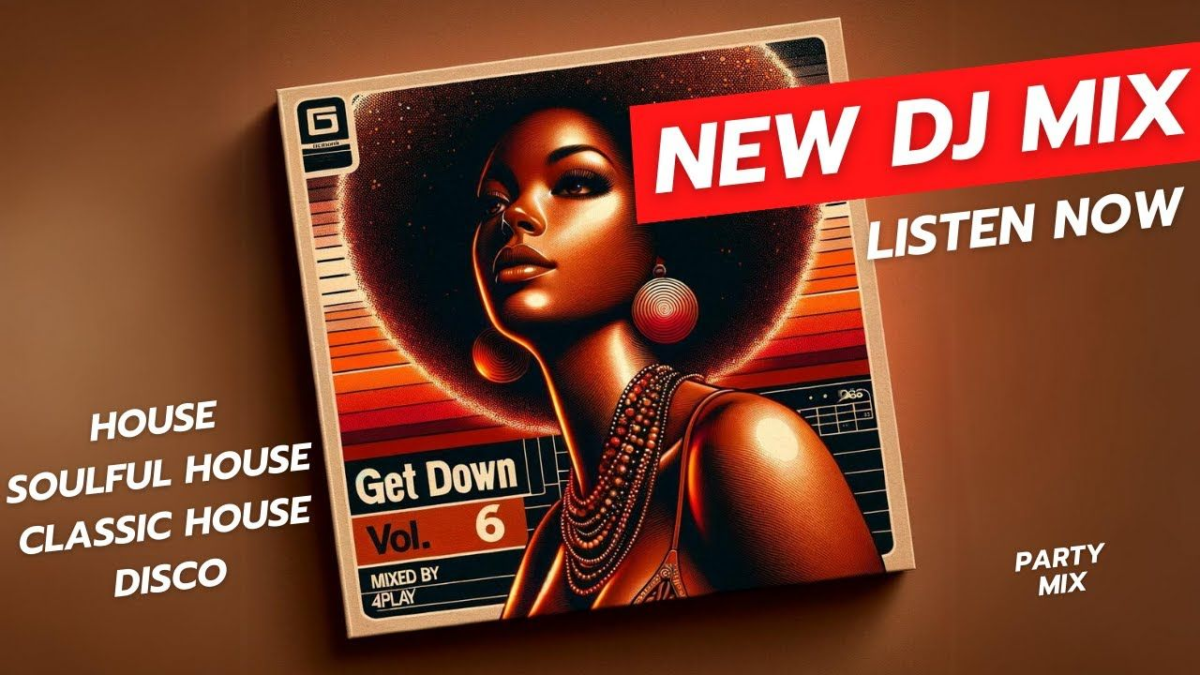
Get Down Vol. 6: Soulful House and Disco for the Cold Months
Soulful house and disco for the cold months: warm basslines, strings, and vocal cuts that lean toward the dancefloor. Mixed…
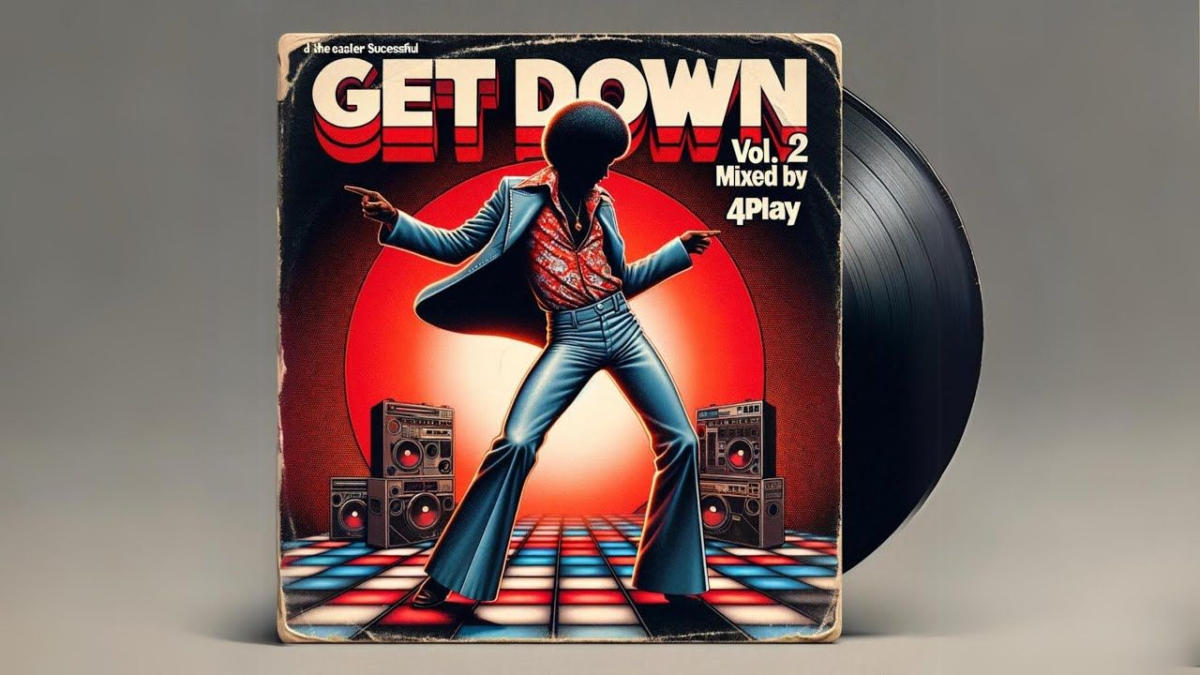
Get Down Vol. 2: Christmas Eve Disco and House, Live in Seoul
Recorded live in Seoul on Christmas Eve: disco and house played to a real room, in the order the night…
Every genre, year by year.
From 1940s roots to 3-step, 127 genres on one timeline. Each one has the year it took shape, where it happened, the labels that carried it and an official track you can play.
Start Here
Six pieces that explain how this city actually goes out. If you read nothing else, read these.
Going Out in Seoul
Which district for which night, and why they are not interchangeable.
Why Seoul Clubs Have Kitchens
The one detail that explains how a Korean club is actually allowed to operate.
Euljiro, a.k.a. Hipjiro
A tool-shop district that became the most interesting night out in the city.
Seoul on Wax
LP bars, record shops, and the DJs still playing vinyl in this city.
The Fall of the Gangnam Megaclub
Burning Sun, COVID, and the end of a business model.
How to Start DJing
The beginner guide, written by someone who has been doing it for more than twenty years.
Planning an event in Seoul?
Twenty years behind the decks. Weddings, corporate events, club nights, and festivals across Korea and Asia. A small team, led by me, not an agency roster. Honest advice, careful planning, and the right music for your room. Tell me about your event and I will send you a quote.