Seoul’s club geography is five separate scenes operating at the same time, in the same city, with different music policies, different crowds, different price points, and almost no overlap. You can spend a year inside one of them and never meet the other four. This is the map I wish someone had handed me when I started playing here.
Itaewon: The International Underground
The address that matters most in Seoul’s underground is 134 Itaewon-ro (34-16 Itaewon-dong), Yongsan-gu, the building whose basement houses Cakeshop. Since 2012 it has been the primary reference point for the international circuit’s relationship with Seoul, and the reason touring DJs know the district at all. Pistil, a short walk away in its own 80-capacity bar and lounge at 130-5 Itaewon-dong, is the lighter sister room with mixed programming that catches the overflow and runs its own identity. Contra, which ran an intimate Danley-powered room on the floors above Cakeshop in the same building, closed after a last night with Hunee on 7 December 2019. The intimate end now belongs to small rooms such as Pistil, Nyapi and Bolero. Around them sits the bar-and-lounge layer that makes Itaewon’s long, complicated night history legible on any given weekend, and since early 2026 the district has Soap back as well. If your reference points are London or Berlin rooms, start here. The Resident Advisor Seoul guide lists what’s on. The Itaewon map keeps moving. Hertz, a 200-capacity house room on Usadan-ro 14-gil, opened in April 2025 with a four-night Fingerprints run featuring Chaos in the CBD, Octo Octa and Eris Drew, and in June 2026 the BBCB (Beton Brut and Concrete Bar) basement on Bogwang-ro became a multi-use space called Blank Site, with BBCB nights continuing once or twice a month.
Not everyone dates the underground to 2012. The Telekom Electronic Beats city guide to Seoul, written by a DJ based in the city, credits DJ Soulscape’s 360 Sounds parties with making the dance scene in Korea, and names Mystik as one of the first underground clubs in the country with a proper sound system.
Haebangchon: The Proving Ground
One hill over, Haebangchon runs at bar scale rather than club scale. Its serious end lives in small basements rather than one flagship room, and a rotating circuit of bars and studio spaces hosts the small, regular, cheap events that make HBC the proving ground for Seoul’s promoter community. This is where the city’s unlicensed and semi-licensed circuit overlaps the licensed one, and where most young Seoul DJs get their first hundred hours in a booth.
Hongdae: The Student Engine
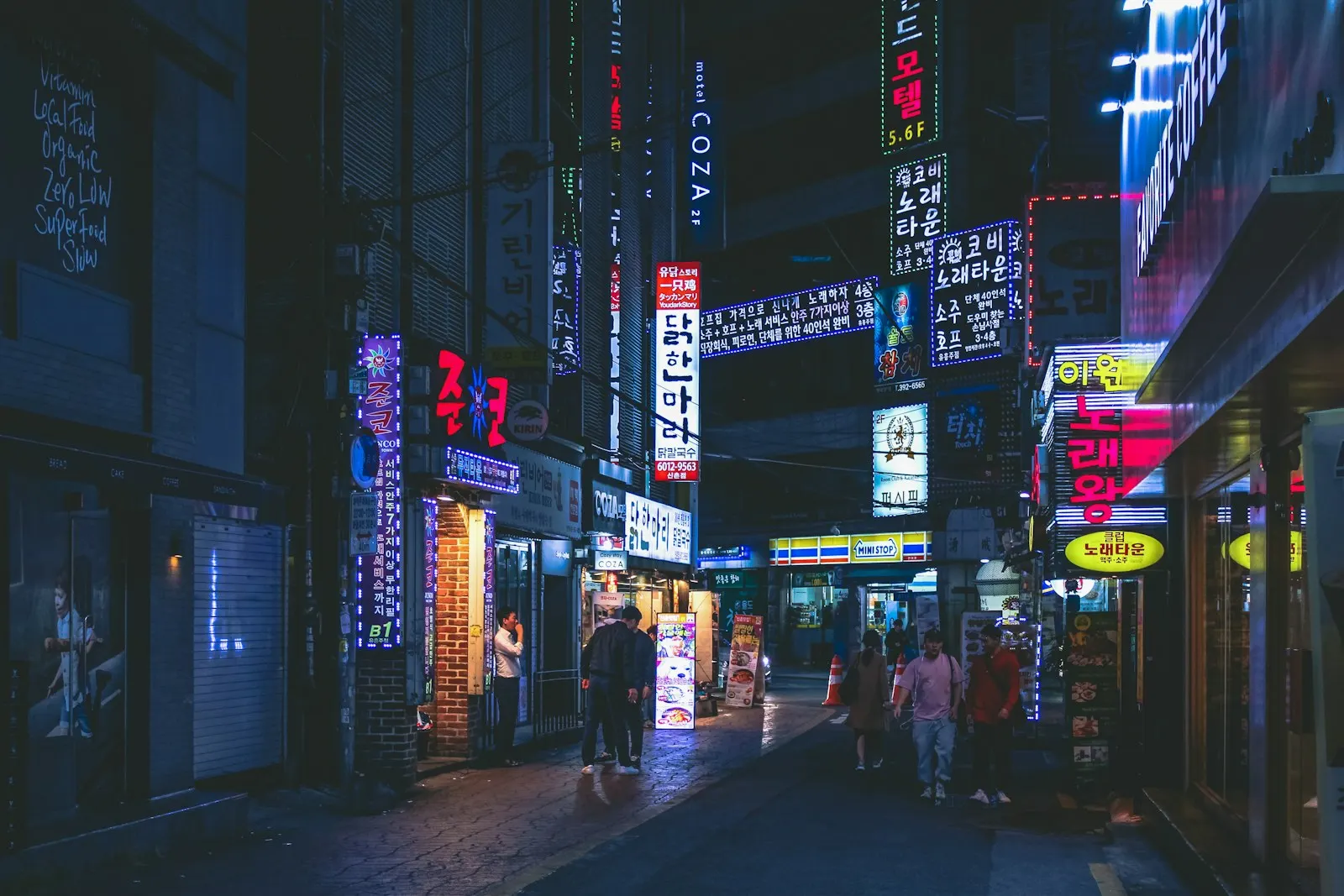
West of the river’s bend, Hongdae is the volume district: the university crowd, cheap covers, dense blocks of small venues, and a turnover of rooms that no map survives for long. Club FF holds the live-band end, the hip-hop rooms run their own economy, and the electronic rooms skew accessible. The exception is vurt. in Hapjeong, a small techno room open since 2014, where filming isn’t allowed and the sound is the point. It’s the easiest scene to enter and the hardest to find depth in, which is the trade I describe in Hongdae vs Itaewon. Nobody needs a contact or a plan here. vurt. has also carried techno out of the basement: on 5 and 6 September 2025 it staged a five-hour techno and burlesque show with the audiovisual team eobchae at the Sejong Center’s S Theater, part of the Sync Next 25 series, with Rrose and Anthony Linell on the bill. You walk downhill from the station and follow the noise.
That turnover has been measured. Kim Dong-jun, Kim Ki-jung and Lee Seung-il’s 2019 study in the Journal of Korea Planning Association tracked changes of business type parcel by parcel across the Hongdae commercial area, and found them more likely where new development had happened next door and where access was better.
Gangnam: The Spectacle Economy
South of the river, Gangnam runs the big-room model: Octagon, a fixture of DJ Mag’s Top 100 Clubs poll through the 2010s, plus the bottle-service floors around it. Production values are world class, headliners are large, and the economics run on tables rather than door tickets. It’s the scene most visitors picture when they imagine Korean nightlife and the one least connected to the other four. The full three-way comparison, including prices and crowd logic, is in Hongdae vs Itaewon vs Gangnam.
Euljiro and the East: The New Rooms
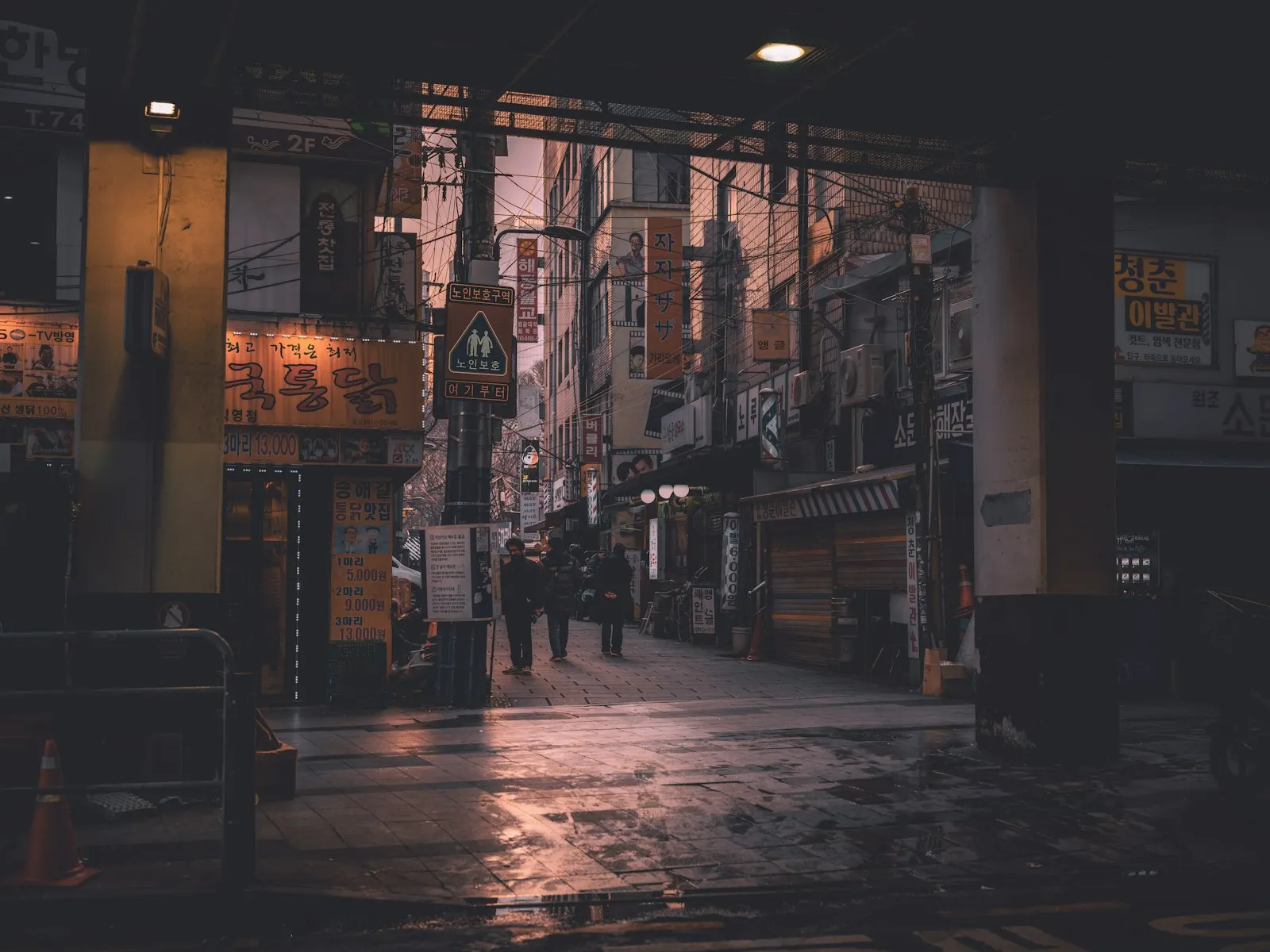
The newest scene grew after 2018 in Seoul’s old industrial pockets, mostly east of the centre, with Mullae, in Yeongdeungpo-gu south of the river, the exception: Euljiro’s print-shop alleys and the workshop blocks of Seongsu and Mullae, where raw spaces convert cheaply into venues and the programming leans experimental. The London analogy is Peckham a decade ago: artists first, licensing later, aesthetics built from what the buildings already were. This is the part of the map most likely to look different two years from now, and the part where the next generation of Korean selectors is most likely to surface first. Seongsu now has a proper club anchor as well: UNDERCITY, a basement on Seongsui-ro 22-gil between Seongsu and Konkuk University stations, holds over 300 people on a d&b audiotechnik system and has run techno and house nights, including its CORE series, since 2025.
Reading the Map
The practical takeaway: pick the scene that matches your night rather than judging the city by the wrong district. Whichever district you pick, carry photo ID: Seoul clubs are adults only and many doors check, with Faust’s listings stating “Photo ID Required”, so visitors should bring a passport. The 2025 survey put Itaewon at 44 percent of underground-leaning respondents’ preferred district, with Haebangchon at 23 and Hongdae at 19, but those numbers describe one tribe. The five scenes rarely advertise each other’s existence. That separation is a feature of Seoul nightlife, not a failure of it, and the neighbourhood guide walks each one venue by venue, including the etiquette that keeps them running.
Frequently Asked Questions
What are the main club districts in Seoul?
Seoul has five separate club scenes rather than one district. Itaewon (이태원) is the international underground, Haebangchon (해방촌) the bar scale proving ground and Hongdae (홍대) the student engine. Gangnam (강남) runs the big room spectacle model, and Euljiro (을지로) with Seongsu (성수) and Mullae (문래) holds the newest, most experimental rooms.
Where is the underground club scene in Seoul?
The heart of the Seoul underground is Itaewon, where the basement of 134 Itaewon-ro (34-16 Itaewon-dong), Yongsan-gu (용산구) houses Cakeshop. Since 2012 it has been the main reference point for the international circuit in Seoul, with its sister bar Pistil a short walk away. The 2025 survey put Itaewon at 44 percent of underground leaning respondents’ preferred district, ahead of Haebangchon at 23 and Hongdae at 19.
Is Hongdae good for clubbing?
Hongdae is the easiest Seoul club scene to enter and the hardest to find depth in. It’s the volume district, with a university crowd, cheap covers, dense blocks of small venues and fast turnover of rooms. Club FF holds the live band end, the hip hop rooms run their own economy and the electronic rooms skew accessible. The exception is vurt. in Hapjeong, a small techno room open since 2014, where filming isn’t allowed and the sound is the point.
What’s clubbing in Gangnam like?
Gangnam runs the big room model, with Octagon, a fixture of the DJ Mag Top 100 Clubs poll through the 2010s, and the bottle service floors around it. Production values are world class, headliners are large and the economics run on tables rather than door tickets. It’s the scene most visitors picture, and the one least connected to the rest, as this three district comparison shows.
Sources
- Telekom Electronic Beats: city guide to Seoul
- Kim Dong-jun, Kim Ki-jung and Lee Seung-il, Business-type-changed parcels in the Hongik University commercial area, Journal of Korea Planning Association 54(2), 2019
Written from Seoul, by someone who has been in the booth for more than twenty years. More on the site, or book a DJ.
Follow the rooms: Cakeshop on Instagram · Soap on Instagram · Pistil on Instagram
Stay in the Loop
New writing on DJ culture, electronic music, and the Seoul underground, delivered when it matters.
More From The DJ Diaries

Play with the history
Four tools built from the same research as this site.