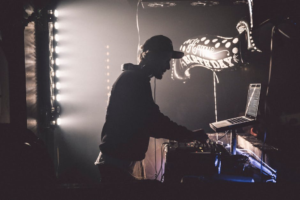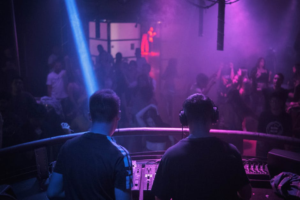
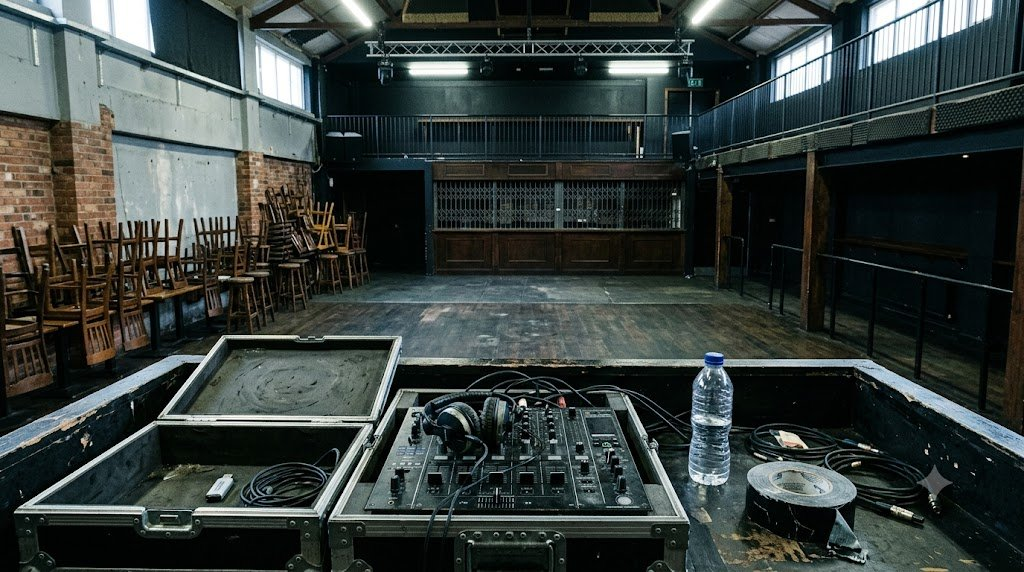
The Seoul scene has been waiting four years for this. On the last weekend of February 2026, Soap reopened the doors of a new permanent venue at 217 Itaewon-ro, ending one of the longer involuntary intermissions in recent Korean club history. The signature blue light, the underground programming policy, the deliberate scale: all returned, and to a room that is now the largest dedicated underground club in the city.
If you missed the original Soap, here is what you missed. The club operated at 132-3 Itaewon from approximately 2017 until 2021, when the lease ran out and the original space closed. For most of the room’s first life, Soap was the answer to a specific question: where in Seoul does a touring underground house DJ headline a 400-capacity room without playing a Gangnam megaclub? The answer almost everywhere else in the world is “the city’s biggest dedicated club.” The answer in Seoul, until February 26, 2026, has been “you don’t, you play Cakeshop instead, which is half the size.”
That gap is now closed. Soap is back. The room is bigger than Cakeshop, the programming policy is essentially what it was before, and the cohort that has carried the project through the four-year roving-party interim is finally back in a venue with a permanent installation. For Korean and international electronic-music readers alike, the Soap reopening is the most significant Seoul nightlife event of 2026.
What you’re walking into
The new venue at 217 Itaewon-ro sits on Itaewon’s main strip, a few minutes’ walk from Cakeshop and the broader Itaewon underground circuit. The space is configured as a single large dance room (capacity ~400), with the deep low-end and acoustically treated environment that the Soap team prioritized at the original location. The blue lighting installation, which was the original venue’s most distinctive visual signature, has been recreated in the new space. If you spent any time at the original Soap, you will recognize the room’s mood within 30 seconds of stepping inside.
The opening week (February 26 through March 1, 2026) ran with a lineup designed to introduce the new space to the existing Soap audience: 6Seoul, FS Green (a Dutch DJ with a deep Asian touring history), Ajuchan, and BRLLNT. The booking was deliberately mixed: an established international name, a senior Korean DJ with national recognition, and a newer cohort that defines the Soap aesthetic as it currently exists. The programming was an argument: this room is for everyone the original Soap was for, plus the Korean DJs who have grown into headliners during the four years the venue was closed.
The room, in Soap’s own pictures
Rather than describe the blue any further, here is the venue as the club presents itself. These are Soap’s own posts, via @soapseoul, where the monthly programme lands first; the club also lists on Resident Advisor.
View this post from @soapseoul
View this post from @soapseoul
Why it matters
There are three legitimate underground clubs in Itaewon that you can name without pause: Cakeshop, Faust, and now Soap. The other rooms in the district (Pistil, Contra, Tape, Henz Club, smaller pop-ups) all do something specific, but those three are the ones that anchor the international-bookings circuit. With Soap reopened, the Itaewon underground has a tier of programming it has been missing: a 400-capacity room for the kind of dance-floor moment that needs more space than Cakeshop can give but is not appropriate for a Gangnam megaclub.
This matters in concrete ways. International touring DJs who could fill 800-1,000 in a European city have, until now, had to either play Cakeshop (200, sells out fast and feels intimate but means the room can’t accommodate the full audience) or cross over to a Gangnam venue (where the table-service economics and the programming brief don’t fit underground sets). Soap is the format the city has been missing. A house DJ playing Soap on a Saturday night is playing a room that would feel familiar in Berlin, Amsterdam or London, scaled to the actual demand for that music in Seoul.
For local DJs, the story is the same in reverse. The 400-capacity room expands what a Korean DJ headlining a Soap night can plausibly book at: bigger international guests on the lineup, more developed production, longer sets, and a touring-circuit credential that scales internationally. The Korean cohort that came up at Cakeshop and the original Soap (Mogwaa, Closet Yi, Net Gala, BRLLNT and others) now has a domestic room that matches their international booking tier.
What the four years away produced
A note on the interim. Soap did not simply close in 2021 and disappear. The team kept the project alive as a roving party, hosting nights at venues across Seoul plus international takeovers at clubs in Tokyo, Bangkok, and Berlin. The roving-party period did three things that the new venue will benefit from.
First, it forced the Soap programming team to be more curatorial and less venue-driven. With no permanent room, every Soap event had to justify itself on the merits of the lineup alone. The bookings during the interim were tighter, more deliberate, and often more interesting than they had been in the venue’s last permanent year. That programmatic discipline carries into the new room.
Second, it built the Soap brand internationally. The roving parties at Tokyo and Berlin venues introduced the Soap name to audiences who would not have encountered it via the original venue alone. The new venue opens with a more globally recognized name than the closed venue had.
Third, it kept the Korean DJ cohort that came up around Soap in active programming during years when their other primary stage (the original Soap) was unavailable. The Korean DJs who would have lost momentum if the project had simply closed have instead spent four years touring with the Soap brand attached. They land in the new venue at the headlining stage, not the development stage.
What the music will be
Soap has historically focused on the house spectrum: deep house, soulful house, the upbeat side of techno, and the broader curated dance music that lands somewhere between Cakeshop’s UK-bass-and-techno breadth and the more functional industrial-techno end that Faust occupies. The new venue will continue in that direction.
- House nights with international bookings. The traveling US, UK and European house circuit (Honey Dijon, Eris Drew, Octo Octa, Anz, Tama Sumo, the broader Smalltown Supersound roster) is one of the audiences the new room is sized for.
- Modern Korean DJ residencies. Look for monthly or near-monthly Soap residencies from the Korean cohort named above, plus newer producers including Net Gala, DJ Bowlcut and the Salamanda axis.
- Mixed-genre takeovers. The original Soap occasionally programmed nights that mixed house, disco, broken beat and the lighter end of UK bass. The new room is large enough to support those mixed-format nights without the floor splitting awkwardly between sub-audiences.
- International label takeovers. Expect London, Berlin and Amsterdam labels to start scheduling Seoul takeovers at Soap, in the format that Cakeshop has done for the smaller-capacity end.
This is not the room for a 4 a.m. Berghain-style hard techno set (Faust is already that room, and its Kirsch Audio system is hard to beat for that specific format). It is the room for the rest of the Itaewon underground programming spectrum, scaled to a capacity that reflects the actual current size of that audience.
How to go
Get there before midnight on weekends. With a 400-cap room and growing word-of-mouth around the reopening, expect lines and possibly door capacity from 11:30 p.m. onward on Friday and Saturday nights. Soap’s policy at the original venue was open-door with cover; current door policy at the new venue is similar, but the room fills meaningfully faster than it used to.
The cover is moderate. Expect ₩20,000-30,000 on event nights, sometimes higher for international headliner bookings. Drinks at the bar are in line with Itaewon prices generally (₩10,000-15,000 for cocktails and beers).
The neighborhood is itself the wider scene. Within a five-minute walk: Cakeshop, Faust, Pistil, Contra, Tape, and the broader Itaewon underground bars. A typical Saturday night for a Seoul regular includes two or three of these rooms in sequence, with Soap now plausibly the central anchor for nights that lean house and upbeat rather than pure techno.
The crowd is genuinely mixed. Roughly half Korean and half international (mostly European and American expats, plus visiting Japanese and Southeast Asian regulars). The age skew is 25-35, the dress code is whatever, and the floor is one of the more diverse you will encounter at a single underground room anywhere in Asia.
Follow @soapseoul for the booking calendar. The venue’s Instagram is the canonical source for upcoming nights; Resident Advisor’s Soap listings are the secondary source. Both update weekly.
What to play in your head before going
If you have not visited Soap before, or if it has been four years and you want to recalibrate, here is a short listening sequence that approximates a Saturday-night Soap set:
- Honey Dijon, “Black Girl Magic” (2022), house at the modern festival-friendly end, with the soul vocal foundation Soap has historically programmed around.
- Octo Octa, “Spin Girl, Spin”, deeper, dreamier house in the late-2010s tradition.
- Mogwaa, “From Above” (Gudu Records, 2024), Korean house production, released on Peggy Gou’s label.
- Eris Drew, Quivering in Time (2021), the album that defines the current curated-house aesthetic.
- Anz, All Hours, All Hours (2022), Manchester DJ pushing the genre’s modern hybrid approach.
If those tracks feel like the kind of music you want to hear at scale, Soap is the room.
The wider story
The Soap reopening is one node in a broader restoration of the Seoul underground that has been quietly building since the pandemic. Cakeshop survived the 2020-2022 period with reduced programming. Faust opened in 2014 and has continued through. The listening-bar circuit (Seendosi, Vinyl & Plastic, the broader Mangwon and Yeonnam-dong scenes) has grown substantially. The Seoul Community Radio infrastructure has scaled. Korean DJs increasingly appear on international touring circuits.
What was missing, until February 2026, was the 400-capacity room to anchor the larger end of all of that. Soap returning fills the gap. The Seoul scene in 2026 is, for the first time since the late-2010s peak, structurally complete: a tier of small listening bars, a tier of mid-sized international-bookings clubs (Cakeshop, Faust, Pistil, Contra, Tape), and now Soap as the largest underground room. Add the festival circuit for the megaclub-tier audience (Octagon, MYST, Club Arena programming, plus the Korea festivals for the EDM end) and the city has a complete vertical of dance-music infrastructure for any audience size or programming type.
Soap reopened on a Friday in February. By April, the Itaewon Saturday night had reorganized around it. If you have not been since the new venue opened, this is the most necessary visit on the Seoul nightlife calendar in 2026.
Go.
Frequently asked questions about Soap Seoul
Where is the new Soap located?
The new Soap is at 217 Itaewon-ro in Yongsan-gu, Itaewon, Seoul. The original venue at 132-3 Itaewon closed in 2021. The new permanent location opened on February 26, 2026, with an opening week running through March 1.
When did Soap reopen?
Soap reopened on February 26, 2026 at the new Itaewon-ro venue, after closing the original space in 2021. During the four-year interim, Soap operated as a roving party at venues in Seoul and internationally in Tokyo and Berlin.
What kind of music does Soap play?
Soap is a house-leaning underground room, programmed across deep house, soulful house, the upbeat side of techno, and curated mixed-format nights. The booking spans international touring DJs and Korean residents, with a programming brief that prioritizes house and modern dance over harder industrial techno (which is more Faust’s territory).
How big is the new Soap?
The new venue has a capacity of approximately 400 people, making it the largest dedicated underground dance club in Seoul. By comparison, Cakeshop holds about 200, Pistil and Faust both run smaller. Gangnam megaclubs like Octagon are larger but operate on table-service economics rather than open-floor underground programming.
Who played the Soap reopening?
The opening week (February 26 through March 1, 2026) featured 6Seoul, FS Green, Ajuchan and BRLLNT. The lineup mixed an established international touring DJ, a senior Korean resident, and the newer Korean cohort that has grown up around the Soap brand during its roving-party years.
Further reading on The DJ Diaries
- Hongdae vs Itaewon vs Gangnam: A Working DJ’s Map of Seoul
- Cakeshop: The Itaewon Cathedral
- Faust: Seoul’s Hardest Techno Room
- Korea’s Most Unforgettable Festivals for 2026
- Seoul Scene category hub
Written from Seoul, by someone who has been in the booth for more than 25 years. More on the site, or book a DJ.
Stay in the Loop
New writing on DJ culture, electronic music, and the Seoul underground — delivered when it matters.