The first thing anyone tells you about Itaewon, if they’ve been going there long enough to have a real opinion, is that it’s not one place. It has never been one place. It’s a neighbourhood that accumulated layers across 70 years and never shed the older ones cleanly, so walking down the main strip after midnight you pass a basement techno club next to a military surplus store next to an artisanal coffee shop next to a bar that has had the same karaoke machine since 1989. The layers are visible if you know where to look. The point is to look.
This piece is the full history. The good: the underground scene that made Itaewon the most internationally connected club district in East Asia. The bad: the gentrification, the door policies, the structural problems that never got resolved. The ugly: October 29, 2022, which can’t be written around. The aftermath, which lasted longer than most coverage acknowledged. And where the district stands now, in 2026, which is something more complicated than either full recovery or permanent ruin.
I’ve been playing in Itaewon since 2006, starting at B1. I have opinions about all of this. So does everyone who spent serious time there. This is mine.
The baseline: where Itaewon came from
Most neighbourhoods have one origin story. Itaewon has two that don’t fully reconcile.
The first: the US military presence. Yongsan Garrison, the American military base that sat in the centre of Seoul, shaped Itaewon for seven decades. The base generated the neighbourhood’s economic infrastructure: a supply strip built around serving American soldiers on leave, with the full catalogue of things a 1970s US military entertainment district contained. Western restaurants, foreigner-facing bars, tailor shops, souvenirs, and a red-light economy that the Korean government periodically tried to regulate and never successfully eliminated. If you want to understand why Itaewon has always felt internationally oriented in a way that no other Seoul district quite matches, this is the answer. The neighbourhood was built to serve foreigners before the concept of a cosmopolitan Seoul neighbourhood was a real thing.
US Forces Korea moved its headquarters out of Yongsan in 2018, and the base land has been returned to Korea in stages since, much of it set aside for Yongsan Park. The effects on the neighbourhood took years to fully register. The PX economy that had sustained the strip for 70 years left with the soldiers. The foreigner-service infrastructure that had substituted for ordinary Korean commercial culture pivoted, awkwardly, toward an international residential and nightlife market that was still being defined.
The rooftops are part of the same story. Jang Yong-hyuk’s 2017 master’s thesis counted around 100 commercial rooftop venues (루프탑, rupeutap) in Itaewon and traces them through the same layers: the camptown (기지촌, gijichon) economy that grew around the Yongsan base after the Korean War, the tourist special zone designation, and the multicultural commercial strip that followed.
The Second Origin Story
The second origin story: everything that grew in the gaps the military economy left open. Gay bars, alternative nightlife, immigrant communities from across Asia and the Middle East and West Africa, a general tolerance for the eccentric and the legally grey that neighbourhoods shaped by strict Korean social norms tended not to have. Itaewon’s cultural density was a function of its structural looseness. Things happened there because there was space for them to happen, and because the neighbourhood had never been fully organized around the conformist social expectations that governed most of the rest of Seoul.
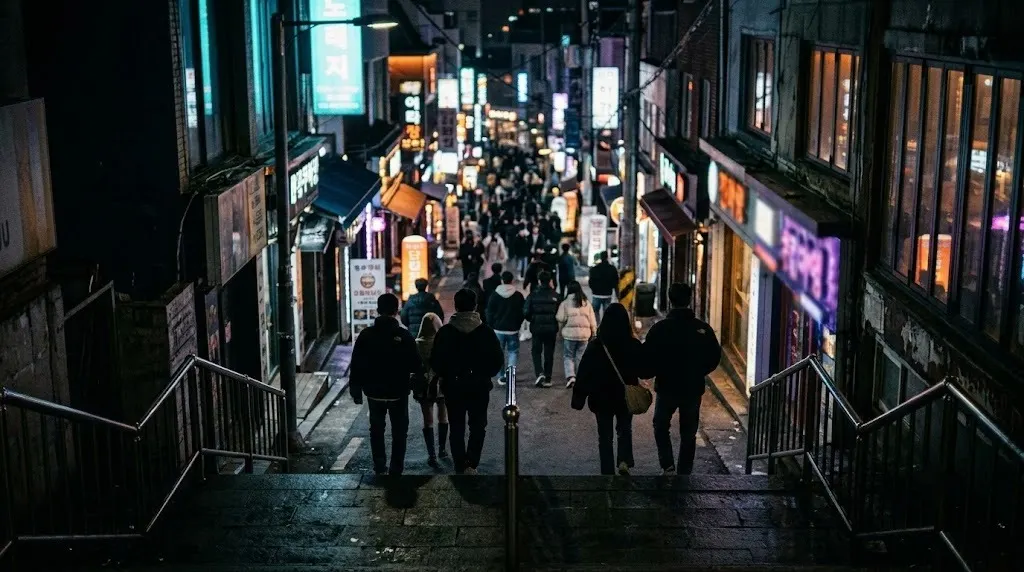
The dance clubs that eventually became the Itaewon underground circuit grew from the second story, not the first. But they grew in a neighbourhood whose physical and economic structure the first story had built. You can’t understand either without the other.
Itaewon Nightlife Map: Venues, Streets and What’s On
Here is Itaewon as it stands now: the venues, the streets worth knowing and what’s on in the next two weeks. Tap a pin for the sound, the address and directions on Naver or Kakao Map.
Itaewon nightlife map
Itaewon is Seoul’s small room district: techno, house and disco clubs and whisky bars from Noksapyeong to Hannam-dong, along the main street, the alleys behind the Hamilton, up toward Homo Hill and in the small Hannam-dong pocket around Daesagwan-ro 31-gil.
Venues on this map: Cakeshop (케이크샵), B1, 134 Itaewon-ro; Blacklist (블랙리스트), 134 Itaewon-ro; Volnost (볼노스트), 142 Itaewon-ro; Seoul Community Radio (서울 커뮤니티 라디오), 22 Noksapyeong-daero 40na-gil; Coley (콜리), 214 Noksapyeong-daero; Southside Parlor (사우스사이드 팔러), 218 Noksapyeong-daero; Ring (링), 2F, 165-6 Itaewon-ro; Rack Seoul (랙), 2F, 4 Itaewon-ro 23-gil; Nué Seoul (누에), 2F, 45 Itaewon-ro 27ga-gil; Hamilton Hotel (해밀톤호텔), 179 Itaewon-ro; Prost (프로스트), 26 Itaewon-ro 27ga-gil; Glam (글램라운지), 26 Itaewon-ro 27ga-gil; Union (바유니온), 29 Bogwang-ro 59-gil; Pistil (피스틸), 9 Bogwang-ro 59-gil; Itaewon Station (이태원역); Faust (파우스트), 3F, 7 Bogwang-ro 60-gil; Casa Corona (카사코로나), 7 Bogwang-ro 60-gil; Blank Site (블랭크 사이트), B2, 22 Bogwang-ro 60-gil; Nyapi (냐피), 187 Itaewon-ro; Flac (플락), 2F, 5 Itaewon-ro 27ga-gil; Public (퍼블릭), B1, 192 Itaewon-ro; Teller (텔러), B1, 39 Usadan-ro; All That Jazz (올댓재즈), 216 Itaewon-ro; Bolero (볼레로), B1, 220 Itaewon-ro; Soap (소프 서울), B2, 217 Itaewon-ro; JJ Mahoney’s (제이제이 마호니스), Grand Hyatt Seoul, Grand Hyatt Seoul, 322 Sowol-ro; Stoked&stoned (스톡앤스톤드), 2F, 72 Daesagwan-ro; Kockiri (꼬끼리), 46 Usadan-ro; Atdge Seoul (엣지서울), B1, 29 Bogwang-ro 59-gil, Yongsan-gu; Paper (페이퍼), Rooftop, 37 Itaewon-ro 27ga-gil, Yongsan-gu; Shelter (쉘터), 5F, 37 Itaewon-ro 27ga-gil, Yongsan-gu; Hertz (헤르츠), 1F, 21 Usadan-ro 14-gil, Yongsan-gu; Rosso (로쏘 서울), B1, 17 Daesagwan-ro 31-gil, Yongsan-gu; Cul Sec (큐섹), 1F, 242 Noksapyeong-daero, Yongsan-gu (Haebangchon side); RO Seoul (로서울), 1F, 19 Noksapyeong-daero 52-gil, Yongsan-gu; Lovehaus (러브하우스), B1, 6 Itaewon-ro 23-gil, Yongsan-gu; Grain Haus (그레인하우스), 1F, 40 Usadan-ro, Yongsan-gu; 232 (232), 232 Itaewon-ro, Yongsan-gu; Soko (소코), 47 Hannam-daero 20-gil, Yongsan-gu (Hannam); Pussyfoot Saloon (푸시풋살룬), B1, 7-6 Daesagwan-ro 31-gil, Yongsan-gu (Hannam); Boogie Woogie (부기우기), 2F, 21 Hoenamu-ro, Yongsan-gu (Haebangchon side); Bar Swallow (바 스왈로), 1F, 38 Itaewon-ro 55ga-gil, Yongsan-gu (Hannam); Gaenari Whisky Hannam (개나리위스키 한남), 2F, 78 Itaewon-ro 54-gil, Yongsan-gu (Hannam); Privilege Bar (몬드리안서울이태원 프리빌리지 바), Mondrian Seoul Itaewon, Rooftop, Mondrian Seoul Itaewon, 23 Jangmun-ro, Yongsan-gu; The Paris Bar (파리스 바), Grand Hyatt Seoul, Grand Hyatt Seoul, 322 Sowol-ro; Satz (재츠), 2F, 21 Daesagwan-ro 30-gil, Yongsan-gu; Blue Square Woori WON Banking Hall (블루스퀘어 우리WON뱅킹홀), 294 Itaewon-ro, Yongsan-gu.
Streets and corners: Itaewon-ro (이태원로), the main street, Itaewon-ro 27ga-gil, the alley behind the Hamilton, Bogwang-ro 59-gil and 60-gil, the south alleys, Homo Hill (우사단로12길), down to the fire station, Noksapyeong-daero (녹사평대로), Hannam-dong lanes (대사관로30길, 31길).
This week in Itaewon · 이태원
Who is playing in Itaewon this week
19 Oct - 25 Oct
Stoked&stoned, Itaewon 이태원
Cozyhoon, Hogi
Atdge Seoul, Itaewon 이태원
Lyumin & givogi
Nyapi, Itaewon 이태원
BRIDGE X SECRET WEAPONS
Bolero, Itaewon 이태원
Metacritik
Atdge Seoul, Itaewon 이태원
GEGEN x Faust
Faust, Itaewon 이태원
Weird Circle with Charlieowo
Nyapi, Itaewon 이태원
Volnost INVITES 'Hypnotic Black Magic'
Volnost, Itaewon 이태원
Ring invites Z@p
Ring, Itaewon 이태원
Hertz 헤르츠: *Origin Hotel* With Elias Sternin
Hertz, Itaewon 이태원
YBDG(Young Boy Dancing Group) 영보이댄싱그룹 X Palm Tree Academy
Layer Studio 20, Itaewon 이태원
KUN
Pistil, Itaewon 이태원
FRISK: Yaya
Flac, Itaewon 이태원
Rocket, Baxa, Mingsturn
Atdge Seoul, Itaewon 이태원
Patina Sound System x JADALAREIGN
Rosso, Itaewon 이태원
KTX
Nyapi, Itaewon 이태원
Volnost Night
Volnost, Itaewon 이태원
Ring — 24 October 2026
Ring, Itaewon 이태원
INVITES: Schwefelgelb
Faust, Itaewon 이태원
Hertz 헤르츠 Selectors: Jesse You Junmo Jimin
Hertz, Itaewon 이태원
Itaewon, 2012 to 2026
How the underground circuit was built, broken and rebuilt
이태원, 2012년부터 2026년까지
- 12012Cakeshop opens The room that connected Seoul to the global underground
- 22015Touring DJs add Seoul dates Seoul becomes a circuit stop
- 32017A full circuit Cakeshop, Faust for harder techno, Soap for house
- 42018US Forces headquarters leaves Yongsan Base land returns to Korea in stages
- 5May 2020The COVID cluster Blame shifts onto the LGBTQ community and Itaewon itself
- 629 Oct 2022The crush 159 people died that night. The official count is now 162
- 7Feb 2026Soap reopens at 217 Itaewon-ro The circuit is complete again
Before 2012: Yongsan garrison, the camptown economy after the Korean War, and queer bars in the fire station alley from the 1990s.
75.6% of the usual foot traffic had returned to Itaewon 1 dong by May 2023, from 71.9% in February. Spending came back faster than people did.
Sources: Shinhan Card and KT data, Seoul City, via Asia Economy
The good: how the scene built
The club that changed everything in Itaewon is Cakeshop. It opened in 2012. Before Cakeshop, Itaewon had nightlife; after Cakeshop, it had an underground circuit. That sentence sounds like marketing. It’s also accurate.
Cakeshop was and remains a 200-capacity basement room that books the kind of DJs who play Fabric in London and De School in Amsterdam. In 2012, that kind of room didn’t exist in Seoul. The city had Gangnam megaclubs for commercial EDM, and it had a Hongdae indie-and-underground scene that was more local than international. What it didn’t have was a room connecting it to the global underground circuit that had been running through London, Berlin, Amsterdam and New York since the early 2000s.
How the Connection Worked
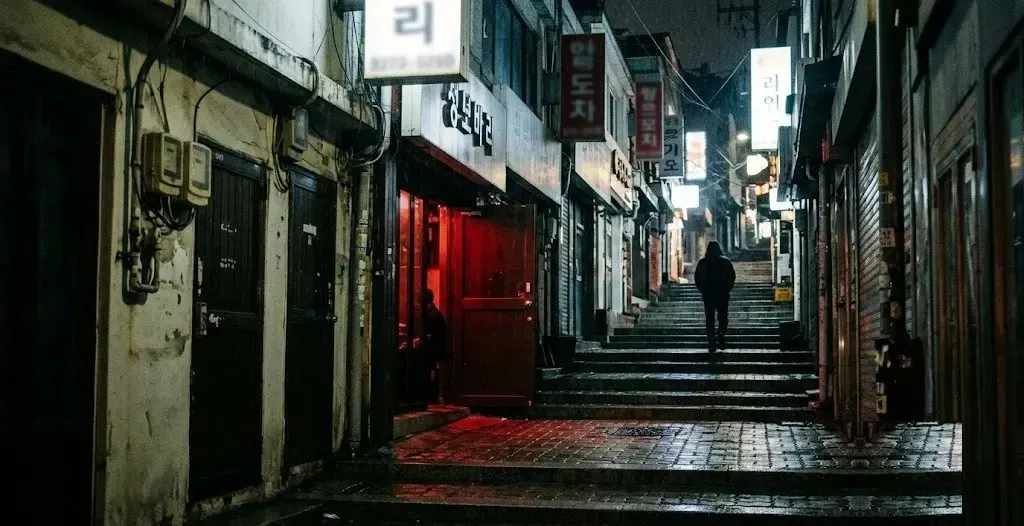
Cakeshop was that connection. By 2015, international touring DJs were adding Seoul dates. By 2017, Itaewon had a full circuit: Cakeshop for the international-bookings end, Faust for harder techno (two rooms, Kirsch Audio system, opened in Itaewon in 2014, the kind of room where the crowd arrives at 2am and considers leaving at 7), Soap at 132-3 Itaewon for the house-leaning 400-capacity end, and a surrounding infrastructure of bars and smaller rooms that made a full Saturday night possible without leaving the neighbourhood.
What the Scene Produced
What the Itaewon scene produced in that period was something specific and not easily replicated: a club circuit that was international in its crowd makeup in a city that was otherwise not particularly diverse in its nightlife. The roughly 50/50 Korean and international split that characterized Cakeshop and Faust at their peak was unusual anywhere; in Seoul, it was unique. The crowd included Korean DJs and producers who had come up studying the international circuit, expats who had moved to Seoul from European cities and brought their music politics with them, and visiting tourists who had specifically travelled for the music. The energy this produced was different from what you get in an entirely local scene, and different again from what you get in a tourist-heavy scene where locals are absent. It was specific, unlikely and good.
The music being played was equally specific. Itaewon at its best wasn’t trying to be Berlin or London. It was a translation: the global underground vocabulary filtered through a Korean sensibility about groove and duration and crowd management that produced something recognizable to international ears but not identical to what any European equivalent was doing. Korean DJs who came up in this circuit, Mogwaa, Closet Yi, Net Gala, BRLLNT and others, aren’t Korean-flavoured versions of European DJs. They’re something that only exists because Itaewon produced the conditions for it to exist.
What was lost in October 2022 was a neighbourhood and, with it, a scene with a specific character that had taken a decade to build and had no direct equivalent anywhere else in the world.
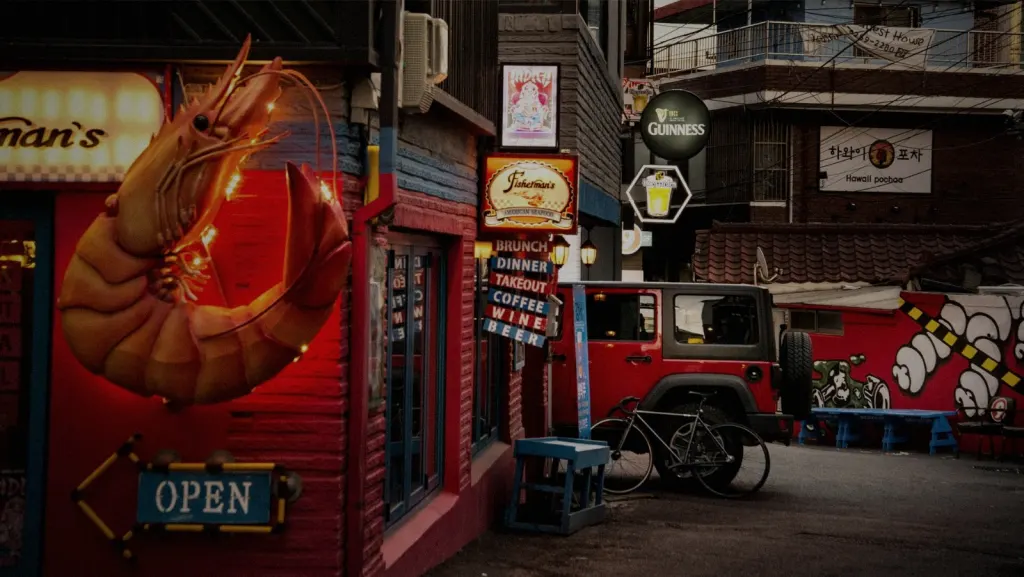
Itaewon at night, on foot
The bad: what the good years obscured
Itaewon wasn’t uncomplicated even in the years before everything went wrong.
The Gentrification Problem
The gentrification problem was real and it was getting worse throughout the 2010s. The same international profile that made the Itaewon scene attractive was also making the neighbourhood expensive in ways that were pushing out the communities that had built it. The immigrant communities from the Middle East and West Africa that had lived in Itaewon since the 1980s and 1990s were being displaced by rising rents that the new nightlife economy was driving. The gay bars that had operated in the Homo Hill area since the 1990s, one of the only openly LGBTQ+ entertainment districts in Korea, were under continuous pressure from rising commercial rents and the slow cultural normalization of the surrounding area that paradoxically made the specific safe-haven function of the district less necessary even as it made the real estate more expensive.
Korean scholarship documented that community before the pressure peaked. Han Yu-seok’s 2013 study in Seoul Studies (서울도시연구) of the fire station alley found sexual minority businesses concentrating there from the 1990s, and described a space defined by openness, with owners running gay and trans bars in plain view, unlike the more closed male queer spaces of Nakwon-dong in Jongno.
The Door Policy Problem
The clubs themselves had door policy problems that nobody wanted to talk about directly. The Itaewon underground positioned itself as cosmopolitan and international. In practice, some venues in the broader Itaewon nightlife district had policies that discriminated against Black people and Southeast Asian visitors in ways that were documented, discussed quietly in expat communities, and never adequately addressed by the scene’s institutions. The underground clubs weren’t the worst offenders, but neither were they as clean as their international profile implied. This is the part of the history that gets written over when people write about what a good thing Itaewon was. It was a good thing and it had these problems simultaneously.
The neighbourhood’s physical infrastructure was also a known issue. The alleys off the main Itaewon-ro strip weren’t designed for the crowds that the neighbourhood’s 2010s nightlife boom generated. Narrow, not well-lit, without adequate crowd management infrastructure on peak nights. People who went regularly noticed this. The feeling of being in a crowd that was too dense for its physical space on a busy Halloween weekend wasn’t unusual or surprising to people who were paying attention.
The ugly: October 29, 2022
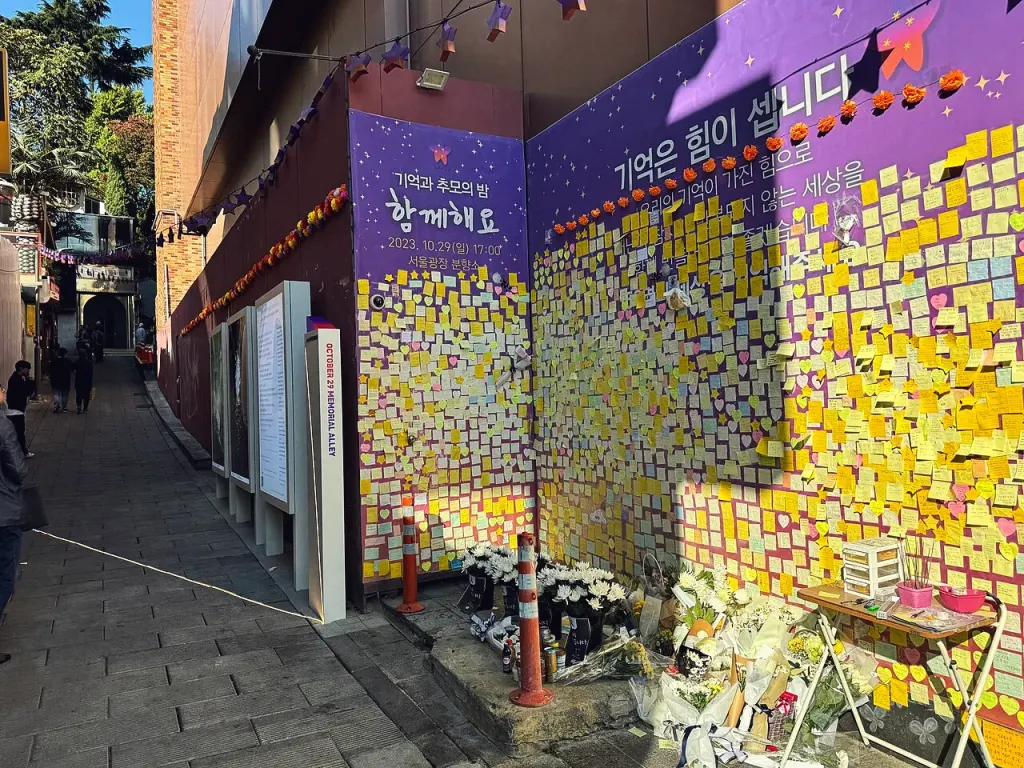
The crush happened in a narrow alley near the Hamilton Hotel. It was Halloween weekend. The crowd was the largest Itaewon had seen since the pandemic restrictions lifted. 159 people died that night, and by August 2026 the official count of victims had risen to 162. Most were in their twenties.
I’m not going to recount the sequence of events in detail here because the journalism on what happened has been thorough and it’s not what this piece is for. What I want to say instead is something about what it felt like to be part of a community organized around going to this neighbourhood when the neighbourhood became the site of a mass casualty event.
Grief First
The first feeling was just grief, which is obvious. The second feeling, which was harder, was a kind of collective guilt-by-proximity that the club community spent months working through in ways that weren’t always healthy. Itaewon was where we went. We had been going there the previous Saturday. We were going to go the following weekend. The fact that the crush wasn’t in a club, wasn’t on a night we were there, wasn’t something the nightlife community specifically caused, didn’t fully resolve the feeling of being implicated simply by association with the place. The neighbourhood was us, and 159 people had died in it.
The Korean government’s response made this worse. The official framing of the disaster in its early days gestured at nightlife culture, at young people out late in a nightlife district, in ways that weren’t explicitly accusatory but were close enough to accusatory that the club community noticed. This was inaccurate as a causal account of what happened, which had to do with crowd density, infrastructure failure, and an inadequate emergency response, and had nothing specifically to do with club culture. But the proximity was enough to colour the public conversation, and the club community, already grieving, found itself also dealing with a political climate that wasn’t especially interested in distinguishing between what caused the disaster and what was in the same zip code when it happened.
There was a precedent for that. A 2021 network analysis in The Geographical Journal of Korea (국토지리학회지) by Park Jun-hong, Baek Ji-hye, Lee Ji-na and Chung Hee-sun looked at news coverage and reader comments after the May 2020 COVID cluster linked to Itaewon clubs, and found the blame moving from infected individuals to the whole LGBTQ community and to Itaewon as a place.
What Closed, and for How Long
The venues closed, most of them, for weeks. When they reopened, the crowds were smaller. Some people never came back. Not because they had been scared off but because the experience of standing in a club in Itaewon in November or December 2022 and trying to feel normal about it was hard, and some people decided not to try.
The aftermath: two years of something that wasn’t quite recovery
The popular narrative about Itaewon post-October 2022 moved fairly quickly to recovery framing, because the media cycle demanded it and because nobody wanted to sit in the harder version of the story indefinitely. There was a real recovery. Venues that had closed temporarily reopened. New places opened. The international booking calendar resumed. By 2024, the surface looked mostly normal.
The surface wasn’t the whole story.
What Actually Happened After
What happened in the two years following the crush was a complex sorting process in which Itaewon retained its infrastructure while some of its specific character quietly changed. The international crowd came back more slowly than the Korean crowd. Some of the expat community who had been anchored in Itaewon moved on, for reasons connected to the disaster and for reasons connected to normal expat life-cycle churn that the disaster accelerated.
What Gentrification Did Next
The gentrification dynamic, which had been building throughout the 2010s, didn’t pause for the district’s grief. Commercial rents didn’t drop meaningfully after the disaster. Foot traffic in the main commercial strip recovered more quickly than the underground club circuit. The restaurants, the brunch spots, the concept shops: they came back fast, because their customer base is broader than the underground music scene’s customer base. The neighbourhood’s commercial skeleton was fine. What was slower to rebuild was the specific social ecosystem, the regulars, the faces you recognized, the feeling of a community rather than a venue list.
Soap, and What Came Back
Soap, which had been operating as a roving party since its original space closed in 2021, didn’t have a permanent home during this period. This mattered more than it sounds. Soap at the original 132-3 Itaewon was the room that gave the Itaewon underground its middle tier: larger than Cakeshop, less dark than Faust, the room where a Saturday night could just be fun rather than specifically serious. Without a permanent Soap, the circuit had a gap in it that the recovery period exposed.
Gentrification: the structural story nobody wanted to tell
Let me spend more time on the gentrification because it’s the structural story that the October 2022 coverage almost entirely skipped.
Itaewon in 2026 isn’t the neighbourhood it was in 2015. The practical definition of gentrification, the process by which a neighbourhood’s increasing desirability raises costs until the communities that made it desirable can no longer afford to remain, has been running in Itaewon for at least a decade. The process is further along now than it was before 2022.
What Got Pushed Out
What got pushed out: the immigrant communities who had lived there since the 1980s, the older bars and restaurants whose economics depended on the cheap rent that no longer exists, the independent music venues that operated on thin margins and needed low overhead to survive, and some of the LGBTQ+ infrastructure that had been the neighbourhood’s backbone for 30 years.
What Replaced It
What replaced them: brunch restaurants, concept stores, boutique hotels, and the kind of international-facing commercial culture that’s the same in Itaewon as it is in Shoreditch or Williamsburg or Kreuzberg, which is to say attractive and fine and completely interchangeable with every other successfully gentrified neighbourhood on earth.
The clubs have survived better than some of the surrounding community because the underground circuit requires specific infrastructure (soundproofing, liquor licenses, late-night operating permissions) that makes it harder to convert to other uses quickly. Cakeshop is still there. Faust is still there. The circuit persisted. But the neighbourhood the circuit sits inside isn’t the same neighbourhood that produced it. The social ecology that made Itaewon fertile, the mix of communities, the tolerance for the marginal, the economic accessibility, is narrower than it was. The clubs exist. The petri dish they grew in has changed.
This doesn’t mean Itaewon is finished. It means the version of Itaewon that exists now is a more expensive, more polished, more internationally legible version of what it was, which is a trade that gentrification always makes and which always loses something specific in the transaction.
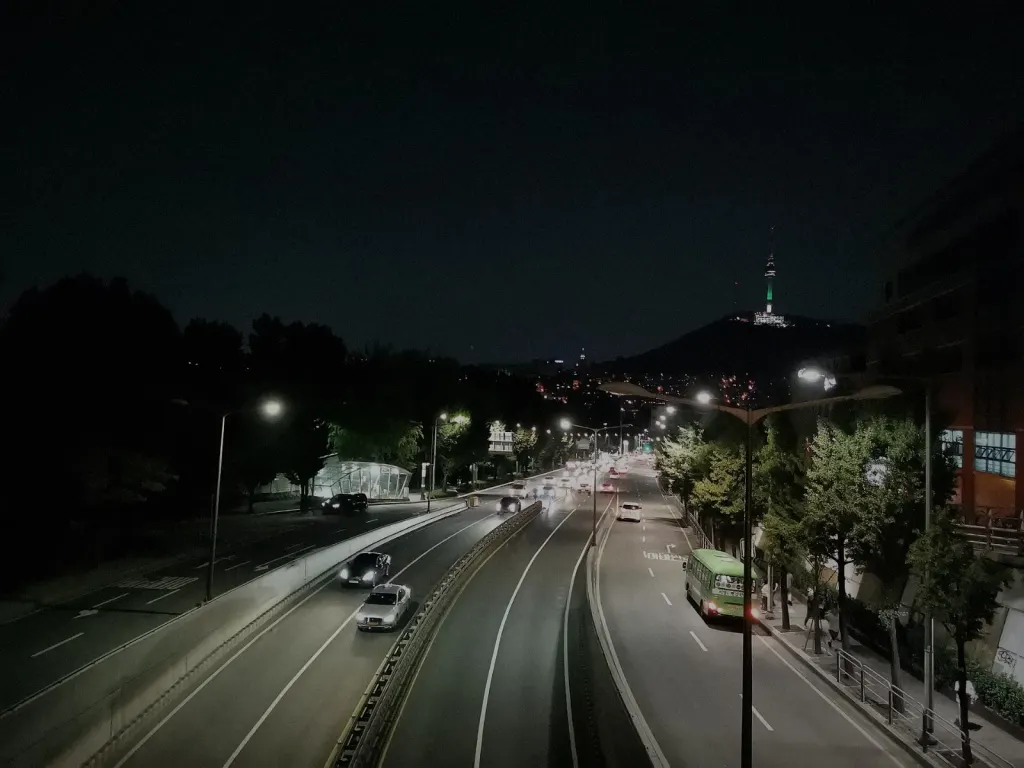
The resurgence: what 2026 actually looks like
In February 2026, Soap reopened at a new permanent home at 217 Itaewon-ro. The new venue holds about 300 people.
I want to be precise about what this means and what it doesn’t mean, because the resurgence narrative is easy to overstate.
What it means: the Itaewon underground circuit is now structurally complete in a way it hasn’t been since 2021. Cakeshop for the 200-capacity international-bookings end. Faust for the harder techno. Soap for the house-leaning end where touring DJs who could fill 800 in a European city can play Seoul without compromising on format. Plus the secondary rooms: Pistil (the Cakeshop team’s lighter sister venue), Contra, Tape. The vertical is intact. The infrastructure is there.
What it doesn’t mean: that the neighbourhood is the same as it was before October 2022, or before the gentrification curve that preceded it. The circuit is rebuilt. The petri dish hasn’t been restored. Those are different things, and conflating them is how you get recovery coverage that feels hollow to the people who went to Itaewon before and still go now.
What Is Genuinely Good Now
What’s good in 2026: the Korean DJ cohort that came up around this circuit went through nearly five years of touring under the Soap brand and emerged at the other end as headliners, not development-stage DJs. They land in the new permanent Soap in a different position than they would have if the room had never closed. The interruption, as brutal as it was, produced something in the Korean side of the scene. The new generation that fills those rooms is more internationally travelled, more connected, and more confident in its own sound than the equivalent cohort from the mid-2010s.
The Crowds Now
The crowds on a good weekend are back to what they were at the 2017-2018 peak, in numbers if not always in the specific social mix. The music is excellent. If you haven’t been to Itaewon since before October 2022 and you’re wondering whether to go back, the answer is yes: the music justifies the trip, the circuit is intact, and the neighbourhood is alive in the ways that matter for a Saturday night.
What to Carry With You
What you should also carry into that Saturday night is a clear accounting of what the neighbourhood was, what happened in it, and who isn’t there now who used to be. The gentrification, the displacement, the communities that didn’t make it through the decade. The 159 people who died on a night that had nothing specifically to do with music but took place in the neighbourhood we all love and shaped the next three years of what going there meant. Itaewon has always been a place that contained contradictions. It still is. Pretending it’s simply recovered and fine is the same mistake as pretending it’s simply ruined.
How to go now
The circuit anchor points are Cakeshop (still the canonical small room, fills up by midnight on weekends), Faust (the harder techno room, late-arriving crowd, go at 2am), and the new Soap at 217 Itaewon-ro (house-leaning, about 300 capacity, the most versatile room in the circuit). Within five minutes of these three: Pistil for the lighter house-and-disco end, Contra for the mid-tier mixed programming, Tape for something in between Cakeshop and Faust in register.
Cover is typically ₩20,000-30,000 for event nights, higher for international headliner bookings. Drinks are ₩10,000-15,000. The crowd is international: roughly half Korean and half a mix of European and American expats, visiting Japanese regulars, and Southeast Asian visitors. Age skews 25-35. Dress is whatever. The floor is one of the more diverse you’ll find at an underground room anywhere in Asia.
Get there before midnight on busy weekends. The neighbourhood is worth walking slowly before you go into a club. The alleys off Itaewon-ro have a density and a peculiarity that no other part of Seoul has. Look at the layers.
Itaewon is the neighbourhood that produced the most interesting electronic music scene in East Asia. That’s still true. It’s also a neighbourhood that has cost people things, including, in October 2022, their lives. Both of those things are part of what you’re walking into when you walk down the hill from Itaewon station at 11pm on a Saturday. Holding both of them at once is the honest version of loving this place.
Frequently Asked Questions
Why is Itaewon the centre of Seoul club culture?
Itaewon (이태원) became the centre of Seoul’s underground club scene because Cakeshop opened there in 2012 and connected the city to the global underground circuit. Before that, Seoul had Gangnam megaclubs for commercial EDM and a more local Hongdae scene. By 2017 Itaewon had a full circuit, with Cakeshop for international bookings, Faust for harder techno and Soap for the house leaning end.
How did Itaewon change after October 29, 2022?
After the crush on October 29, 2022, in which 159 people died, most Itaewon venues closed for weeks and reopened to smaller crowds. The international crowd returned more slowly than the Korean crowd, and by 2024 the surface looked mostly normal. What was slower to rebuild was the social ecosystem of regulars and familiar faces, while gentrification continued to raise costs across the district.
Is Itaewon nightlife worth going to in 2026?
Yes, the music justifies the trip and the Itaewon club circuit is intact in 2026. Soap reopened in February 2026 at a new permanent home at 217 Itaewon-ro with about 300 capacity, completing the circuit alongside Cakeshop and Faust. On a good weekend the crowds are back to the numbers of the 2017 and 2018 peak, even if the neighbourhood around the clubs is more expensive and polished than it was.
What should I know before clubbing in Itaewon?
Cover in Itaewon is typically ₩20,000 to 30,000 on event nights, higher for international headliners, and drinks run ₩10,000 to 15,000. Cakeshop fills by midnight on weekends, while the Faust crowd arrives late, so going at 2am makes sense there. The crowd is roughly half Korean and half international, and more on the rooms themselves is in the story of how Cakeshop defined Seoul’s underground.
Further reading on The DJ Diaries
- Soap Reopens: Seoul’s Largest Underground Club Returns
- Hongdae vs Itaewon vs Gangnam: A Working DJ’s Map of Seoul
- Seoul Scene: Cakeshop
- Seoul Scene: Faust
- Korea’s Most Unforgettable Festivals for 2026
Sources
- Jang Yong-hyuk (장용혁), Commercial rooftops and Itaewon’s placeness, master’s thesis, 2017 (ScienceON record)
- Han Yu-seok (한유석), Sexual minorities and community making in Itaewon’s fire station street, Seoul Studies 14(1), 2013
- Park Jun-hong, Baek Ji-hye, Lee Ji-na and Chung Hee-sun, Socio-spatial exclusion of minorities and the Itaewon coronavirus outbreak, The Geographical Journal of Korea 55(2), 2021
Written from Seoul, by someone who has been in the booth for more than twenty years. More on the site, or book a DJ.
Watch and listen: Itaewon night walk, 4K
Follow the rooms: Cakeshop on Instagram · Soap on Instagram · Faust on Instagram · Pistil on Instagram
Stay in the Loop
New writing on DJ culture, electronic music, and the Seoul underground, delivered when it matters.
More From The DJ Diaries
Play with the history
Four tools built from the same research as this site.