Six seconds. That’s how long the drum break lasts in “Amen, Brother”, a 1969 B side by The Winstons that almost nobody bought. Those six seconds sat forgotten until 1986, when the Ultimate Breaks and Beats compilation put them in front of hip hop producers, and N.W.A used them on “Straight Outta Compton” in 1988.
Then London’s early 1990s rave scene looped the break, sped it up and cut it to pieces, and it became the rhythmic DNA of a whole genre. Snare on the two and four, kick buried in the mix, hi hats pushing forward with a slightly desperate urgency. Drum and bass is what three decades of producers did with those six seconds, and it’s one of the most inventive runs in electronic music.
Drum and Bass
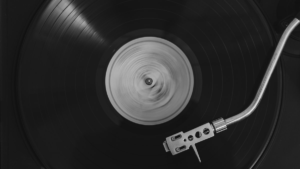
Six seconds of a 1969 drum break, looped until it became a whole genre
160 to 180 BPM. Drums near 170, bass at half speed near 85, so you can dance at either speed. House, 120 to 130, for reference.
- Born
- London, 1992 and 1993, as jungle
- The room
- Pirate radio: Kool FM, Flex FM, Eruption FM
- Key record
- Goldie, Timeless (1995)
- Listen for
- Fast chopped drums over slow, heavy bass
1997 Roni Size and Reprazent won the Mercury Prize with New Forms, which sold 300,000 copies in the UK.
Sources: Universal Music Canada
Jungle Came Out of Black British London
Jungle, the immediate precursor to drum and bass, came from several strands colliding: the Jamaican soundsystem tradition carried to British cities, the sub bass of dub and ragga, the upward rush of rave, and the breakbeats of hip hop. It was mostly a Black British music, rooted in inner city London: Hackney, Brixton, Ladbroke Grove.
Like garage after it, jungle reached people through pirate radio, on stations like Kool FM, Flex FM and Eruption FM, broadcasting to communities mainstream media wasn’t serving. There’s more on that in how pirate radio built UK club culture.
Fast Drums, Slow Bass
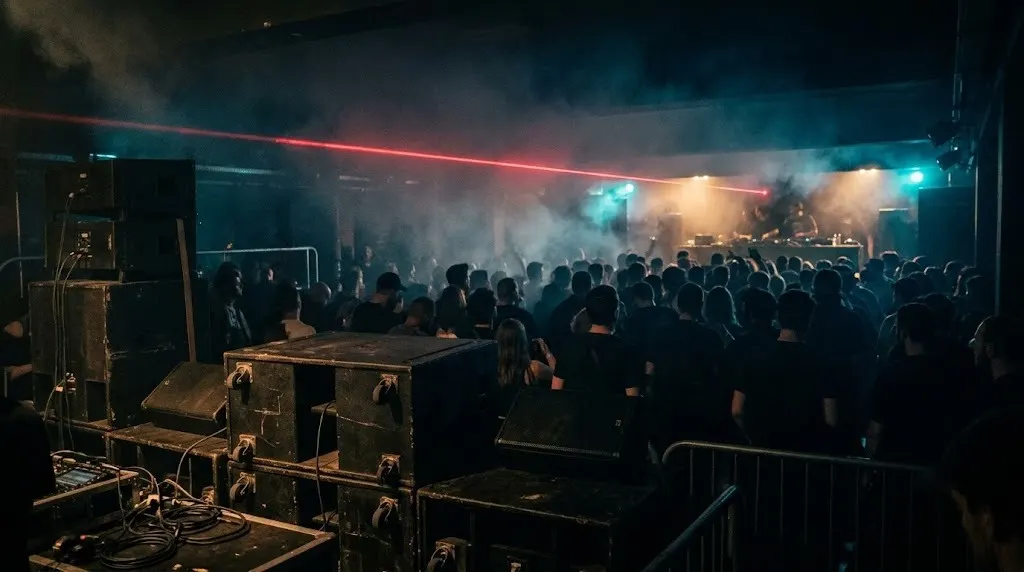
The tempo was the thing. As producers cut and spliced breaks on Akai samplers such as the S950 and S1000, the rhythms got faster and more layered. By 1992 and 1993 tracks were running at 160 to 180 BPM, and the breaks had been chopped so finely they barely resembled the records they came from.
Under that, producers laid bass lines moving at half speed, a debt to reggae. That’s why you can dance to drum and bass at two speeds: nod or step with the bass at roughly 85 BPM, or move with the drums at around 170. Lightning on top, weight underneath. That contrast has driven every form the genre has taken since, and it’s the first thing to listen for if you’re new to it.
Why the Name Changed
The word jungle carried a lot from the start. It nodded to Jamaican dancehall, and to the city streets the music came from. To some of its critics it was also a racial signifier, used with hostility.
“Drum and bass” took over in the mid 1990s, partly as a plain description of a music built on drums and bass, and partly as a rebrand that moved the scene away from what had gathered around the old name. Both words are still in use, and which one someone reaches for often tells you their generation and where they stand. A rebrand that made the music easier to sell also put some distance between it and the communities that made it, and that tension has never fully gone away.
Goldie Made It an Album
Goldie was the one who said out loud what drum and bass could be. His 1995 album Timeless, released on FFRR, was meant as a statement beyond the dancefloor, drawing on jazz, classical composition and film music while staying rooted in the break. “Inner City Life”, featuring the vocalist Diane Charlemagne, was the genre’s crossover moment: emotionally complicated, a hit, and still credible underground. Timeless turned 30 in 2025, and London Records reissued it, newly remastered, on 7 November 2025.
Goldie’s label, Metalheadz, became the scene’s most respected imprint. Its Sunday Sessions at the Blue Note in Hoxton were a weekly ritual for the people who took the music most seriously.
Liquid, Dark and Neuro: One Genre, Wide Range
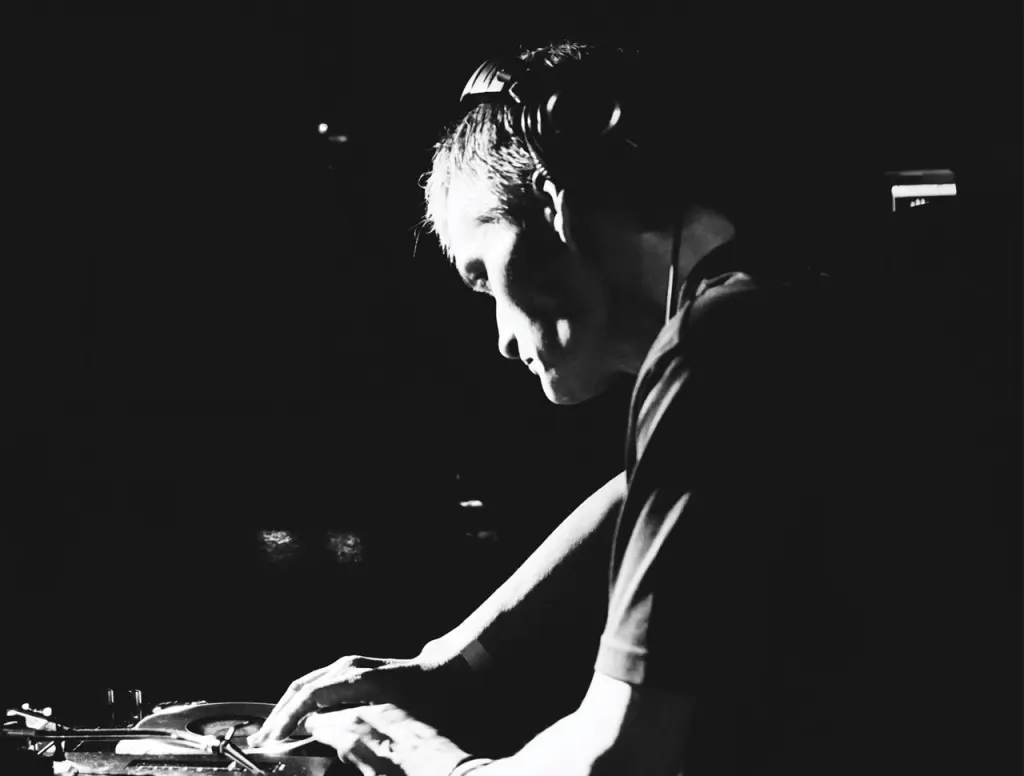
The range was there from the beginning. LTJ Bukem’s Good Looking Records stood for the “intelligent” or liquid side: atmosphere, jazz harmony and a dreamlike feel over impact. His Logical Progression mixes pulled listeners into long sets that had more in common with Brian Eno’s ambient records than with a rave. At the other end, Moving Shadow and Metalheadz pushed tighter production, heavier bass design and deliberate darkness.
Drum and Bass, Strand by Strand
From the dreamy end to the hard end
드럼 앤 베이스의 여러 갈래
| Strand | The sound | Names and labels |
|---|---|---|
| Liquid | Atmosphere, jazz harmony, warmth | LTJ Bukem, Good Looking, High Contrast, Logistics |
| Dark | Tight production, heavy bass, deliberate darkness | Moving Shadow, Metalheadz |
| Neurofunk | Engineered bass, drums edited to inhuman precision | Ed Rush and Optical, Photek, Konflict |
| Jump up | Bass wobbles and crowd energy | The mainstream crossover end |
How to read itSame tempo range, very different nights. Ask which strand a party plays before you go.
Neurofunk arrived in the late 1990s as the most technical strand. Ed Rush and Optical, Photek and Konflict treated production like engineering: intricate bass sounds, drums edited to inhuman precision, layers that took several listens to decode. Photek in particular sounded like he’d built his records in a laboratory, which was partly the point.
The Break That Never Stopped
The 2000s and 2010s took the genre places its originators might not have recognised. Liquid funk, the warmest and most pop friendly strand, found a wide audience through artists like High Contrast and Logistics. Jump up went for a different crossover, built on heavy bass wobbles, crowd energy and a deliberate refusal of introspection. Meanwhile drum and bass kept trading ideas with grime, dubstep and UK garage.
The 2020s brought another surge. On Beatport‘s 2025 year end drum and bass chart, Sub Focus and bbyclose’s “On & On” was the top selling track, Bou the top selling artist and Jungle Cakes the top selling label.
And the Amen break itself never stopped working. In May 2026 the Library of Congress added “Amen, Brother” to the National Recording Registry, an honour the Houston Defender called long overdue for what it described as the most sampled audio clip in history. Salt-N-Pepa’s “I Desire” (1986) was one of the first records to use it, N.W.A and Oasis followed, and neither the bandleader, Richard Spencer, nor the drummer, Gregory Coleman, ever received royalties. Spencer didn’t learn the break had been used until 1996, and Coleman died homeless in 2006. A 2015 crowdfund started by two British DJs raised more than £18,000 for Spencer.
Every new generation of producers has gone back to it and found something new, in hip hop, rock, jungle, drum and bass, breakcore, footwork and even ambient music. Part of that is the break’s own swing, an asymmetry that never quite resolves and always leans forward.
Drum and bass has also kept unusually close to its own history. Techno travelled a long way from Detroit; drum and bass stayed tied to jungle and to the soundsystem culture underneath it. The jungle revival of recent years, veterans returning to their early sound and younger producers finding it for the first time, is a reconnection rather than nostalgia. At its best the music still sounds urgent, like it was made by people with something to say about what a city feels like from the inside.
Test Yourself
Frequently Asked Questions
What is the Amen break?
The Amen break is a six second drum break from “Amen, Brother” by The Winstons, recorded in 1969. Hip hop producers found it on the 1986 Ultimate Breaks and Beats compilation, London’s early 1990s rave scene looped and chopped it, and it became the rhythmic DNA of drum and bass. It has since turned up in hip hop, rock, jungle, breakcore and ambient music.
What’s the difference between jungle and drum and bass?
Jungle is the immediate precursor to drum and bass, a mostly Black British music rooted in inner city London, in Hackney, Brixton and Ladbroke Grove. The name drum and bass took over in the mid 1990s, partly to describe a music built on drums and bass and partly to move the scene away from associations around the word jungle. Both terms are still used, and which one people choose often depends on their generation.
What BPM is drum and bass?
By 1992 and 1993, jungle and drum and bass tracks were running at 160 to 180 BPM, with bass lines moving at half speed, an influence from reggae. That’s why you can dance to it with the drums at around 170 or with the bass at around 85. This BPM guide compares it with other styles.
What are the main styles of drum and bass?
The main strands are liquid, dark, neurofunk and jump up. Liquid, from LTJ Bukem’s Good Looking Records and later High Contrast and Logistics, favours atmosphere and jazz harmony. Dark, from labels like Moving Shadow and Metalheadz, goes for heavy bass and darkness. Neurofunk, from Ed Rush and Optical, Photek and Konflict, treats production as engineering, and jump up leans on bass wobbles and crowd energy.
Further Reading
- Wikipedia: the Amen break and its place in sampling history
- Wikipedia: The Winstons, the band behind Amen, Brother
- Wikipedia: jungle and its roots in London soundsystem culture
- Wikipedia: Goldie and the album Timeless
- Wikipedia: drum and bass and its liquid, dark and neuro styles
- Jungle vs Drum and Bass
Sources
Vice, Kool FM and London’s jungle pirates
MusicRadar, the history of breaks
The Wire, Simon Reynolds on the hardcore continuum: the state of drum and bass, 1995
The Wire, Simon Reynolds on the hardcore continuum: ambient jungle, 1994
Billboard, Diane Charlemagne obituary
Red Bull Music Academy Daily, Nightclubbing: Metalheadz at the Blue Note, April 2013
DJ Mag, Goldie announces Timeless 30th anniversary reissue, 2025
Beatportal, Drum and Bass: the top selling tracks, artists and labels of 2025
Songwriters Hall of Fame, Library of Congress National Recording Registry class of 2026, May 2026
Houston Defender, Black artists named Library of Congress treasures in 2026
Wikipedia, Amen break (royalties, early samples and the 2015 crowdfund)
Journal article on the Amen break and sampling, 2020 (DOI 10.12801/1947-5403.2020.12.01.08)
Written from Seoul, by someone who has been in the booth for more than twenty years. More on the site, or book a DJ.
Stay in the Loop
New writing on DJ culture, electronic music, and the Seoul underground, delivered when it matters.
More From The DJ Diaries
Play with the history
Four tools built from the same research as this site.