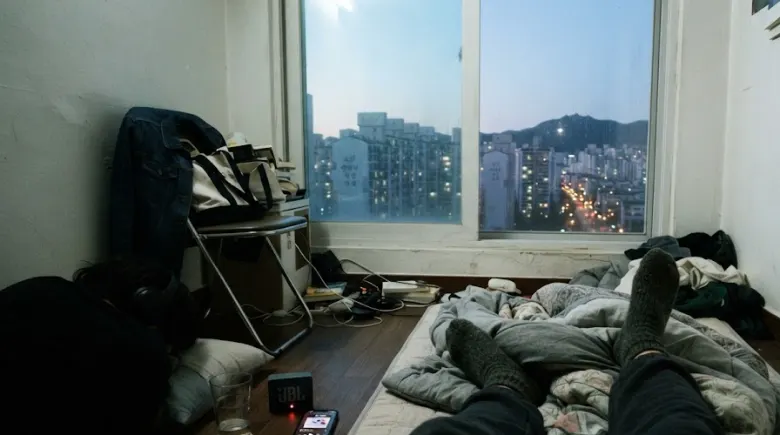
In 1975, laid up in bed after a road accident, Brian Eno put on a record of 18th century harp music and left it playing far too quietly to hear properly. Instead of getting up to fix it, he listened. The harp blended with the room and the rain outside, and the result struck him as a new way of hearing.
Three years later he gave the idea a name. In the liner note to Ambient 1: Music for Airports (1978), the closest thing the form has to a manifesto, he wrote that ambient music must accommodate many levels of listening attention without enforcing any one in particular, and must be as ignorable as it is interesting. Ambient is music built to reward whatever attention you bring to it, from full concentration to almost none. Everything since, from the chill out room to the sleep playlist, has been an argument about what to do with that idea.
Ambient
Music built to work at any volume, including almost none
TempoOften no beat at all. Ambient house kept a slow pulse for the chill out room, while the main floor ran at house tempo.
- Born
- Brian Eno's idea, worked out between 1975 and 1978
- The room
- The chill out room of the late 1980s and early 1990s
- Key record
- The Orb, Adventures Beyond the Ultraworld (1991)
- Listen for
- Texture over rhythm, found sounds, change you only notice afterwards
Eno Found Ambient by Accident
The harp record taught Eno that music could stop insisting on being listened to and take its place as one part of a room. Discreet Music (1975) began the deliberate exploration of that idea, and the Ambient series that started with Music for Airports developed it record by record.
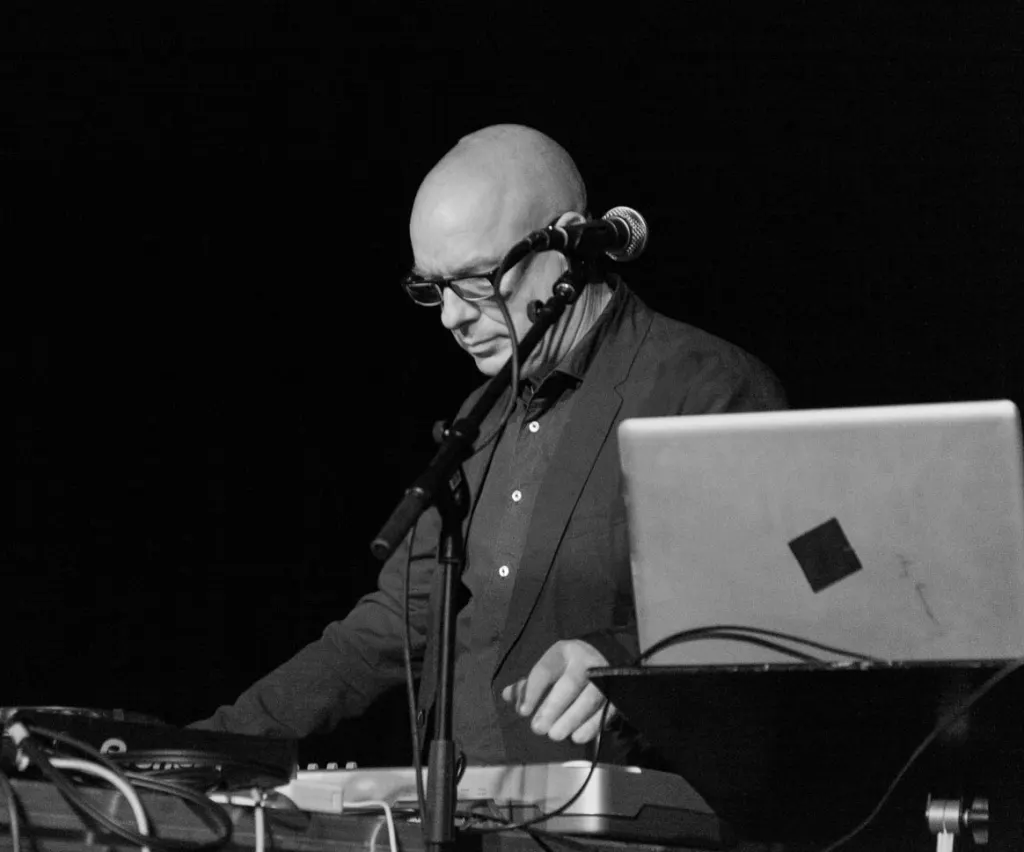
The radical part was the claim that a piece of music could be a work of art and a piece of furniture at the same time, and that the two jobs didn’t contradict each other. The aim was music that holds up at every level of attention, in the background or the foreground. That distinction has shaped every form ambient has taken since.
His collaborations with Harold Budd, The Plateaux of Mirror (1980) and The Pearl (1984), are the purest version of it. Budd played piano in sustained notes with long spaces between them, and Eno’s treatments blurred the attack, stretched the decay and set it in reverb that seemed to have no walls. The music doesn’t ask for forward attention. It asks for peripheral awareness, a willingness to be surprised by what arrives.
Japan was running a parallel experiment through the 1980s. Light in the Attic’s 2019 compilation Kankyō Ongaku, curated by Spencer Doran of Visible Cloaks, brought that environmental music to a new audience and a Grammy nomination.
The Chill Out Room Put Ambient Next to the Dancefloor
The ambient house movement of the late 1980s and early 1990s proved Eno’s idea could live inside dance music culture without losing its point. The Orb, founded by Alex Paterson and Jimmy Cauty in 1988, made records that sprawled across twenty minutes, with found sounds, news broadcasts and birdsong laid over the rhythm of house. Cauty left in 1990; Paterson has been the only constant since.
Adventures Beyond the Ultraworld (1991) was a dance record and an ambient statement at once, music made for the chill out room rather than the main floor. It was for the moment when the body needed rest and the mind wanted to keep travelling. The Orb is still going: Paterson, now working with Michael Rendall, released the eighteenth Orb album, Buddhist Hipsters, in October 2025.
Aphex Twin, Biosphere and Stars of the Lid Gave It Weather, Landscape and Feeling
Aphex Twin’s relationship with ambient is one of the most productive and ambiguous in the genre, and it sits close to the IDM argument. Richard D. James could be extraordinarily violent on record, but the ambient works, above all Selected Ambient Works Volume II (1994), are some of the most fully realised ambient music anyone has made. Most tracks have no obvious melody, no clear rhythm and no structure you can follow consciously. The untitled tracks feel like states rather than songs, like weather systems rather than compositions.
Biosphere, the Norwegian artist Geir Jenssen, gave ambient a geography. Substrata (1997), widely considered one of the form’s defining records, draws on the landscapes of the Norwegian Arctic: vast, cold, quiet and sometimes frightening in their indifference. It sounds cold because Jenssen had absorbed what those places feel like and found sounds to match.
Stars of the Lid, the Austin duo of Brian McBride and Adam Wiltzie, came at ambient through orchestral music, with strings, brass and tape manipulation pushed into a frankly emotional register that Eno’s cooler approach had avoided. And Their Refinement of the Decline (2007, Kranky) showed ambient could carry real emotional weight and still leave the listener room.
Contemporary Ambient Keeps Finding New Ground
Fifty years on, the form Eno proposed still hasn’t run out. William Basinski’s Disintegration Loops turned the decay of magnetic tape into an elegy. Tim Hecker builds noisy, distorted environments that are ambient in structure and confrontational in texture. Grouper (Liz Harris) works where folk meets atmosphere, with an intimacy that recalls Budd’s piano, and Julia Holter takes the framework somewhere else again.
Eno himself is still at it. In 2025 he released three albums with the artist Beatie Wolfe: Luminal and Lateral came out together on Verve on 6 June 2025, and Lateral, a 64 minute piece the pair call space music, sits squarely in the ambient line, with Liminal completing the trilogy later that year. The man who named the form is still adding to it in his late seventies.
For an easy way into his thinking, Gary Hustwit’s documentary Eno (2024) is itself generative: software reassembles it from archive footage, so every screening is a different film.
The Dancefloor Needs Its Opposite
The relationship between ambient and the dancefloor has stayed productive. The chill out tradition, from The Orb to today’s after hours ambient sets, rests on a simple observation: the physical intensity of a floor creates a need for music that lets the body recover while the mind stays engaged. Gas, the project of Wolfgang Voigt, works best in that space between ambient and slow techno, where the difference between a record you dance to and a record you listen to stops being clear.
The complication is what happened to Eno’s idea once streaming arrived. A form designed to be as ignorable as it is interesting now gets marketed on streaming platforms as mood music, sold on the first half of that line: sleep playlists, focus playlists, background for something else. That turns a bet on the listener’s attention into a tool for switching attention off. The best ambient still trusts the listener in a way most commercial music doesn’t, and that trust is the part a playlist can’t package.
Whether the trust is repaid depends on who is listening, and when, and what they bring. That gap between the music and the listener, which ambient insists on leaving open, is what keeps the form from running out.
Test Yourself
Frequently Asked Questions
What is ambient music?
Ambient music is music designed to accommodate many levels of listening attention without enforcing any one in particular. Brian Eno set out that idea in the liner note to Ambient 1: Music for Airports in 1978, writing that it must be as ignorable as it is interesting. It rewards whatever attention the listener brings, from full concentration to near unconsciousness.
Who invented ambient music?
Brian Eno defined ambient music as a form, and he arrived at it by accident. Recovering from a road accident in 1975, he listened to harp music played too quietly to hear clearly and found it blended with the room and the rain outside. Discreet Music in 1975 began his exploration of that idea, the Ambient series developed it, and in 2025 he was still releasing ambient work, including Lateral with Beatie Wolfe.
What is ambient house and the chill out room?
Ambient house was a late 1980s and early 1990s movement that brought ambient ideas into dance music culture. The Orb made records that sprawled across twenty minutes with found sounds, news broadcasts and birdsong over house rhythms. Their 1991 album Adventures Beyond the Ultraworld was made for the chill out room, where the body rested while the mind kept travelling.
What are the best ambient albums to start with?
Start with Brian Eno’s Ambient 1: Music for Airports and his collaborations with Harold Budd, The Plateaux of Mirror and The Pearl. Aphex Twin’s Selected Ambient Works Volume II, Biosphere’s Substrata and Stars of the Lid’s And Their Refinement of the Decline are also central. For more in the same spirit, see essential late 90s chill out albums.
Further Reading
- Wikipedia: Ambient 1: Music for Airports and its liner notes
- Wikipedia: Brian Eno, who named and defined ambient music
- Wikipedia: ambient house and the chill out room
- Wikipedia: Aphex Twin, Selected Ambient Works 85 to 92
- Wikipedia: Stars of the Lid and drone ambient
- The late 90s chill out albums worth knowing
Sources
Brian Eno, liner notes to Ambient 1: Music for Airports (1978), via Hyperreal
Brian Eno, liner notes to Discreet Music (1975), via Hyperreal
Getintothis, The Orb’s Adventures Beyond the Ultraworld at 25, September 2016
Resident Advisor, review of Aphex Twin’s Selected Ambient Works Volume II
Scene Point Blank, Stars of the Lid, And Their Refinement of the Decline
Wikipedia, And Their Refinement of the Decline
The New Yorker, Looped, on William Basinski, November 2014
The Quietus, Wolfgang Voigt interview on Gas
Synthtopia, Two new albums from Brian Eno and Beatie Wolfe, April 2025
Wikipedia, Lateral (album), 2025
NPR via KUOW, Why the ambient music market is booming, 2024
Written from Seoul, by someone who has been in the booth for more than twenty years. More on the site, or book a DJ.
Stay in the Loop
New writing on DJ culture, electronic music, and the Seoul underground, delivered when it matters.
More From The DJ Diaries

Play with the history
Four tools built from the same research as this site.