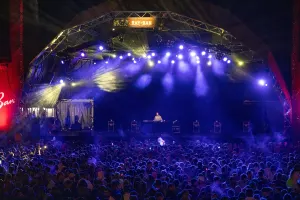
The morning after a Hongdae gig in 2012, I woke up to a ringing in both ears that didn’t go away. It wasn’t the usual buzz that fades over a shower and a coffee. It stayed through breakfast, through lunch, through a long afternoon walk along the Han River, and through a quiet evening of pretending it wasn’t there. By Monday it had softened but not gone. A long peak time set, played too close to a blown monitor in a room nobody had ever treated for acoustics, had taken a small chip out of the one sense the job depends on.
I’ve worn earplugs at every gig since. Seoul’s clubs are loud and the culture is forgiving about volume, and I’ve seen more hearing damage in working DJs than in any other group of friends I have. The damage is permanent, cumulative and largely preventable, and preventing it costs less than a night’s cover. This is what I wish someone had told me plainly when I was new to the booth.
Volume and Time Do the Damage Together
Hearing damage depends on two things: how loud it is and how long you’re in it. At 85 decibels, roughly a busy street, you can safely spend eight hours. Every three decibels above that halves the safe time. At 94 decibels, a club at moderate volume, you get about an hour. At 100 decibels it’s fifteen minutes, and at 103, which any peak time set goes past, it’s under eight.
How Long Before It Hurts
Safe daily time at each level. Every 3 dB louder halves it.
Pink rowsMost club booths run between 95 and 110 dB.
At 108 dB in your ears, the safe limit is 2.4 min.
Try itA three hour set at 108 dB is about 75 times the daily limit. Tick the earplugs box and the same set drops to about three quarters of it.
100 dB averaged over 15 minutes is the ceiling in the WHO standard for safe listening venues, with live monitoring, quiet zones and earplugs on offer.
1 billion young people are at risk of hearing loss from recreational listening, by WHO estimate.
57% of professional DJs in one small study (21 DJs, 2019) reported tinnitus. A small sample, but the direction is clear.
Sources: WHO · Revista CEFAC
Run that forward and the numbers get ugly fast. A three hour set in a room running at 108 decibels is about 76 times the NIOSH recommended daily dose, because at that level the limit arrives in under two and a half minutes. A full eight hour shift at the workplace limit counts as one dose. The National Institute for Occupational Safety and Health publishes these thresholds for factories and building sites, and reading them as a working DJ is sobering.
Most DJs don’t wear earplugs because of booth culture, not physics. The physics says you should. The culture is slowly catching up, and the World Health Organization now has a standard for safe listening venues. In October 2026 the WHO called again for commitments to make listening safe, naming clubs and concerts among the places where more than a billion young people are exposed to potentially harmful sound. It estimates that about one person in five already has some degree of hearing loss, a share that could reach nearly one in four within about thirty years. Nobody is going to enforce any of it for you in a Seoul basement.
Two Kinds of Damage, and Neither Comes Back
There are two distinct hearing problems a working DJ is at higher risk for. The first is noise induced hearing loss, a permanent drop in your ability to hear particular frequency ranges. It usually shows up first as trouble picking out voices in a noisy room and a dulled top end. Once it’s gone, it doesn’t come back. You can protect the hearing you still have, but you can’t recover what you’ve lost.
Hearing Loss Is Getting Younger
People in their twenties treated for hearing loss, national health insurance data
20대 난청 환자 증가
Why it mattersThis is the age group filling Seoul’s clubs, and the age most DJs start playing.
The second is tinnitus, a persistent ringing, buzzing or whistling with no outside source. It runs from mild and occasional to severe and constant, and at its worst it’s debilitating. For someone whose living depends on hearing music clearly, it can end a career. I have several friends in the scene who can’t DJ anymore because they can no longer tell a kick drum from the noise in their own heads. None of them thought it would happen to them, and all of them wish they’d started wearing earplugs sooner.
The trend is visible in Korea too. Health insurance data show 44,932 people in their twenties were treated for hearing loss in 2023, up 46 percent from 2019, as Segye Ilbo (세계일보) reported.
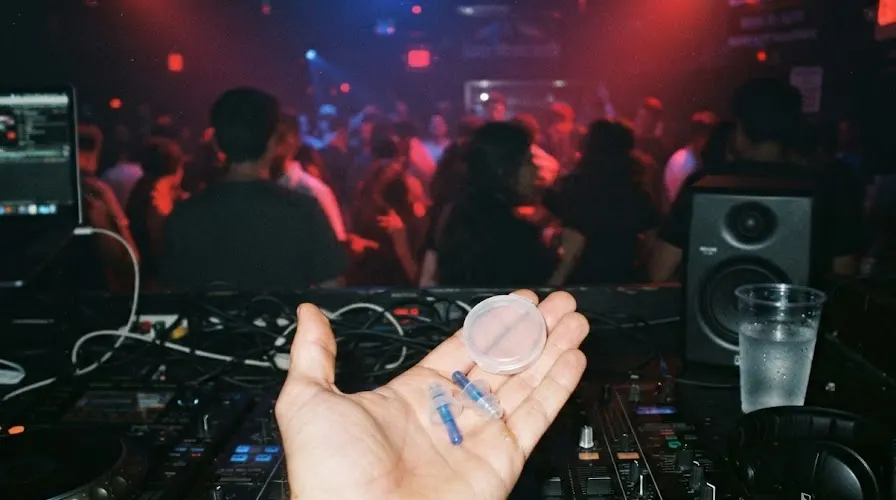
Musicians’ Earplugs Let You Mix
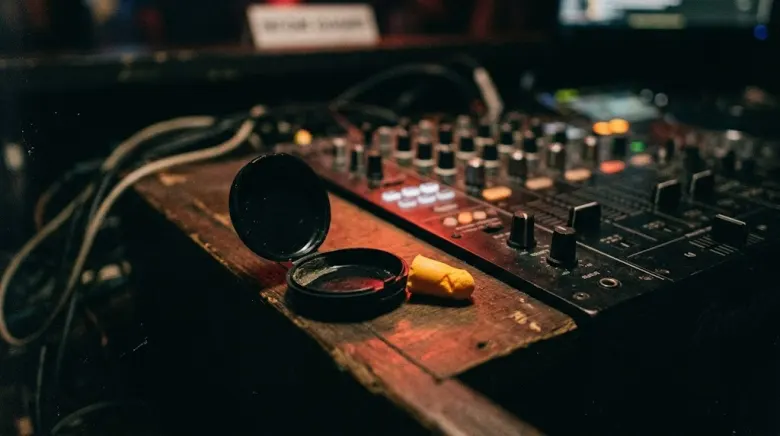
Musicians’ earplugs differ from the foam kind in one way that matters. They cut the volume evenly across the frequency range, instead of killing the top end and leaving the bass. For a DJ, that’s the difference between mixing properly through earplugs and not being able to. Foam plugs will protect your hearing, but they muffle the highs and hide the cues you need to beatmatch. You can’t mix cleanly through cheap foam. You can through musicians’ plugs.
Which Earplugs for the Booth
What each kind does to the mix, and what it costs
DJ 귀마개, 무엇을 골라야 할까
| Type | What you hear | Cost |
|---|---|---|
| Foam plugs | Muffled highs, hard to mix | Cheapest; better than nothing |
| Etymotic ER20 or ER20XS | About 20 dB cut, flat | Around US$20 |
| Custom moulded | Flat, fitted to your ear | US$200 to 500, from an audiologist |
Start hereBuy the ER20s first. At 100 dB the safe limit is fifteen minutes, so anything in your ears beats nothing.
The entry option that works for most DJs is the Etymotic ER20 or the newer ER20XS, which costs around twenty US dollars and gives roughly 20 decibels of flat attenuation. That’s what I’d hand any DJ who has never owned hearing protection. Until you buy a pair, even drugstore foam is far better than nothing, because at 100 decibels the NIOSH limit is reached in fifteen minutes.
The step up is custom moulded musicians’ plugs from an audiologist. They cost between two hundred and five hundred US dollars depending on the filters, fit your ear canal exactly, and are far more comfortable over a long set. I’ve had a pair from a Seoul audiologist since 2014, and they’re the best career investment I’ve made.
Turn the Monitors Down and Step Back
The most useful thing a DJ can learn early is how to ask for less monitor volume without losing the mix. You don’t need your monitors at peak time levels to beatmatch. You need them just loud enough to hear the transitions, which in most rooms is five to ten decibels below where DJs tend to set them. The common mistake is pushing the monitors up to compete with the main room, which stacks one exposure on top of another.
Ask the sound engineer to help you find a level that works. If the booth has no dedicated monitor control, raise it with the club before your next booking there. A room that cares about its DJs will give you a way to manage your exposure. A room that refuses is one to think twice about.
The other thing you control is where you stand. If the booth sits near a main speaker, moving even a metre or two away cuts your exposure noticeably, because sound intensity falls with the square of the distance. Small adjustments add up over a career.
The Myths That Keep DJs Unprotected
Three myths do most of the damage. The first is that earplugs make it impossible to mix. With musicians’ plugs they don’t. Every working DJ I know who switched to proper plugs reports no real drop in mix quality after about two weeks of getting used to them.
The second is that hearing damage is something that happens to older DJs. It builds over a career, but it starts on the first loud night. A 22 year old playing loud rooms is already taking measurable damage, whether they feel it or not.
The third is that ringing after a gig is normal. It’s the audible sign that you went past a safe threshold. When the ringing fades overnight, that’s your hearing threshold recovering, not proof you got away with it. Research on so called temporary noise induced hearing loss has found lasting loss of nerve connections in the inner ear even after hearing tests return to normal. If your ears ring after gigs regularly, you’re on the way to tinnitus, even without a chronic case yet.
If the Damage Is Already Done
If you already have mild tinnitus or some hearing loss, the first job is to stop making it worse. Wear earplugs at every gig, starting now. Get a baseline hearing test from an audiologist so you know where you stand, and test again every two years to see whether things are stable or getting worse. These are basic steps, and they can add years to how long you keep working.
For active tinnitus, a few things have helped the DJs I know who live with it. Sound masking apps and devices make the ringing less noticeable in quiet hours. Cognitive behavioural therapy has some evidence behind it for helping the brain adapt to the signal. Avoiding total silence often helps too, because the ringing is loudest when there’s nothing else to hear.
I’m not a medical professional, and any tinnitus that affects your daily life should be seen by a specialist. The World Health Organization publishes useful general summaries. But enough working DJs live with manageable tinnitus that the path is well known and the tools are easy to find. Time off to protect your ears is sometimes a money decision as well as a medical one, so plan for it the way you’d plan for anything else that keeps you working.
Frequently Asked Questions
How loud is too loud for a DJ to play without hearing protection?
Anything above about 94 decibels for more than an hour, or about 91 decibels for more than two hours, is past the NIOSH recommended daily limit. Most club environments run between 95 and 110 decibels at the DJ booth. Assume every paid gig is loud enough to need hearing protection unless it’s an explicitly quiet lounge or restaurant set.
Do foam earplugs from a drugstore work for DJing?
They protect your hearing, but they muffle the high end and make it hard to mix cleanly. They’re better than nothing. Musicians’ earplugs like the Etymotic ER20 series give similar protection with a flat response that keeps the cues you mix by, for around twenty US dollars.
Are custom moulded earplugs worth the cost?
Yes, if you gig regularly. They’re far more comfortable over long sets than any universal fit plug, and the fit improves how they sound. Expect to pay between two hundred and five hundred US dollars, and expect them to last five to seven years with normal use.
Is it too late to protect my hearing if I’ve been DJing for ten years?
No. The damage already done is permanent, but every protected night from now on reduces what builds up from here. DJs who start wearing plugs late still extend their working life compared with DJs who never start. If you have ringing that doesn’t go away, see an audiologist or an ear, nose and throat specialist, and don’t keep playing at the volume that caused it.
Further Reading on The DJ Diaries
- Avoiding the Red: Volume Control Tips for Professional Sound
- How Sound Systems Shape the Dancefloor
- The Art of the Booth
Sources
US NIOSH, noise and occupational hearing loss: exposure limits and the 3 dB exchange rate
US NIDCD, noise induced hearing loss
World Health Organization, deafness and hearing loss fact sheet
World Health Organization, global standard for safe listening venues and events
World Health Organization, hearing guidelines implemented at a major arts festival
Revista CEFAC, study of tinnitus among professional DJs, 2019
Segye Ilbo, hearing loss among people in their twenties, 2025 (Korean)
Ear and Hearing article (DOI 10.1097/AUD.0b013e31819769fc), cited here on the hearing risks DJs face
Journal article (DOI 10.1258/002221504772784577), cited here on sound levels at the DJ booth
Journal of Neuroscience, lasting nerve damage after temporary noise induced hearing loss, 2009
Review of cognitive behavioural therapy for tinnitus (PubMed Central)
Etymotic, ER20XS high fidelity earplugs
World Health Organization, call for commitments to make listening safe, October 2026
Written from Seoul, by someone who has been in the booth for more than twenty years. More on the site, or book a DJ.
Stay in the Loop
New writing on DJ culture, electronic music, and the Seoul underground, delivered when it matters.
More From The DJ Diaries
Play with the history
Four tools built from the same research as this site.