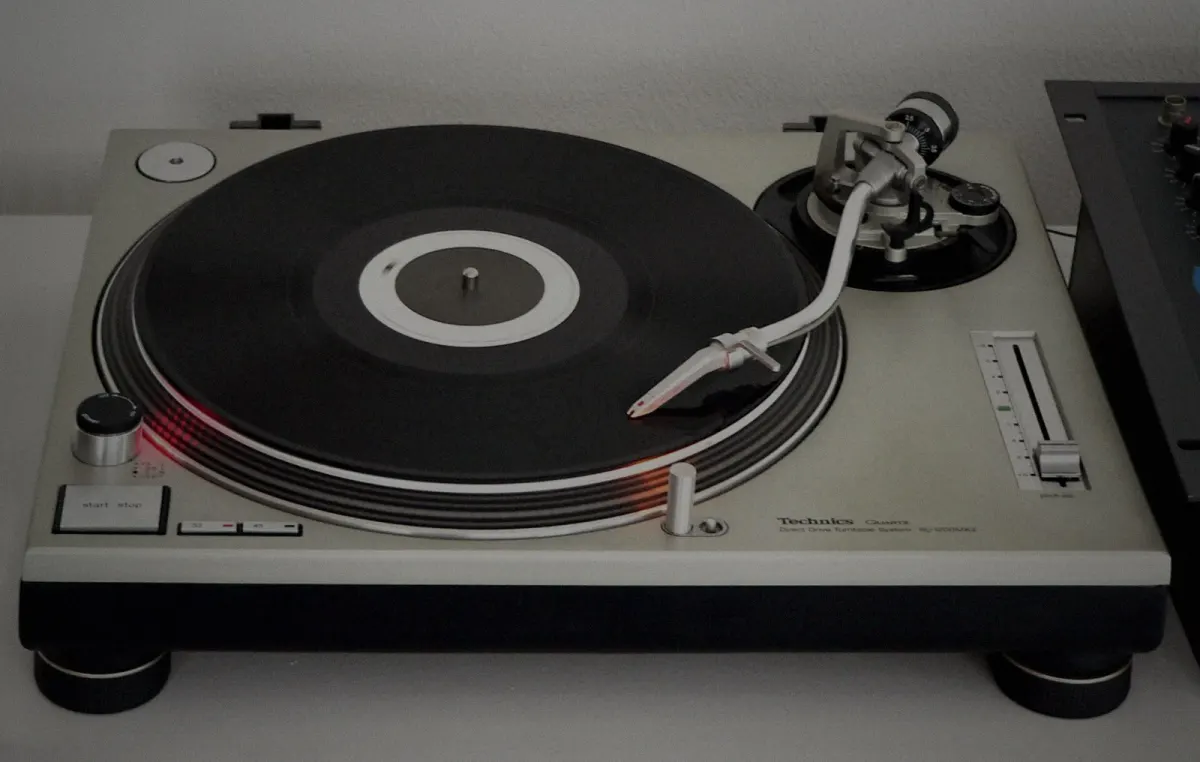
The SL-1200 was designed for living rooms. Hip-hop DJs turned it into an instrument, and fifty years later it remains the only piece of DJ equipment that has never been replaced, only imitated.
A Hi-Fi Deck With One Crucial Feature
Technics, Panasonic’s audio brand, launched the SL-1200 in 1972 as a consumer high-fidelity turntable. The feature that mattered was the motor: direct drive, coupled straight to the platter with no belt. That meant high torque and near-instant spin-up, and, critically, a motor that fights back. Grab the platter, slow it, release it, and the direct-drive motor snaps immediately back to pitch. A belt-drive deck slips, stretches and sulks under the same treatment. Panasonic built that robustness for reliability. The Bronx found another use for it.
Technics SL-1200
A hi fi deck built for living rooms that became the standard in every booth on earth
- Type
- Direct drive turntable
- Launched
- 1972, as a consumer hi fi turntable
- Changed
- Made the turntable a percussion instrument, then made beatmatching reliable
- Played by
- Kool Herc, Grandmaster Flash, Grand Wizzard Theodore, and every house and techno booth by 1990
- Today
- Discontinued in 2010, back in 2016 with the Grand Class reissues
The machinesTen instruments on The DJ Diaries, from 1970 to 2006, drawn to scale. Tap a dot to read its story.
3.5 million SL-1200 series turntables sold since its 1972 launch.
Sources: What Hi-Fi
The Bronx Rewrites the Manual
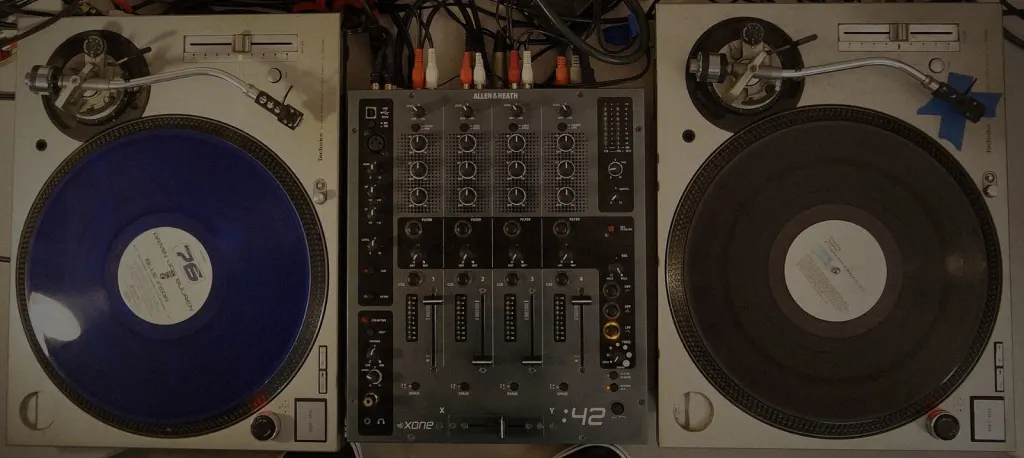
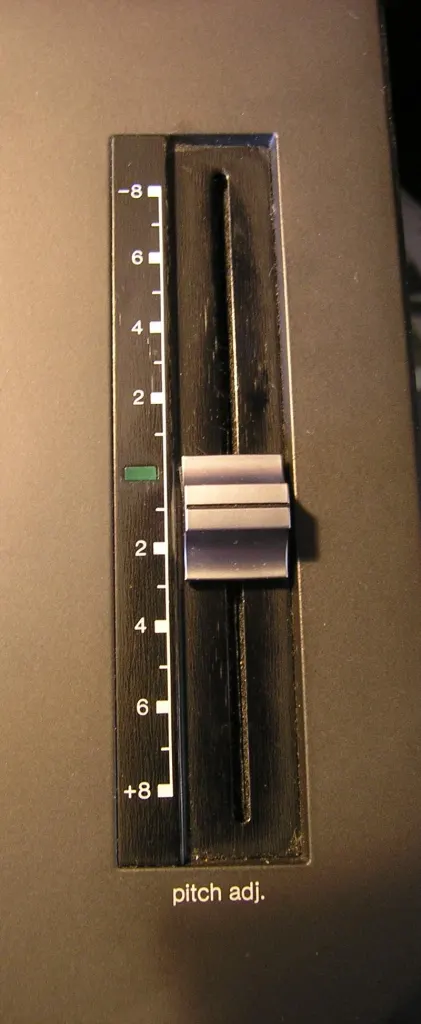
Through the late 1970s, hip-hop’s founding DJs, Kool Herc’s breaks, Grandmaster Flash’s clock theory, Grand Wizzard Theodore’s scratch, discovered that a turntable with enough torque was a percussion instrument. The 1979 SL-1200MK2 revision, with its quartz lock and the sliding pitch fader, met the culture halfway, and from then on the machine and the music co-evolved: by the late 1980s the MPC handled the beats and the 1200s handled the hands. House and techno adopted the same deck for a different reason, pitch control made beatmatching reliable, and by 1990 there was no serious booth on earth without a pair.
The Standard and the Interruption
For three decades the SL-1200 was less a product than a fixed constant, the reference around which mixers, cartridges, flight cases, and digital vinyl systems were all designed. Then, in 2010, Panasonic discontinued it, judging the DJ market lost to CDJs and controllers. The mourning was real and the secondhand prices absurd, and in 2016 Technics returned with the Grand Class reissues, premium-priced, audiophile-pitched, but unmistakably the same instrument. Roughly 3.5 million units have been sold across the model’s life, and a working MK2 from 1982 will still hold pitch tighter than most things sold this year.
Why It Endures
Longevity this extreme has a simple explanation: the SL-1200 solved its problem completely. Torque, isolation, pitch stability, and a control surface whose every function lives under your fingers, there was nothing left to add and nothing you could remove, the same finished-design quality as the DJM channel strip. Digital formats overtook vinyl’s convenience decades ago, yet the format refuses to die, and every serious club still specs a pair of 1200s beside the CDJs. Instruments don’t retire while the technique they enabled is still alive, and the scratch is still alive.
Where the 1200 Sits in 2026
The reissue story didn’t stop at the Grand Class decks. In 2019 Technics launched the SL-1200MK7, its first new standard DJ turntable in about nine years, and dropped the word QUARTZ from the plinth, according to the model history. The MK7 is the deck many clubs bought when their old MK2s finally gave out. It’s lighter and cheaper than the Grand Class models, and under the hand it behaves the way a 1200 should. In August 2026 Technics marked the series’ 55th anniversary with the SL-1200M7GL, a gold-accented MK7 limited to 12,000 units, as ecoustics reported.
Seoul gives the deck a second reason to exist. Korea had no LP pressing plant in 2011 and now has three. The Seoul Record Fair grew from about 2,000 visitors in 2011 to about 20,000 in 2019, and has drawn around 13,000 since the pandemic, as Newsis reported ahead of its 14th edition in Seongsu in October 2025. Turntable sales on the 29CM shopping platform rose 96 percent year on year in early May 2026, per Herald Business. Most of those buyers are listeners, not DJs. They still end up in the same rooms, and my piece on Seoul vinyl bars covers where the records get played out loud.
In a booth, a pair of 1200s next to the CDJs is often the least prepared part of the setup. Check tonearm height, counterweight and anti skate before anything else. Bring your own cartridges and a spare stylus, because a borrowed needle is how a vinyl set goes wrong in the first ten minutes. Watch for feedback as well: a deck on a hollow wooden counter near the monitors will start to hum once the room gets loud. The full list of what to pack is in the bag guide.
The other change is the queue behind the records. New pressings take longer than most DJs expect, and I wrote about why records take a year to arrive. That delay is part of why a vinyl set still reads as a statement in 2026. It tells the room the DJ planned ahead, sometimes by months.
Fifty years on, the 1200 is still the tool that makes that statement playable.
From My Own Booth
I used 1200s through the nineties. They’re iconic, and they just keep going. They never die. You still see them around in Canada and in Korea, and secondhand they hold their value. If you find a pair at a garage sale, you’re lucky.
I never used belt-drive decks myself, but the principle is the same as with any gear: if you can mix on those, you can mix on anything. When I arrived in Seoul, the booths were a mix of turntables and CD players.
The most obvious problem in a club is vibration feeding back from the bass and the speakers into the decks, so you have to isolate them. And many years ago, back when people smoked in clubs, you always wanted to make sure your records were nice and clean, with a brush in your bag.
Do I miss playing records? Yes. Back in those days we were always setting up the gear ourselves, and that was part of the ritual. What I don’t miss is transporting it, the records and the turntables both. They weigh a ton. But, my God, they’re built to last. A pair of 1200s is a wise investment.
I only wish people took better care of their mixers, or that manufacturers built mixers the way Technics built these turntables.
Go Deeper: Watch, Listen, Read
Where to go next for the history of the deck, the technique it made possible and the people who pushed it furthest.
- Technics: SL-1200 Series 50 Years: the maker’s own timeline of every model, straight from the source.
- Resident Advisor: Industry Standards, Technics SL-1200: a clear long read on why a plain deck with no extras became the most important tool in the booth.
- The Vinyl Factory: How the SL-1200 Became the World’s Most Popular Turntable: the engineering explained for non-engineers, from torque to feedback resistance.
- Red Bull Music Academy: Grand Wizzard Theodore interview: the man credited with the scratch, in his own words.
- DMC World DJ Championships: the competition where the 1200 became a sport, still running and now presented by Technics.
- Last Night a DJ Saved My Life, Bill Brewster and Frank Broughton: the standard history of the DJ, with the Bronx and the 1200 at its centre.
Frequently Asked Questions
Why did the Technics SL-1200 become the standard DJ turntable?
The Technics SL-1200 became the DJ standard because of its direct drive motor, which gave high torque, near instant spin up and a platter that snaps straight back to pitch after being slowed by hand. Hip hop DJs used that torque to turn the turntable into a percussion instrument. House and techno DJs adopted it because its pitch control made beatmatching reliable, and by 1990 no serious booth was without a pair.
When was the Technics SL-1200 released?
Technics, the audio brand of Panasonic, launched the SL-1200 in 1972 as a consumer hi-fi turntable. The SL-1200MK2 revision arrived in 1979 with quartz lock and the sliding pitch fader. Roughly 3.5 million units have been sold across the life of the model.
Was the Technics SL-1200 discontinued?
Yes, Panasonic discontinued the SL-1200 in 2010, judging the DJ market lost to CDJs and controllers. Secondhand prices climbed sharply after that. In 2016 Technics returned with the Grand Class reissues, which were premium priced and audiophile pitched but recognisably the same instrument.
Is an old SL-1200MK2 still worth buying?
A working MK2 from 1982 will still hold pitch tighter than most turntables sold this year. The SL-1200 solved its problem completely, with torque, isolation, pitch stability and every control under your fingers. Serious clubs still spec a pair of 1200s beside the CDJs. The wider format question is covered in an honest comparison of vinyl and digital DJing.
Written from Seoul, by someone who has been in the booth for more than twenty years. More on the site, or book a DJ.
Watch and listen: Technics · The history of the Technics SL-1200, Crossfader
Stay in the Loop
New writing on DJ culture, electronic music, and the Seoul underground, delivered when it matters.
More From The DJ Diaries


Play with the history
Four tools built from the same research as this site.