On 11 December 1999, Artful Dodger and Craig David’s Re-Rewind entered the UK singles chart. It peaked at No. 2 and stayed for 20 weeks, and a sound that had spent most of the decade on pirate radio and in import bins was suddenly on daytime television.
That sound was UK garage, and it started as a cover version of somebody else’s music. American garage house, from the New York and New Jersey clubs of the 1980s, was gospel vocals, rich chords and a reverence for the diva. London took that template in the early 1990s, sped it up, roughened the bass and chopped the vocals, and within ten years the result had split into 2 step, speed garage, grime, dubstep and UK funky. Few genres have had that many children that fast.
UK Garage
Britain remade American garage, then it split into everything
TempoSlightly faster than its American source. The rhythm matters more than the number: the kick skips beats.
- Born
- London, mid 1990s. 2 step from about 1996 to 2001
- The room
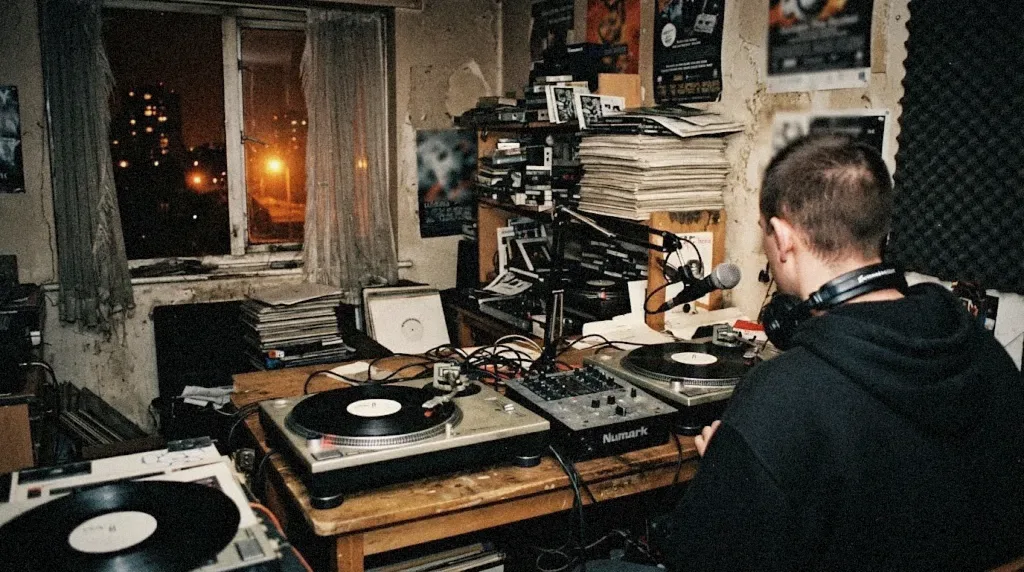
- Tower block pirate stations
- Key record
- Craig David, Born to Do It (2000)
- Listen for
- A syncopated kick that skips beats, with shuffled hats carrying the groove
No. 2 Artful Dodger and Craig David, Re-Rewind, entered the UK chart on 11 December 1999, peaked at No. 2 and stayed 20 weeks.
Sources: Official Charts
How London Remade New York Garage
The British version was distinct from its American source almost immediately. Producers around labels like Locked On and Ice Cream Records, and acts like DJ Luck and MC Neat, took the American records apart and rebuilt them for London. The biggest outside influence was an American: Todd Edwards, whose chopped vocal technique became a reference point for a whole generation of British producers.
Three things changed. The tempo crept up. The bass lines got harder and less resolved. And the vocal samples were cut, pitched and rearranged into patterns with no real precedent in American house. The records kept the polish of New York garage and added a restlessness that was entirely London’s.
Pirate Radio Was the Infrastructure
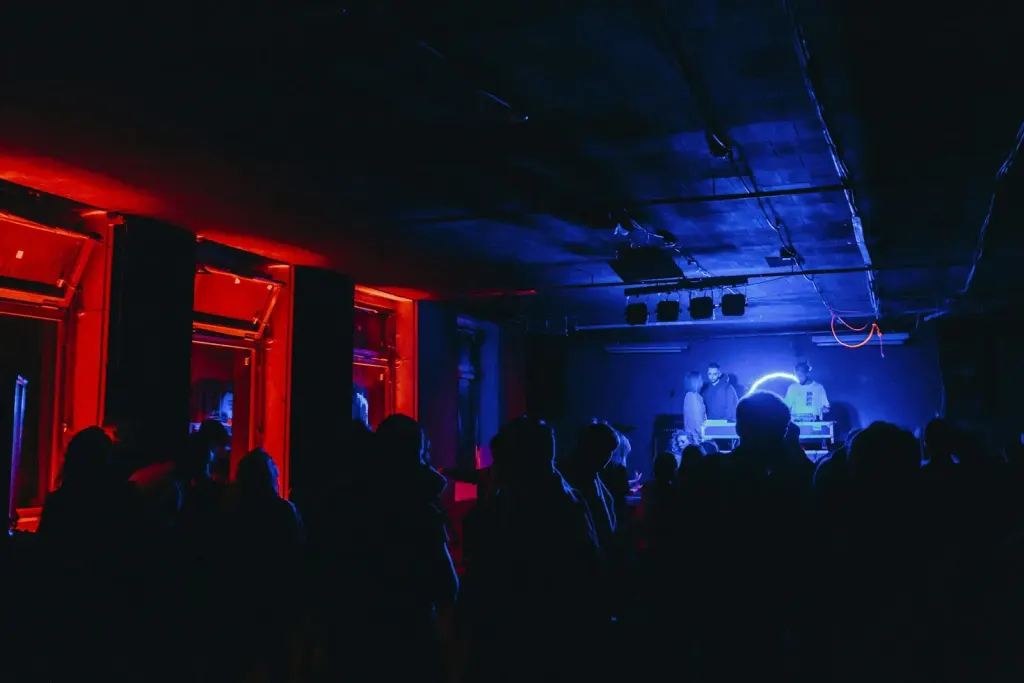
The mainstream music industry was slow to notice any of this, so the scene built its own media. Pirate radio was how garage reached people: Freek FM, Déjà Vu and Rinse FM gave producers, DJs and MCs a place to work in public, every week, in real time.
The pirate station model was unlicensed, often run from tower blocks, and always one raid away from losing its gear, so equipment moved constantly. That do it yourself setup matched the music. By the time garage reached the charts, it had already been fully formed on air for years, on its own terms.
2 Step Took It to the Charts, Speed Garage Kept the Floor
2 step took shape between roughly 1996 and 2001, and it’s what most people mean when they say UK garage. The name describes the rhythm. In a four to the floor house record the kick lands on every beat. In 2 step the kick skips beats and lurches around the grid, and shuffled hi hats and off beat snares carry the groove instead. Listen for the gap; once you hear it, you can’t miss it at volume.
Craig David, So Solid Crew, Artful Dodger and MJ Cole each showed a different side of it, and by the early 2000s garage was all over the charts. Craig David’s debut single, “Fill Me In”, went to No. 1 and sold 165,000 copies in its first week, and his album Born to Do It (2000) became the record most people think of when they hear the word garage. So Solid Crew’s 21 Seconds brought the MC led street version to a pop audience that hadn’t realised the music had been growing underground for nearly a decade.
Speed garage grew up alongside it and went the other way: harder, heavier in the bass, made for the club rather than the radio, with bass lines pitched so low you felt them as much as heard them. The split between polished 2 step and raw speed garage was the scene arguing with itself about success, and that argument never really ended. Every pop crossover pulled one way, and the dancefloor pulled the other.
After 2002, It Split Into Everything
After 2 step’s peak the scene broke apart, and the pieces turned out to be more productive than the whole. By 2002 and 2003, garage had fragmented into the two most important British forms of the next twenty years.
One Sound, Five Branches
What each branch took from UK garage
UK 개러지에서 갈라져 나온 다섯 갈래
| Branch | When | What it kept | Names |
|---|---|---|---|
| 2 step | About 1996 to 2001 | The skipping kick and the chopped vocal | Craig David, Artful Dodger, MJ Cole |
| Speed garage | Mid 1990s, alongside 2 step | The low bass, aimed at the club | The harder club end |
| Grime | From 2002 and 2003 | The MCs, over sparse beats | Skepta, Stormzy, Dizzee Rascal |
| Dubstep | From 2002 and 2003 | The bass, with everything else stripped away | Burial, James Blake nearby |
| UK funky | Late 2000s | The warmth, plus Nigerian and Ghanaian music | Roska, Cooly G |
How to read itEach branch kept one part of garage and threw out the rest.
Grime took garage’s MC culture, the fast and often confrontational delivery, and put it over sparse beats with the electronic edge of rave and jungle. It was music about being young, Black and working class in London, and it said so plainly. Dubstep took the other half, the bass obsession of speed garage, and stripped away everything else. That minimalism went on to mutate around the world, as the history of dubstep in South London traces.
UK funky, in the late 2000s, went somewhere gentler. It reached back to garage’s soulful side and drew on Nigerian and Ghanaian music, and artists like Roska and Cooly G, with the crews around Rinse FM, showed the family was wide enough to turn warm again without that being a retreat.
What Garage Left Behind
Garage never really went away. In the summer of 2026, a UK garage remix of Kyla’s “Do You Mind” was TikTok’s UK song of the summer, with more than 543 million video views from 644,000 UK posts, and Silva Bumpa’s “On 2nite” reached No. 14 on the UK singles chart. A sound from the late 1990s is being found again by people who weren’t born when it charted.
Garage Is Back on British Phones
Growth in UK TikTok posts using each hashtag, February to July 2026
2026년 여름, 영국 틱톡에서 다시 뜬 UK 개러지
How to read itGarage and house rose together. The song of the summer was a garage remix.
Its longer legacy is spread thin because so much grew out of it. Grime is the most visible part: its global spread, its influence on hip hop production in North America, and the careers of Skepta, Stormzy and Dizzee Rascal. But it runs deeper, into contemporary R&B production, into UK bass music generally, and into the vocal processing that became standard in pop after Burial and James Blake started working near dubstep.
It’s also more specifically British than the usual story allows. The housing estates of South and East London, the Black British communities of the 1990s and a pirate radio culture running its own media without permission were as particular a context as the Detroit that produced techno or the Chicago that produced house. The music carries that history whether or not the people dancing to it know it.
From a booth in Seoul, the connection is real but indirect. You can hear UK funky in some of the city’s more adventurous productions, and garage’s basic logic, fast rhythms, heavy bass, MCs and do it yourself distribution, fits parts of the Korean underground well. The social history is different. The way the music moves into new places and keeps its core is the reason it’s worth tracing back.
Test Yourself
Frequently Asked Questions
What is UK garage?
UK garage is the British remake of American garage house, which arrived in London in the early 1990s through pirate radio and import record shops. British producers pushed the tempo up slightly, made the bass lines harder and chopped and pitched the vocal samples into new structures. The result kept the polish of its American source and added a restless, distinctly London edge.
What is 2 step garage?
2 step garage took shape between roughly 1996 and 2001 and is what most people mean by UK garage. The name refers to a kick drum that skips beats instead of landing on every one, with shuffled hi hats and off beat snares carrying the groove. Craig David, So Solid Crew, Artful Dodger and MJ Cole took it into the charts by the early 2000s.
How did UK garage turn into grime and dubstep?
By 2002 and 2003 the garage scene had fragmented. Grime took garage’s fast, confrontational MC culture and put it over sparse beats with the edge of rave and jungle. Dubstep took the bass obsession of speed garage and stripped everything else away. The later branches are traced in every UK electronic genre explained.
What’s the difference between speed garage and UK funky?
Speed garage grew alongside 2 step as a harder, bass heavy sound aimed at the club rather than the radio. UK funky came in the late 2000s and went the other way, reconnecting garage with its soulful side and drawing on Nigerian and Ghanaian music, with artists like Roska and Cooly G.
Further Reading
- Wikipedia: garage house, the New York and New Jersey sound UK garage grew from
- Wikipedia: UK garage, its history, its artists and its offshoots
- Wikipedia: speed garage, the mid 1990s London variant
- Wikipedia: 2 step garage, the sound that crossed over to the charts
- Wikipedia: UK funky, one of the later branches of the garage family
- How Pirate Radio Built UK Club Culture
- Every UK Electronic Genre Explained
Sources
Official Charts, Artful Dodger, Re-Rewind (The Crowd Say Bo Selecta)
Mixmag, Todd Edwards on his favourite US and UK garage tracks
Red Bull Music Academy Daily, The Dreem Teem interview, January 2018
Official Charts, the highest charting UK garage tunes
Official Charts, So Solid Crew, 21 Seconds
Beatportal, UK garage and house dominate TikTok’s UK songs of the summer 2026, September 2026
MusicRadar, everything you need to know about UK garage
The Guardian, FWD>> at ten, August 2011
Written from Seoul, by someone who has been in the booth for more than twenty years. More on the site, or book a DJ.
Stay in the Loop
New writing on DJ culture, electronic music, and the Seoul underground, delivered when it matters.
More From The DJ Diaries

Play with the history
Four tools built from the same research as this site.