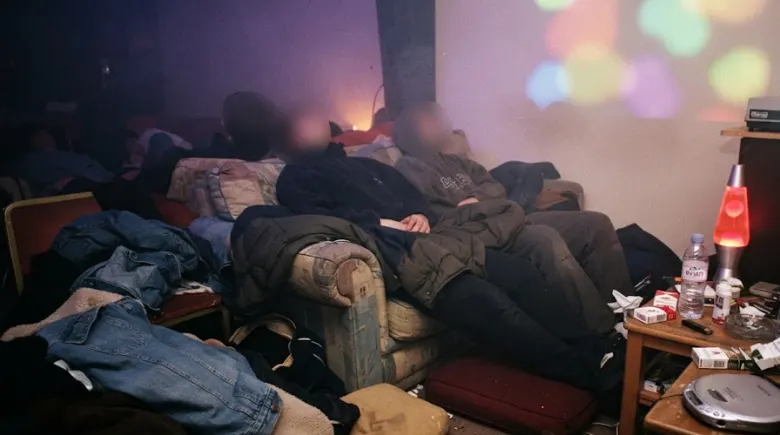
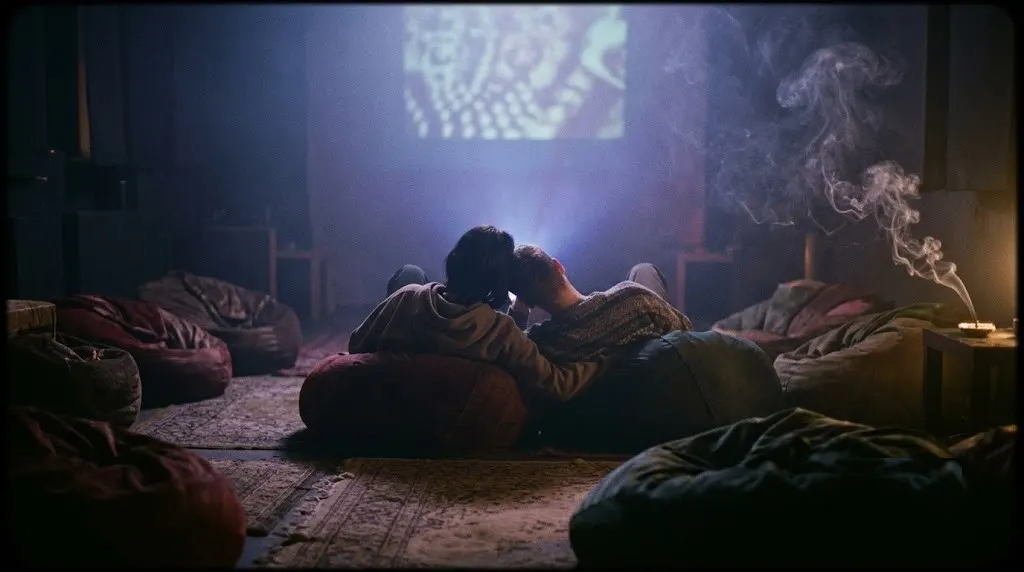
Every big night had one, and so did the small ones, even the house parties: a room next to the main floor where the music slowed down. The chill out room was where you went to decompress. Some were quiet, some were contemplative, and some were just warm and chatty, with the bass coming through the wall.
The music in those rooms put you in a particular state: too demanding to ignore, too gentle to demand a response, fully present without the physical pull that peak time house creates. The late nineties produced an unusual run of albums that live in that state, and seven of them still teach me how to hold a room without tempo or volume. This is a personal list more than a critical one. These records lived in my car and in my headphones, and they still hold up in ways that surprise me.
Seven Albums, 1996 to 2000
The records that defined the room next to the main floor, with one thing to listen for in each
Where to startMoon Safari is the gentlest entry point. Mezzanine is the darkest. Play any of them as a whole album, which is the point.
Bristol Made the Darkest Records in the Room
Mezzanine (1998) is the most sonically oppressive album you’d ever want to spend time inside. Its darkness has emotional weight, and Massive Attack use that weight with great control across the whole running time. “Angel,” which opens the record, sounds like something slowly drowning in its own bass. “Teardrop” is one of the most perfectly built songs of its decade, and the album holds together in a way later Massive Attack records never quite matched.
What Mezzanine teaches a DJ is sustained density: you don’t need fast tempos or big drops to hold a room. You can build and release tension at a quarter of the speed, and the effect on a listener can be just as strong. One practical note for 2026: in September 2025 Massive Attack asked their label to pull their music from Spotify worldwide, in protest at chief executive Daniel Ek’s investment in the military AI company Helsing. If your copy lived in a Spotify playlist, you’ll need to find it somewhere else.
For Portishead, the self titled second album (1997) is the one I’ve gone back to most, rather than the debut, Dummy. It’s darker and more uncomfortable, which probably explains why Dummy gets more attention in retrospectives. It was “Glory Box,” the closing track on Dummy, that first pulled me in, but this is the record I kept returning to. “Over” could close a devastating film. Beth Gibbons uses conventional pop vocal technique to deliver something disturbing in ways that are hard to pin down, and that ability to affect a listener before they’ve worked out why is something I’ve thought about in music selection ever since.
Endtroducing and The K&D Sessions Turned Old Records Into New Ones
DJ Shadow’s Endtroducing (1996) is early for a late nineties list, but it kept being discovered through the rest of the decade, and its influence runs through everything else here. It was also the record that most changed how I thought about DJing and music making as neighbouring practices. It was made entirely from samples, which earned it a Guinness World Record entry, and yet it doesn’t sound like anything else.
Endtroducing sounds like a complete world with its own atmosphere and logic, built from other people’s records. It moves between moods without losing its thread, and it treats texture as a compositional element as important as melody or rhythm. Those are lessons for any DJ, well beyond electronic music.
Peter Kruder and Richard Dorfmeister were doing something in the nineties their peers weren’t quite matching: taking house and electronic tracks and turning them slower, smokier and more meditative, through a process that was technically remixing but felt more like reimagining. The K&D Sessions (1998) is a double album of those remixes, and it’s still one of the best arguments for the chill out room as a creative space. Their version of Bomb the Bass’s “Bug Powder Dust” is the one I think of as canonical. Taking something with energy and finding its quieter, slower interior is a lesson in tempo and emotional weight I’ve come back to many times.
Moon Safari and Tourist Were the Easy Way In
Air’s Moon Safari (1998) is the least uncomfortable record here and probably the best entry point to late nineties chill out. Nicolas Godin and Jean-Benoît Dunckel made something that sounds like a French film score from 1965 that somehow got made with synthesisers in 1998. “Sexy Boy” gets played at the expense of the rest, but the album is the point: it holds one mood from start to finish, and few records manage that. I’ve used tracks from it in opening sets to settle a room into a relaxed, attentive feeling before the tempo arrives.

St. Germain’s Tourist came out in 2000, but the late nineties ran on into that year in music and in culture. Ludovic Navarre’s project layered live jazz over house beats and deep bass lines in a way that should have been messy and came out elegant. Plenty of artists tried jazz and house in the late nineties, and few got there. Navarre treated the jazz as a living element, setting live players alongside samples such as Marlena Shaw on “Rose Rouge,” and the improvisation breathes through the precision of the production. The result has a relaxed authority few electronic records reach.
Boards of Canada Made Nostalgia Strange
Music Has the Right to Children (1998) sits a little apart because it’s openly nostalgic. It sounds like decayed, half remembered sounds from childhood, like a home video from the 1970s with the colour slightly wrong. That should make it sentimental, but the Sandison brothers process the nostalgia into something more abstract and melancholy than plain remembering.
Boards of Canada’s influence on the electronic music of the two decades since is enormous and often unacknowledged. Their treatment of synthesis and sampling has become part of the production vocabulary of artists across many genres. And the story isn’t over: on 29 May 2026 Warp released Inferno, the duo’s first studio album since Tomorrow’s Harvest in 2013, trailed with unlabelled VHS tapes mailed to past Warp buyers.
Chill Out Was Never Just Relaxing Music
The label did these records a disservice. “Chill out” suggests background music, and half of this list is dark, uncomfortable and demanding. Trip hop, the Bristol sound of Massive Attack, Portishead and Tricky, is a specific genre: heavy, sample based production, minor key melodies and a darkness that sets it apart from music that is simply relaxing.
Trip Hop or Chill Out?
How the two overlap, and where they part
트립합과 칠아웃, 무엇이 다를까
| Label | The sound | On this list |
|---|---|---|
| Trip hop | Heavy, sample based, minor key, dark | Mezzanine, Portishead |
| Chill out | Any slower, atmospheric electronic music | All seven |
The ruleMost trip hop counts as chill out. Not all chill out is trip hop.
Most trip hop qualifies as chill out, but not all chill out is trip hop, and the broader term covers anything slower and atmospheric, from Moon Safari to Tourist. What these records share is that they were experimental within commercial limits. They were dark and atmospheric, they asked for real attention, and they still found big audiences and lasting influence. That combination is rarer than it looks in hindsight.
For DJs, that’s why the era is worth studying. It showed what music can do at lower tempos and volumes, building atmosphere through texture, mood and tonal colour instead of beat intensity. Bonobo, Tycho and Four Tet carry the tradition on in different ways, but these are the canonical examples, and knowing them gives you a richer vocabulary for the slower, deeper parts of any set. If you’re building a library that spans this territory, the guide to where to find and buy music as a DJ covers the platforms.
What the Room Meant to Me
This music was the soundtrack to my drives home and my nights in on my own. There was something about the sound that was a little surreal but still warm. It told you things were going to be all right. Y2K and the 2000s were on the way, and whatever came, we would get by. The videos had their own hyper real, futuristic look too, as if they were showing you the world just around the corner.
Play any of these as a whole album, in order, which is the point. Start with Moon Safari if you want it gentle, and Mezzanine if you want it dark.
Frequently Asked Questions
What Is Chill Out Music and Where Did It Come From?
Chill out music emerged from the chill out rooms at raves and clubs in the late eighties and early nineties, spaces set aside from the main dance floor where the music was slower and more atmospheric. It developed through the nineties, drawing on trip hop, ambient electronic music, jazz and downtempo production, and the late nineties were its most successful and interesting period.
What’s the Difference Between Trip Hop and Chill Out?
Trip hop, linked mainly to the Bristol sound of Massive Attack, Portishead and Tricky, is a specific genre: heavy, sample based production, minor key melodies and a darkness that sets it apart from simply relaxing music. Chill out is a broader term for slower, atmospheric electronic music. Most trip hop qualifies as chill out, but not all chill out is trip hop.
Which Contemporary Artists Continue the Chill Out Tradition?
Bonobo, Tycho, Four Tet, Jon Hopkins and Floating Points all work in territory that connects to late nineties chill out. William Basinski and Brian Eno continue the ambient side, and GoGo Penguin carries on the jazz and electronic crossover St. Germain explored. Boards of Canada returned in May 2026 with Inferno, their first album in thirteen years.
How Can DJs Use Chill Out Music in Their Sets?
To establish atmosphere at the start of a night before the tempo builds, as a change of register between higher energy sections, and in downtempo or ambient settings where the goal is sustained mood rather than dance floor energy. Building mood through texture, tone and emotional temperature rather than BPM carries over to any kind of set.
Further Reading
- José Padilla remembered (DJ Mag): the Café del Mar resident who turned Ibiza sunsets into a genre
- How The Orb brought ambient house to the masses (DJ Mag): the chill out room’s origin story
- The vinyl hunting exploits of DJ Shadow (Red Bull Music Academy): the crate digging behind Endtroducing
- Five things about Teardrop (909originals): the backstory of Mezzanine’s best known track
- Music Has the Right to Children (Warp): the label’s official page, with formats still in print
- Wikipedia: Massive Attack, Mezzanine
- Wikipedia: DJ Shadow, Endtroducing
- Wikipedia: Air, Moon Safari
- Wikipedia: Boards of Canada, Music Has the Right to Children
- Wikipedia: trip hop and how it differs from chill out
Sources
Pitchfork, Massive Attack, Mezzanine review
Guinness World Records, first album made completely from samples
Discogs, Portishead, Portishead
Discogs, Bomb the Bass, Bug Powder Dust
Pitchfork, Boards of Canada, Music Has the Right to Children review
Blue Note Records, St. Germain
CMU, Massive Attack pull music off Spotify, 19 September 2025
Wikipedia, Inferno (Boards of Canada album), 2026
mxdwn, Boards of Canada announce Inferno, April 2026
Related on The DJ Diaries: the dance music timeline and which genre is yours.
Written from Seoul, by someone who has been in the booth for more than twenty years. More on the site, or book a DJ.
Stay in the Loop
New writing on DJ culture, electronic music, and the Seoul underground, delivered when it matters.
More From The DJ Diaries


Play with the history
Four tools built from the same research as this site.