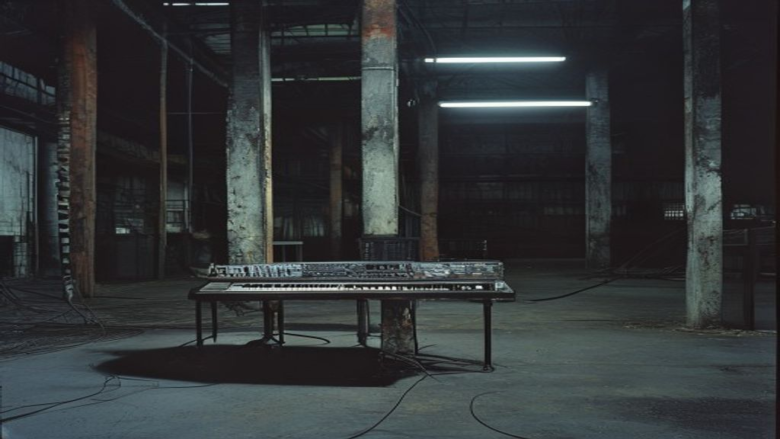
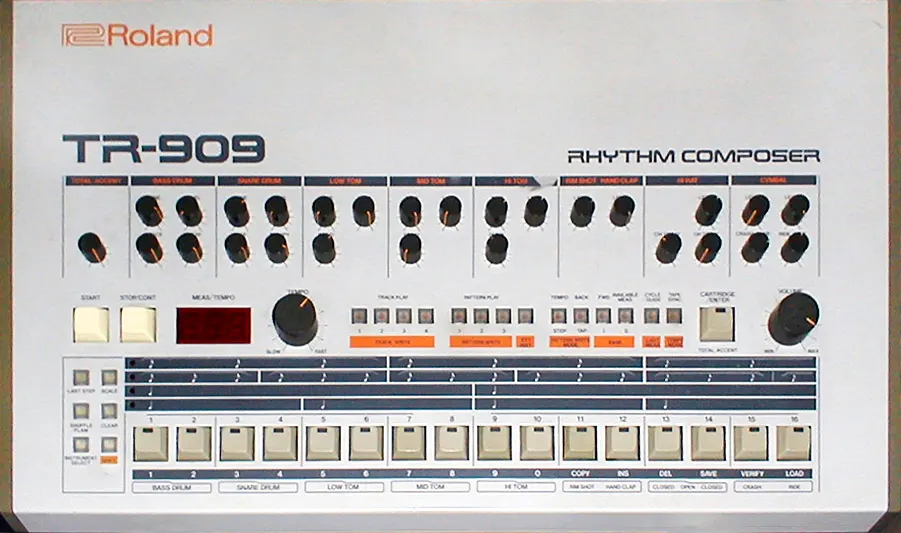
Detroit in the early 1980s was a city in visible collapse: car plants emptying, the population shrinking, whole blocks going dark. Three friends who had gone to school together in the Michigan suburb of Belleville, Juan Atkins, Derrick May and Kevin Saunderson, looked at that city and heard the future in it.
They called what they made techno. Techno was invented in Detroit by Black artists who were reading European science fiction, and they built it from Kraftwerk, Parliament Funkadelic and Giorgio Moroder, plus the texture of a post industrial city whose future you could only see by imagining it. The line gets repeated so often it risks sounding like a cliché. It’s still true, and everything techno became, in Germany, in Rotterdam, in Sheffield and eventually in Seoul, grows from it.
Detroit Techno
Black artists in Detroit, reading European science fiction, building the future out of drum machines
130 to 150 BPM. Detroit's originals sit low in the range. Rotterdam later pushed past 200. House, 120 to 130, for reference.
- Born
- Detroit, early 1980s. The Belleville Three: Atkins, May, Saunderson
- The name
- A 1988 compilation, The New Dance Sound of Detroit
- Key record
- Rhythim Is Rhythim, Strings of Life (1987)
- Listen for
- Machine precision with a human melody inside it
150 to 1.5 million Berlin Love Parade went from about 150 people in 1989 to a record 1.5 million in 1999, by the organisers count. Police estimates were lower.
Juan Atkins Wrote the Theory
Atkins had the clearest idea of what techno was for. He was influenced by the futurist sociology of Alvin Toffler and by his mentor Richard Davis, who recorded as 3070 and founded Cybotron with him. Atkins wanted music about the merging of man and machine in the information age.
His early records as Model 500, “No UFOs”, “Night Drive” and “Off to Battle”, arrived fully formed. Each one put the machine’s emotional logic ahead of the human performer. The synthesiser wasn’t imitating something organic; it was an organism in its own right.
May Brought the Heart, Saunderson Brought the Charts
Derrick May was the romantic of the three, more soulful and more interested in the tension between the cold grid and warm, imprecise feeling. His records as Rhythim Is Rhythim, above all “Strings of Life” (1987), are still among the most overwhelming pieces of electronic music ever made. The piano figure, built from a piece Michael James played for May, is almost violently human against the machinery around it. It became an anthem at the Haçienda, in Ibiza and across a dance culture that was only starting to take shape.
Who Built Detroit Techno
Three friends, three different temperaments
디트로이트 테크노를 만든 세 사람
| Who | Records | What they brought |
|---|---|---|
| Juan Atkins | Cybotron with Richard Davis; Model 500, “No UFOs”, “Night Drive” | The theory: Toffler, machines with an emotional logic |
| Derrick May | Rhythim Is Rhythim, “Strings of Life” (1987) | The romance: a human melody inside the machine |
| Kevin Saunderson | Inner City with Paris Grey, “Big Fun”, “Good Life” | The reach: pop hits on a techno frame |
How to read itBetween them they set the emotional range techno has worked in for four decades.
Kevin Saunderson reached the most people. His Inner City project with the vocalist Paris Grey made “Big Fun” and “Good Life”, which crossed into the pop charts without giving up the underlying architecture. Saunderson showed that accessibility and integrity didn’t have to be enemies. Atkins’s austerity, May’s romance and Saunderson’s melody: between them, the three set the emotional range techno would work in for the next forty years.
A 1988 Compilation Named It
Techno crossed the Atlantic in two ways. The first was the records themselves, carried by DJs and played in clubs in London, Manchester and Berlin before most people on either side of the ocean had a name for them.
The second was a compilation and the essay on its sleeve. Neil Rushton, a British Northern Soul promoter turned label boss, put out a compilation in 1988 titled Techno, subtitled The New Dance Sound of Detroit, with sleeve notes by the journalist Stuart Cosgrove. Its working title had been The House Sound of Detroit. It changed when Juan Atkins’s track “Techno Music” was added, and that’s how the word reached the UK as the name of a genre. The record arrived with the force of a founding text, origin story included.
Berlin Kept the Pulse and Lost the Soul
What Germany did with Detroit’s invention is one of the great productive misreadings in music. Berlin’s post reunification scene, centred at first on clubs like Tresor and E-Werk, took the Detroit blueprint and stripped out almost everything but the mechanical pulse. The soul mostly went. What stayed was structure, repetition and darkness.
In a city rebuilding itself after the Wall, that made sense. Abandoned buildings, sets running from Saturday into Monday, the amnesia of the dancefloor: all of it fitted a particular post Wall sense of time and space. It was less a theft than a change of context.
The cost was the credit. The version of techno that spread around the world from Germany was harder and said much less about where it came from, and a lot of people who love the music still meet it without ever hearing the names Atkins, May and Saunderson. That’s the argument that follows techno everywhere it goes, and it’s a fair one.
Rotterdam, Sheffield, Minimal and Hard
From that root, techno went in directions Detroit hadn’t imagined. Rotterdam’s gabber scene smashed through the BPM ceiling, at 200, 220 and 250, into music as much about aggression and belonging as dancing. Belgium’s new beat and the EBM tradition added an industrial, gothic streak that still feeds the hard end today. Sheffield’s Warp Records went cerebral, releasing Robert Gordon, LFO and Nightmares on Wax, with a Northern English melancholy and a closer relationship to soul and hip hop.
Minimal techno arrived in the late 1990s and early 2000s as a correction to excess. Ricardo Villalobos and Richie Hawtin, whose Plastikman alias tied him closely to Detroit before he moved his practice to Germany, made reduction the whole aesthetic: a kick, a hi hat, a melodic figure buried in the low mids. Its natural home was the after hours slot at Berghain, which by the 2000s had become techno’s global reference point, with an architecture, a door policy and programming that all said what the dancefloor should ask of you.
The 2020s belong to the hard end. Industrial techno and hard techno took that edge and amplified it. Artists like Rebekah, Phase Fatale and Alignment treat the floor as a place for physical and psychological intensity rather than escape, which, a little unexpectedly, connects back to Detroit: music made for a difficult present, not a comfortable fantasy.
Seoul Plays It Its Own Way
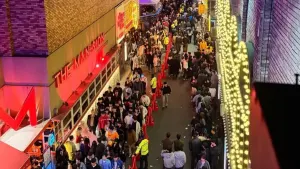
Seoul shows how a global form picks up a local accent. GQ Korea named Faust (파우스트) its club of the year back in 2016, and Mixmag Asia’s October 2025 Seoul clubbing guide still describes it as an intimate two room club, with a handmade Kirsch Audio system in the dark main room and Tanz Bar as the looser second room. The same guide covers Volnost (볼노스트), which moved in 2023 into a two storey building in Itaewon (이태원), bar downstairs and music upstairs on Martin Audio, and is open with weekly events at 142 Itaewon-ro. BBCB splits the same way: Beton Brut for faster techno, trance and house, Concrete Bar for house and minimal. These rooms take on techno’s harder registers with a character that’s shaped by Seoul rather than borrowed. More on Faust is on its Seoul Scene page.
The Euljiro (을지로) district, with its post industrial spaces and art crowd mixing with the night crowd, rhymes with Detroit without copying it. A form that takes root somewhere new mutates and picks up the local character along the way.
Detroit, meanwhile, has started claiming its own invention out loud. Ahead of the 20th edition of the Movement festival, Mayor Mary Sheffield proclaimed 18 to 25 May 2026 the city’s first official Detroit Techno Week. Forty years on, the city that inspired the music is finally putting its name on it.
What has held across forty years of techno is the idea Atkins, May and Saunderson started with in a Detroit suburb: that machines, properly instructed, can say something true about being alive in an industrial world. The gear has changed, the tempos have moved and the contexts have multiplied. Stand in front of a serious sound system at the right moment and you can still hear it: the Belleville Three, reading Toffler, building the future.
Test Yourself
Frequently Asked Questions
Where did techno music originate?
Techno started in Detroit in the early 1980s, made by Black artists who were reading European science fiction. Juan Atkins, Derrick May and Kevin Saunderson, known as the Belleville Three, built it from Kraftwerk, Parliament Funkadelic and Giorgio Moroder. The texture of post industrial Detroit, a city in visible economic collapse, shaped the sound as much as any record.
Who are the Belleville Three?
The Belleville Three are Juan Atkins, Derrick May and Kevin Saunderson, the Detroit creators of techno, named for the Michigan suburb where they went to school together. Atkins brought the theory through Cybotron and Model 500, May brought a romantic, soulful edge with “Strings of Life” in 1987, and Saunderson reached the widest audience with Inner City, whose “Big Fun” and “Good Life” crossed into the pop charts.
How did techno get to Europe and Berlin?
DJs carried the records across the Atlantic first. Then in 1988 Neil Rushton put out a Detroit compilation, titled Techno and subtitled The New Dance Sound of Detroit, which gave the music its name and origin story. Berlin’s post reunification scene, centred on clubs like Tresor and E-Werk, stripped the Detroit blueprint down to its mechanical pulse.
What’s the difference between minimal techno and hard techno?
Minimal techno arrived in the late 1990s and early 2000s with artists such as Ricardo Villalobos and Richie Hawtin, pursuing reduction and rewarding close listening. Industrial and hard techno, the dominant current of the 2020s, amplify the genre’s hard edge and treat the floor as a place for intensity, with artists like Rebekah, Phase Fatale and Alignment. The wider family is traced in the family tree of dance music.
Further Reading
- The Family Tree of Dance Music
- Seoul Scene: Faust
- Euljiro After Dark
- Door Policy and Club Culture
- Wikipedia: Detroit techno
Sources
Red Bull Music Academy, Kevin Saunderson lecture
Red Bull Music Academy Daily, the roots of techno, July 2014
Cambridge University Press, book chapter on Detroit techno (DOI 10.1017/9781009036535.019)
Attack Magazine, Juan Atkins: it’s all connected
GQ Korea, 올해의 클럽 파우스트 (Club of the year: Faust), December 2016
Mixmag Asia, The Mixmag Asia clubbing guide: Seoul, October 2025
Electronic Groove, Detroit declares first official Detroit Techno Week, May 2026
Red Bull Music Academy, Steve Beckett: the Warp factor
The Guardian, Berghain bouncer Sven Marquardt’s memoirs, August 2014
Written from Seoul, by someone who has been in the booth for more than twenty years. More on the site, or book a DJ.
Follow the rooms: Faust on Instagram
Stay in the Loop
New writing on DJ culture, electronic music, and the Seoul underground, delivered when it matters.
More From The DJ Diaries
Play with the history
Four tools built from the same research as this site.