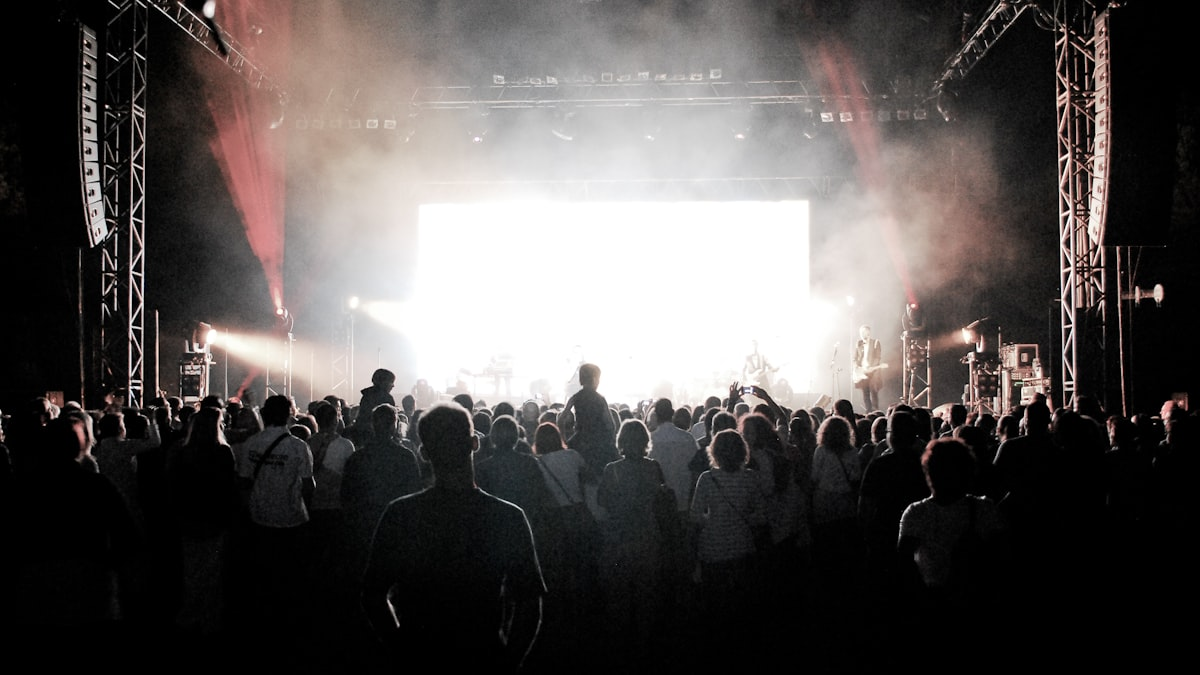
The Criminal Justice Act 1994 criminalised music characterised by “a succession of repetitive beats.” The parties had already changed the country.
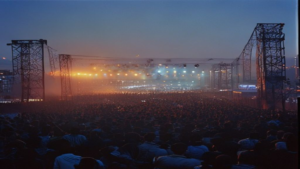
On the night of June 23, 1989, approximately 11,000 people gathered in a field near Longwick in Buckinghamshire for Biology, one of the orbital M25 raves organised by Tony Colston-Hayter’s Sunrise company. They had found out about the location by calling a hotline number. By the time the Criminal Justice Act tried to criminalise this culture five years later, acid house had already produced an entire generation of DJs, an outdoor festival infrastructure, a legal club circuit, and four distinct genre branches.
The Hacienda opens the door
The Haçienda in Manchester, opened in 1982, was the precursor to the rave era. The venue was funded by Factory Records and New Order. In 1987 and 1988, the Haçienda became the place where Chicago house music was first encountered and embraced by British audiences in significant numbers. Graeme Park had traveled to Chicago, had encountered house music, and brought it back to Manchester.
Sunrise and the orbital raves
The Sunrise organization pioneered the orbital rave model. Rather than using a single fixed venue, Sunrise organized massive outdoor events at multiple locations around the M25 orbital motorway. Events would be announced through hotline phone numbers. Attendees would call hours before the event and receive the location information. Sunrise’s Midsummer Night’s Dream in 1989 attracted approximately 25,000 attendees.
By 1991 and 1992, the legal nightclub infrastructure was expanding rapidly. Ministry of Sound opened in September 1991, deliberately designed as a superclub. The Criminal Justice Act of 1994, specifically Section 63, criminalised music events characterized by “music including sounds wholly or predominantly characterised by the emission of a succession of repetitive beats.” The Act was extraordinarily controversial.
The rave era produced more than a music genre or a drug culture. It produced a festival infrastructure, a model of mass gathering, a sense of youth culture agency. The outdoor raves showed that youth communities could organize large-scale events without institutional support, without licensing. The infrastructure it had created persisted: the festival model, the DJ culture, the sense of electronic music as a mass cultural phenomenon.
Why 1989 still matters in a Seoul basement
I bring this era up constantly, and not out of nostalgia. Every unlicensed warehouse party thrown anywhere since, including the Korean events that run outside the club system today, is running the Sunrise playbook: a location revealed late, a crowd that finds its way, an authority a step behind. The tools changed from phone hotlines to encrypted group chats; the choreography did not.
The other lesson is legislative, and it rhymes uncomfortably with Korea’s own licensing tangles: the Criminal Justice Act tried to define a culture out of existence by describing its drum patterns, and the culture simply changed rooms. Scenes route around law the way rivers route around stone: slowly, and then all at once.
Written from Seoul, by someone who has been in the booth for more than 25 years. More on the site, or book a DJ.
Stay in the Loop
New writing on DJ culture, electronic music, and the Seoul underground — delivered when it matters.