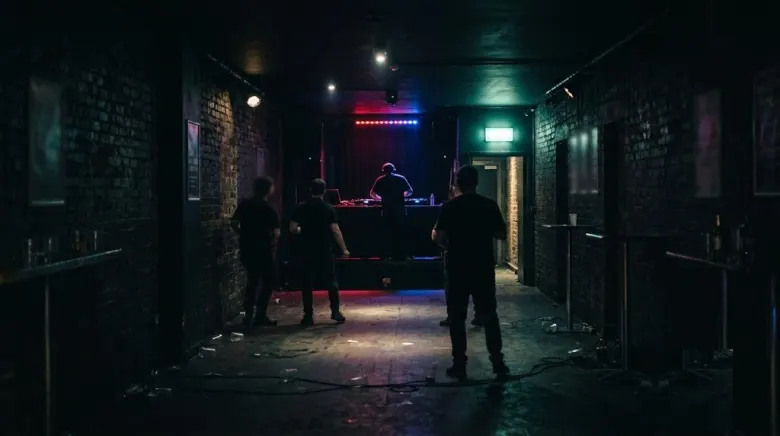
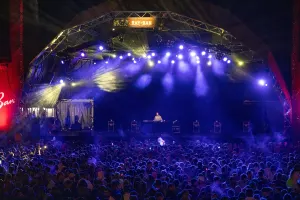
A Thursday in Hongdae (홍대), around 2016, and I was opening the room for a drum and bass night with a proper heavyweight headlining later. I’d been running long blends, thirty two bars or more, because that’s what I’d been practising at home and it felt like the refined thing to do. A veteran DJ I respect, who had just finished the set before mine, came over between records and said what I wasn’t ready to hear. Your mixes are beautiful. They’re too long for this room.
I didn’t believe him at first. The blends were landing cleanly. But over the next hour I watched what he meant. Every time I took a track out slowly, the front of the crowd started waiting. Heads dropped, phones came out, and the drop that should have lifted the floor kept arriving thirty seconds late. I cut my next mix to eight bars, hit the new record hard on the one, and the room came back within half a phrase. It had taken me fifteen years to feel it in my hands: mix length is a decision about what the room needs next, and if you only know one length, you only play one kind of room well.
Long Mixes Belong Where the Crowd Listens for Layers
Deep house, progressive, minimal, melodic techno, classic disco, dub techno, ambient rooms and some strains of trance all depend on the feeling that the music is building rather than switching. A bar is four beats, so a thirty two bar blend at a house tempo of 124 BPM runs about a minute, while an eight bar mix at a typical drum and bass tempo of 174 BPM is over in about eleven seconds.
How Long a Mix Lasts, by Genre
The usual range of bars per mix, and what that means in time
장르별 믹스 길이, 마디와 초
| Genre | Bars per mix | In seconds |
|---|---|---|
| Deep house, techno | 16 to 64 | 31s to about 2 min |
| House, progressive | 16 to 32 | 31s to 62s |
| Drum and bass, hip hop, UK garage | 4 to 16 | 6s to 22s for drum and bass |
How to read itOne bar is four beats. Seconds are worked out at 124 BPM for the house and techno rows and 174 BPM for drum and bass. The same sixteen bars last half a minute in one room and twenty seconds in the other.
When you bring a new record in over thirty two bars and let the percussion of the outgoing track ride under the incoming hats for a full minute, the floor rides a shift in tone it never consciously notices. In those rooms that’s the whole craft, and when it works, nobody in the crowd knows you did it. They just feel better.
Between 2011 and 2016 I held residencies at two different venues in Apgujeong (압구정), and long blends were the entire job at both. One had tall ceilings, a low lit dance floor and a crowd that chose it because it wasn’t a peak time club. A cut on the one in a room like that would have felt violent. Thirty two bars was the starting point, and sixty four wasn’t rare. Over an hour you could move from one key to another without the floor registering a jump, or drop the tempo by three BPM so gradually nobody noticed.
The technique isn’t complicated, but it takes practice. You need to know by ear the outro length of every record in your rotation, and how many bars each incoming track takes to show its personality. You need a decent mixer with good EQ, because long blends live or die on whether you can carve the bass and mids between two competing basslines without the mix turning muddy. I go deeper into that in mastering the mix.
Short Mixes Are a Craft of Their Own
Short mixes, anything from four to sixteen bars and sometimes a clean cut on the one with no blend at all, are the language of other genres: hip hop, drum and bass, jungle, UK garage, grime, footwork, Jersey club and modern club edits. The crowd at a drum and bass night wants the next tune to hit while the current one is still at full intensity, not a minute long blend.
The tradition has deep roots. Hip hop DJing grew out of DJ Kool Herc’s “merry go round”, cutting between two copies of the same record to stretch a short drum break, and the cut mix and scratch techniques of the late 1970s were built on rapid changes rather than long blends. Quick turn DJing across dance music owes something to that. I trace those threads in my brief history of DJing, because understanding why a tradition exists is the quickest way to stop fighting it.
A drum and bass DJ cutting in tight on the one is doing exactly what the tradition asks. If you play these genres and have never practised cutting, start now. The window is small. Hit the new track a beat late and the floor stumbles; hit it a beat early and the outgoing track sounds cut off mid sentence. The target is a cut so clean the only evidence is that the track changed, and that takes weeks on the same two records.
The Floor Tells You Within Twenty Minutes
The crowd will tell you in real time whether your mix length is right, through body language. When a blend runs too long in a room that wants shorter mixes, the front row stops dancing with full commitment. Heads drop half an inch, shoulders loosen, and someone near the booth looks back over their shoulder, waiting for the next thing. When a cut is too short in a room that wants blends, people flinch. The first beats of the new record feel aggressive, and the energy that was building drains away because the crowd wasn’t ready to let the last track go.
The best feedback loop is the first twenty minutes of your set. Start at your usual length for the genre, watch the floor and adjust. If the room is colder than you expected, cut tighter to inject energy. If it feels held and focused, stretch your blends by eight bars and see whether you earn a deeper listen.
This is also where the warm up matters. If the DJ before you cut every twelve bars all night, the crowd has been trained into that rhythm, and switching straight to long blends without a bridge will lose them. Handing a room between DJs is its own discipline, and I wrote about it in set time etiquette.
Your Mixer Has Already Made Half the Decision
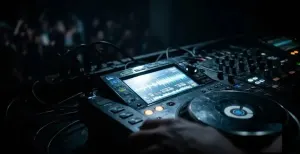
Your mixer shapes your mix length before you play a note. On a Rane Seventy Two, with a short throw crossfader and a magnetic fader curve, your hands naturally reach for cuts, because that’s what the mixer was built for. On a Pioneer DJM-900 or DJM-A9, the smooth channel faders and three band EQ with its isolator mode reward long blends, although the DJM-A9 also carries a third generation Magvel crossfader built for scratching. Neither is wrong. They’re tuned for different traditions.
Crossfader, Upfader, Rotary
What each control is built for, and who leans on it
크로스페이더, 업페이더, 로터리
| Control | Built for | Who leans on it |
|---|---|---|
| Crossfader | Clean cuts and scratching | Hip hop and scratch DJs |
| Upfader | Gradual blends over many bars | Most house and techno DJs |
| Rotary level | The far long blend end | Euphonia, from AlphaTheta |
The ruleYou can play a whole house or techno set on the upfaders. You can’t play a scratch rooted set without a good crossfader.
The crossfader is a cut tool and a scratch tool; the upfader is a blend tool. Use the crossfader for a clean, instant change between channels, or to swing a track in and out rhythmically. Use the upfader to bring a new track in gradually while the outgoing one breathes down over many bars. Most working DJs spend far more time on the upfaders, unless they came up through hip hop or scratch, where the ratio flips.
If you’re shopping for gear in 2026, Pioneer DJ products are moving to the AlphaTheta name, a rebrand announced in January 2024, so newer mixers and players may not carry the Pioneer badge. Rotary mixers sit at the far long blend end of the spectrum. AlphaTheta, the company behind Pioneer DJ, announced its four channel Euphonia rotary mixer in March 2024, with rotary level controls in place of linear faders, a three band master isolator and transformers developed with Rupert Neve Designs.
A Recorded Mix Plays by Different Rules
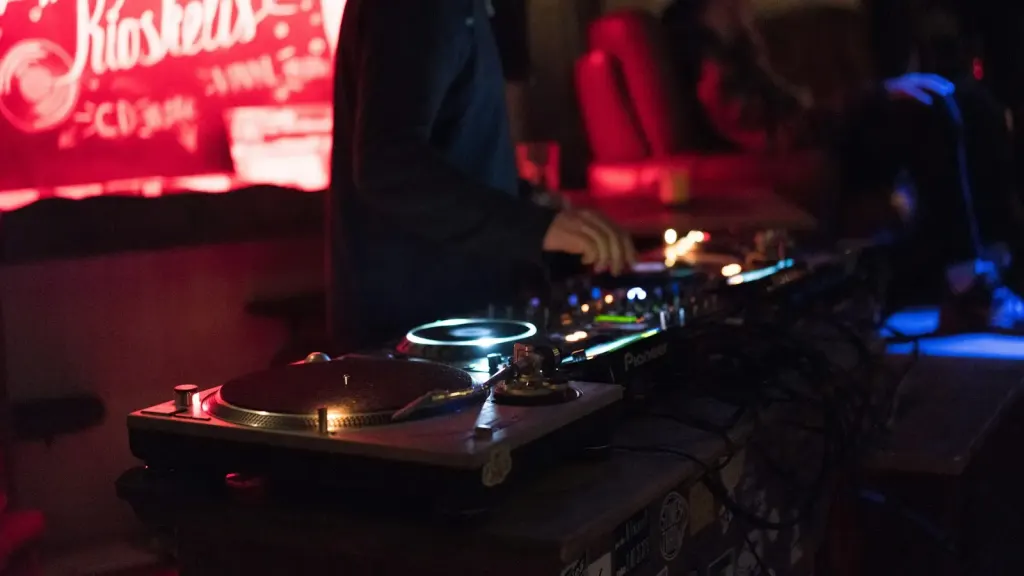
Everything above is about a live room, and a recording complicates it. A listener on Mixcloud has no lights, no crowd and no volume to soften a misjudged transition. A short cut that works in a loud room can sound abrupt on a recorded mix, especially one a promoter or booker is judging.
Long blends, by contrast, read as competent and considered on a recording. If you’re uploading a mix, lean slightly longer than you would in the club for the same genre, unless the mix is an explicit hip hop or drum and bass showcase, where tight cuts are the point.
It cuts the other way too. A long blend that sounded patient on your headphones at home can feel slow in a room that wants energy, which is exactly what happened to me that Thursday in Hongdae. Neither length is the refined one. Each is right for a room, and wrong for another.
Three Skills to Build This Year
If you want to get better at this over the next year, work on three things, in order. First, a default thirty two bar blend you can do in your sleep, on two records you know intimately, so that when a gig asks for long mixes your hands already know the shape. Second, a clean cut on the one with no gap, on two records at the same BPM and in the same key, until the cut sounds like a sample change.
Third, know the outro length of every record in your current crate by ear, to within a bar. It sounds tedious, but it’s the skill that quietly separates working DJs from bedroom DJs. A DJ who knows their records that well can play at any length the room asks for, because they’re not guessing.
You can practise all three at home on any reasonable setup. If you’re still building one, my guide to starting out as a DJ covers the equipment decisions that matter and the ones you can put off. After that it’s the boring kind of practice. Record yourself, listen back the next day, and notice where you reached for a cut when a blend would have worked, and where you held a blend too long. Adjust, and do it again next weekend.
Frequently Asked Questions
What’s the ideal DJ mix length for a club set?
There’s no single number, because it depends on the genre and the room. As a working range, deep house and techno sets tend to live between sixteen and sixty four bars per mix. House and progressive sit around sixteen to thirty two. Drum and bass, hip hop and UK garage often work inside four to sixteen bars, and a clean cut on the one is common. If you don’t know the room, start at your genre’s usual length and adjust in the first twenty minutes.
Should I use the crossfader or the upfader?
Both. The crossfader is the cut and scratch tool, the upfader is the blend tool, and good DJs use both in the same set. If you came up through hip hop, you’ll use the crossfader more. If you came up through house, techno or disco, you’ll use the upfaders more. Let the genre of the night decide which does more of the work.
Is it bad to cut tracks short during a set?
Only if it doesn’t suit the music or the room. In drum and bass, hip hop and a lot of modern club edits, cutting tight is the right move and long blends would hurt the energy. In deep house or progressive, a short cut feels abrupt. Watch the crowd’s body language after each cut and adjust the next one.
How do you practise long blends at home?
Pick two records you know well, at the same BPM and in compatible keys, and practise a thirty two bar blend until it’s flawless. Then swap one record and do it again, until you have a pool of ten or fifteen records you can move in and out of with confidence. Record yourself and listen back the next day to hear the small timing mistakes you missed live.
Further Reading on The DJ Diaries
- Mastering the Mix
- Reading the Room
- DJ Etiquette: Timing Your Set
- A Brief History of DJing
- The Genre BPM Guide
- Vinyl vs Digital DJing
Sources
Pioneer DJ and AlphaTheta, mixers
Written from Seoul, by someone who has been in the booth for more than twenty years. More on the site, or book a DJ.
Stay in the Loop
New writing on DJ culture, electronic music, and the Seoul underground, delivered when it matters.
More From The DJ Diaries
Play with the history
Four tools built from the same research as this site.