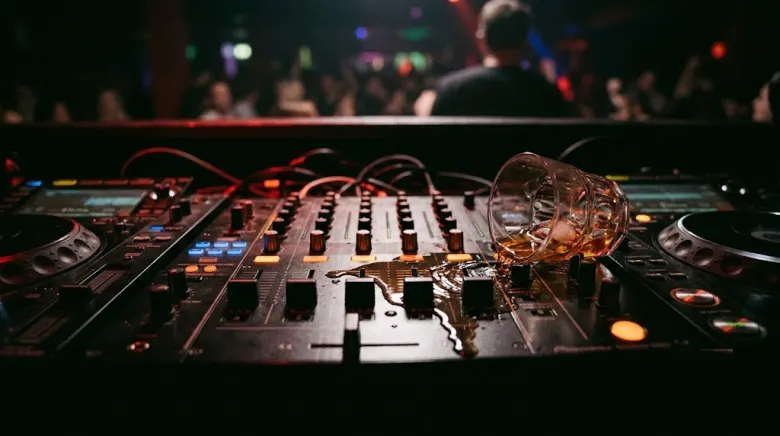
The DJ reached for the USB stick without checking which player was live, and the music stopped. The room went silent in the way rooms do when something has gone wrong rather than ended. He recovered in about fifteen seconds that felt like fifteen minutes, and the crowd laughed, which was generous of them.
Every DJ has a private catalogue of moments like that: the track that went somewhere unexpected and took the floor with it, the transition that collapsed in front of three hundred people. I’ve been playing since school in Canada, and in Seoul clubs since 2006, and I still make versions of some of these mistakes. The ones I’ve stopped making, I stopped because I made them enough times for the lesson to stick. Most DJ mistakes are connected, and most trace back to one root: not knowing your music well enough, and letting sync or habit do the listening for you.
Know the Track Before It Goes in the Set
I once dropped a track I’d heard a few times but hadn’t learned. Halfway through it did something I didn’t expect, the energy shifted in a direction that didn’t fit the room, and by the time I’d worked out what was happening, the floor had started to thin at the edges. You can’t undo a mood that has started to dissolve.
You don’t have to own a track for years before you play it. But before a track goes into an active playlist, you should know it well enough to anticipate every structural change. Where the breakdown is. When the bass drops. Whether the ending is a clean cut or a long fade. Whether there’s a spoken word passage, a key change or a moment of near silence that works in some rooms and clears others. That knowledge comes from listening with a DJ’s attention instead of a listener’s: what comes before and after this moment, what it does to the energy, and what has to follow it.
A little theory helps more than most beginners expect. Knowing beats, bars and eight bar phrases lets you predict where a track is going, so you can prepare your next move earlier and with more confidence. Most dance music is built in phrases of 8, 16 or 32 bars, and starting a transition at the top of one lands the changes where the crowd expects them. DJ Mag’s technique guides cover the theory in practical terms, no conservatory required.
Train Wrecks and Vocal Clashes Happen in the Blend
A train wreck is a transition where two tracks fail to blend and the result is audible chaos: two kick drums landing at different times in front of a crowd that is now looking at you. Most DJs have their first one in public within their first few gigs. The cause is almost always the same: too little preparation and too much confidence, with the fader moving before the beats are locked. It sounded close enough in the headphones. Through the speakers it wasn’t close at all.
Four Mixing Mistakes the Room Hears First
What goes wrong, what the floor hears, and the fix
플로어가 먼저 알아채는 믹싱 실수 네 가지
| Mistake | What the room hears | The fix |
|---|---|---|
| Fader before the beats lock | Two kicks out of time | Beatmatch by ear with sync off |
| Bass left in on the incoming track | Two basslines fighting | Cut its bass, swap it over gradually |
| Vocal over vocal | Neither one makes sense | Bring the new track in over an instrumental |
| Levels in the red | Distortion, tired speakers | Watch the master meter on every new track |
The ruleNearly every one of these is a listening problem before it is a technical one.
The fix is manual beatmatching with sync off. A simple drill: load the same track on both decks, start them a beat apart and nudge until the kicks merge, then repeat with two different tracks a few BPM apart. Doing it by hand has nothing to do with virtue: the manual process trains your ear to hear exactly when two beats are and aren’t aligned, and that ear saves you when the software does something unexpected or when you’re on unfamiliar gear where sync behaves differently from your setup at home.
Then shape the blend with EQ. Bring in a new track without managing the low end and you get two basslines fighting in the speakers. The standard approach is to cut the bass of the incoming track while you blend it in, then bring it back as you take it out of the outgoing one; Resident Advisor’s DJ tutorials go deeper if you want them. Watch the energy too. Jumping from a deep, hypnotic techno track straight into something that sounds like a different party, with no bridging track or structural moment to signal the change, jars a crowd that had settled into the groove.
Vocals need their own care. A friend of mine, a DJ I respect enormously, once laid two vocal tracks directly on top of each other without thinking about how the lyrics would interact. Both were great records. Together they were two sets of words fighting for the same space, neither one comprehensible, and the floor reacted before he realised what he’d done. Don’t bring a vocal in over another vocal unless you’ve heard them together and know they work. Use the instrumental section of the outgoing track to introduce the new one, and pull back the mids so the two don’t crowd each other. Harmonic mixing helps as well: the Camelot wheel shows which keys sit together, and Mixed In Key, the tool most professional DJs use to tag their libraries with Camelot numbers, pays for itself within the first month.
Effects and Levels Reward Restraint
Early in my career I fell briefly in love with reverb. One night, feeling confident about my setup, I put it on a track, and instead of the big, immersive sound I was imagining, the track drowned. The attack was gone, the groove was buried, and the floor dropped within eight bars, fast enough that I knew exactly what had caused it.
Effects are useful because they’re powerful, and that’s also why they’re dangerous. A well placed filter sweep builds anticipation; a subtle delay on a synth line adds depth. An aggressive reverb or too much echo on a vocal is just noise. Before you reach for an effect, ask whether it serves the track or serves your idea of what the track should sound like. If you’re reaching for it because you’re bored, or because you want the crowd to notice you doing something, leave it. Start with filters. A high pass filter is one of the most elegant, least destructive tools you have, and learning it well teaches more about restraint than any amount of reading.
The same restraint applies to level. Every mixer has a meter, and when it goes red, the signal is clipping, which means the sound is distorting, and everyone in the room is having a worse night. Clipping is audible to anyone paying attention, and a full night of it does real damage to speakers. Check the master every time you change the gain, which is every time you start a new track, because tracks are mastered at different volumes and one that sits comfortably in your headphones can blow out the master. Resident Advisor’s guide to gain staging is one of the clearest explanations of how it works.
Pace the Night and Play the Room in Front of You
I learned the most about pacing as a punter. By 10pm the DJ that night had played every track the crowd wanted to hear, every anthem and every peak hour record, all before the room was half full. By midnight the set had nowhere left to go, and the floor thinned while the DJ kept playing. Set structure is one of the most underrated skills in DJing, because when it’s right nobody notices it.
The simplest framework is to think in thirds. The first third is arrival music: tracks that draw people to the floor and set the night’s direction without showing everything you have. The second third builds, raising the energy step by step and testing what the room wants. The final third is the peak, where your biggest records land on a crowd that has been prepared for them. Your emergency floor fillers belong there too. Drop them early because you’re nervous and want a quick reaction, and you leave the room nowhere to go. Save them and trust the build.
Pacing only works if you’re reading the room you’re in. In my early years I planned sets around what I wanted to play, and they were coherent and satisfying and often wrong for the night. A crowd at a corporate event on a Friday evening doesn’t need a ninety minute journey through deep house; it needs to dance and feel good, fairly quickly. Reading a room is mostly physical: whether the floor is filling or thinning, whether people are dancing or standing and talking, whether the bar staff are enjoying themselves, and the faces, which tell you how a track is landing before the bodies do.
A prepared setlist is useful as a starting direction and a sense of the arc. Treated as a script, it isn’t. The crowd will tell you within the first thirty minutes whether your destination still makes sense, and you need a library organised well enough to change course without spending forty five seconds scrolling. Mastering the Mix goes through the crowd reading process in more detail.
Requests sit inside the same judgement. Every DJ who has played a public gig has been handed a folded napkin with a song title on it, a habit with a long history in Korea’s music dabang (음악다방) request slips. If a request fits where the night is going, play it. If it doesn’t, thank the person and don’t. What you must not do is promise a request and then skip it. If you’re not sure, say so. The relationship between a DJ and a crowd runs on trust, and small broken promises wear it down faster than almost anything.
Plan for the Moment Something Breaks
The USB pull at the top of this piece happens because handovers are stressful and people move too fast under pressure. The fix is a procedure, not a piece of gear: check before you touch anything that’s playing or about to play. It sounds obvious, it is obvious, and it still happens at every level, because the booth pushes you to hurry.
Think your backups through before you need them. For music, that means three copies of your library at minimum, two with you at the gig and one in a different bag or place. For equipment, it means knowing where the venue’s spare gear is before you start, not while the music is stopped. The DJ bag guide covers the contingency kit, from spare headphones to cables, that separates people who’ve had something go wrong from people who haven’t yet.
Attention breaks too. I’ve seen DJs lose thirty seconds between tracks because they were dancing with someone next to the booth, and cued tracks run deep into their outros because the DJ was mid conversation. The crowd forgives small wobbles from a DJ who is clearly present and enjoying the music. It doesn’t forgive silence.
Sync Isn’t Cheating, and Fun Isn’t Unprofessional
None of this means the hard way is the virtuous way. Sync is a useful tool once you can beatmatch without it. Learn by hand first, so you know how to fix things when sync misreads a beat grid or behaves differently on unfamiliar equipment, and after that, using it to free your attention for EQ and track selection is a choice, not a crutch.
The same goes for enjoying yourself. Some DJs protect themselves with a studied coolness, never visibly reacting to the music, which reads from the floor as indifference. That’s a mistake too. The balance is to be emotionally present in the room, which makes your decisions better, while keeping enough technical attention to catch problems before they become the room’s problem. Think of it as a posture: open to the room, anchored to the job.
Protect Your Ears From the First Gig
Club rooms run loud, consistently and sometimes dangerously. Hearing damage builds up and doesn’t heal, and DJs are among the most at risk occupational groups for noise induced hearing loss. Plenty of DJs of a certain age have a story about tinnitus or lost high frequencies, and few of them took the risk seriously when they started. It’s a growing issue in Korea too.
Hearing Loss Patients Rose Fastest Among the Young
Increase in hearing loss patients, 2019 to 2023
난청 환자 증가율, 2019~2023년
How to read itThe sharpest rise is in the age group that fills the clubs, and that includes the DJs.
Segye Ilbo (세계일보), reporting in 2025, found that hearing loss patients rose 23 percent between 2019 and 2023 (Korean), with the sharpest increases, about 46 percent, among teenagers and people in their twenties.
Get a pair of high fidelity earplugs before your first gig and wear them at every gig after it. Etymotic and Alpine Hearing Protection make musician earplugs that lower the volume evenly across frequencies instead of muffling the sound. The Sound Advice post is the most thorough thing on this site about the details, for DJs and for the people they play to.
Then keep the rest of this list in practice. Keep your library fresh, so you always have options that fit the room: Beatport, Traxsource and Bandcamp between them cover most of electronic music. The genre face offs put genres like house and techno side by side on one tempo scale, which helps you plan a genre change instead of lurching into one, and the What Kind of DJ Are You quiz is a light way to think about your own habits behind the decks.
Frequently Asked Questions
What are the most common mistakes in DJ mixing?
Train wrecks from unmatched beats, two basslines fighting because the bass wasn’t cut on the incoming track, vocals layered over vocals, clipping the master, overusing effects, mixing out of phrase and peaking too early in the night. Nearly all of them come from not knowing your tracks well enough or relying on sync instead of your ears.
How do I stop train wrecking my mixes?
Practise beatmatching by ear with sync off until you can hear the moment two kick drums drift apart. Don’t move the fader until the beats are locked in your headphones, and keep a hand near the jog wheel to correct small drifts during the blend. Recording your practice mixes and listening back shows exactly where it goes wrong.
Should beginner DJs use sync?
Learn without it first. Sync is useful, but if you’ve never beatmatched by hand you won’t know how to fix things when it misreads a track’s beat grid or behaves differently on unfamiliar equipment. Once you can do it manually, using sync to free up attention for EQ and track selection is a choice rather than a crutch.
What backup gear should a DJ carry to every gig?
At minimum, three copies of your music library on separate USB sticks, two with you and one kept apart, plus spare headphones and the cables your setup needs. Find out where the venue’s spare equipment is before you start. The DJ bag guide on this site has the full list.
Further Reading
- Mastering the Mix: A DJ Set Guide
- How to Start DJing: A Beginner’s Guide
- Reading the Room: DJ Programming
- The Ultimate DJ Bag Guide
- Sound Advice: Hearing Safety in Nightlife
- Korea’s Music Dabang Request Slips
- DJ Controllers vs CDJs
Sources
DJ Mag, Tech and technique guides
Resident Advisor, DJ tutorial on mixing and EQ
Mixed In Key, The Camelot wheel
Sound On Sound, Glossary: clipping
Resident Advisor, guide to gain staging
Segye Ilbo, on the rise in hearing loss patients, March 2025 (Korean)
Written from Seoul, by someone who has been in the booth for more than twenty years. More on the site, or book a DJ.
Stay in the Loop
New writing on DJ culture, electronic music, and the Seoul underground, delivered when it matters.
More From The DJ Diaries

Play with the history
Four tools built from the same research as this site.