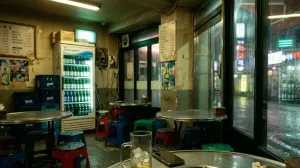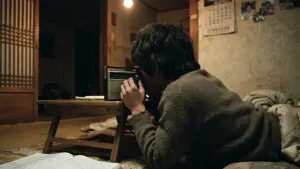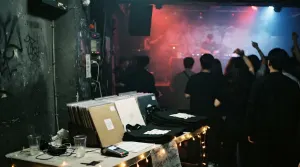
Seoul has been dancing in basements for nearly seventy years. The rooms have changed names more often than the people running them, and most of them are gone, but the addresses are still there: a hotel lobby on Namsan, a penthouse block in Cheongdam, a karaoke bar in Nonhyeon, a Daiso in Hongdae. This is the history of how the city went out, decade by decade, with the music that filled each room and the people who built them.
It starts with the US Army base in Yongsan and the clubs that grew up on the road below it. It runs through hotel discotheques, booking nightclubs, rock cafés, Hongdae’s live clubs, the Gangnam megaclubs that made DJ Mag’s world top ten, and the small, DJ owned rooms that carry the scene now. The map below lets you watch it happen.
Watch Seoul’s Clubs Open and Close, 1957 to 2026
Press play or drag the year. Every dot is a room we could date from news reports, magazines and Namuwiki (나무위키, namuwiki), the Korean crowd encyclopedia. Tap one for its story and source. The bars underneath show which sounds ruled each era, and the line moves with the year you pick.
Seventy Years of Seoul Clubbing on One Line
The story below runs from the first GI clubs in 1957 to the rooms opening this year. Keep scrolling and the year, the era and the photo move with you. On a laptop, the list of eras on the left jumps straight to that decade.
1957 GI clubs on the road below the base
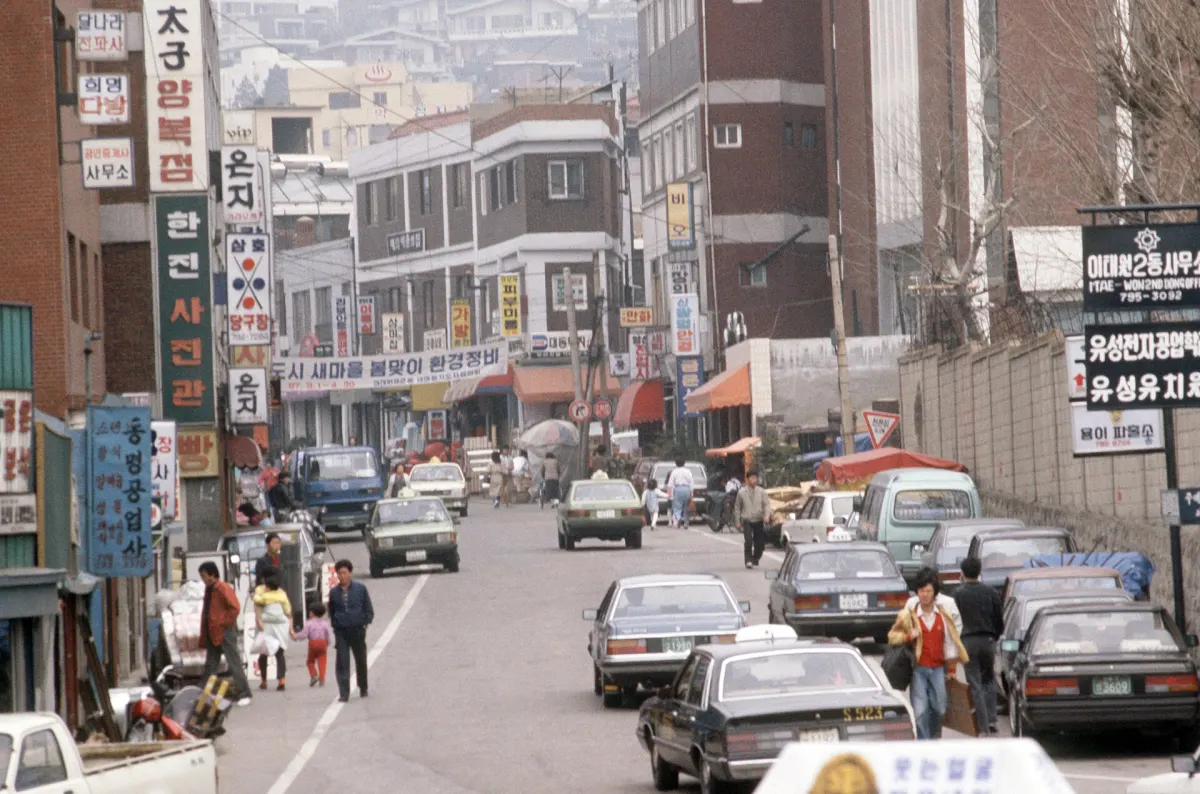
The UN Club opens in Itaewon (이태원), the first of the clubs built for American soldiers. Korean show bands learn the American songbook here.
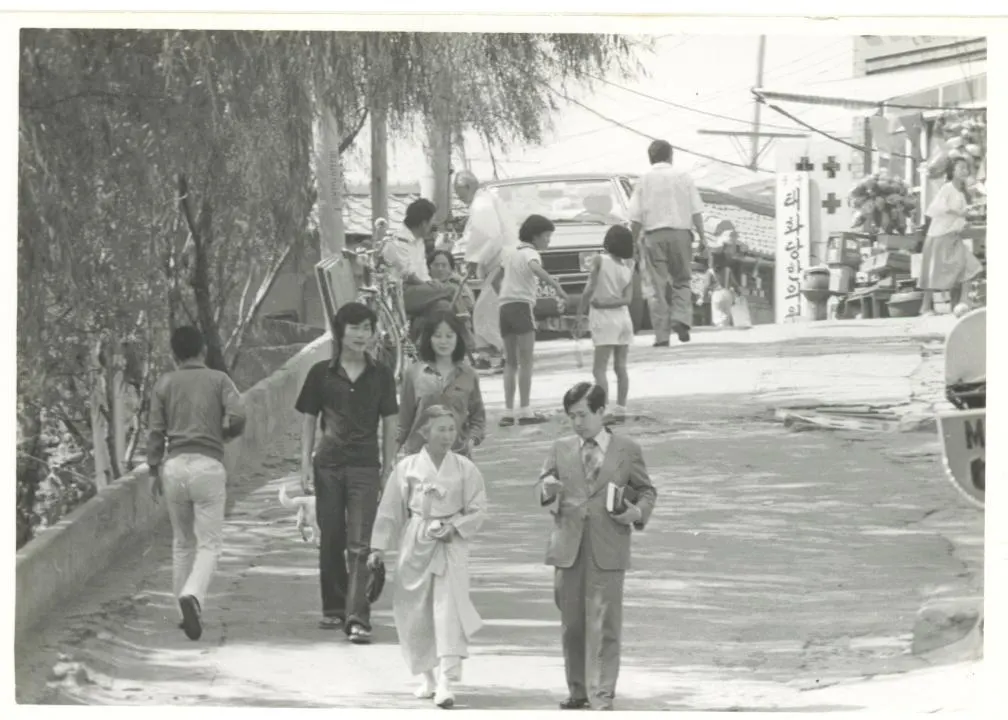
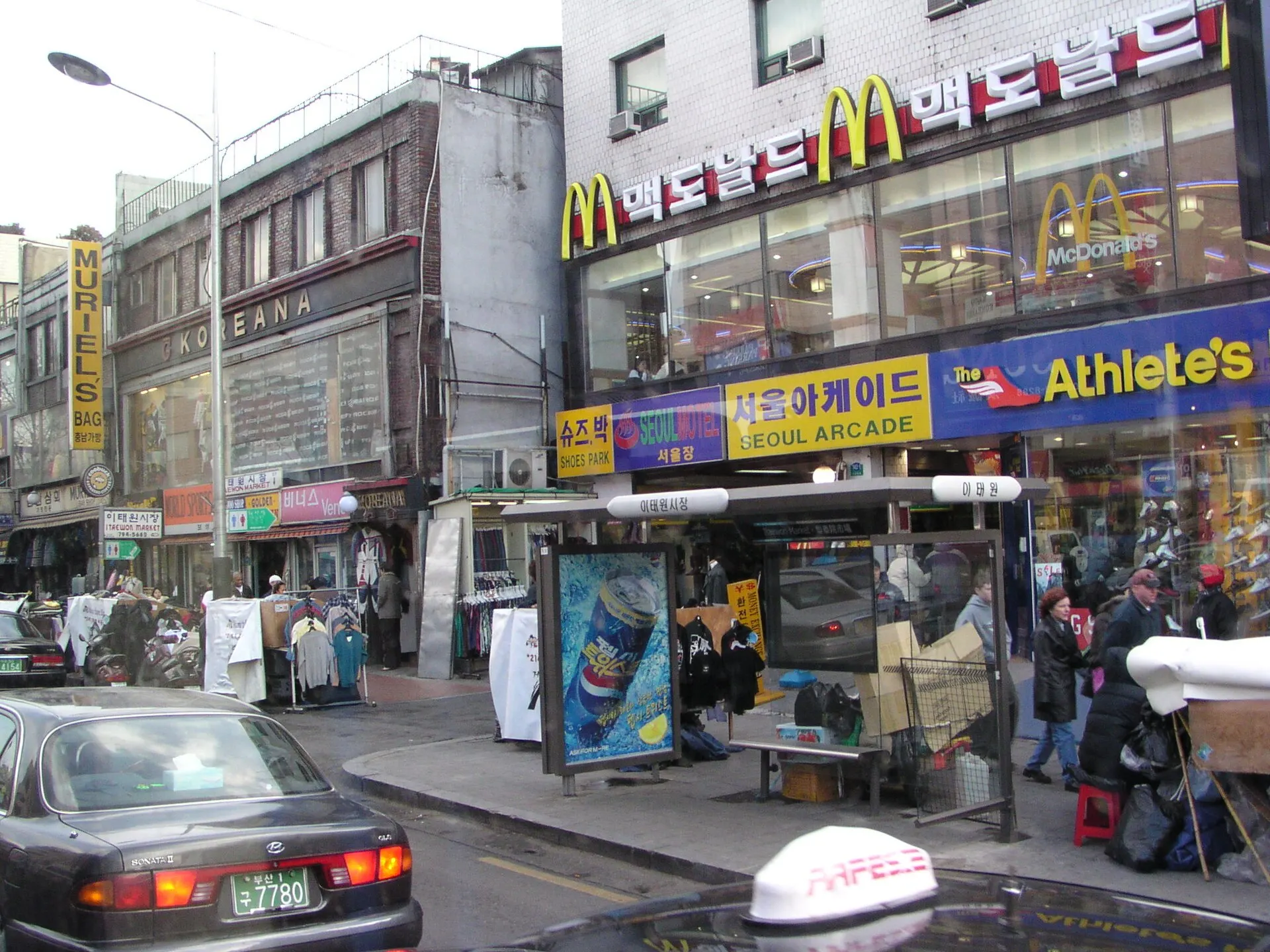
Itaewon around 1978, the road below the base where Seoul's foreigner clubs grew up. Photo: Bob Simpson, via Wikimedia Commons, CC BY 2.0 1971 Tomorrow under the Chosun Hotel
Seoul’s most lavish discotheque opens on 2 January with strobes over a copper floor.
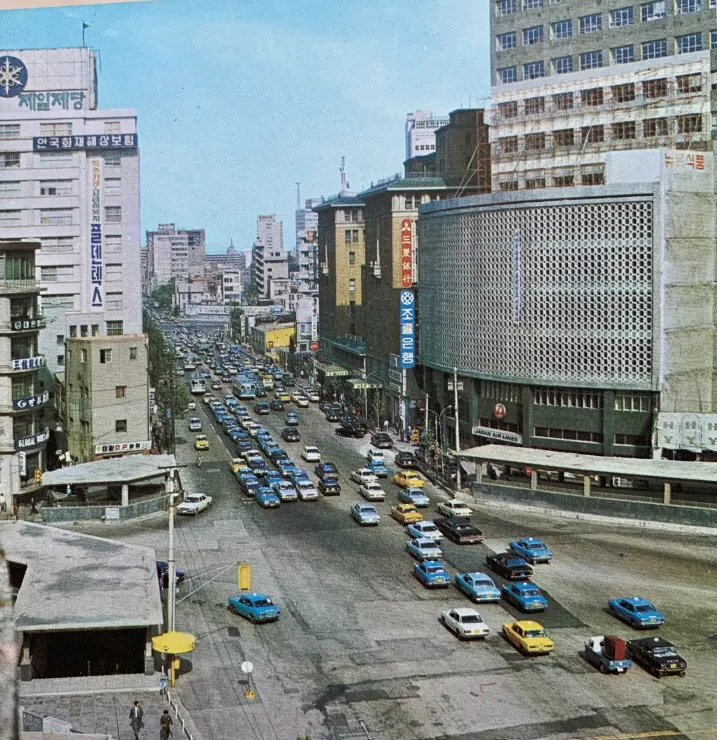
Euljiro in 1971. Photo: 셀수스협동조합, via 공유마당 and Wikimedia Commons, KOGL Type 1 1976 Mugyo-dong (무교동) cleared
The quarter of music halls and nightclubs is torn down for redevelopment.
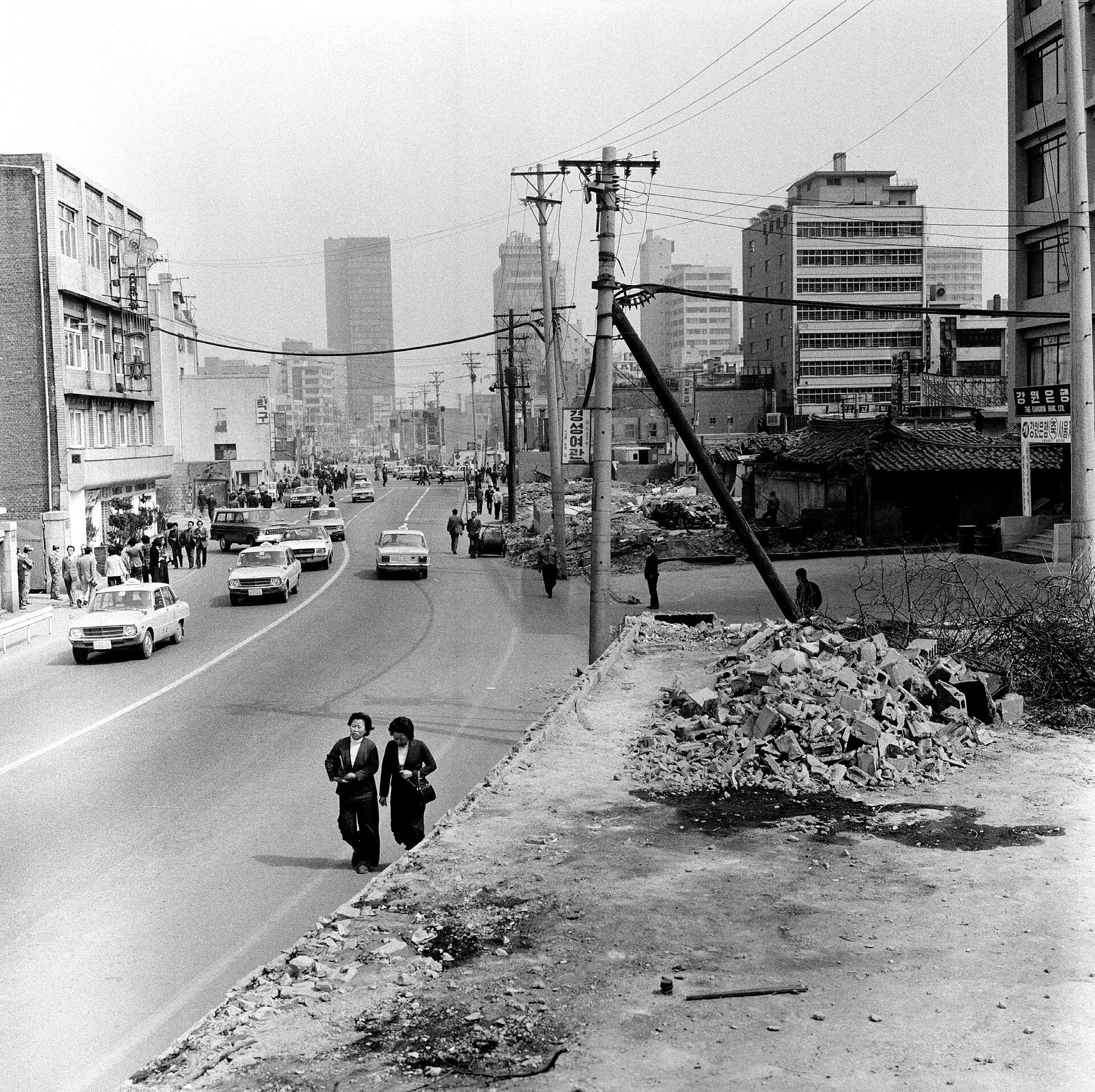
Mugyo-dong being cleared on 29 March 1976. The quarter held about 230 music halls and nightclubs before redevelopment. Photo: Government of the Republic of Korea, via e영상역사관 and Wikimedia Commons, public domain 1982 The curfew ends
On 5 January the midnight curfew lifts after 37 years. Seoul’s nights get longer overnight.
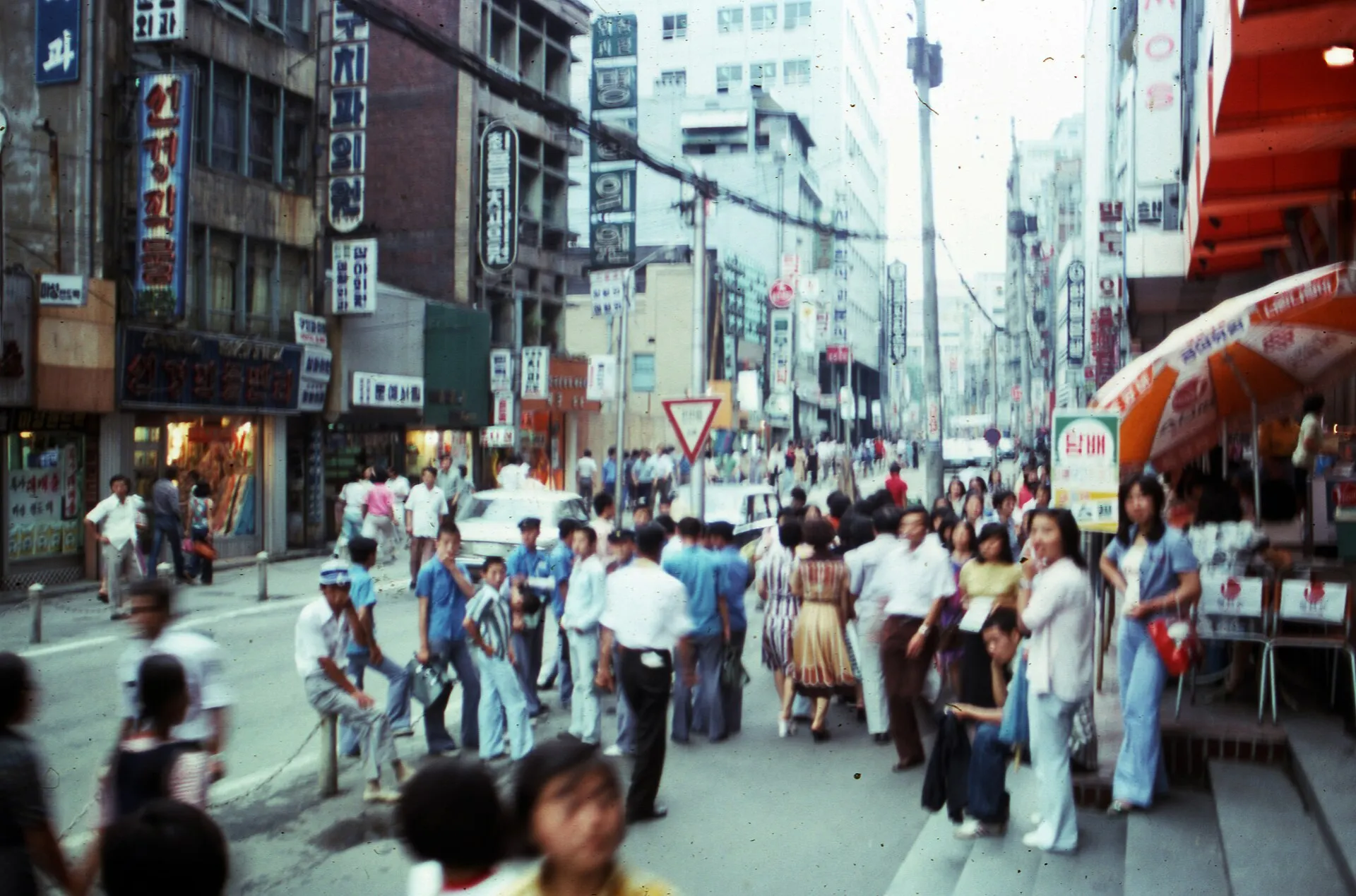
Myeongdong in August 1975, when Seoul went out downtown. Photo: Korea Copyright Commission (공유마당), via Wikimedia Commons, CC BY 4.0 1983 Seoul Hilton and the DJ association
The Hilton opens on Namsan, and disco DJs form their own association.
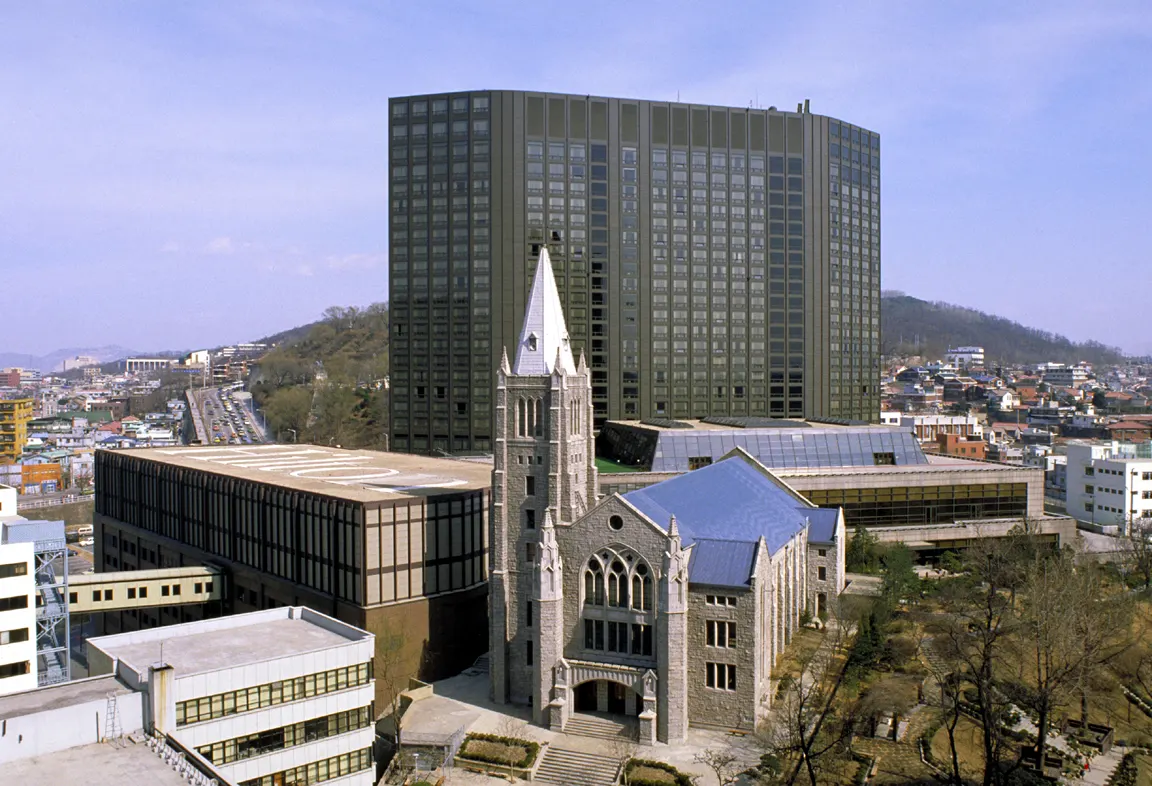
The Seoul Hilton just after it was finished in 1983. Photo: Jong Soung Kimm, the hotel's architect, via Wikimedia Commons, CC BY-SA 3.0 1986 Moon Night
The Itaewon room where Korean pop learned to dance hits its stride.
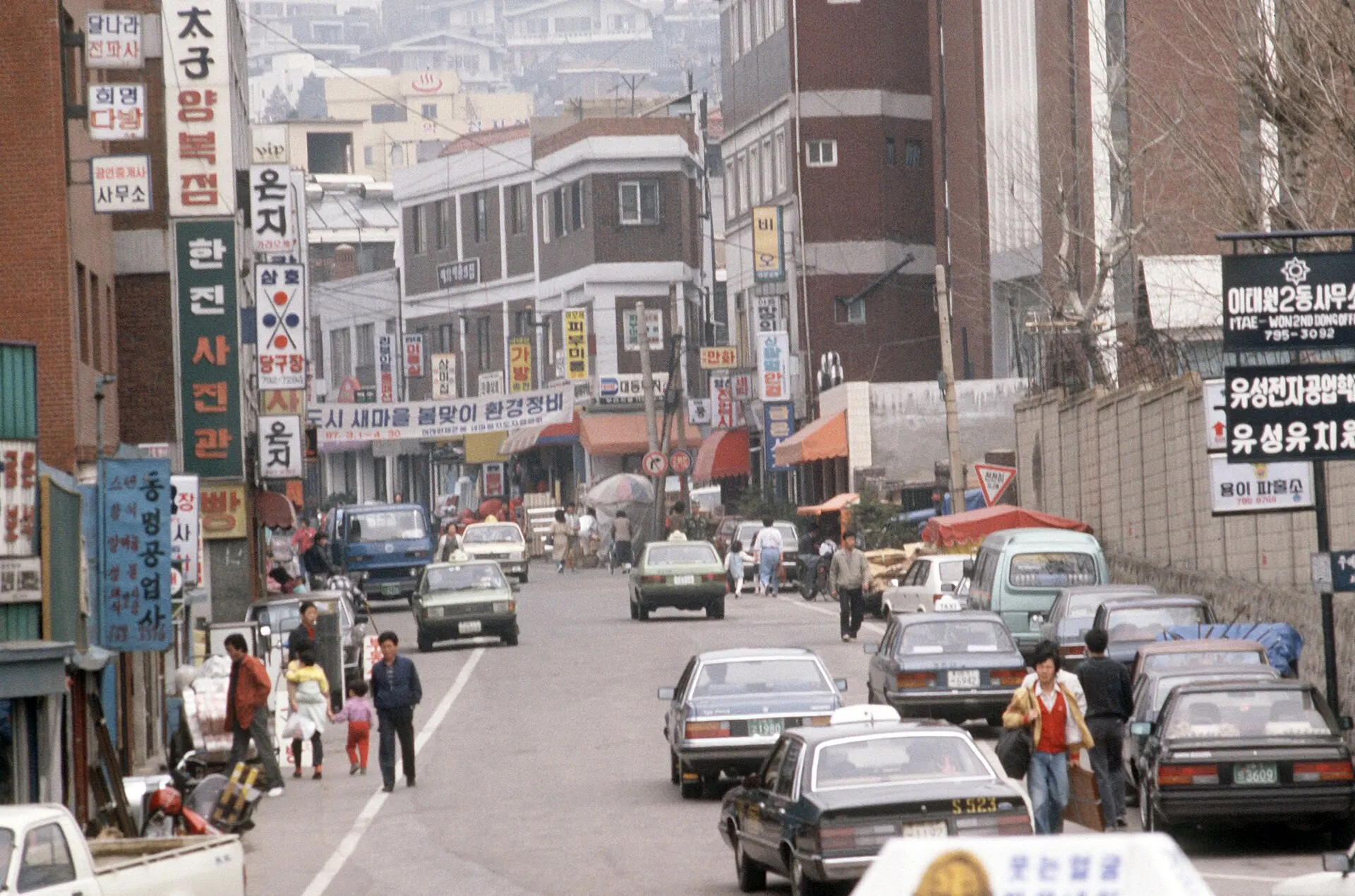
Itaewon on 15 April 1987, a year before the Olympics. Photo: SSG Arnold W. Kalmanson, U.S. Army, via the U.S. National Archives, public domain 1988 The Olympic year
JJ Mahoney’s opens at the Grand Hyatt and the Capital Hotel adds a nightclub.
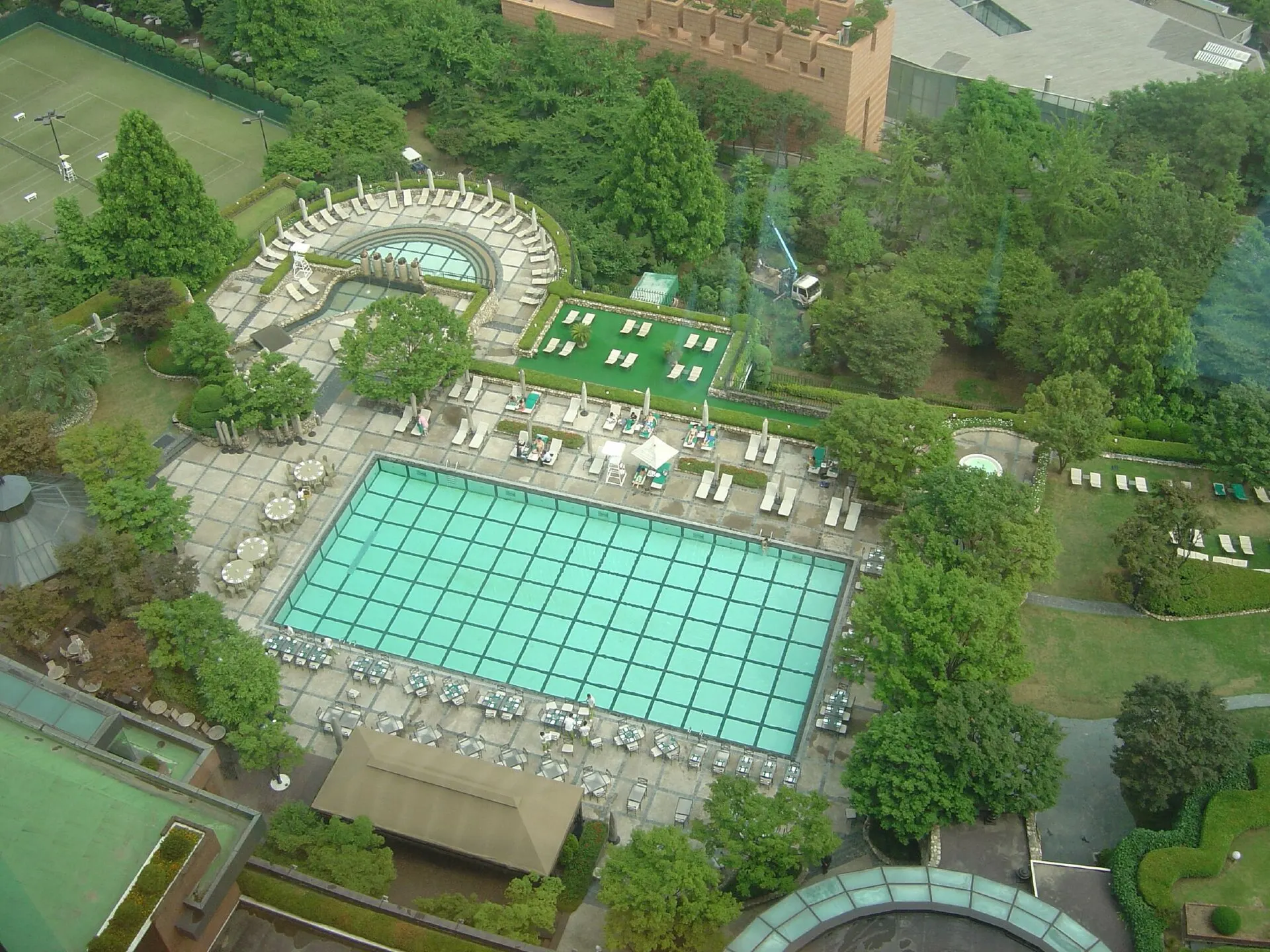
The Grand Hyatt on the slope of Namsan, home of JJ Mahoney's since 1988. Photo: Gary Bembridge, via Wikimedia Commons, CC BY 2.0 1994 Juliana
Gangnam’s (강남) hotel nightclub era peaks under the Emerald Hotel in Cheongdam (청담).
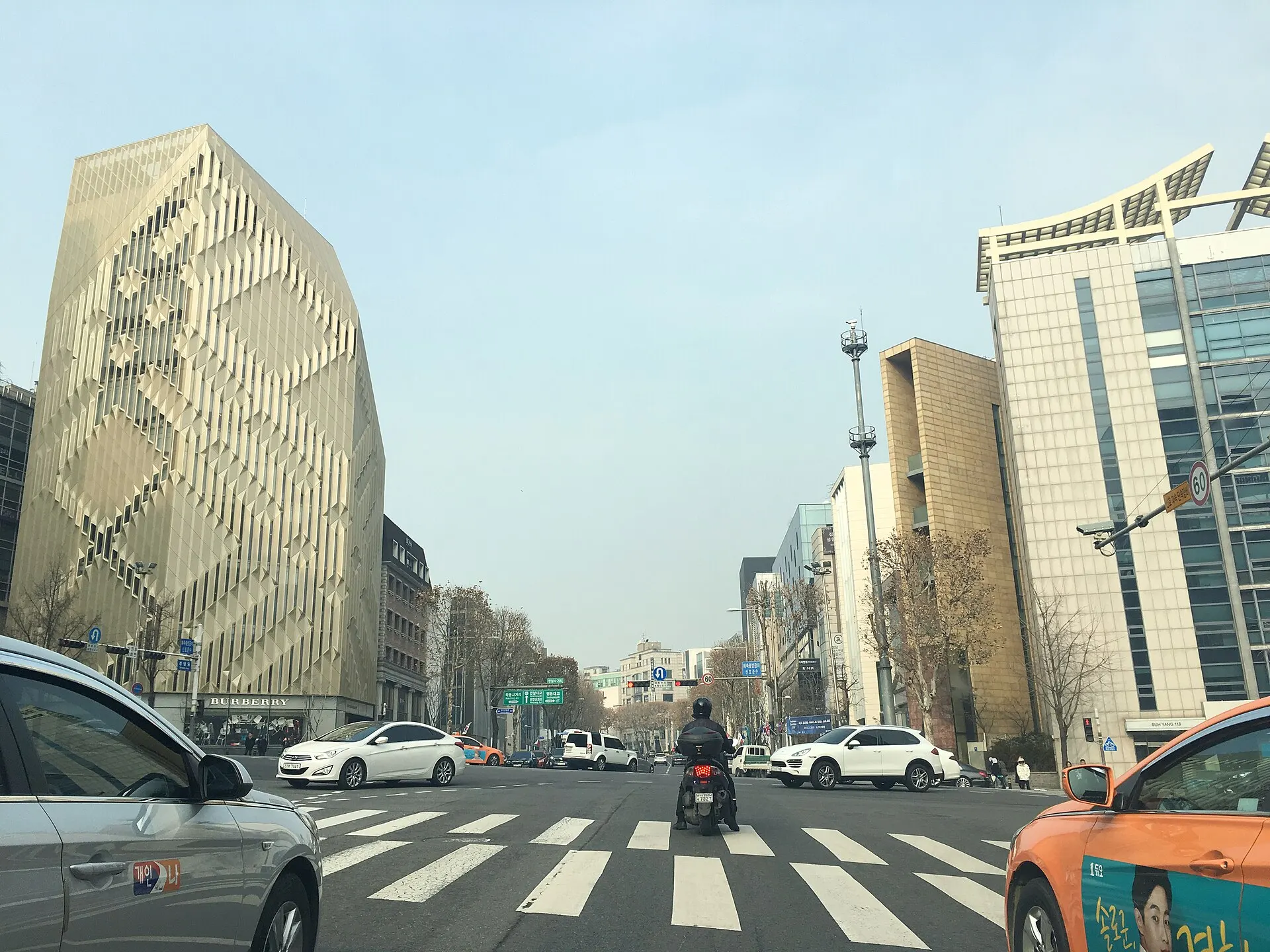
Cheongdam in 2017. Photo: Cyberdoomslayer, via Wikimedia Commons, CC BY-SA 4.0 1995 Techno at M.I
DJ Unkle opens M.I in Hongdae (홍대), one of the first rooms to play techno to a crowd.
2001 Club Day
One wristband, a dozen clubs. Hongdae’s monthly night begins on 30 March.
2008 Eden
Opens under the Ritz-Carlton with the biggest floor in Seoul.
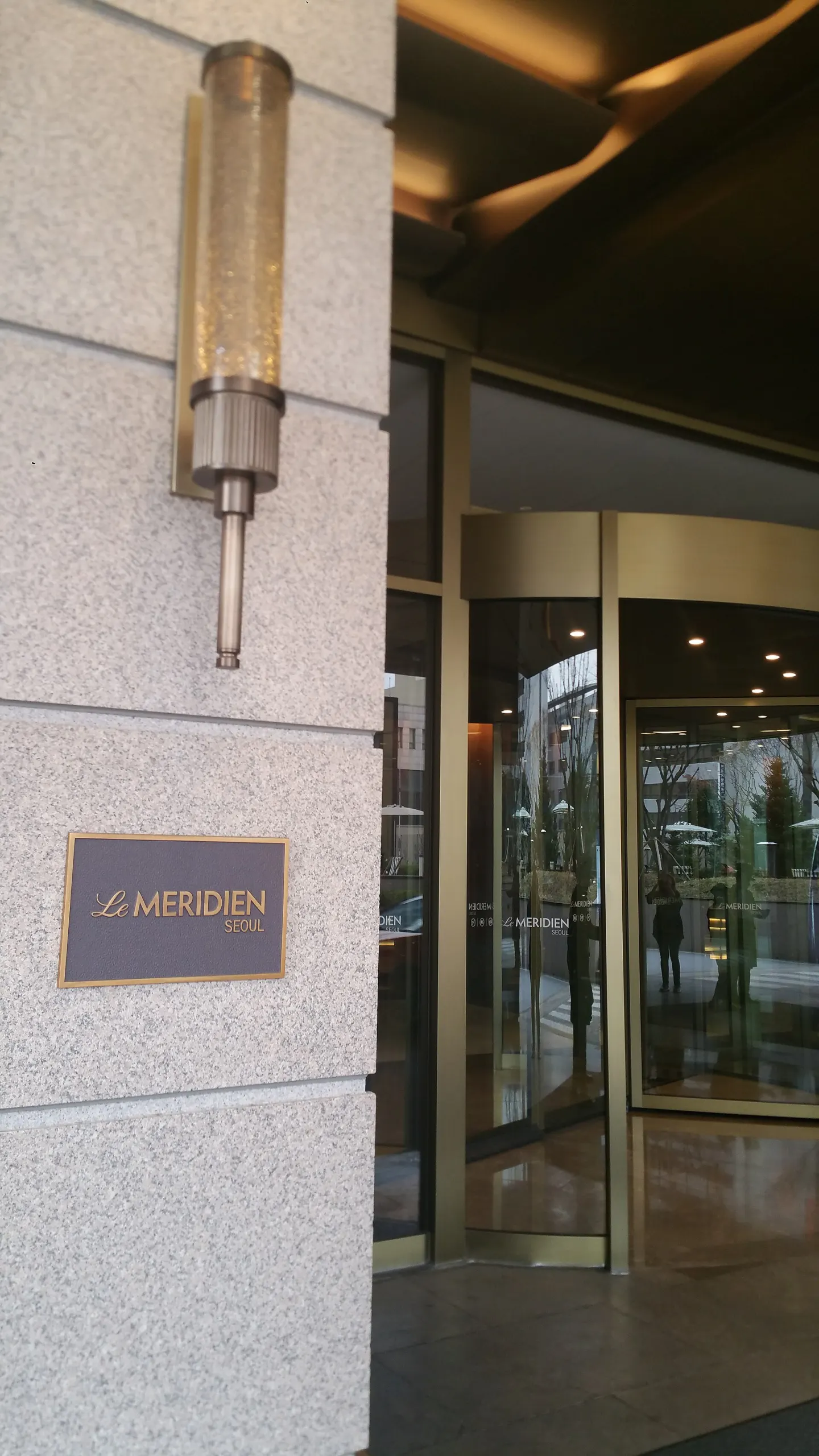
The former Ritz-Carlton on Bongeunsa-ro in 2019, by then Le Méridien. Its basement held Eden, Base and Burning Sun. Photo: Bonnielou2013, via Wikimedia Commons, CC BY-SA 4.0 2011 Octagon opens
The megaclub era begins in Gangnam. Club Day stops in January. Lowrise opens in Mullae (문래).
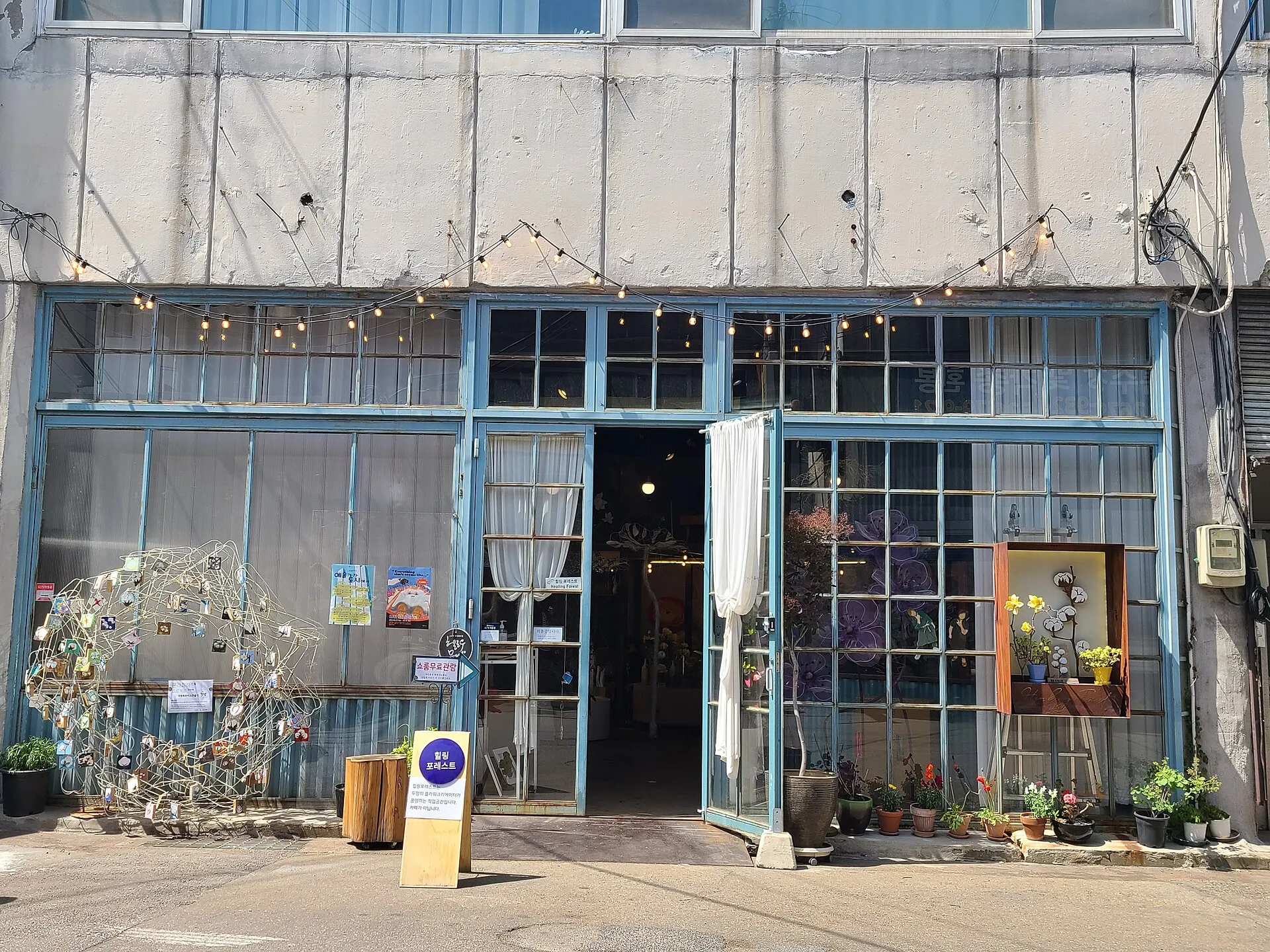
Mullae's creative village among the metal shops, 2022. Photo: 나선우, via Wikimedia Commons, CC BY-SA 4.0 2014 The underground builds
Faust in Itaewon and Vurt in Hapjeong (합정). Gangnam table clubs take off.
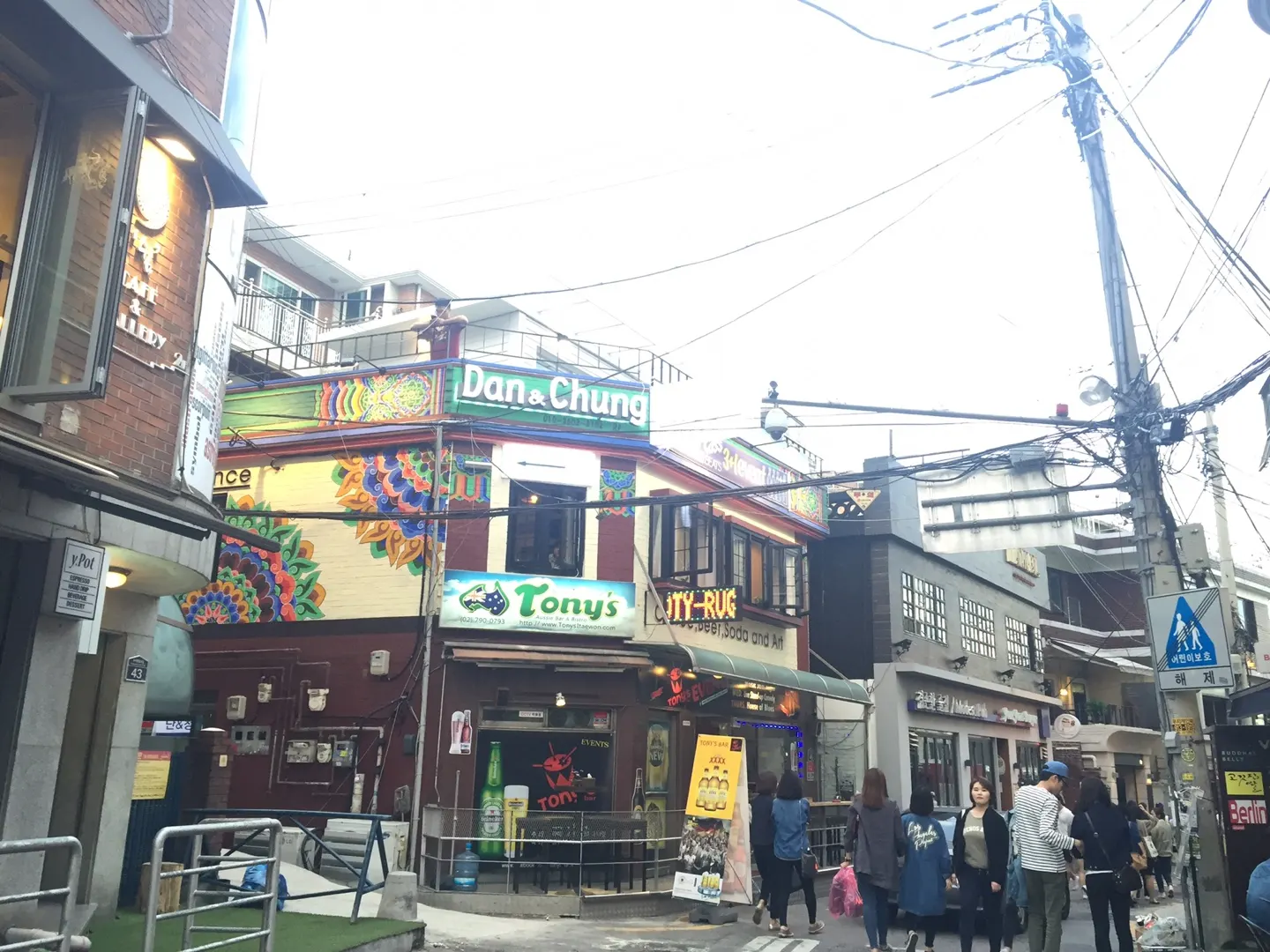
Itaewon's pub street in 2015. Photo: Shinae Hyun, via Wikimedia Commons, CC BY-SA 4.0 2020 COVID
Seoul closes all entertainment venues in May. Octagon, Vera, MWG and DGBD shut.
2022 29 October
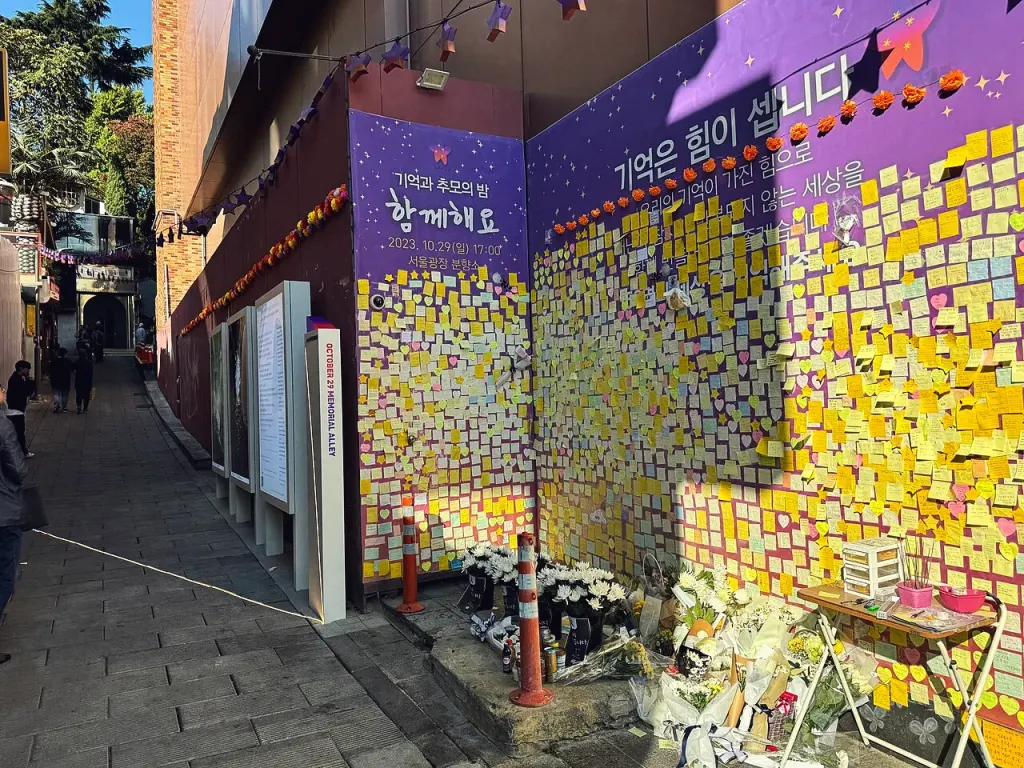
159 people die in the crowd crush beside the Hamilton Hotel.
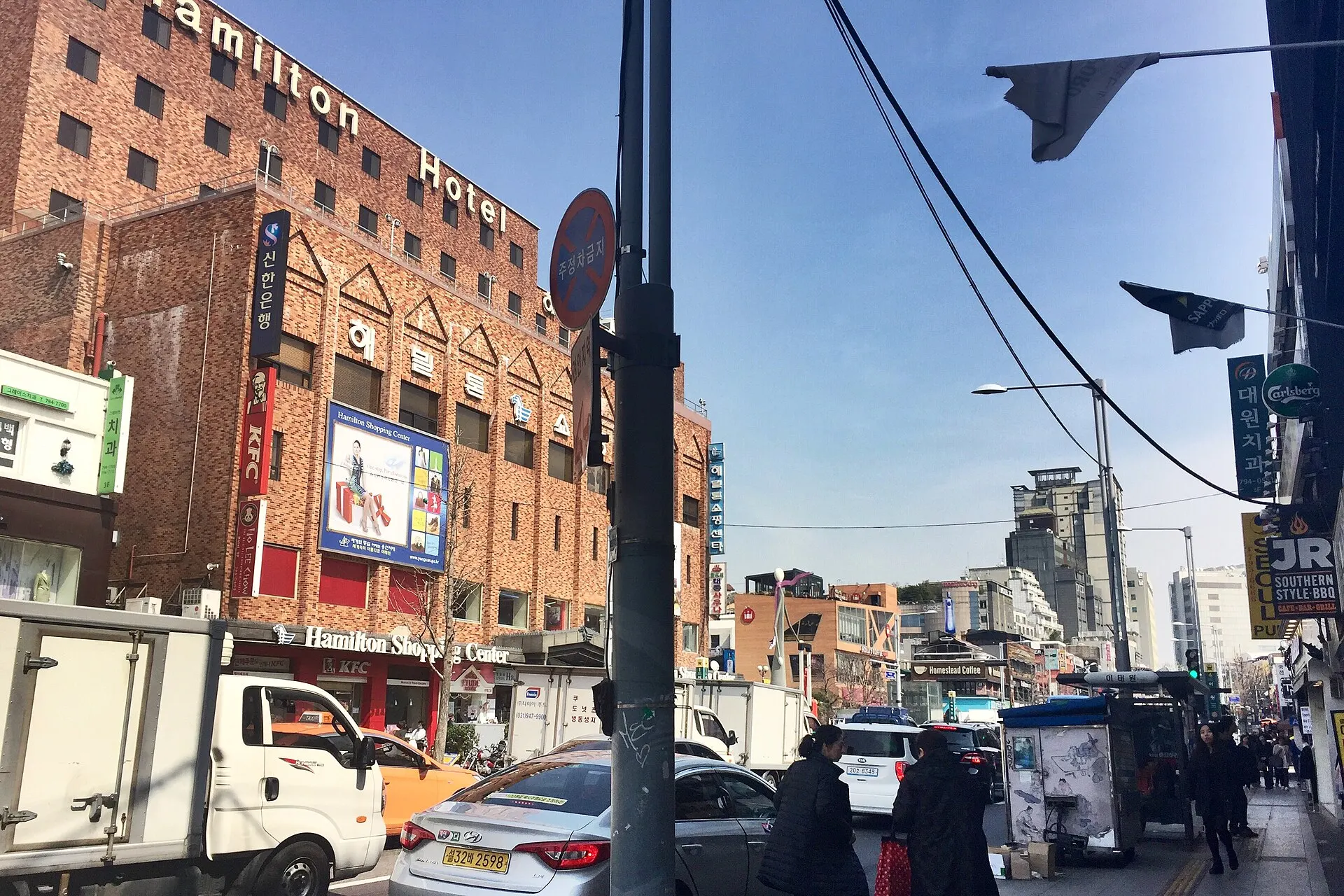
The Hamilton Hotel on Itaewon-ro in 2016, the landmark the whole district was mapped around. Photo: anokarina, via Wikimedia Commons, CC BY-SA 2.0 2023 Small rooms
DJ owned rooms open across Itaewon and JJ Mahoney’s live room reopens.
2026 Lion and a farewell
Lion opens on the old Answer site in Cheongdam. DJ Unkle dies in August.
1957 to 1969: The Base, the Bands and the Twist
Seoul’s club story begins with soldiers. The Korea Times dates the UN Club in Itaewon (이태원) to 1957, and a run of GI clubs followed through the late 1960s with names like 007, Playboy, King, Seven, American and Lucky. K Club was trading as a foreigners club by 1964 and lasted, under different owners and crowds, until 2024. The music was whatever the soldiers wanted: big band, rock and roll, country and soul, played by Korean show bands who learned the American songbook on the Eighth Army circuit.
Those bands are the hidden root of Korean pop. The same players who worked the base clubs at night recorded the first Korean rock and soul records, and when the twist craze hit in the 1960s, Seoul’s first gogo halls (고고장, gogojang) put live bands on stage with a record player filling the gaps between sets. That record player, and the person minding it, is where the Seoul DJ comes from.
The 1970s: Discotheques Against the Curfew
From 1945 until January 1982, Seoul had a midnight curfew. Going out meant either going home early or staying in until 4am, and the city’s first real discotheques were built around that second option. In February 1970 the Cosmos Room started “gogo time” in Myeongdong (명동), and the same year Midopa Cabaret opened a gogo room of its own.
The most ambitious room of the decade opened under a hotel. On 2 January 1971, after a New Year’s Eve preview, Tomorrow opened in the basement of the new Chosun Hotel in Sogong-dong. The Korea Times describes strobe lights across a copper dance floor, a DJ booth and lighting rig designed by AFKN DJ Joe Policy, and Filipino house bands The Wild Five and The House Rockers. It seated about 350 and billed itself as Korea’s first psychedelic discotheque. It ran until 4am, when the curfew lifted, and some owners of that era went further, building inns (여관, yeogwan) next door for anyone stranded at midnight.
Outside the hotels, the action was in Mugyo-dong (무교동) and Hoehyeon-dong. Nirvana (닐바나) in Hoehyeon-dong was the engine of the “group sound” band boom, Korea’s psychedelic rock moment, and by 1976 the Mugyo-dong quarter held about 230 entertainment venues, the Copacabana nightclub among them. Then the bulldozers came. The government cleared Mugyo-dong for redevelopment from 1976, and a 1971 order against “decadent” culture had already pushed gogo halls to close earlier. Jazz found its own corners: All That Jazz (올댓재즈) opened in Itaewon in 1976 and Janus (야누스) in Sinchon (신촌) in 1978, and both still argue about which was first.
Seoul’s Hotel Basements: Where the City Went Out for Forty Years
If one thread runs through Seoul club history, it’s the hotel basement. From the 1960s into the 2010s, many of the city’s biggest rooms sat under tourist hotels (관광호텔, gwangwang hotel). Hotels were built to earn foreign currency, they had the floor space, and they could run an entertainment licence alongside the rooms upstairs. The law behind that is its own subject. What matters for the dance floor is that the hotel basement became the place where Seoul’s money, its foreigners and its nightlife met.
Walkerhill, 1963
Walkerhill (워커힐) opened in 1963 on the eastern edge of the city, built to earn dollars from UN forces and visitors. Newsis reports that Louis Armstrong played the opening, with a fifteen year old Yun Bok-hee (윤복희) as his guest. The Walkerhill Show ran from 1963 until 2012 and drew millions. It was a theatre restaurant rather than a disco, but it set the template: the hotel as Seoul’s official night out.
The Riverside Hotel and Mul Night, 1981
Mul Night (물나이트) opened with the Riverside Hotel in Jamwon-dong in 1981, on the hotel’s lower lobby level, with more than fifty rooms around a dance floor. Cho Yong-pil performed there. It outlived the hotel’s 1995 bankruptcy and closed in November 2014 after 33 years, which Seoul Shinmun put down to the decline of nightclub culture. The space became a lounge and steakhouse.
The Seoul Hilton, 1983
Kim Chong-soung’s Seoul Hilton opened on the slope below Namsan in December 1983, one of the finest modernist buildings in the city. It closed on the last day of 2022, as the Korea Times recorded, and demolition began in 2025. Some former regulars remember a basement nightclub there, and on one Korean forum thread it’s called Pharaoh, or New Pharaoh. We couldn’t confirm the name in any news archive, so if you danced there, we’d love to hear what it was really called.
JJ Mahoney’s at the Grand Hyatt, 1988
JJ Mahoney’s (제이제이 마호니스) opened at the Grand Hyatt on Namsan in June 1988, in the run up to the Seoul Olympics, according to the JoongAng Daily. It was built as a complex of rooms rather than one floor, with a resident house band, DJs and a long bar, and it has had a band on its stage ever since. Its 25th anniversary party in 2013 spilled out into the hotel pool. The hotel itself opened as the Hyatt Regency in 1978. JJ’s went dark for about three years during the pandemic and its live room reopened in December 2023, as the JoongAng Daily reported. Namuwiki describes the crowd now as mostly people in their thirties and forties, some of them the same Gangnam regulars who were dancing in the 1990s.
The Hamilton and the Capital, Itaewon
The Hamilton Hotel (해밀톤호텔) opened on Itaewon-ro in 1973, founded by Lee Chul-su, whose Hankyung obituary called it the landmark of Itaewon. For fifty years the district has been mapped around it: you meet in front of the Hamilton, and you walk up the hill behind it. We found no reliable record of a nightclub in its basement. What the Hamilton is remembered for, according to Namuwiki, is its rooftop pool parties in the 2000s and 2010s, some of the first in Seoul. The alley beside the hotel is where 159 people died in the crowd crush of 29 October 2022.
A few minutes down the road, the Capital Hotel (캐피탈호텔) opened in 1988 with a nightclub, karaoke rooms and a sauna, as ArchDaily notes in its story of the building’s rebirth as Mondrian Seoul Itaewon in 2020. The nightclub’s name isn’t recorded in anything we could find.
Gangnam’s hotel nightclubs, 1990s
South of the river, the 1990s belonged to hotel nightclubs. The biggest name was Juliana (줄리아나), which ran from 1994 to 2007 in the basement of the Emerald Hotel, renamed Hotel Ellui in 1997, at Cheongdam-dong 129 by Yeongdong Bridge. Chosun reports queues of about 100 metres and sales of ₩1.8 billion to ₩1.9 billion a month, even through the 1997 financial crisis. The crowd was politicians’ children, chaebol heirs, celebrities and athletes, and the business ran on booking, with waiters tipped for better tables. Around it were Boss at the Sunshine Hotel in Sinsa, Club I at the Riviera Hotel in Cheongdam, later H2O Night, and Danco at the New World Hotel, modelled on Juliana’s Tokyo. Design Week reported in 1996 that Samsung was building an 800 square metre nightclub inside the Hotel Shilla, designed by London’s Virgile and Stone.
Juliana’s basement had a second life. Around 2011 it reopened as Club Ellui, a 4,000 capacity room with Funktion-One sound throughout, according to MC2 Audio. DJ Mag ranked it 39th in the world in 2013. The hotel was sold in 2016, as Sisa Journal e reported, and the site is now The Penthouse Cheongdam, one of Korea’s most expensive apartment blocks.
The Ritz-Carlton and the New Hilltop, 2008 to 2020
The last great hotel basements were megaclubs. Eden opened under the Ritz-Carlton on Bongeunsa-ro in December 2008, with what Trazy called the largest dance floor in Seoul. The same basement became Base in 2015 and Burning Sun in 2018, which closed in February 2019 amid the scandal that bears its name. In Nonhyeon, Octagon opened under the New Hilltop Hotel in November 2011, on the old site of the Baskia nightclub. With about 3,000 capacity and its own resident crew, it reached fifth in DJ Mag’s world ranking in 2016 and 2017. It closed in March 2020.
The 1980s: Curfew Lifted, Booking Born
The curfew ended on 5 January 1982, and the night got longer. This is the decade booking (부킹, buking) was born, the practice of waiters leading guests from one table to another. DJ Shin Chul (신철) has told MBC radio that it began with DJs visiting women’s tables to build a following, before the waiters turned it into a system. In 1983 a disco DJ association formed, and a Rock and Disco Festival was held at the Lotte Hotel.
In Itaewon, the music turned toward black America. Sportsman’s had opened in 1978 as the first foreigner club that also welcomed Koreans, and by the mid 1980s Moon Night (문나이트) was the room that mattered. About 80 pyeong, it played soul, new jack swing and hip hop to a crowd of dancers who would go on to build Korean pop. Lee Soo-man found Hyun Jin-young there, and Yang Hyun-suk, Park Jin-young, Lee Ju-no, Koo Jun-yup and Kang Won-rae were regulars. Kang Won-rae later tried to revive it. For about a decade after 1986, the moves on Korean television started on that floor.
The 1990s: Rock Cafés, Hongdae and Techno
Two things happened at once in the early 1990s. In Sinchon, rock cafés (락카페, rakkape) filled with students dancing between the tables to Seo Taiji and Boys. They were registered as restaurants, so when the police came the lights went up and everyone sat down. Sinchon had 53 of them by October 1992. The Rolling Stones rock café fire on 29 September 1996 killed 12 people, and the format faded soon after.
A few stops west, Hongdae (홍대) was turning into a scene. SKA and Baljeonso (발전소) opened in 1992 and 1993, Drug opened in Sangsu in 1994 and became the birthplace of Korean indie, and Hwanggeum Tugu (황금투구) started a trance club that would later become Myeongwolgwan and MWG. In 1995 DJ Unkle opened M.I, one of the first rooms in Seoul to play techno to a crowd, alongside Joker Red, Matmata, Hodge Podge and Underground. Yang Hyun-suk opened nb in December 1999 and gave Hongdae a hip hop home. The same year, live clubs gained legal standing. Before that, as DJ Soulscape has explained, the law counted a DJ as entertainment staff.
Elsewhere, the colatec (콜라텍, kollatek) arrived: alcohol free discos for teenagers that, over the next twenty years, turned into daytime dance halls for seniors. Some of them are still running in Yeongdeungpo.
The 2000s: Club Day and the European Rooms
On 30 March 2001, nb, M.I, Underground and SSAB launched Club Day (클럽데이), one wristband for a night across Hongdae’s clubs. It began at about 800 people and grew to around 10,000 a month, with more than twenty venues by 2010. In May 2004, M.I and Matmata merged into M2, Hongdae’s biggest electronic club, where Paul van Dyk played in 2005. Club Day ran 117 times before stopping in January 2011, and came back as Live Club Day in 2015. DJ Unkle, who did as much as anyone to build it, died in August 2026.
Gangnam (강남) answered with what people called European style clubs. Circle opened in 2006, Answer in 2007 with Paul van Dyk, Benny Benassi and Justice on its posters, and Eden at the Ritz-Carlton in 2008. The music moved from Korean dance pop to house and electro, and the clubs started to borrow the nightclub’s tables, the first sign of what came next.
Hongdae’s dance rooms in those years had their own map. The Club Day line up that Seoul Shinmun listed in October 2002 ran from Matmata (마트마타) for techno and relaxed house, to Myeongwolgwan (명월관) for trance, NB and DD for hip hop, M.I for long running techno and SAAB (사브) for what the paper called high end techno, with SKA for backpackers and foreigners. Pressian names NB, M.I, Underground and SSAB as the four clubs that started Club Day in March 2001, while a JoongAng Daily account names Club 108, M1, Joker Red and Myeongwolgwan. Both versions agree it began with a handful of rooms and a shared wristband.
By 2004, Electronic Times’ club guide described Matmata playing European techno, disco house and funky house, Hodge Podge (흐지부지) moving from rock and hardcore into indie late at night, MWG on progressive and funky house and NB on hip hop with a second room for everything else. That year M.I and Matmata merged into M2, which JoongAng Daily later called the area’s biggest electronic club. NB sat across the street from Stompers, and in late 2002 Hodge Podge became one of about ten Hongdae clubs that turned away US soldiers, JoongAng Daily reported. Smaller rooms came and went fast. Tool was well enough known by 2007 that Korea Times listings used it as the corner landmark for finding Club FF on Wausan-ro 17-gil. MWG, which traced its roots to 1994, held on at 362-12 Seogyo-dong until it closed in September 2020, a loss Gulf News covered as one of the pandemic’s casualties.
Itaewon ran on a different clock. Hollywood opened on a third floor in 1994, spread to the second floor and then the basement, and was already fading when Limelight (라임나이트) opened in May 2003 in the basement at the Hamilton Hotel car park entrance, the old Vivace (비바체) space, as JoongAng Daily reported that August. Regulars remember an earlier nightclub in the Hamilton’s own basement through the 1980s and into the mid 1990s, later turned into a sauna, though that account comes from a fan forum thread rather than the press. Limelight was still running under that name in 2004. Around 2006 the lounge format arrived with B1 (비원), which opened halfway up the sloping alley on the west side of the Hamilton, the same alley where the 2022 crowd crush happened, and called itself the first Korean club to build lounge culture. B1 later moved into a much bigger room at 179 Itaewon-ro, the old Limelight basement in the Hamilton building, on 1 February 2013, and Luv Superlounge near Itaewon station exit 1 was listed by the Korea Times in 2014 before it became House Ming.
2010 to 2019: Megaclubs, Tables and the Underground
For most of the 2010s, Seoul was one of the world’s big club cities on paper. Octagon climbed DJ Mag’s list from 97th in 2012 to fifth in 2016. Club Ellui and The A made the top 100 too, and in 2019 so did Chroma at Paradise City in Incheon. The sound was EDM and big room house, and the business, increasingly, was the table. Money Today reported Gangnam table prices rising from about ₩250,000 around 2014 to ₩1 million or ₩2 million by 2019. The dance floor shrank as the tables grew.
Underneath that, a different scene was building. Faust opened in Itaewon around 2014, Vurt in Hapjeong the same year, Volnost in 2017, and Seoul Community Radio started broadcasting in 2016. These were small rooms with serious sound, run by DJs and booking techno and house that would never fill a megaclub. They are the reason Seoul still has a scene.
The Big Rooms: Stadiums, Arenas and Festival Grounds
The clubs tell one story and the big rooms tell another. Ultra Korea filled Seoul Olympic Stadium (서울올림픽주경기장, Seoul Ollimpik Jugyeonggijang) from 2012 to 2016 and again in 2018 and 2019. World DJ Festival started at Nanji Hangang Park (난지한강공원, Nanji Hangang Gongwon) in 2007, and Boiler Room brought its cameras to S-Factory in Seongsu in 2022. The map below holds the arenas, halls and festival grounds where Seoul’s largest dance nights have happened, each with its capacity and a show we could source.
Seoul concert and event halls
Venues on this map: KSPO Dome (KSPO DOME (올림픽체조경기장)), 424 Olympic-ro, Songpa-gu; Olympic Hall (올림픽홀), 424 Olympic-ro, Songpa-gu; Ticketlink Live Arena (티켓링크 라이브 아레나), 424 Olympic-ro, Songpa-gu; Woori Art Hall (우리금융아트홀), 424 Olympic-ro, Songpa-gu; 88 Lawn, Olympic Park (88잔디마당), 424 Olympic-ro, Songpa-gu; Seoul Olympic Stadium (서울올림픽주경기장), 25 Olympic-ro, Songpa-gu; Jamsil Auxiliary Stadium (잠실종합운동장 보조경기장), 25 Olympic-ro, Songpa-gu; Seoul Land (서울랜드), 181 Gwangmyeong-ro, Gwacheon-si, Gyeonggi; Paradise City (파라다이스시티), 186 Yeongjonghaean-ro 321beon-gil, Yeongjong-gu, Incheon; Inspire Arena (인스파이어 아레나), 127 Gonghangmunhwa-ro, Yeongjong-gu, Incheon; KINTEX (킨텍스), 217-60 Kintex-ro, Ilsanseo-gu, Goyang-si, Gyeonggi; Gocheok Sky Dome (고척스카이돔), 430 Gyeongin-ro, Guro-gu; YES24 Live Hall (예스24 라이브홀), 20 Gucheonmyeon-ro, Gwangjin-gu; Blue Square Woori WON Banking Hall (블루스퀘어 우리WON뱅킹홀), 294 Itaewon-ro, Yongsan-gu; Jangchung Arena (장충체육관), 241 Dongho-ro, Jung-gu; Dongdaemun Design Plaza (DDP) (동대문디자인플라자), 281 Eulji-ro, Jung-gu; Nanji Hangang Park (난지한강공원), 162 Hangangnanji-ro, Mapo-gu; Oil Tank Culture Park (문화비축기지), 87 Jeungsan-ro, Mapo-gu; S-Factory (에스팩토리), 11 Yeonmujang 15-gil, Seongdong-gu; Incheon Munhak Stadium (인천문학경기장), Munhak-dong, Michuhol-gu, Incheon.
2019 to 2022: Scandal, COVID and the Crush
Three blows landed in four years. Burning Sun closed in February 2019 and took the reputation of Gangnam clubbing with it. In May 2020 a COVID cluster in Itaewon led Seoul to close all entertainment venues, and Octagon, Vera, MWG and DGBD all shut that year. Then, on 29 October 2022, 159 people died in the alley beside the Hamilton Hotel. The clubs closed for the mourning period, and Itaewon’s card sales were down by more than half the following February.
2022 to 2026: Smaller Rooms, Older Crowds, New Districts
What came back is smaller and more music first. Itaewon has a run of small, DJ owned rooms that opened from 2022 onward, and Volnost moved into a two floor building in 2023. In Gangnam, Lion Super Club opened in January 2026 on the old Answer site, and small basements like Muse and Times run house and underground nights in Apgujeong. The Juliana name came back in 2025 near Hakdong, run by its former boss Oh Deuk-su (오득수) with Kim Sung-soo of Cool, for a crowd that is mostly in its forties and fifties. In the industrial west, Mullae (문래) has bars and music rooms among the metal shops, from Lowrise in 2011 to GBN Live House, as the Korea Times has followed. Euljiro (을지로) has its listening bars upstairs from the print shops.
The habits have changed too. Card data published in 2026 showed people in their twenties spending about half what they did at bars in 2023, and running crews, LP bars and canned highballs are growing. Seoul’s 2026 night economy plan didn’t mention clubs at all. The rooms that are thriving are the ones that treat the music as the reason to come.
The Sound of Each Era
Put the decades side by side and the city’s soundtrack reads like this. The base clubs played American big band, rock and roll and soul. The 1960s and 1970s belonged to gogo and the group sound bands, then to disco in the hotel discotheques. The 1980s and 1990s split into two worlds: the booking nightclubs with their Korean dance pop and trot medleys, and Itaewon’s black music rooms that taught Korean pop to dance. Hongdae brought indie rock, then techno, trance and hip hop. Gangnam went from house and electro to EDM, and the table clubs followed. Since the 2010s, underground techno and house have carried the scene in small rooms, while the nostalgia nights bring the 1990s back for the people who were there. Seoul’s house music lineage in particular is deep and underrated, and much of it was built in rooms that held fewer than two hundred people.
Listen through the eras
- 1964 · Add4 (애드포), 빗속의 여인 (Woman in the Rain)
Shin Joong-hyun’s group sound era, as played in the base and downtown clubs - 1971 · Kim Choo-ja (김추자), 거짓말이야 (It’s a Lie)
The gogo hall years before the 1975 crackdown - 1992 · Hyun Jin-young (현진영), 흐린 기억 속의 그대
Itaewon’s black music rooms going mainstream - 1996 · Clon (클론), 꿍따리 샤바라
The booking nightclub and dance pop peak - 1990s · Crying Nut (크라잉넛), 말 달리자
Hongdae’s live club punk years - 2004 · Clazziquai (클래지콰이), Sweety
House and lounge pop from the Club Day era - 2005 · Epik High (에픽하이), Fly
The hip hop that filled NB and DD - 2017 · Yaeji, Raingurl
A Korean American house record that the small rooms took to heart - 2019 · Peggy Gou, Starry Night
Korean born house going global - 2010s · Mogwaa, Boiler Room: Seoul
The underground techno that carries the small rooms now
Links go to official artist, label, broadcaster or Boiler Room uploads on YouTube.
The People Who Could Tell This Better
Most of this history lives in people, not archives. We’d love to sit down with the DJs who played Moon Night and M.I, the staff who ran Juliana and JJ Mahoney’s, the founders of Octagon and the crews who built Itaewon’s small rooms, and anyone who remembers what the Hilton’s basement club was called. If that’s you, or someone you know, the contact page is always open.
Frequently Asked Questions
What was Seoul’s first nightclub?
Clubs for American soldiers in Itaewon came first, with the UN Club dating to 1957. Tomorrow, which opened in the Chosun Hotel basement on 2 January 1971, is the earliest documented hotel discotheque.
Why were so many Seoul nightclubs in hotel basements?
Tourist hotels were built to earn foreign currency, had the space, and could run entertainment licences alongside their rooms. Under the midnight curfew that lasted until 1982, rooms like Tomorrow simply ran until the curfew lifted at 4am.
When did JJ Mahoney’s open?
JJ Mahoney’s opened at the Grand Hyatt Seoul in June 1988, ahead of the Seoul Olympics. Its live room reopened in December 2023 after a pandemic closure.
What happened to Juliana in Cheongdam?
Juliana ran from 1994 to 2007 in the basement of the Emerald, later Ellui, Hotel. The space became Club Ellui around 2011, the hotel was sold in 2016, and the site is now The Penthouse Cheongdam. A Juliana revival opened near Hakdong in 2025.
What music did Seoul clubs play in the 1990s?
Gangnam nightclubs played Korean dance pop and Eurodance with booking, Sinchon rock cafés played Seo Taiji, Itaewon played soul, new jack swing and hip hop, and Hongdae moved from indie rock to techno and trance by the late 1990s.
Sources and Further Reading
Facts in this piece and in the map come from the sources below. Namuwiki is crowd edited, so its claims are attributed to it. Where sources disagree on a year, the map shows the best supported date and the story says so.
- Seoul Shinmun: W세대 THE CLUB DAY (17 Oct 2002)
- Kyunghyang Shinmun: 홍대 앞 클럽문화의 오늘 (10 Dec 2003)
- Pressian: 종로→명동→신촌→홍대 청년문화 잔혹사 (22 Jul 2011)
- Electronic Times: 홍대 클럽 트렌드 (27 Nov 2004)
- JoongAng Daily: Sorry, soldier, can’t let you in (6 Jan 2003)
- JoongAng Daily: Hongdae’s bohemian raps and dancing (19 Nov 2010)
- JoongAng Daily: Hooray for Hollywood (19 Aug 2003)
- Korea Times: Around Town listings (3 May 2007)
- Korea Times: Around Town (6 Mar 2014)
- Gulf News: COVID-19 kills one of Seoul’s oldest underground music venues (30 Sep 2020)
- Trazy: Club MWG listing
- Trazy: B1 lounge club listing
- Trazy: NB2 listing
- Daum cafe: Itaewon nightclubs of the 1980s to mid 1990s (fan memory thread)
- Korea Times, Morning Calm Tales: Itaewon’s evolving soul (2025)
- Korea Times, Korea Encounters: tales from the Chosun Hotel in 1970 (2024)
- Newsis, Walkerhill and the Walkerhill Show (2024)
- Seoul Shinmun, Mul Night closes after 33 years (2014)
- Korea Times, Millennium Hilton Seoul disappears into history (2022)
- Clien forum thread on the Hilton, unverified memories of the basement club
- JoongAng Daily, JJ Mahoney’s 25th anniversary (2013)
- JoongAng Daily, hotel bars reopen (2023)
- Hankyung, Hamilton Hotel founder obituary (2014)
- Namuwiki, Hamilton Hotel
- ArchDaily, Mondrian Seoul Itaewon
- Chosun via Daum, Juliana and Gangnam’s hotel nightclubs (2025)
- Time Out Seoul, The return of the nightclub
- Design Week, Nightclub in South Korea (1996)
- MC2 Audio, Korea’s king of clubs (Club Ellui)
- DJ Mag Top 100 Clubs 2013, Ellui
- Sisa Journal e, Ellui Hotel sale (2016)
- Asia Economy, the old nightclubs of Gangnam (2022)
- Trazy, Club Eden
- Wikipedia, Burning Sun scandal
- DJ Mag Top 100 Clubs 2019, Octagon
- Namuwiki, Hongdae Street clubs
- Namuwiki, Gangnam clubs
- Korea Times, Mullae’s machinists, artists and café owners (2019)
- Lowrise Seoul
- Seoul Shinmun archive reporting on Sinchon rock cafés (1992), the Rolling Stones fire (30 September 1996) and Club Day (2002, 2011, 2015)
- Money Today on Gangnam table prices (14 March 2019)
- Star News on the Moon Night revival (24 March 2021)
- GQ Korea interview with DJ Soulscape (2021)
- Period photographs from Wikimedia Commons, 공유마당 and the U.S. National Archives, credited under each image
Written from Seoul, by someone who has been in the booth for 25 years. More on the site, or book a DJ.
Stay in the Loop
New writing on DJ culture, electronic music, and the Seoul underground, delivered when it matters.
More From The DJ Diaries
Play with the history
Four tools built from the same research as this site.