
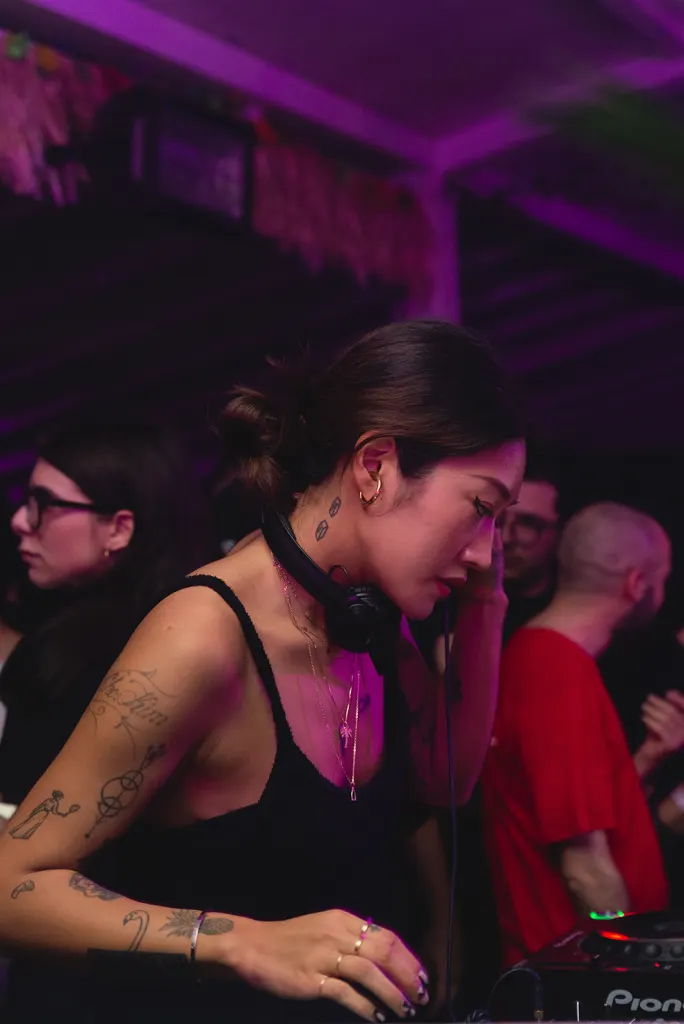
Lead photo: Peggy Gou press photo. Used for editorial purposes.
The first time I heard a radio host talk about Peggy Gou with the kind of reverence usually saved for Daft Punk or The Chemical Brothers, I was in a cab in Seoul, sometime around 2017. A Korean-born DJ, the host said, had taken Berlin’s underground by storm.
I remember thinking: this doesn’t happen.
Not because Korean DJs lack talent, but because the road from Seoul to the top of Berlin’s club world had barely been walked. She walked it without apologizing for being Korean and without playing the exotic outsider. She just showed up and was better.
Peggy Gou, 1991 to 2026
Incheon, London, Berlin, and every stage after
인천에서 베를린까지, 페기 구의 길
- 11991Born 김민지 in Incheon Sent to school in London as a teenager
- 22016Day Without Yesterday On Phonica White
- 32018Once Ninja Tune. It Makes You Forget (Itgehane)
- 42019Gudu Records Her own label, Korean for shoes. DJ-Kicks
- 52023(It Goes Like) Nanana XL Recordings. DJ Mag Top 100 No. 9
- 6Jun 2024I Hear You Her debut album
- 726 Jun 2026Wo,man With Ayra Starr
She sings in Korean on her biggest club records, and Pitchfork calls her the first Korean woman to play Berghain.
UK No. 5 peak for (It Goes Like) Nanana in July 2023, with 12 weeks in the Top 10 and 25 in the Top 100.
No. 10 in the DJ Mag Top 100 DJs 2024, the highest ranked Asian DJ on the list.
Sources: Official Charts · Bandwagon
Incheon, London, Berlin

She was born Kim Min-ji in Incheon, and her parents sent her to school in London as a teenager. At the London College of Fashion she spent her weekends dancing at Plastic People and Corsica Studios. A friend in Korea had already shown her how to beatmatch, she told The Guardian.
Then Berlin. Her own summary of those years is better than anything I could write: “working at a record store, working on music at home, Berghain every Sunday.”

Berlin is the centre, and it has its own way of deciding who belongs. In the record store, she said, she was “always the outsider.”
The outsider went on to become, by Pitchfork’s account, the first Korean woman to play Berghain.

A Set Is Not a Playlist
What struck me when I first listened to her early mixes was how coherent her taste was. You can hear a DJ who thinks about the relationship between tracks as much as the tracks themselves. A set is an architecture, not a playlist.
The records came in 2016: the two-part Art of War on Rekids, and “Day Without Yesterday” for the Phonica White series out of the London shop where she used to dig. They’re built on MPC rhythms and pull from Chicago house, Detroit techno, boogie and Italo disco. Pitchfork heard house music splashed “with color until it’s as splotchy as a tie-dyed piece of fabric.”
The DJs she admires tell you how she plays. “I really like Detroit DJs, like Maurice Fulton,” she said. “You feel like he’s going to play something techno, then all of a sudden it’s disco.”
She built credibility in the room where it’s hardest to earn, long before casual fans knew her name.
The Chorus Nobody Could Translate
In 2018 she released the Once EP on Ninja Tune, and the standout was “It Makes You Forget (Itgehane).” It was the first time she had sung on a record, and she sang in Korean.
It’s not a banger in the usual sense. There’s no drop that throws hands in the air. Her voice moves between murmuring and singing, the spoken parts sit low in the mix, and the chorus has a lilting cadence that Pitchfork compared to Brazilian pop. The patient repetition builds into something close to a trance state.
I remember hearing it for the first time and feeling something I hadn’t felt in years. There’s a texture to that track that comes from someone who understands both minimalism and soul, who uses space and silence as much as sound.
Then the crowds started singing it, in Korean, without knowing the words. “They don’t even know how to sing these lyrics,” she told The Guardian, “and they still love it.”
She wasn’t going to pretend to be European.
Nanana Goes Everywhere
“(It Goes Like) Nanana” came out on XL Recordings in June 2023 and went to number 5 on the UK Singles Chart. It spent 25 weeks on that chart and went to number 1 on the dance and independent charts. She told the Korea Herald she had worked on it for three years.
I was in Seoul when that song started showing up on mainstream radio, and I didn’t know what I was hearing at first.
It’s a 1990s house hook engineered for one purpose: to make a room move together. It works at 3 AM in a club and on daytime radio. Most tracks that try to do both give one up. This one didn’t, and it earned her a 2024 Brit Awards nomination.
The debut album, I Hear You, followed on XL in June 2024, with Lenny Kravitz on “I Believe In Love Again.” Pitchfork wished it had more anthems. Nobody was arguing about the singles.
Gudu Means Shoes
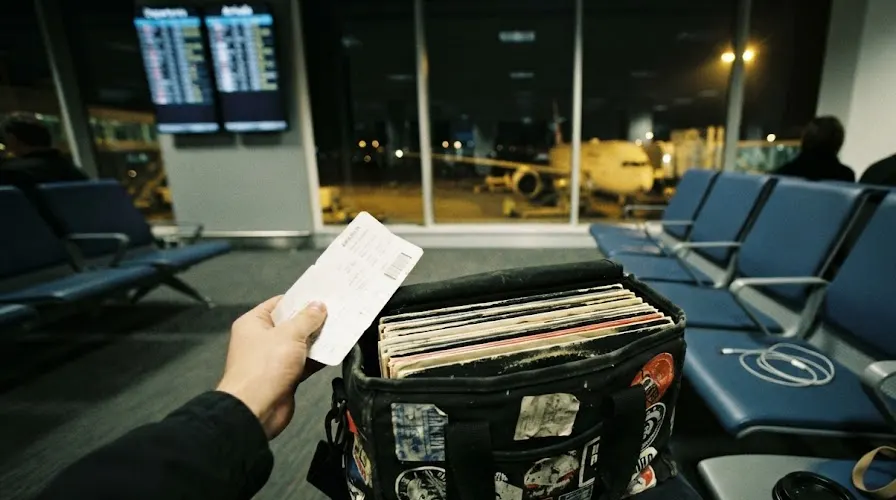
In 2019 she started her own label, Gudu Records, and launched it with her own Moment EP, which carried “Starry Night.” The name is the Korean word for shoes, and, as RA reported, a play on “Gou do.” The artist Jee-ook Choi, who drew the Once sleeve, took on the label’s art direction.
The reason was control. “With another label, I didn’t have much freedom: they decided everything,” she told The Guardian. “I wanted to have control over when I release, artwork, everything.”
She also said she wanted to sign others, particularly Asian and female artists. She did. Seoul’s Mogwaa has released electro-flavoured techno on Gudu, and Maurice Fulton, the DJ she held up as a model, turned up on the label too, on a joint track called “Jigoo.”
The doors she opened for herself, she’s propping open for others.
On Her Own Terms

She has never had a manager. The Guardian said so in 2019, and Pitchfork was still saying it in 2024.
The look is run the same way: the sunglasses, the precise clothes, a fashion label of her own. In a scene where women DJs get judged on appearance in ways men never are, she decided how she wanted to be seen.
That has made her a target, and The Guardian noted the criticism sometimes carries racism and misogyny with it. Her answer: “I choose who I take the advice and criticism from.”
She was just Peggy. That turned out to be enough.
Coming Home Is Complicated

When I moved to Seoul, I expected to find a thriving electronic music scene. What I found was talented musicians working in near invisibility.
When I started playing Seoul clubs in 2006, Korean DJs had very few names of their own on the global circuit to point to. Now young Korean producers can point to her and say: someone like me did it.
She keeps bringing Korea into the music. In 2021 “Nabi,” Korean for butterfly, slowed things to 98 BPM, with a spoken verse from OHHYUK of the Seoul band Hyukoh. RA heard 1990s electronica and Japanese city pop in it.
The homecoming shows haven’t been smooth. On 27 July 2024, her headline set at Boiler Room Seoul, at S-Factory in Seongsu, was called off around 1 AM, just before she was due on, because of the size of the crowd. Korea JoongAng Daily reported that she was “deeply upset and heartbroken” and that her team was working on a new date.
Still, the attention matters. The rooms in our nightlife guide and the events in our Korean DJ festivals guide get looked at differently now. Not all of that is down to her, but it was a watershed for everyone making serious music in a market that usually gets overlooked.
Go Back and Listen
Start where Berlin started: “Day Without Yesterday,” the 2016 Phonica White record. Then “It Makes You Forget (Itgehane),” loud, in a dark room. Then “Starry Night,” the first record on her own label.
Play “Nabi” on a Sunday afternoon. Save “Nanana” for the moment a room needs to become one room. And watch the Dekmantel set above to see how she builds a night.
Then read on: Seoul club culture at a crossroads, our brief history of DJing, and, if you’re plotting your own path, building a DJ career in Asia.
Frequently Asked Questions
Who Is Peggy Gou?
Peggy Gou, born Kim Min-ji in Incheon in 1991, is a Korean DJ, producer and singer who built her name in Berlin’s club scene. She’s known for “It Makes You Forget (Itgehane),” “Starry Night” and “(It Goes Like) Nanana,” and she runs the label Gudu Records.
What Was Peggy Gou’s Breakthrough Track?
Her club breakthrough was “It Makes You Forget (Itgehane)” from the 2018 Once EP on Ninja Tune, which won Best Track at the AIM Independent Music Awards. Her mainstream breakthrough was “(It Goes Like) Nanana” in 2023, which reached number 5 on the UK Singles Chart.
Where Did Peggy Gou Start Her Career?
She learned to DJ while studying at the London College of Fashion, then moved to Berlin, where she worked in a record store. Her first EPs came out in 2016 on Rekids and Phonica White before she signed to Ninja Tune.
What Is Gudu Records?
Gudu Records is the independent label Peggy Gou founded in 2019. The name is the Korean word for shoes. It launched with her Moment EP and has since released other artists, including Seoul’s Mogwaa. Her fashion label, KIRIN, is a separate project.
Has Peggy Gou Played in Seoul?
Yes. She played Seoul in March 2023. Her headline set at Boiler Room Seoul in July 2024 was cancelled before she went on because the venue was overcrowded, and she said she would reschedule.
Where Is Peggy Gou From?
Peggy Gou was born in Incheon, South Korea, in 1991. She was sent to school in London as a teenager, studied at the London College of Fashion, then moved to Berlin and worked in a record store while her DJ career took shape.
What Is Peggy Gou’s Real Name?
Her birth name is Kim Min-ji (김민지). Peggy Gou is the name she DJs, produces and releases music under.
Credits and Rights
This article is about the work of Peggy Gou, Kim Min-ji, and is written as research and opinion. We haven’t interviewed her. Official site: peggygou.com, label Gudu Records. Nothing here is affiliated with or endorsed by her.
Rights, corrections and takedown. Images on this page are used editorially to illustrate writing about the artists and records discussed. Where a photographer or rights holder is identified, they’re credited above. If you hold rights in any image here, or if anything on this page is factually wrong about you or your work, get in touch and it will be corrected, credited properly or removed, promptly and without argument.
Written from Seoul, by someone who has been in the booth for more than twenty years. More on the site, or book a DJ.
Stay in the Loop
New writing on DJ culture, electronic music, and the Seoul underground, delivered when it matters.
More From The DJ Diaries



Play with the history
Four tools built from the same research as this site.