The MPC is not a drum machine. It is the instrument that taught machines to swing, and in doing so it built the rhythmic foundation of thirty years of popular music.
Roger Linn’s Second Act
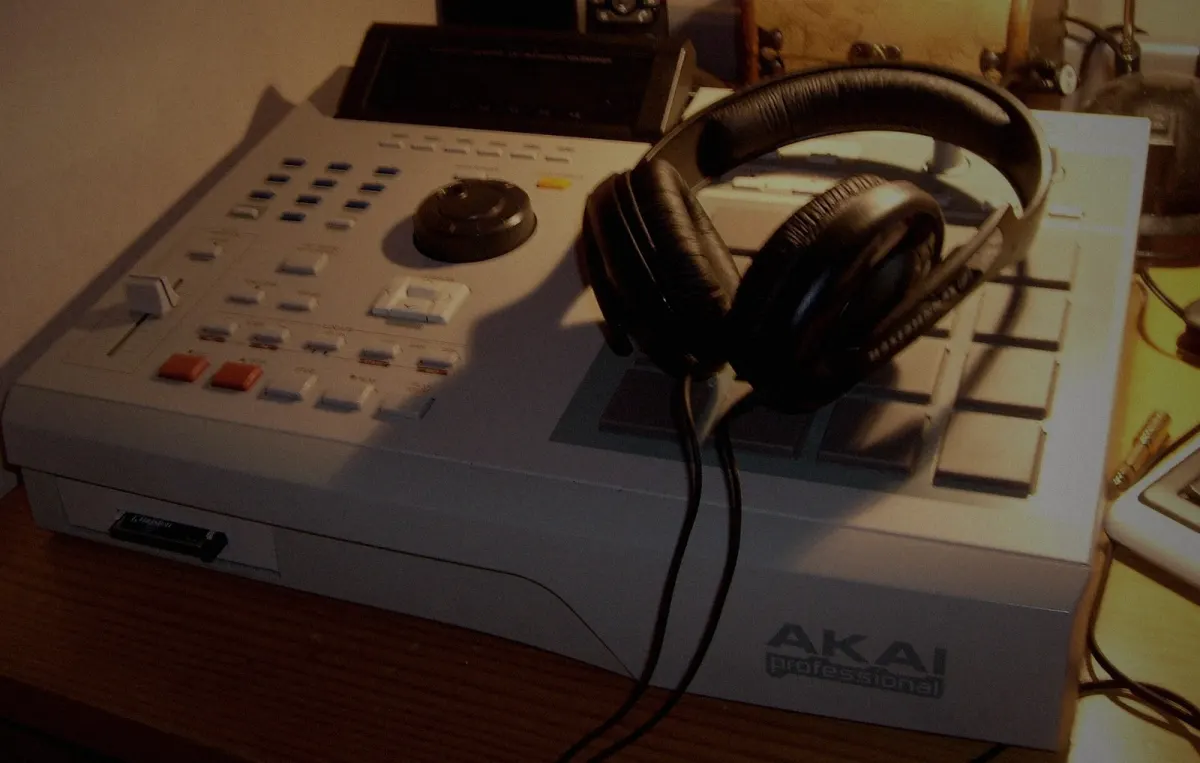
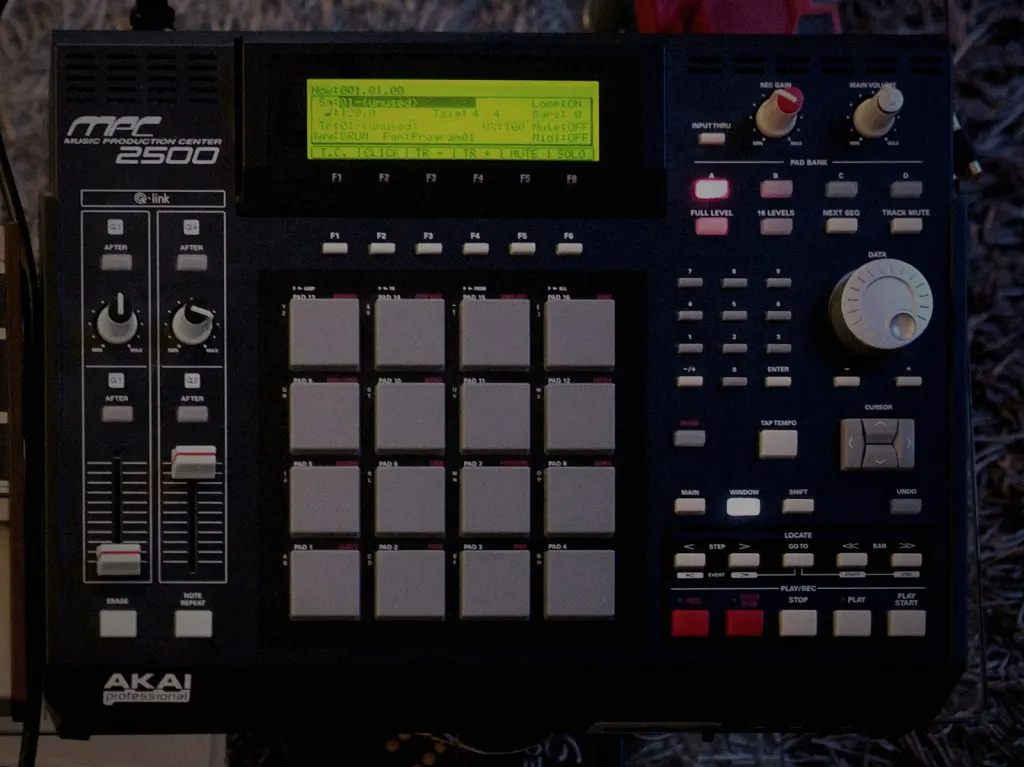
The Akai MPC60 arrived in 1988, designed by Roger Linn, whose LinnDrum machines had already supplied the drum sounds of 1980s pop and R&B, and manufactured by Akai after Linn’s own company folded. The MPC represented a shift in his thinking: instead of a box that played drum patterns, a performance instrument combining sampling, sequencing and real-time control under 16 pressure-sensitive rubber pads laid out in the now-universal 4×4 grid. Any sound could be a drum. Any drum could be played by hand. That inversion, sampling as percussion, is the whole revolution in one sentence.
Swing, Quantise, and Human Error
The MPC’s deepest legacy is a feeling. Linn’s swing and quantise implementations nudged programmed rhythms off the mathematical grid in musically meaningful percentages, and hip-hop’s producers pushed further, disabling quantise entirely to play drums loose by hand. J Dilla turned that looseness into a language, drunken, off-kilter, deeply human grooves programmed on his MPC3000, that changed how drummers themselves play; you can hear working musicians describe the Dilla feel as a technique standard today. DJ Premier chopped on it, Pete Rock layered on it, Kanye sped soul samples through it, and the boom-bap era is essentially an MPC catalogue.

Beyond Hip-Hop
Dance music took the same tool in its own directions. House and techno producers used MPCs as sequencing brains for hardware rigs; the French touch generation chopped disco loops on them; and the UK’s jungle pioneers ran chopped breaks through samplers with the MPC’s workflow as the mental model. The pad grid itself became the industry’s standard interface, from Ableton’s Push to every controller and the SP-404’s cult, sixteen squares as the universal language of finger drumming.
The Instrument Test
The MPC passes the test that matters: it created techniques that exist nowhere else, chopping, pad drumming, swing-as-signature, and those techniques created careers, genres and a canon. Modern standalone MPCs sell strongly to a generation that could do everything in software, for the same reason the SL-1200 and the MS-20 endure: physical instruments teach through the hands. Linn built a drum machine that wanted to be played rather than programmed, and hip-hop, given an instrument, did what musicians always do. It invented a music the designer never imagined.

What the MPC Actually Changed
The technical story gets told often. The one that matters is about who could make records.
It moved production out of studios. Before, arranging a track meant a room you booked by the hour and an engineer. The MPC put sequencing, sampling and arrangement in one box a person could own, and the centre of gravity moved to bedrooms.
Its limitations became the sound. Finite sampling time forced short loops, and the swing setting gave a specific feel that people chased deliberately. Nobody sets out to make music that sounds like a constraint, but a generation did.
From the Booth
The MPC lineage is why so much of what I play still sits on a grid that is not quite straight. When a record feels alive rather than mechanical, you are usually hearing decisions made on hardware that could not do everything, by someone who worked around it.
Why was the Akai MPC so important?
It combined sampling, sequencing and arrangement into one affordable machine a producer could own, which moved record-making out of hourly studio bookings and into bedrooms. Its constraints, notably limited sampling time and its distinctive swing, shaped the rhythmic feel of hip hop and later dance music, so the limitations became part of the aesthetic rather than obstacles to it.
Frequently Asked Questions
Who invented the Akai MPC?
The Akai MPC was designed by Roger Linn, whose LinnDrum machines had already supplied the drum sounds of 1980s pop and R&B. The first model, the MPC60, arrived in 1988 and was manufactured by Akai after Linn’s own company folded. It combined sampling, sequencing and real time control under 16 pressure sensitive rubber pads in a 4×4 grid.
Why was the Akai MPC so important to hip hop?
The Akai MPC put sampling, sequencing and arrangement in one machine a producer could own, which moved record making out of hourly studio bookings and into bedrooms. Its swing and quantise settings nudged rhythms off the mathematical grid, and producers who switched quantise off played drums loose by hand. DJ Premier, Pete Rock and Kanye all worked on it, and the boom bap era is essentially an MPC catalogue.
What MPC did J Dilla use?
J Dilla programmed his drunken, off kilter grooves on an MPC3000. His looseness became a language that changed how drummers themselves play. Working musicians now describe the Dilla feel as a standard technique.
Did the MPC influence dance music as well as hip hop?
Yes, house and techno producers used MPCs as the sequencing brains of hardware rigs, and the French touch generation chopped disco loops on them. Its 16 pad grid became the standard interface for finger drumming, from Ableton’s Push to the cult of the Roland SP-404. Modern standalone MPCs still sell strongly because physical instruments teach through the hands.
Written from Seoul, by someone who has been in the booth for more than 25 years. More on the site, or book a DJ.
Watch and listen: Akai Professional · How J Dilla humanized his MPC3000, Vox
Stay in the Loop
New writing on DJ culture, electronic music, and the Seoul underground, delivered when it matters.
More From The DJ Diaries

Play with the history
Four tools built from the same research as this site.