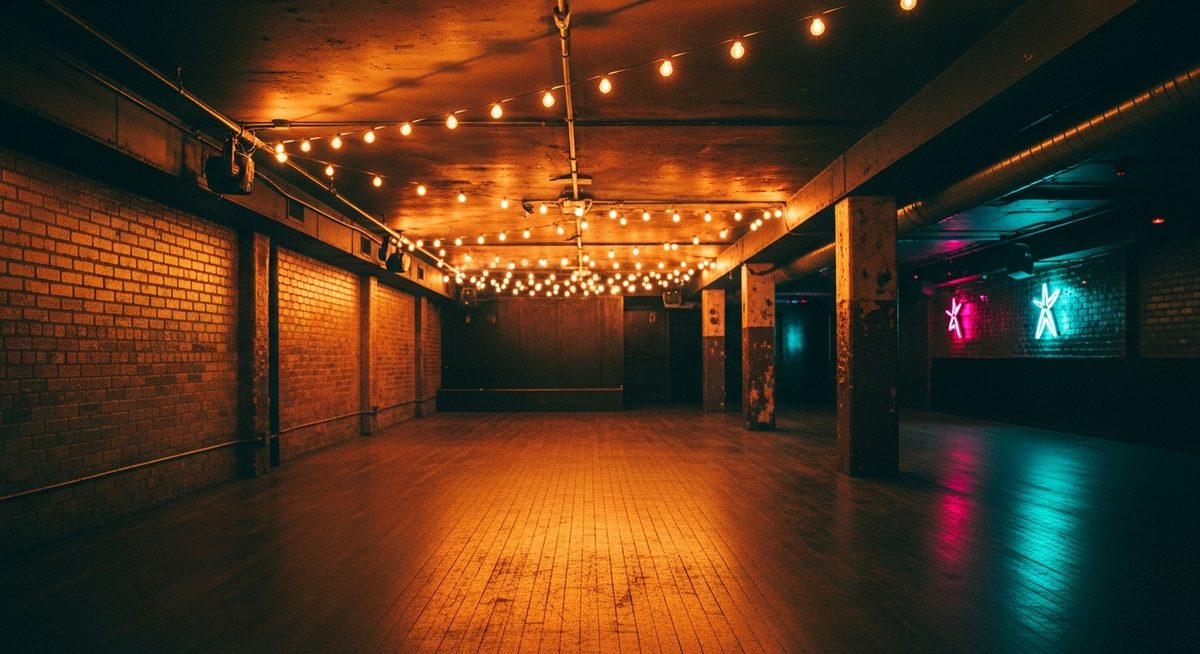
August 1973, the recreation room at 1520 Sedgwick Avenue in the Bronx. Clive Campbell, Kool Herc to everyone who knew him, has two copies of the same funk record on two turntables, and every time the band drops out and the drums take over, he switches to the other copy and runs the break again. The break goes on for as long as he wants it to. Hip hop is usually dated from this night.
That party is one of a handful of moments that reinvented the job. Radio named it in 1935, discotheques gave it a room, Francis Grasso taught it to mix, house and techno gave it music made to be mixed, rave made it the main event, and CDJs, laptops and now live stem separation have rebuilt the booth several times over. Every time, someone declares DJing is dying, killed by streaming or AI or the laptop or the loss of vinyl. Every time, the art form adapts, because the core skill has never changed: reading a room and giving it what it needs.
DJing, 1935 to 2025
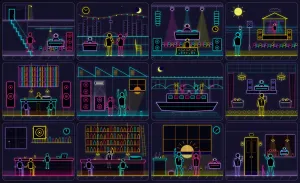
From the radio studio to the stems on a laptop, drawn to scale
- 11935"Disc jockey" is coined Walter Winchell, describing radio host Martin Block
- 21947Whisky à Go-Go, Paris Records replace the house band
- 31955 to 1958Bob Casey plays record hops on two decks Yonkers, New York. Onstage with two turntables by 1958, by his own account
- 4Late 1960sFrancis Grasso beatmatches By ear, in New York clubs
- 51971 and 1972Bozak mixer, Technics SL-1200 The club mixer and the turntable that became the standard
- 61973Kool Herc at 1520 Sedgwick Avenue The breakbeat, isolated and extended
- 71988 and 1989Acid house The DJ becomes the main event, for fields of people
- 82001Pioneer CDJ-1000 The club standard within a few years
- 92002Final Scratch ships Timecode vinyl controls digital files
- 10Sep 2025CDJ-3000X From AlphaTheta, formerly Pioneer DJ
Technics SL-1200s sold. Production stopped on 1 November 2010 and came back in 2016.
14 February 1970 David Mancuso holds the first Loft party, Love Saves The Day, at 647 Broadway.
1977 the Citronic SMP101 is the first commercially available mixer with a crossfader. The Allen and Heath Xone:62 follows in 1999.
Sources: Wikipedia, Technics SL-1200 · Wikipedia, David Mancuso · RBMA, evolution of DJ mixers · RBMA, Bob Casey
The Job Started On The Radio
The term disc jockey was coined in 1935 by Walter Winchell, the American newspaper columnist and radio commentator, to describe the radio announcer Martin Block. Block played recorded music on air as if the artists were in the next room, and listeners felt they were at a live performance. Winchell’s word fit better than he probably knew: a jockey rides and controls something larger than himself, and that takes skill and feel.
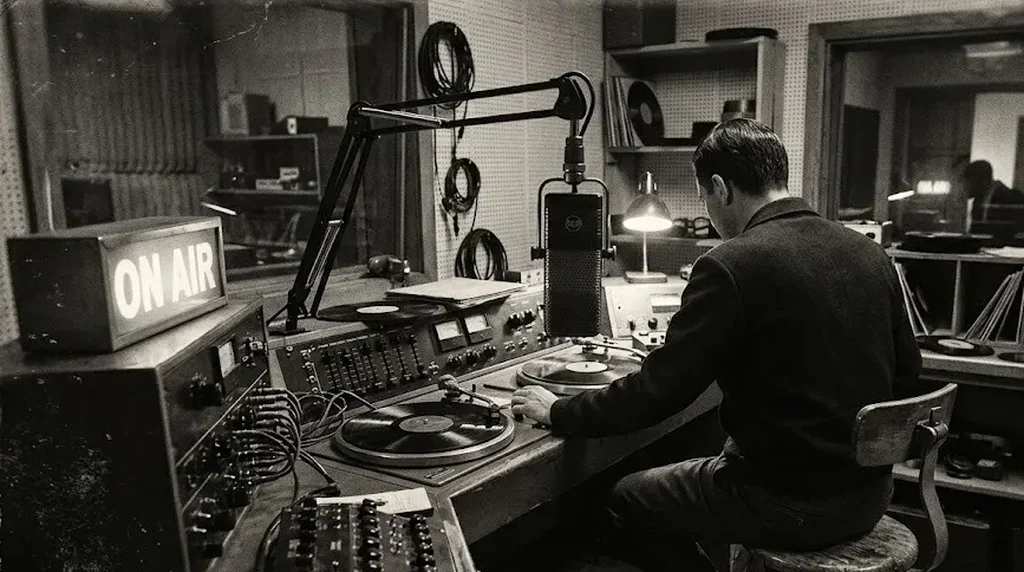
The setup came before the word. The BBC Handbook of 1929 and advertisements in Gramophone magazine as early as 1931 show twin turntables in use in broadcasting, years before anyone said disc jockey.
Early radio DJs didn’t just play records; they chose them and framed them, and showed that a person presenting recorded music could be as powerful a cultural force as a live band. One early claim needs a warning label. Jimmy Savile, later exposed as a prolific sexual abuser, claimed to have staged one of the first record only dance parties in 1943. Historians note there’s no independent evidence for it, and his later claim to have invented twin turntable play is contradicted by those 1929 and 1931 sources.
Discotheques Gave The DJ A Room, And Grasso Taught It To Mix
After the Second World War, nightclubs and dance halls began turning into discotheques, rooms where records replaced the band, partly to save money and partly because records could do things a house band couldn’t. In 1947 the Whisky à Go Go opened in Paris, one of the first true commercial discotheques. In 1953 the French singer Régine used two turntables at a Paris venue so one record could start as another ended, getting rid of the silence a single deck always left.
In the United States, radio DJs were running sock hops, gymnasiums full of teenagers dancing to records. Bob Casey played record hops on two decks in Yonkers, New York, from 1955, and by his own account was onstage with two turntables by 1958. Those rooms weren’t glamorous, but they were where the techniques got tested.
The 1960s were when DJing became a technical discipline. Francis Grasso, often credited as the father of modern nightclub DJing, developed beatmatching in New York clubs in the late 1960s: aligning the tempos of two records so one could carry into the other without breaking the floor’s rhythm. He did it by ear, cueing the incoming record in his headphones and nudging it forward on the platter until the beats sat together. He was also one of the first to slip cue, holding a record still against the spinning platter and letting go at exactly the right moment.
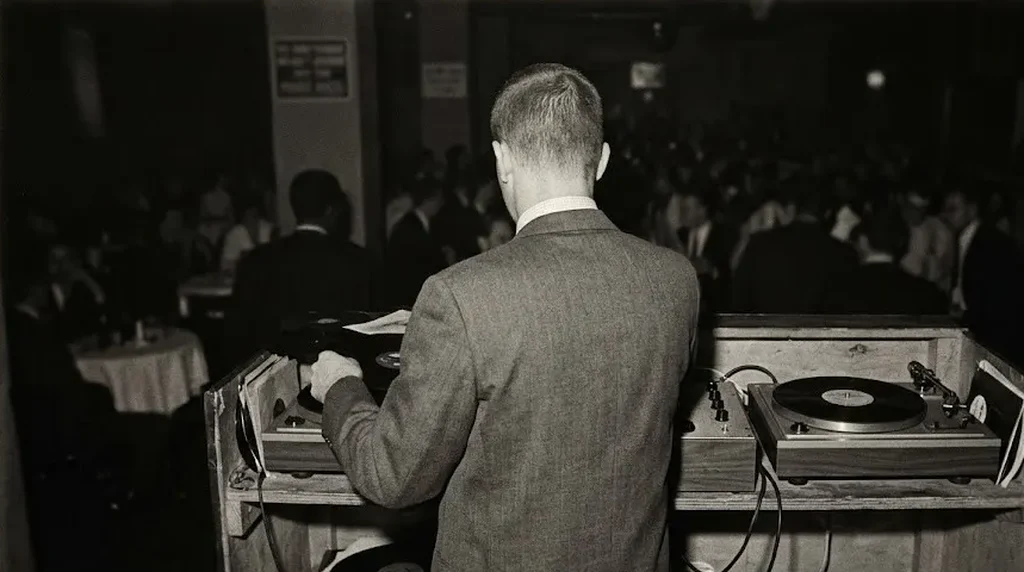
What a new DJ learns on day one was, in Grasso’s hands, an invention. He was working out the grammar of a new art form as he went.
The 1970s Wrote Two Rulebooks At Once
No decade changed DJing more than the 1970s, and no figure looms larger in it than DJ Kool Herc. At that party his sister Cindy organised, he isolated the instrumental breaks of funk and soul records, the moments where the groove was exposed and the vocals dropped out, and extended them by switching between two copies. He called it the merry go round, or simply the breakbeat.
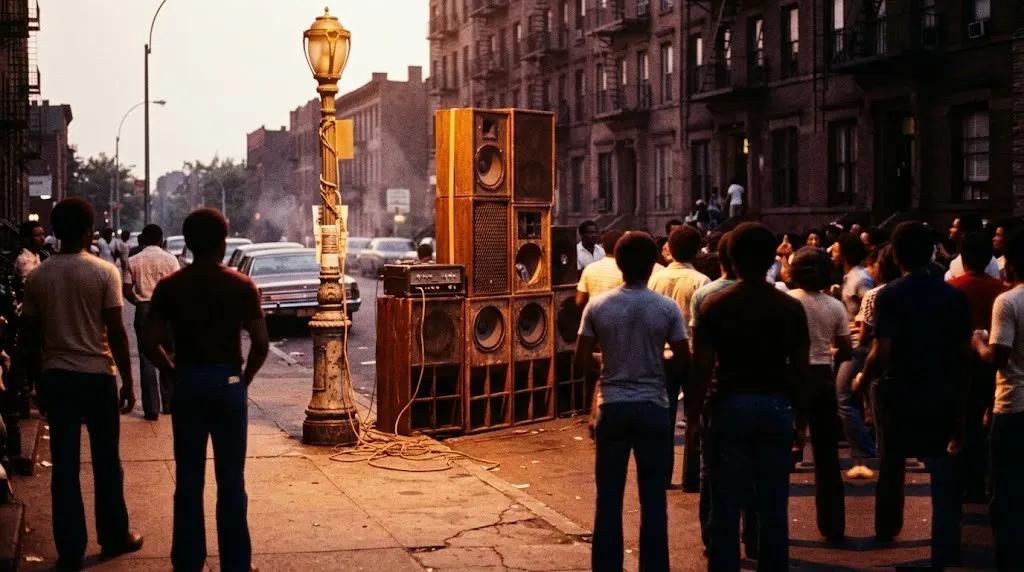
The breakbeat gave MCs long instrumental sections to rap over and gave the breakers a stage to dance on. Out of a pair of turntables in a community room came hip hop, one of the most consequential cultural movements of the 20th century.
In Manhattan, at the same time, a different rulebook was being written. Larry Levan at the Paradise Garage and David Mancuso at his Loft parties were building what became the template for house and club DJing: sets that lasted all night, built slowly and deliberately, and treated the floor as one shared experience rather than a run of song moments. Levan used the club’s sound system and his selection to put dancers into states close to religious experience, and the Paradise Garage gave its name to a genre. Herc wrote the rules for hip hop, and Levan and Mancuso wrote the rules for the all night set.
The gear caught up in the same decade. The Bozak CMA-10-2DL, introduced in 1971 and designed by audio pioneer Rudy Bozak, set standards for club mixing that lasted for decades. The Technics SL-1200 arrived in 1972 as a hi fi deck, and the version clubs standardised on, the SL-1200MK2, followed in 1979. Its direct drive motor and solid build made it reliable in ways consumer turntables never were, and its pitch fader let DJs match tempos precisely. By the mid 1980s it was everywhere, and for two decades it was simply what a DJ used.
House, Techno And Rave Made The DJ The Main Event
In Chicago, Frankie Knuckles, the Godfather of House Music, was developing a new genre at the Warehouse. He took the continuous set of the New York tradition and fused it with synthesisers, drum machines and home production. House music was born from a DJ’s sensibility: music made to be mixed, with long intros and outros that gave the DJ room to work.
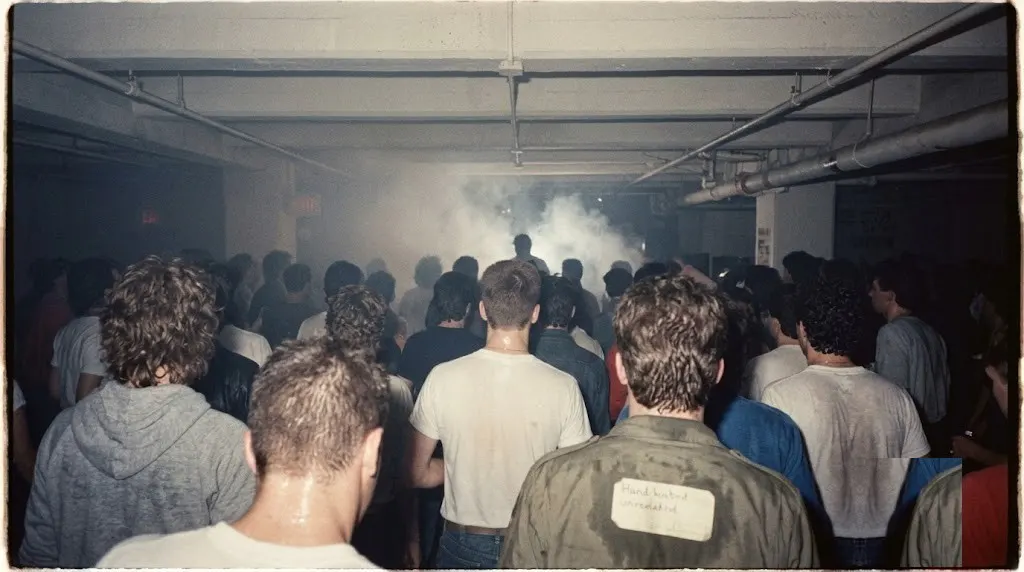
In Detroit, Juan Atkins, Derrick May and Kevin Saunderson were making techno, which took house music’s electronic sound and stripped it toward abstraction. Machine music for a post industrial city.
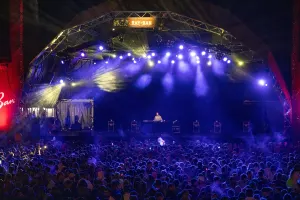
Then the acid house explosion of 1988 and 1989, mostly in the UK, turned DJing from a club discipline into a force that could fill fields with tens of thousands of people. The illegal raves proved a DJ could be the main event, not a warm up or an interlude between live acts, for eight hours without a break.
The rave era produced DJs whose craft was managing energy over very long stretches: how do you build a crowd from cold at midnight to a peak at 4am and bring them down gently before the sun rises? That question produced some of the most sophisticated programming in the history of the form, and figures like Carl Cox, Sasha and John Digweed, who turned the long form set into something close to high art.
Every New Format Started The Same Argument
The first digital vinyl system shipped its first working units in early 2002. Final Scratch, developed by the Dutch company N2IT and championed by Richie Hawtin and John Acquaviva, let DJs control digital files with timecoded records. Native Instruments, which supplied the Traktor software for later versions, went on to build its own system, Traktor Scratch. Native Instruments entered preliminary insolvency proceedings in January 2026, and in May 2026 inMusic, owner of Denon DJ and Rane, signed an agreement to buy the company, Traktor included.
Meanwhile Pioneer’s CD players were moving into booths. The Pioneer CDJ-1000, launched in 2001, became the club standard within a few years, and by the end of the decade most major clubs had swapped their turntables for CDJ pairs, first for CDs and then for USB drives, without giving up the platter and transport controls vinyl DJs knew. The format is still moving. In September 2025 AlphaTheta, the company formerly called Pioneer DJ, launched the CDJ-3000X with a 10.1 inch touchscreen, built in Wi-Fi and cloud streaming, its first new flagship since the CDJ-3000 in 2020.
Software like Serato DJ Pro, Rekordbox and Traktor put a whole record collection on a laptop or a USB stick, and the barrier to entry dropped through the floor. The tools available to beginners now, which I cover in my beginners guide to DJing, are more capable than professional gear from fifteen years ago, at a fraction of the price.
The newest shift is AI stem separation: pulling the vocals, drums, bassline and melody out of any track, live, without a pre made edit. A decade ago that was hours of studio work. Now it’s in the mainstream software.
Live Stem Separation, Where to Find It
The DJ software with stem separation built in, 2026
DJ 소프트웨어의 실시간 스템 분리 기능
| Software | Stem feature |
|---|---|
| Serato DJ Pro | Stems |
| VirtualDJ | Real-Time Stems |
| Algoriddim | Neural Mix Pro |
| Rekordbox 7 | Stem isolation for club use |
What it meansA clean acapella from any track, vocals from one record over the drums of another, or the kick pulled out to rebuild the low end, all in real time.
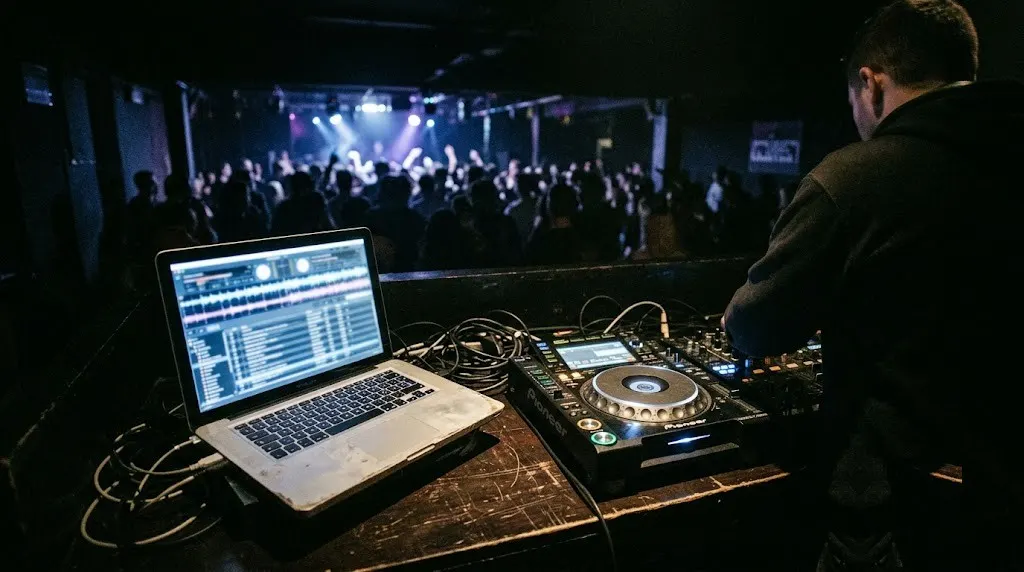
The argument around stems is the same argument every new format has started. Some DJs say harmonic mixing and building transitions were always the point, and stems are one more tool. Others worry about mixes all starting to sound alike, or about the gap between what’s technically possible and what serves a dancefloor. That debate has been running, in one form or another, since Grasso cued up a record by ear in New York in 1969.
The answer hasn’t changed either: the music and the room matter more than the technology. The moment a track lands exactly right and something shifts in a crowd is the point, whether the record is vinyl, a CD or a file. Whether DJs use stems to deepen their musical language or as a crutch for lazy programming is the open question of the next chapter.
What The History Teaches A New DJ
The through line from Kool Herc’s Bronx parties to Frankie Knuckles’ Warehouse, to the rave fields of the English countryside, to Seoul’s underground clubs today, is one quality: the ability to read what a room needs and give it that. Technology has changed again and again. That skill hasn’t. If you’re starting out, learn to beatmatch by ear on whatever two decks you have before you lean on sync, because it’s the skill that saves you when the technology fails.
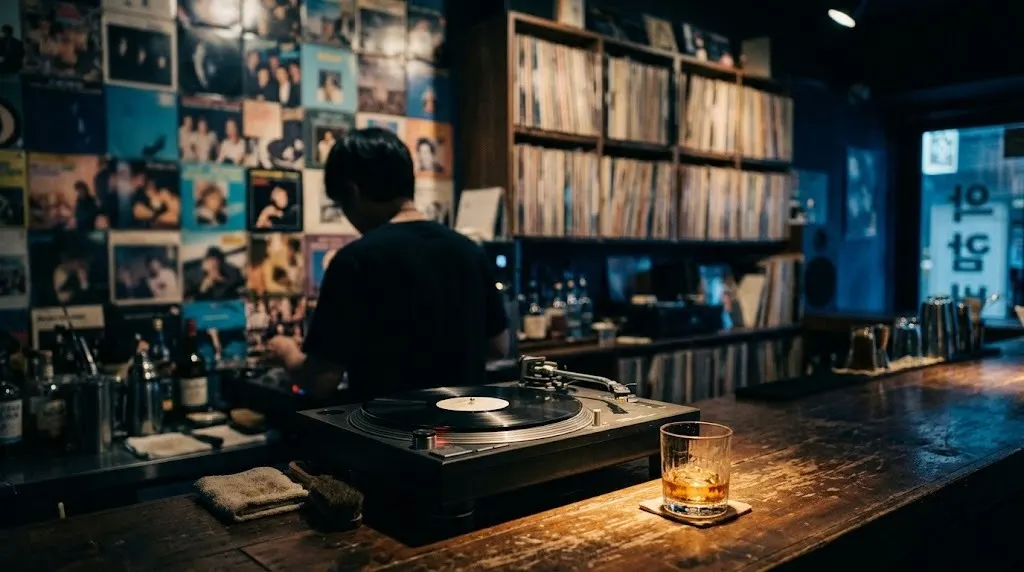
You’re stepping into a lineage older than most performance traditions, and the mistakes that derail new DJs are the ones that always have: playing for yourself instead of the room, not knowing your music deeply enough, building too fast. The history is the reason the fundamentals matter.
To go further, the dance music timeline follows this story through 127 genres, year by year, with an official track for each. The dance music machines page has the Roland TR-808, TR-909 and TB-303 behind so much of it, with sound demos and a step sequencer. And if a term in this piece is new to you, the DJ and club glossary explains 100 of the most common ones.
Frequently Asked Questions
Where does the term disc jockey come from?
The American columnist Walter Winchell coined disc jockey in 1935 to describe Martin Block, a radio announcer who played records on air as if the artists were in the studio with him. The jockey part suggested someone riding and controlling something powerful, which still fits the job.
Who invented beatmatching?
Francis Grasso is generally credited with developing beatmatching in New York clubs in the late 1960s. He matched the tempos of two records by ear, cueing the incoming one in his headphones, and he was also one of the first DJs to slip cue.
Who is the father of hip hop DJing?
DJ Kool Herc. At a back to school party in the recreation room of 1520 Sedgwick Avenue in the Bronx in August 1973, he stretched the instrumental breaks of funk and soul records by switching between two copies. That gave MCs and dancers room to perform and helped launch hip hop.
When did DJs switch from vinyl to digital?
Gradually, through the 2000s. Timecoded vinyl systems like Final Scratch arrived around the turn of the millennium, the Pioneer CDJ-1000 launched in 2001, and by the end of the decade most major clubs had CDJs in the booth. Vinyl never disappeared, and plenty of DJs still play it.
Further Reading On The DJ Diaries
- Techno, from Detroit to the dancefloor
- The long set
- The machines that made dance music
- The Technics SL-1200: why a hi fi turntable became a DJ standard
- How software saved vinyl DJing
- What a famous door policy says about club culture
- Find your era: the DJ Diaries quiz
Sources
Red Bull Music Academy Daily, Bob Casey interview
The Source, Kool Herc’s party at 1520 Sedgwick Avenue
Tim Lawrence, Love Saves the Day, Duke University Press
Wikipedia, Disc jockey (Bozak mixer, CDJ-1000)
Red Bull Music Academy Daily, the evolution of DJ mixers
Mixdown, gear icons: Pioneer DJ
Written from Seoul, by someone who has been in the booth for more than twenty years. More on the site, or book a DJ.
Stay in the Loop
New writing on DJ culture, electronic music, and the Seoul underground, delivered when it matters.
More From The DJ Diaries

Play with the history
Four tools built from the same research as this site.