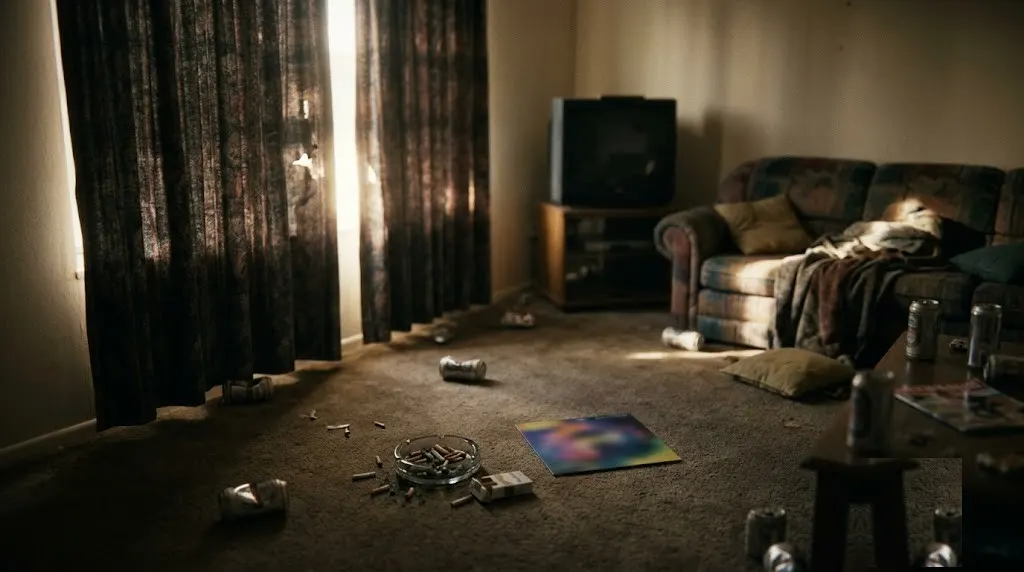
A VHS copy someone had brought back from the UK, a friend’s living room in Canada in the late nineties, and about six of us on the couch. We watched Human Traffic twice that night. It wasn’t a perfect film, but it was the first time any of us had seen the texture of going out in the nineties described from the inside: the paranoia, the negotiation with your own anxiety, the particular kind of friendship that forms around one kind of music in one kind of room.
Justin Kerrigan made it on a modest budget in Cardiff in 1999. It did solid business in UK cinemas, then kept growing on video for years as word of mouth, midnight screenings and the loyalty of the rave generation turned it into something people still watch and argue about 27 years later. It remains the closest thing cinema has to a first person account of what the late nineties rave scene felt like.
A Weekend in Cardiff, Seen from Inside Your Own Head
Human Traffic follows five friends, Jip, Lulu, Moff, Nina and Koop, over a single weekend in Cardiff: the build up on Friday, the night itself, and the long Sunday morning after. Its real subject is what it feels like to be young, anxious and in love with music, and Kerrigan pursues that with more honesty than most films about club culture manage.
Jip is the emotional centre. His anxieties, the difficulty with his mother, the habit of processing his inner life through music and the social world around it, are recognisable without your having had exactly those anxieties yourself.
The Style Is the Night Out
Human Traffic does things formally that were unusual for a British film of its budget. Characters break the fourth wall and talk straight to camera, which lets you into their private version of events instead of watching them from outside. The audience sits inside the night rather than watching it happen to someone else.
The editing is fast and fragmented on purpose: split screens, rapid cuts, stylised cutaways that show internal states rather than physical events. Some critics at the time found it chaotic. It now reads as the most accurate picture cinema has of a busy, music soaked night from inside your own head. The humour is very British, and the social pleasantries sequence, where Jip trades forced politeness with someone he can’t stand while his inner voice gives the unfiltered version, is one of the most painfully accurate scenes of small talk on film.
The Record Shop Scenes Show What Streaming Replaced
Koop’s record shop is a social space as much as a shop. You establish who you are through what you buy and how you talk about it, and you meet people who share your taste and have more of it than you do. Buying a record happens inside a conversation of recommendation and competitive expertise that streaming has no equivalent for.
Those scenes catch the intensity that formed around music in underground scenes before the internet made every piece of information available to everyone at once. Part of being in a scene was knowing things others didn’t: records that were hard to find, who made what, where and why. The shop was where that knowledge was built and tested.
The Soundtrack Is a Character
Fatboy Slim, Orbital, Underworld, CJ Bolland, Energy 52: this is the music people were playing in the rooms the film is set in, chosen by someone who knew what those rooms sounded like. The characters engage with it as the main content of their shared experience, where most club films use music as set dressing. In Human Traffic, the night exists because of the music.
The cameos make the same point. Carl Cox plays Pablo Hassan, manager of the film’s club, the Asylum, and Howard Marks delivers a memorable monologue that ties the film to the wider culture around the scene.
Where It Falls Short, and Why That Helps
The obvious comparisons are Trainspotting and Go. Trainspotting is the more accomplished film, but it’s about heroin addiction, and its club scenes are moments in a much darker story. Go is set in the LA rave scene and is built more like a thriller than a social document.
Human Traffic is the one that treats the rave experience as a positive, formative part of young lives rather than a backdrop to damage or crime. That’s its limitation and its value at once. If you want the damage, other films have it. This is the one that people who were there recognise themselves in.
Human Traffic, 1999 to 2025
The release, the sequel that never happened, and the restoration
휴먼 트래픽, 1999년부터 2025년까지
| When | What happened |
|---|---|
| 1999 | Released, written and directed by Justin Kerrigan, set in Cardiff |
| 2019 | A sequel, Revolution, announced with Danny Dyer, Shaun Parkes and Nicola Reynolds returning |
| 2024 | Kerrigan says he will never make a sequel |
| July 2025 | BFI 4K restoration: cinemas from 16 July, UHD and Blu-ray from 21 July |
The upshotThere is one Human Traffic, and in 2025 it was restored rather than continued.
The film never got a follow up. A sequel, Revolution, was announced in 2019 with Danny Dyer, Shaun Parkes and Nicola Reynolds set to return, but in 2024 Kerrigan said he would never make one.
Why It Still Matters
Human Traffic works as a period document of rare specificity. If you want to know what the late nineties rave scene in the UK felt like, not its politics or economics but the experience of being young and part of it, this is the closest thing to a first person account that cinema has produced.
I’ve shown it to people too young to have known the scene it depicts, and the responses split cleanly. Some immediately understand what was being chased in those rooms. For others the culture is foreign, but the feeling underneath it still translates.
It got a fresh start in July 2025, when the BFI released a new 4K restoration, back in selected UK cinemas from 16 July and on UHD and Blu-ray from 21 July. For the history the film depicts in fiction, our deeper dive into the music and culture of the rave era covers the ground.
Frequently Asked Questions
What’s Human Traffic About?
Human Traffic is a 1999 British independent film directed by Justin Kerrigan, set over one weekend in Cardiff and following five friends through a night out in the late nineties rave scene. It’s less a plot driven film than a social document, an attempt to capture what it felt like from the inside to be young and part of that culture.
Is Human Traffic Based on a True Story?
Not literally, though it draws heavily on Justin Kerrigan’s personal experience of the Cardiff rave scene in the mid to late nineties. The characters are composites and the weekend is fictional, but the record shop culture, the music, the social dynamics, the anxiety and the euphoria come from direct experience.
Who Are the Real DJs and Music Figures in Human Traffic?
Carl Cox plays Pablo Hassan, manager of the film’s club, the Asylum. Howard Marks delivers a memorable cameo monologue. The soundtrack features Fatboy Slim, Orbital, Underworld, CJ Bolland and Energy 52.
How Does Human Traffic Compare to Trainspotting?
They share a period and a British setting but tell different stories. Trainspotting is a film about heroin addiction that includes club scenes. Human Traffic is about the rave experience as a positive, formative part of young lives, for the many people for whom it was about music and friendship rather than a background to damage.
Credits and Rights
This article discusses Human Traffic (1999), written and directed by Justin Kerrigan and produced by Fruit Salad Films and Irish Screen. All rights in the film and its artwork belong to the rights holders. Nothing here is affiliated with or endorsed by them.
Rights, corrections and takedown. Images on this page are used editorially to illustrate writing about the artists and records discussed. Where a photographer or rights holder is identified, they’re credited above. If you hold rights in any image here, or if anything on this page is factually wrong about you or your work, get in touch and it will be corrected, credited properly or removed, promptly and without argument.
Further Reading
- 90s rave culture: beats, clubs and the Second Summer of Love
- 1999: the year dance music exploded
- Disco vs funk
- How dance music trends rise and fade
Sources
Variety, review of Human Traffic, 1999
BFI, Human Traffic 4K restoration release, 2025
Little White Lies, on Go and LA rave culture
DJ Mag, Kerrigan on making his first film
Far Out, Kerrigan as Human Traffic turns 25, June 2024
DJ Mag, Kerrigan: “I will never make a sequel”, July 2024
Mixmag, top 10 Human Traffic scenes
Written from Seoul, by someone who has been in the booth for more than twenty years. More on the site, or book a DJ.
Watch and listen: BFI · Human Traffic, the BFI 4K restoration trailer
Stay in the Loop
New writing on DJ culture, electronic music, and the Seoul underground, delivered when it matters.
More From The DJ Diaries
Play with the history
Four tools built from the same research as this site.