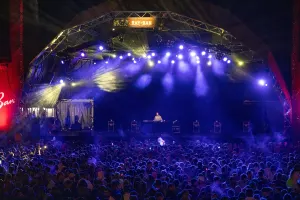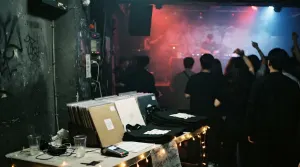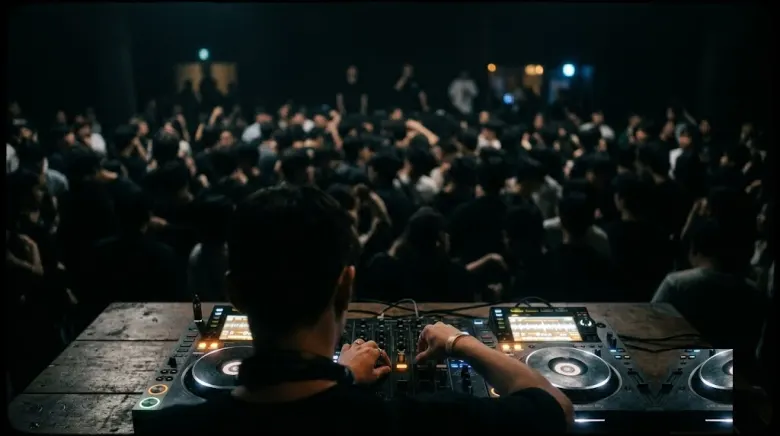
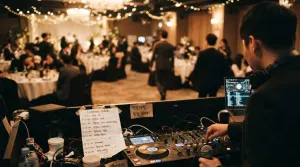
Watch the bar staff. When someone carrying a tray of drinks pauses to bob their head, or the person restocking glasses starts singing along, the music has filled the room past the dancefloor. It’s one of the most reliable signs a set is landing, and no tutorial will teach you to notice it.
Every skill in the basics of DJing can be learned in months. What takes years is reading a room and pacing a night. Mastering the mix means making the right musical decision at the right moment for the particular people in front of you, and that’s what this guide is about.
The Technical Side Is the Easy Part
Beatmatching, EQ, transitions, harmonic mixing and effects, everything in the basics of DJing, is learnable in a matter of months with steady practice. The software helps. The CDJs help. Mixed In Key gives you key information that used to take years of ear training. The latest example is AlphaTheta’s CDJ-3000X, launched in September 2025, whose hot cue workflow analyses a track’s structure in real time. Every generation works with better tools than the last, and there’s no virtue in making things harder than they need to be.
What can’t be sped up by software is learning to read a room. What a crowd needs at 10pm against what it needs at 2am. When to push and when to pull back. The difference between a crowd that’s quietly absorbing something and a crowd that has lost the thread. You build that set by set, room by room, mistake by mistake.
Start by Watching the Whole Room
Before you play a single record, watch the full room, not just the front rows by the booth, which always hold the most committed dancers and are the easiest audience to read. Look at the back, the bar, the people standing rather than dancing who are still deciding whether to commit to the night, and the people talking to each other, half listening. All of them are giving you information.
What you’re looking for is the baseline: what state are people in when you start, and which way do they naturally want to move? A crowd that arrives warm and chattering, a drink and a conversation in and looking for permission to dance, needs something different from a crowd that arrives quietly and is still feeling out the room. The most expensive mistake in the first twenty minutes is to play toward where you want the room to be rather than where it is.
Warm up sets are where this matters most. As I wrote in my post on common DJ mistakes, one of the most damaging things a warm up DJ can do is play peak time records at 9pm. It’s rarely selfishness. Usually the DJ doesn’t realise what it does to the arc of the evening, and it comes from not watching what the room needs.
A Set Has a Shape
Every set tells a story, and the best DJs know which one before they play the first record, even if the details change in response to the room. You need an opening that sets the tone without giving everything away, a middle that builds tension and releases it in waves, and a peak that feels earned. In a full night set, the descent needs as much care as the climb.
Four Parts of a Set and the Job of Each
How a long set is built, from the first record to the last
DJ 셋의 네 단계
| Part | Its job |
|---|---|
| Opening | Tell the room what kind of night it is; the first twenty minutes set expectations |
| Middle | Build and release in waves; in a four hour set this can run two and a half hours |
| Peak | Land when it feels earned, not forced |
| Descent | Bring the room down with as much care as you took it up |
The ruleA set that holds one energy level for two hours is running in place.
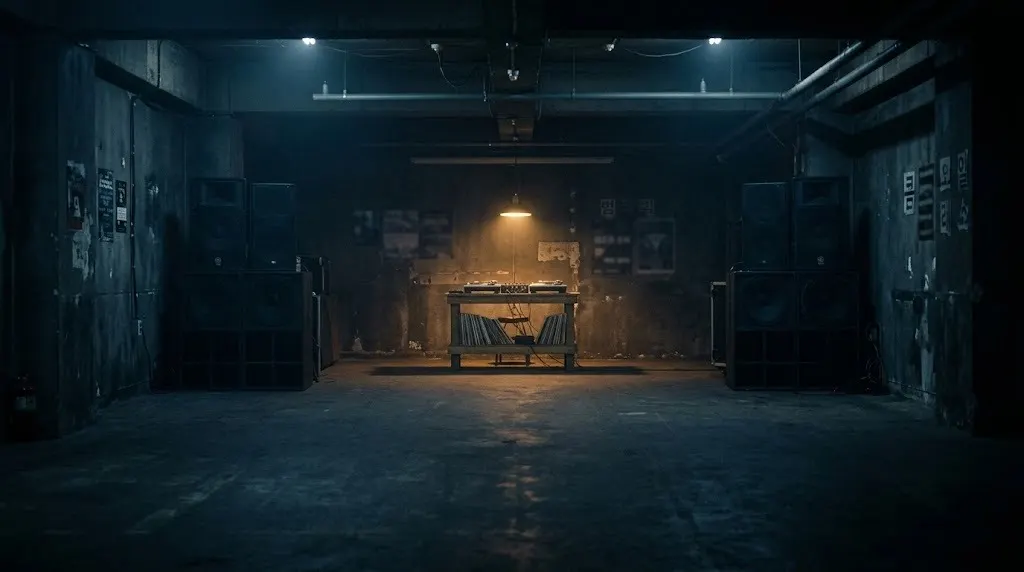
The opening has one job: to tell the room what kind of night this is going to be. Not to fill the floor, just to set a tone and a direction. Open with something minimal and atmospheric and you’re making space for a slow build; open with something instantly recognisable and energetic and you’re promising a direct, celebratory night. Neither is wrong, but both require you to know what the set is for before you start.
The middle, which in a four hour set might run for two and a half hours, is where the programming skill lives. That’s where you manage contrast: between tempos and energies, but also between tension and release, familiar and unfamiliar, moments that demand a physical response and moments that reward closer listening.
Quiet Moments Make the Loud Ones Louder
Drop from a peak record into something lower in energy, not a full stop but a deliberate step down, and let that calmer track work for two or three minutes before you build again. The second peak will hit harder than the first. The crowd has had space to breathe, their bodies have reset a little, and the anticipation has rebuilt from a lower point.

I’ve seen that arc again and again from the best DJs I’ve watched over the years, from Larry Heard’s deep house sets in small rooms to Carl Cox at full festival capacity. They don’t hold one energy level. They work in waves and use contrast to steer the crowd’s attention.
Familiarity works the same way. Play three records the crowd knows back to back and the fourth lands softer. Play two they know, then something unfamiliar that fits the key, the tempo and the mood, then the next familiar record, and it comes back with full force. The unfamiliar track resets their relationship with the familiar.
You Are Not Alone in the Room
A night is a team effort, and the DJ is one part of it. Talk to the promoter before you play, find out what they want the night to be, and where your set sits between what came before and what comes after. If a headliner follows you, your job is to set the room up for them, not to exhaust it. The best nights are ones where every set makes the next DJ’s job easier.
Talk to the sound engineer too. Not constantly, nobody wants the DJ who’s always complaining about the monitors, but check in at the start, confirm the levels, and flag problems as they come up. A great set through a badly balanced system is a compromised set. As I wrote in my post on sound management, the DJ and the sound engineer are one of the most undervalued partnerships in club culture.
Plan the Shape, Not the Tracklist
The room at midnight isn’t the room at 2am. People who were unsure about dancing are dancing. The conversation level has changed, the drinks have changed, bodies have warmed up, and the night has built a shared state that didn’t exist when the first person walked in. The ceiling is higher, and the crowd will tolerate more risk, a record that doesn’t deliver right away.
That’s why set lists are useful as frameworks and dangerous as commitments. Plan the structure, your opening register, the build sections and the peak material, but leave the track choices open until you can see the room. If you’re new, record every practice mix and listen back an hour later, noting where the energy rose, flattened or dropped; it’s the quickest way to hear your own pacing. The DJ who plays the exact set they planned in their bedroom, whatever is happening in front of them, is playing a tape.
Two Warm Ups, Two Handovers
Crowd energy when the headliner takes over, as a share of the room’s peak
워밍업 DJ의 페이스 조절
How to read itThe early peaker hit 95% by 11pm. By handover the room has fallen to 75% and has nowhere left to go. The patient warm up hands over at 80% with the climb to 100% still ahead.
The classic version is the DJ who peaks too early. It’s a failure of patience that passes for enthusiasm: the best record at 10pm while the room is still filling, the crowd responds, so another peak record, and another. By 11pm the room has heard the best the DJ has, the crowd is a little tired, and the headliner walks into a room with nowhere left to go. A crowd that should have been at 80% for the headliner to take to 100% is instead a crowd that hit 95% and has already slipped to 75%. Pacing is an act of generosity toward the crowd, the other DJs and the night as a whole.
There’s no moment where you finish learning to DJ. The DJs I most admire, the ones who’ve been doing this for twenty or thirty years, still learn from every set, still make mistakes, and still misjudge a room and have to correct in the middle of a set.
Mastery is the speed and grace with which you correct. It’s the depth of the library you can draw on when the room needs something you didn’t expect, and the experience of enough difficult rooms, cold when they should have been warm or heading somewhere you didn’t plan, that you know what to do.
Knowing your music deeply is the foundation. Avoiding the amateur mistakes clears the path. Finding where to buy the right music keeps the library growing. But the reading, the building and the steering of a room full of people toward a shared night is the job.
Frequently Asked Questions
How Do DJs Build Energy in a Set?
By managing contrast, not just playing louder or faster records over time: alternating tension and release, familiar and unfamiliar, peaks and deliberate moments of lower energy that let the next peak hit harder. Energy builds in waves, not in a straight line.
What’s a DJ Set Arc and Why Does It Matter?
A set arc is the overall shape of a performance: the opening, the build, the peak or peaks, and the descent. It matters because a set without one tends to plateau or wander instead of building toward anything. The best sets have the structure of a story, with a beginning, a middle and a destination.
How Do DJs Keep a Crowd Engaged All Night?
By reading the room constantly, managing contrast between tracks, timing familiar records against unfamiliar ones, and working with the promoter and sound engineer so the technical side supports the music. Engagement comes from giving the crowd something to anticipate, not just something to respond to.
What Does Reading the Room Mean in DJing?
Watching the crowd, its energy, its density and how it responds to different sounds, and adjusting your programming to match instead of playing a fixed set. It means watching reactions to individual records, keeping an eye on the edges of the floor, and picking up signals from the bar and venue staff about how the night is going.
Further Reading
- How to start DJing: a beginner’s guide
- Common DJ mistakes and how to avoid them
- Reading the room
- The long set
Sources
AlphaTheta, announcing the CDJ-3000X, September 2025
Red Bull Music Academy, Larry Heard lecture
Written from Seoul, by someone who has been in the booth for more than twenty years. More on the site, or book a DJ.
Stay in the Loop
New writing on DJ culture, electronic music, and the Seoul underground, delivered when it matters.
More From The DJ Diaries

Play with the history
Four tools built from the same research as this site.