The Night Everything Changed
One night I’ll never forget is the first time I showed up at a venue and found CDJs on the decks instead of turntables. It was 2003 in Seoul, and I had just landed a slot at one of the bigger clubs in Gangnam (강남). I had spent months practising on a pair of turntables and a mixer at home, feeling like I had the whole thing figured out. I could beatmatch by ear, ride the pitch and drop a record on the one without looking. I thought I was ready.
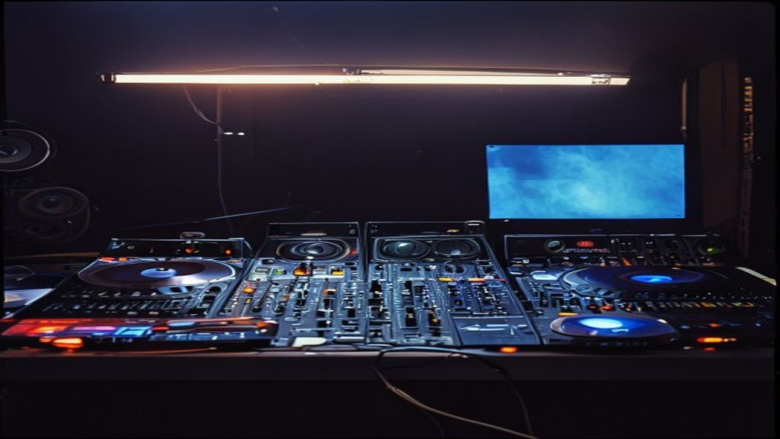
I walked up to the booth, saw the two massive CD turntables and the four-channel mixer, and felt my stomach drop. The layout was completely different. The jog wheels looked a little like platters but didn’t behave like vinyl. The buttons had different functions. The whole workflow was inverted from what my hands had learned. That night I stumbled through my first hour, sweating through my shirt, making rookie mistakes that cost me the second booking I was expecting.
That experience changed how I think about equipment. I came home after that set and immediately ordered CDJs for my home practice space. I wasn’t abandoning vinyl. I’d understood something I hadn’t before: the professional standard exists for a reason, and if you’re serious about working in clubs, you need to speak the same language as the venues. Today most new DJs arrive at the booth from a controller rather than from vinyl, and the jump feels exactly the same. This is the conversation I want to have with you, the one nobody had with me before I showed up that night with the wrong skill set.
Quick Answer
A DJ controller is a hardware interface that runs DJ software on your laptop, while a CDJ is a standalone media player that reads your music from a USB drive with no laptop needed. Controllers are the affordable, sensible way to learn, but Pioneer CDJs are the standard in club booths, so if you want to play clubs you need time on CDJs before your first booking. Prepare your music in Rekordbox and those habits carry straight across from one to the other. Before any club gig, export to a USB stick, test that stick on a real player, and carry a second, identical stick as a backup.
CDJ or Controller
Start where you are, then follow the line
| ControllerDDJ and similar | CDJclub standard | |
|---|---|---|
| What it is | Hardware that runs DJ software on your laptop | A standalone player that reads your USB stick |
| Cost to start | A few hundred dollars | About US$3,000 a player, plus a mixer |
| Where you find it | Home practice, small bars, mobile rigs | Almost every serious club booth |
| Your music | Rekordbox on the laptop | USB stick. Cloud and streaming on the 3000X |
| First instrument | Yes | After the controller |
Before your first club gig0 of 5 done
One CDJ-3000X costs ten times a beginner controller, and a club booth has two or more, plus a mixer.
1994 the CDJ-500 arrived, the first commercially available flat top DJ CD player.
About 70% of the global DJ equipment market belongs to Pioneer DJ and AlphaTheta, by one publisher census. Not an audited figure, but it matches what you find in booths.
Sources: DJWORX · EDMTunes · AlphaTheta company history · Digital DJ Tips
What Actually Separates CDJs from Controllers
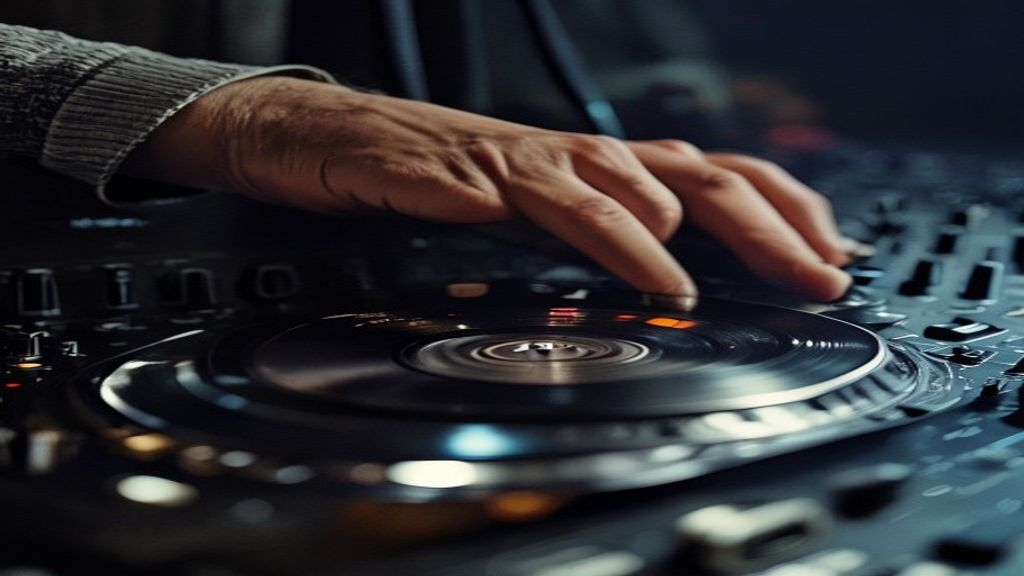
Let’s start with the basics. A CDJ, today usually a Pioneer DJ CDJ-3000 or its 2025 successor, the AlphaTheta CDJ-3000X, is a standalone media player. You plug in a USB stick with your tracks organized in Rekordbox, and it reads that library directly. The newest players can also pull tracks from a cloud library or a streaming service over Wi-Fi. The device has its own screen, its own navigation controls, its own jog wheel, and its own performance pads and loop controls. No laptop required. No software running in the background. The CDJ is the complete system.
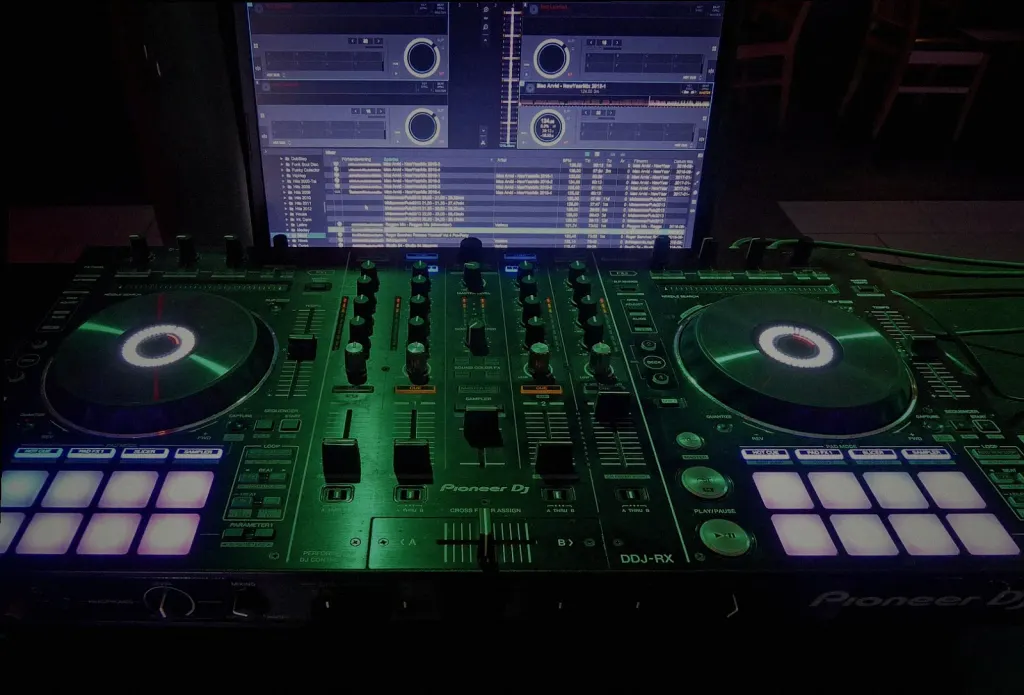
A DJ controller is an interface device. It doesn’t make music on its own. It sends control signals, usually MIDI, to software on your laptop, typically Rekordbox, Serato DJ, Traktor, djay or VirtualDJ. The controller has faders, knobs, jog wheels, pads, and buttons that map to functions in the software. The actual audio processing happens in your computer. The controller just tells it what to do. It shapes how you learn and what you need to know to operate professionally.
The jog wheel feel is different. On a CDJ, the jog wheel is a large, weighted platter with a touch-sensitive top and a small display in the centre that tracks where you are in the song. It doesn’t spin on its own the way a turntable does, but you can touch the top to scratch and the side to bend the pitch, and you can adjust how heavy it feels. On most controllers, the jog wheels are smaller and lighter, with a capacitive top that tells the software when your hand is on it. The muscle memory you develop on each is slightly different, which is why moving between the two without practice causes problems.
The interface depth is also different. CDJs have more physical controls dedicated to specific functions. Hot cues, loops, beatjump, slip mode, quantize, these all have dedicated hardware controls. On many controllers, especially budget models, you’re using combinations of buttons and shift modes to access those same functions. CDJs are designed to be operated without looking at a laptop screen. Controllers often assume you have a screen nearby to reference.
The Club Reality You Need to Accept
Every DJ needs to hear this early: if you want to play professional club gigs, you’ll encounter CDJ setups, in every region. Walk into a serious club in Toronto, Seoul, Berlin, Amsterdam, New York, or anywhere else where electronic music is taken seriously, and you’ll almost always find Pioneer DJ players behind the decks. It became the standard because it’s reliable, it links several players into one system, and working DJs everywhere already know how to use it.
In more than two decades of playing clubs, I’ve never once shown up to a professional venue and found a controller setup as the main booth rig. Controllers exist in home practice spaces, in small bars that double as DJ venues, in mobile DJ setups, and in EDM festival booth configurations where the actual mixing is being done by laptop. They’re not what you’ll find in a serious club environment.
This matters because your practice equipment should eventually reflect your performance environment. If you’re learning on a controller and you plan to take club bookings seriously, you eventually need to transfer those skills to CDJ hardware. The fundamentals translate, but the interface is different enough that you need dedicated time on the actual equipment. Any DJ who tells you otherwise has never shown up to a professional gig underprepared.
There’s also the networking aspect. Club CDJs connect through Pro DJ Link, so one USB stick plugged into one player can feed every player in the booth. You can browse that library from player three and load a track instantly. Linked players share tempo and beat position for sync, and with a linked DJM mixer each player shows when its channel is live. A booth of CDJ-3000 and CDJ-3000X units can link up to six players. None of this matters in your bedroom, but in a four-deck club setup during a busy night, finding your way around that linked setup quickly and confidently is a real professional skill.
Why Controllers Are Still the Right Starting Point
Start with a controller. An entry-level Pioneer DDJ-FLX4 or a Hercules Inpulse will teach you beatmatching, phrasing, mixing, reading waveforms, and how to build a set. It costs a few hundred dollars instead of a few thousand. You don’t need to invest heavily to find out if DJing is something you’re serious about.
The workflow on a controller and on CDJs is more similar than different. Rekordbox is the same library whether you’re playing through a controller connected to your laptop or through standalone CDJs. With a controller you play in Performance mode, and for CDJs you export your playlists to a USB stick in Export mode, but the track organization, the hot cue placement, the loop setting, all of that carries across. If you build good habits in Rekordbox on a controller, those habits transfer directly to CDJs. The preparation side of DJing is format-agnostic.
Controllers also let you practise anywhere. No DJ booth required, no dedicated space, no loud speakers necessary for basic practice. A controller, a laptop, and headphones, and you can practice beatmatching and transitions in a hotel room or a bedroom at midnight. That accessibility matters in the early stages when you’re building fundamentals and need as many repetitions as possible.
Where you’ll feel the gap is in the jog wheel response and the booth navigation. When you’re used to a controller’s capacitive jog wheel and you step behind a CDJ for the first time, the larger platter feels heavier, more physical, more responsive to pressure and touch. The muscle memory isn’t the same. It’s fixable with practice, but the adjustment takes time. Budget for that transition period when you start chasing professional bookings.
Budget Reality and What to Actually Buy
The price difference between controllers and CDJs is significant. A solid beginner controller runs a few hundred dollars. A pair of new club players plus a professional DJM mixer runs well into the thousands. For a sense of scale, the CDJ-3000X launched in 2025 at a list price of about US$3,000 for a single player. That’s real money that most people starting out don’t have and shouldn’t spend before they know this is a serious pursuit for them.
My recommendation is this: start with a mid-range controller. Get good on it. When you’re consistently playing to real audiences and you’re getting booked in venues that have professional equipment, rent practice time at a DJ studio before your gigs. Many cities have rehearsal spaces with CDJ setups you can book by the hour. Use those to acclimate to the professional environment. Once you’re booking enough gigs to justify the investment, buy CDJs for your home practice space.
Used CDJs are a legitimate option. The CDJ-2000NXS2 was the booth standard for years, it went out of production once the CDJ-3000 arrived, and there’s a large used market. You can find a pair in good condition for significantly less than new players. The CDJ-3000X is now the flagship, the CDJ-3000 is still in plenty of booths, and the NXS2 is still worth practising on because the layout and the Rekordbox workflow are the same. If you find NXS2s at a good price, they’re a fine home rig. The main things you give up are the bigger touch screen, the newer library features and the cloud and streaming options of the latest players.
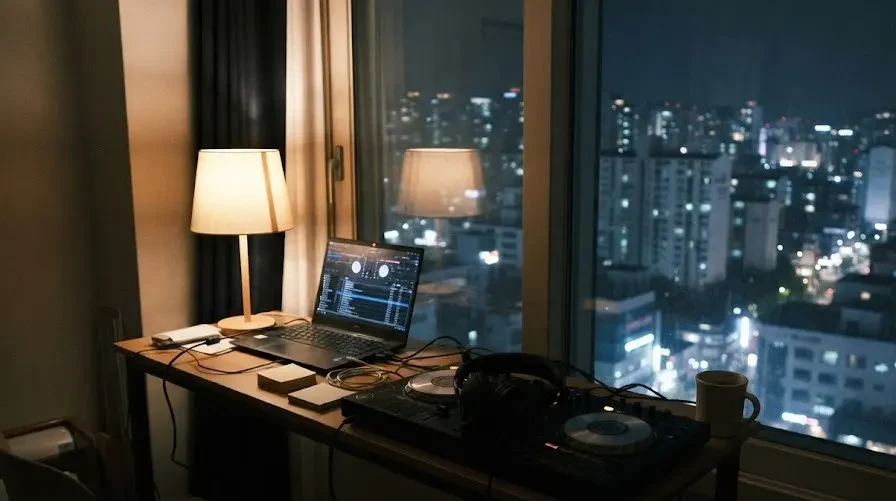
One thing worth knowing about Seoul clubs specifically: in my experience about nine in ten club booths here run Pioneer CDJs with a Pioneer mixer. Small pubs and some listening bars run controllers, which makes sense when space and the sound budget are tight, and the vinyl listening bars and cocktail bars opening all over the city keep turntables in the picture. DJ Korea (디제이코리아), the official Pioneer DJ and AlphaTheta importer, has its showroom at I’Park Mall in Yongsan (용산), practice rooms in neighbourhoods like Seongsu (성수) rent CDJ-3000 and DJM-A9 sets by the hour, and the academy courses I’ve looked at start with Rekordbox and put students on a CDJ-3000X or CDJ-3000 with a DJM-A9. If you’re hoping to work in the Seoul scene, which I’d recommend because it’s one of the most exciting DJ markets in the world right now, you need to be completely fluent on CDJs. There’s no shortcut around that.
What Changed in 2025 and 2026
In September 2025 AlphaTheta, the company behind Pioneer DJ, launched the CDJ-3000X. It keeps the CDJ-3000 layout but adds a 10.1 inch touch screen, built-in Wi-Fi, an NFC tap-in for your Rekordbox account and USB-C, and it can play from cloud storage and from streaming services. A firmware update in January 2026 added Apple Music next to Beatport Streaming and TIDAL. It links with CDJ-3000 units over Pro DJ Link, so a club can run both side by side.
In July 2026 two more players arrived. The CDJ-1500X is a smaller, cheaper multi player with the same size screen and the same cloud and streaming options, aimed at bars and small clubs. The XDJ-AN is a two-channel all-in-one unit whose layout is modelled on the club CDJ and DJM, and AlphaTheta pitches it as a bridge from home setups to the booth. It joins the XDJ-AZ, the OPUS-QUAD and the OMNIS-DUO, all-in-one units that already play straight from USB or streaming with no laptop, which is why the old controller or CDJ question is blurrier than it used to be. For scale, the CDJ-1500X lists at US$1,699 per player and the XDJ-AN at US$1,199, against US$2,999 for a single CDJ-3000X.
The software side moved too. Spotify arrived inside Rekordbox, Serato and djay in September 2025, on the laptop rather than on the CDJs themselves. Rekordbox 7 now splits tracks into four stems (since version 7.2.8 in December 2025), vocals, drums, bass and the rest, and Denon DJ’s Engine hardware can play stems standalone. In October 2025 AlphaTheta, Algoriddim and Native Instruments announced OneLibrary, a shared library format that lets djay and, in time, Traktor export USB sticks that CDJ-3000X and updated CDJ-3000 players can read. For a beginner that matters: the software you learn on no longer locks you out of the club booth, as long as you prepare your USB properly.
On the mixer side, the four-channel DJM-A9 arrived in 2023, the six-channel DJM-V10 sits beside it as the other flagship, and the compact three-channel DJM-V5 followed in January 2026. Plenty of booths still run the older DJM-900NXS2. Learn one Pioneer DJ mixer well and the others feel familiar.
Making the Decision That Is Right for You
Here’s how I’d frame the decision. If you’re a complete beginner and you want to learn DJing without a major upfront investment, start with a controller. The Pioneer DDJ-FLX4 or the smaller DDJ-FLX2 are solid choices, and a used DDJ-400, the model the FLX4 replaced, is still a good way in. Learn Rekordbox. Build good habits around music organization and preparation. Practise beatmatching until you don’t need to think about it. Those skills will serve you on any platform.
If you’re already DJing and getting serious bookings, invest in CDJ practice time. Rent a studio, ask a friend with CDJs if you can practise on their rig, do whatever you need to do to build fluency on the professional standard. Don’t wait until the night of your first club gig to figure out how CDJs work. That’s how you have the same nightmare experience I had in Gangnam in 2003.
If you can afford CDJs from the start and you know you’re serious about club DJing, buy CDJs. The extra investment will pay off in professional readiness. There’s no adjustment period when you show up to a gig. What you’ve been practising at home is exactly what’s in the booth.
Either way, understand that the equipment isn’t the craft. The craft is knowing your music, being able to read a room, constructing a set that takes people somewhere, and making technical decisions in real time under pressure. Those skills are built through repetition and through performing for real audiences. Whether you’re building them on a controller or on CDJs matters less than whether you’re building them at all. Read about how to start DJing properly and don’t let gear debates delay you from starting.
Try it: If the booth vocabulary in this piece is new to you, the DJ and club glossary explains 100 terms in plain language. And if you’re still working out what kind of DJ you want to be, which decides a lot of the gear question, the What Kind of DJ Are You quiz is a quick place to start.
Watch and listen: Pioneer DJ / AlphaTheta · The Pioneer DJ CDJ-3000 masterclass, AlphaTheta
Frequently Asked Questions
Should I start with a controller or CDJs?
Start with a controller. An entry-level model teaches beatmatching, phrasing, EQ and library preparation for a few hundred dollars, a fraction of what a CDJ setup costs. Once you’re serious about club gigs, add CDJ practice time before your first booking.
What’s the difference between a DJ controller and a CDJ?
A controller sends signals to DJ software running on your laptop, and the laptop does the audio work. A CDJ is a standalone player with its own screen and controls that reads music straight from a USB drive prepared in Rekordbox, so no laptop is needed in the booth. All-in-one units such as the XDJ-AZ, OPUS-QUAD and XDJ-AN blur the line, because they play from USB or streaming services without a laptop.
Do professional clubs use CDJs or controllers?
Most professional clubs use Pioneer DJ players, usually CDJ-3000s, the newer CDJ-3000X or the older CDJ-2000NXS2, with a Pioneer DJM mixer such as the DJM-A9, DJM-V10 or DJM-900NXS2. Controllers turn up in bars, mobile setups and home studios, but you should expect CDJs in a serious club booth.
Can skills learned on a controller transfer to CDJs?
Yes. Beatmatching, phrasing, EQ, track selection and Rekordbox library habits all transfer directly. The jog wheel feel and the booth layout are different, so book some practice time on real CDJs before a club gig.
How much do CDJs cost compared to controllers?
A beginner controller costs a few hundred dollars, while a pair of new CDJs and a club mixer run into several thousand. Used CDJ-2000NXS2s, which are no longer made, cost much less than new players, and many cities, Seoul included, have studios where you can rent time on CDJs by the hour.
Can you DJ from Spotify or other streaming services on CDJs?
Not from Spotify. Spotify works inside Rekordbox, Serato and djay on a laptop, not on the players. The CDJ-3000X and CDJ-1500X can stream from Apple Music, Beatport Streaming and TIDAL over Wi-Fi, but club Wi-Fi isn’t something to count on, so always bring a prepared USB stick.
Written from Seoul, by someone who has been in the booth for more than twenty years. More on the site, or book a DJ.
Stay in the Loop
New writing on DJ culture, electronic music, and the Seoul underground, delivered when it matters.
More From The DJ Diaries


Play with the history
Four tools built from the same research as this site.