The First Time I Touched a Turntable
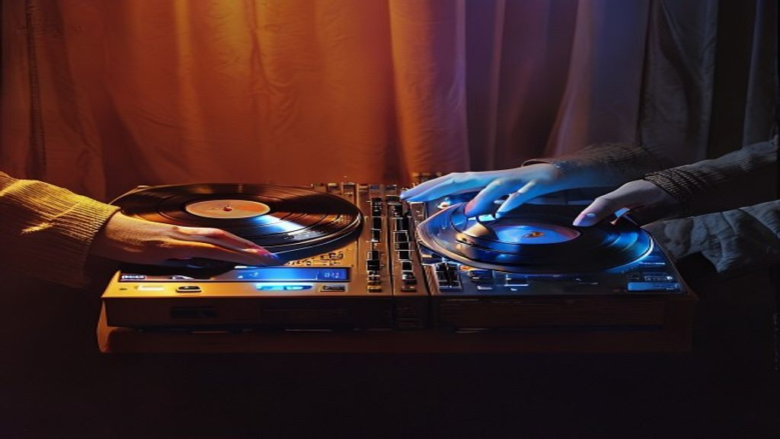
I first played records in middle school, and I took it seriously in Canada: vinyl, house parties and a radio show. Two Technics 1200s, a mixer and a crate were the whole education. What that taught me early: playing music meant controlling a physical object that made sound.
Fast forward to 2003. I’m in a different club, different city, and someone hands me a Pioneer CDJ. It’s a black box. No moving parts that I can see. No vinyl. No needle. The track queues up on a screen, and I press play. The song starts perfectly. No wow or flutter from aging vinyl. No skips. No dust-induced pops. And yet, something felt missing. I couldn’t name it then. I was too busy thinking about how much lighter my record bag was going to be.
That’s where my story with both formats begins. Not with ideology. Not with what some forum on the internet told me to believe. But with the physical reality of standing behind different pieces of equipment, night after night, year after year, in clubs across Canada and eventually in Seoul. After more than twenty years, I’ve learned that the vinyl versus digital question comes down to what each format teaches you, what each demands from you, and what you’re trying to achieve on the night.
What Vinyl Actually Teaches You
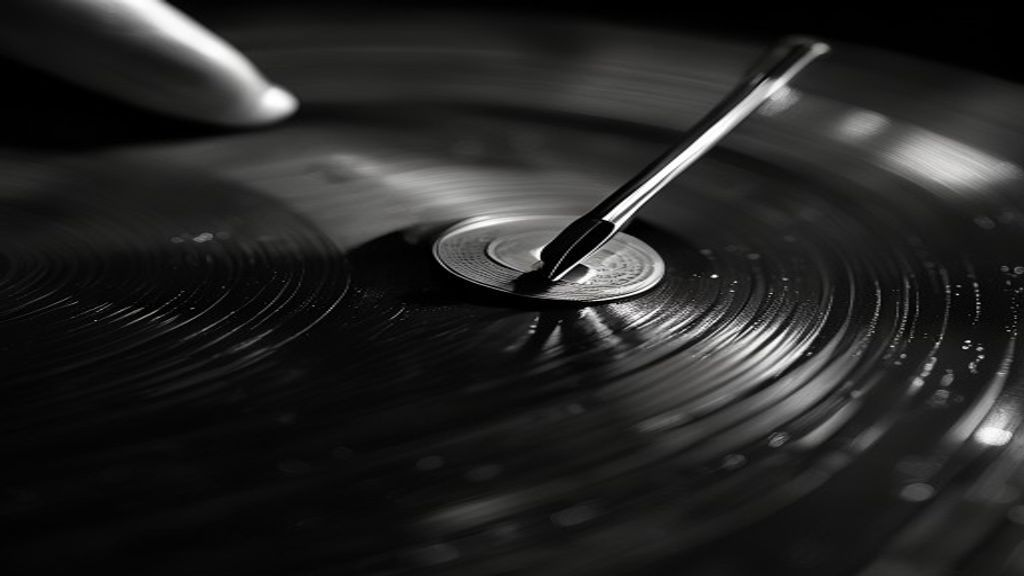
Vinyl forces you to listen. That’s the first thing it teaches. When you’re beatmatching by ear, adjusting the pitch slider in tiny increments, watching the platter spin and feeling the rhythm through your fingers, you’re not thinking about Instagram. You’re not checking your phone. You’re present with the music. The bass frequencies from your left deck have to lock perfectly with the frequencies from your right. Your ears become the only tool that matters.
I have trained hundreds of DJs over the years, and I can always tell when someone’s learned to beatmatch on vinyl versus when they have only used sync buttons. The vinyl-trained DJs hear the music differently. They understand decay and sustain. They know instinctively where the kick drum sits in the pocket. When they move to digital, that ear training translates immediately. They don’t need the visual feedback. They could mix with their eyes closed.
Beyond beatmatching, vinyl teaches you about crate culture and digging. You have to physically go somewhere, flip through hundreds of records, read the labels, feel the weight of the sleeve in your hand, get obsessed with a B-side that nobody else knows about. There’s a relationship that develops between you and your collection. Each record has a story. You remember where you found it, what you were going through when you discovered it, how the crowd responded the first time you played it. That emotional connection to music doesn’t happen the same way when you’re searching Spotify by genre and BPM.
And yes, vinyl DJing has real physicality to it. The tonearm, the slip mat, the feel of nudging the platter slightly to adjust the tempo, the satisfaction of a clean drop that lands on beat because your hands are coordinated and your ears are sharp. It’s performance as a physical practice, not just a technical one. That matters to how you think about DJing as a craft.
The Digital Revolution Actually Works
I remember exactly when I stopped being skeptical about digital. It was somewhere around midnight in a club, and my laptop crashed. Not the worst moment of my life, but close. I lost my main output. But the backup CDJ I had brought kept running. Had I insisted on vinyl-only setup that night, the club would have gone silent. The crowd would have left. I’d have lost money and reputation. That moment crystallized something for me: digital tools are professional equipment.
Rekordbox and Serato aren’t gimmicks. They’re engineered to do one thing exceptionally well: let you organize massive music libraries and access them in real time. Rekordbox alone can handle hundreds of thousands of tracks. You can organize by mood, by tempo, by key, by whatever system makes sense in your head. Try doing that with vinyl. You would need a warehouse and a team of assistants. The practical reality is that digital lets you respond to crowds in real time. If a room is sagging, you can pull up something specific in seconds. If an unexpected request comes in, you’re ready. That’s professional.
The technical quality is undeniable too. Digital files don’t degrade. They don’t skip when the table gets bumped. They don’t warp in heat or humidity. If you’re playing in a humid club in Seoul during summer, vinyl can warp during your set. I’ve watched it happen. Digital files just sit there, identical every single time. For a serious working DJ, that reliability matters. It matters when you’re booked for a six-hour set and you need to deliver.
And let’s talk about the economics. Vinyl records cost real money. Demand isn’t easing either: US vinyl sales passed US$1 billion in 2025 for the first time since 1983, the nineteenth straight year of growth, according to the RIAA. Good used records run fifteen to fifty dollars each. A scratch record that gets regular use lasts maybe a year before the needle wear becomes audible. Building a serious vinyl collection for club work can cost tens of thousands of dollars and take years. A digital library is a hard drive and a USB stick. The music itself is cheaper. The backup is easier. The portability is absolute.
The Authenticity Question Needs Honesty
This will upset some people: the “vinyl is more authentic” argument is more complicated than the purists admit. Yes, vinyl is analog. Yes, there’s a warm quality to vinyl that some people love. Yes, there’s an argument to be made that playing vinyl requires more skill because you’re managing more variables. All of that’s true. But “authenticity” doesn’t equal “better,” and I say that as someone who loves vinyl and still spins it regularly.
Digital DJing is authentic too. It’s how the music gets played in most professional venues. It’s how modern producers and artists expect their work to be distributed. When you’re using Rekordbox or Serato professionally, you’re not faking anything. You’re using the tools of the modern era with skill and intention. There’s nothing inauthentic about that. If anything, pretending that vinyl is the only “real” way to DJ is a form of gatekeeping dressed up as artistic integrity.
I’ve played transcendent sets on vinyl. I have also played them on CDJs. The difference wasn’t the medium. It was how well I knew my music, how attuned I was to the room, how much energy I brought to the performance, and how willing I was to listen to what the crowd needed in that moment. Those variables matter far more than whether the track was spinning on a Technics or displayed on a screen.
Where vinyl does have a real advantage is in forcing a certain kind of intentionality. When you can only carry so many records, you choose them carefully. You know every single one. You have tested them in rooms. You have conviction about each selection. That’s valuable. But you can develop that same intentionality digitally. You just have to be disciplined enough to do it. Build a crate, stick to it, know it inside out. The difference is that digitally, you can change your mind faster, which is either a feature or a bug depending on your perspective.
What Clubs Actually Use (And Why It Matters)
Let me be direct: CDJs are the industry standard everywhere. If you’re working clubs in Toronto, Vancouver, Montreal, Seoul, Tokyo, or anywhere else that matters professionally, you’re using CDJ equipment most of the time. Funktion-One sound systems, Pioneer DJ hardware, Rekordbox networking. That’s the setup. It’s not changing anytime soon because it works and because venues have already invested in it.
Even when clubs do have vinyl turntables, they’re usually set up as secondary. You’re playing them through the same club mixer as the CDJs, and many of those mixers double as DVS interfaces. So you can spin vinyl, and the room will hear it, but you’re still running through the digital setup. The idea of a “pure vinyl” club is increasingly rare. It exists in specific collector-DJ communities and certain vinyl-focused venues, but it’s not the standard working environment for most DJs.
This matters because it tells you something about what you should probably learn first. If your goal is to work professionally, you need to be competent on CDJs. You need to understand Rekordbox, how to load tracks, how to prepare files, how to read waveforms, how to troubleshoot when equipment acts up. That’s not negotiable. It’s the language that venues speak. Vinyl is the supplement, not the main course, in most professional contexts.
I’ve always had a real turntable and vinyl in my home setup. I still use it for practice and for that specific vibe when I’m not bound by venue requirements. But when I walk into a professional booking, I’m walking in with my library organized on Rekordbox and my tracks formatted for digital playback. I have adapted to the industry standard without losing my connection to the music. That’s what professionals do.
The Hybrid Approach: DVS and the Middle Path
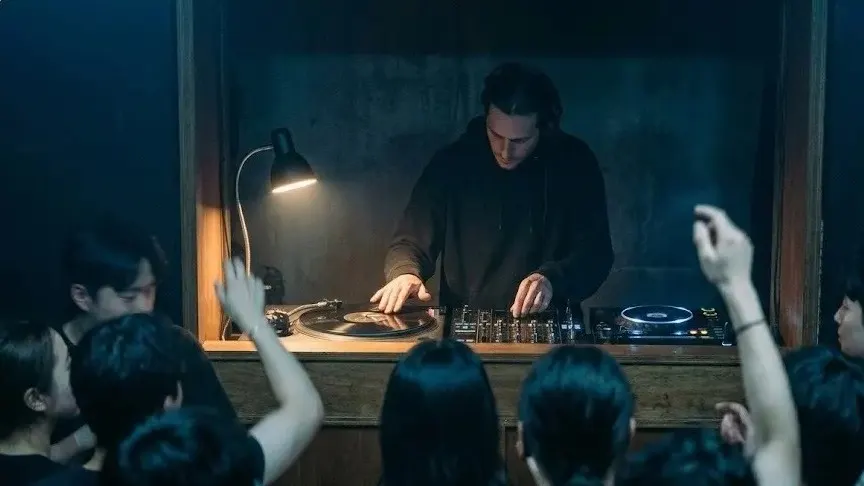
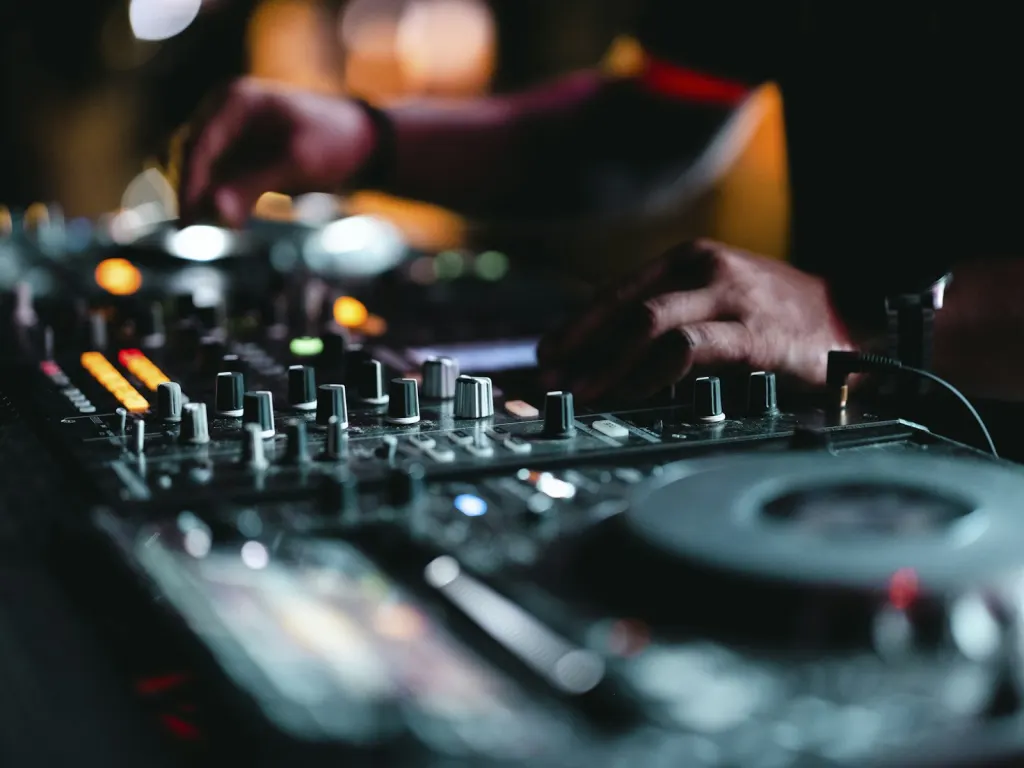
Digital Vinyl Systems are where the two worlds merge. DVS technology lets you use traditional turntables and vinyl control records to manipulate digital files. So you get the tactile, physical experience of scratching and beatmatching on vinyl, but the reliability and library size of digital. Companies like Serato have built their whole ecosystem around this. You plug turntables into a Serato-supported mixer or interface from a hardware partner, use control records, and you’re essentially DJing digitally but with the vinyl interface.
I use DVS regularly, especially when I want that vinyl feel but need the flexibility of a large digital library. It’s the best of both worlds, though “best of both worlds” comes with a price tag and some technical complexity. You need good turntables, you need a proper sound card or DVS controller, and you need to understand how the software maps the physical controls to digital functions. It’s not as simple as just dropping a record and playing.
But here’s what matters: if you learned on vinyl first, DVS feels natural immediately. Your muscle memory transfers. If you learned on digital only, DVS takes some time to adjust to. The tactile feedback is different. The way you control speed and playback feels completely different from using a mouse or a jog wheel. That’s another argument for learning vinyl early, even if you’re eventually going to use digital professionally. It gives you a foundation that translates to other formats.
Many serious DJs I know in Seoul use a hybrid setup. They will use DVS for live radio shows or special events, and straight digital for club bookings. The flexibility matters. You’re not locked into one way of thinking about the music. You can adapt to different rooms, different vibes, different technical constraints. That adaptability is worth the investment in learning multiple formats.
Vinyl, Digital or Both
What each format teaches, costs and asks of you
| Vinylrecords and turntables | DigitalCDJs, controllers | DVStimecode vinyl | |
|---|---|---|---|
| Beatmatching | By ear, on the pitch slider | By ear, or with sync | By hand, on turntables |
| What it teaches | Listening | Library and preparation | The feel of vinyl with digital files |
| Cost to start | Highest | Most affordable | Turntables plus software |
| In club booths | Rare | The standard | Bring your own |
| Weak spot | Weight and fragile edges | A crashed laptop mid set | Two systems to keep working |
The verdictStart digital. It is cheaper and it is what clubs use. After twenty years, the format matters less than whether you are a good DJ.
US vinyl revenue passed $1 billion in 2025 for the first time since 1983, its 19th straight year of growth. UK LP sales rose 13.3% to 7.6 million.
Sources: RIAA via Music Week · BPI via Music Week
What Beginners Should Actually Do
Here’s my advice, and I know it will disappoint people who wanted me to definitively say one format is the answer: start digital. I recommend it even though I love vinyl and I’ll probably always be something of a vinyl DJ. The reason is practical, and it’s about your path to working professionally.
Digital equipment is more affordable to start with. A good USB controller costs a few hundred dollars and will teach you all the fundamental skills you need. You can install Serato or Rekordbox on your laptop and practice immediately. You don’t need to invest two thousand dollars in turntables and another thousand in records just to figure out if you actually like DJing. Start cheap, figure out if this is real for you, and then invest in higher-quality gear once you’re committed.
Learn how to DJ fundamentally. Understand beatmatching, phrasing, mixing, how to read a room, how to build a narrative in your set. Those skills are universal. They translate perfectly between vinyl and digital. The specific tools matter less than the foundational knowledge. Once you’re solid on those basics, you can move to vinyl if you want to, or stay digital, or learn DVS. You’ll have the skills to pick up any format.
And get experience in real venues. That’s crucial. The Resident Advisor listings and local club connections will teach you more about professional DJing than anything else. You’ll figure out what equipment you need to be competent on because you’ll encounter it. You’ll understand the industry standard because you’ll be working within it. Start with a controller, get good, get booked, learn what each venue needs, and adapt from there.
How the Seoul Scene Sees This Question
One of the best things about my time in Korea is that the DJ community there doesn’t have the same vinyl versus digital baggage that exists in North America. In Seoul, it’s about good DJing. I’ve played clubs that have all vinyl, all digital, or hybrid setups, and nobody cares which one you choose. They care if you can read the room and keep the energy moving. The best DJs I’ve worked with in Seoul use whatever format suits the situation.
There’s a strong vinyl record community in Seoul, especially around Hongdae and Gangnam, but it isn’t framed as “real” versus “fake.” The 14th Seoul Record Fair (서울레코드페어) moved to Seongsu in October 2025; organisers told Newsis (Korean) that attendance has settled at about 13,000 per edition since the pandemic, and that Korea now has three vinyl pressing plants, up from none in 2011. It’s just a different cultural space. There are collectors who appreciate the format and the culture around it. But they’re not dismissive of digital DJs. The divide that exists in some Western DJ circles just doesn’t have the same weight in the Korean scene.
That perspective is liberating. The question stops being “which one is better?” and starts being “which one serves this moment best?” A vinyl-focused night in a collector bar needs a different approach than a club where you’re trying to get five hundred people dancing. Those are different jobs requiring different tools.
The Real Answer After Twenty Years
The vinyl versus digital debate matters way less than you think it does. What matters is whether you’re a good DJ. Good DJs can make magic with vinyl or digital or both. Bad DJs will be bad on whatever format you give them. The tool amplifies what’s already there.
If you want to avoid common mistakes, stop obsessing over the format and start obsessing over the music. Know your tracks. Understand the technical side of mixing so well that the equipment becomes invisible. Develop your ear so carefully that you can mix in a dark club without looking at anything. Learn how to read a room and respond to what people actually need, not what you think they should want. Those skills matter more than whether you’re using wax or code.
The physical and emotional connection to music that vinyl teaches is real and valuable. The efficiency and professionalism that digital enables is equally real and equally valuable. The best DJs I know have learned to appreciate both. They understand why someone loves vinyl and why someone prefers digital, and they respect both approaches without insisting that one is objectively superior.
My advice: start digital if you’re just beginning. Get professional on CDJs because that’s what venues use. But at some point, get behind vinyl turntables and spend time learning what that teaches. The ear training alone is worth it. And if you fall in love with it, build a vinyl collection slowly and thoughtfully. Don’t do it as gatekeeping or as a way to prove you’re a “real” DJ. Do it because the culture and the format move you.
The music is the real medium. Whether that music comes from vinyl or digital is secondary. I’ve spent more than twenty years in Canada and in Seoul learning that, and I’m grateful for every format that taught me something. Your job is to master them all, respect what each one brings to the table, and then use your judgment about which tool serves the music and the moment best.
Frequently Asked Questions
For more on developing your craft, check out mastering the mix, and explore the brief history of DJing to understand where these formats came from.
Written from Seoul, by someone who has been in the booth for more than twenty years. More on the site, or book a DJ.
Stay in the Loop
New writing on DJ culture, electronic music, and the Seoul underground, delivered when it matters.
More From The DJ Diaries

Play with the history
Four tools built from the same research as this site.