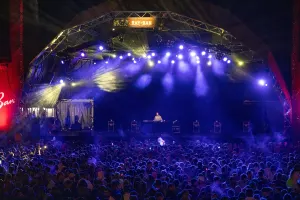
Years ago I was playing a warm up slot at a club on one of those Saturdays that had gone better than expected. The floor filled early, the energy was right, and somewhere around the ninety minute mark I made a decision I’ve thought about ever since. I’d play eight more minutes. Just eight. The next DJ was a friend, the room was good, and stopping felt like a waste.
He came into the booth without a word, waited for my track to reach its natural break, and took over. No confrontation, no visible irritation, just the quiet competence of someone who’d been through it before. He never mentioned it and neither did I. But I never ran over a set time again, because I understood exactly what I’d done. I’d made a decision that wasn’t mine to make, about time that wasn’t mine to spend, in a room I was supposed to be handing to someone else.
Running over is the most common kind of DJ rudeness, and the least discussed. It happens in Seoul basements, Toronto bar slots and on festival stages. The DJ doing it nearly always thinks they have a good reason. They nearly never do.
The Extra Minutes Belong to the Next DJ
The pull to keep going is real. The floor is moving, the energy is high, you’ve got the track that would land perfectly, and stopping feels like walking away from something good before it’s finished. That instinct is understandable. It has almost nothing to do with whether you should act on it.
The time you took wasn’t a bonus for the floor. It was a withdrawal from the next DJ’s account. They arrived having thought about what they’d open with, how they’d read the room when they took over, and what energy they’d be walking into. You changed all of that without asking.
I learned it from the other side too. After one bad night in Seoul I stopped taking warm up slots at venues where the previous DJ had poor time discipline. I’d looked forward to that slot for weeks and planned an opening that would have suited the room at my start time. I walked in to find the outgoing DJ forty five minutes over. By the time I got on, the crowd was somewhere else entirely and the plan was useless.
The Whole Night Runs on the Schedule
Venues run on schedules because several systems depend on them at once. Sound engineers have shifts. Bar staff have handovers. Promoters have worked out how long each act gets to reach the crowd. And licences come with closing times that are enforced by law, not suggested.
Ending a Set on Time
The countdown to midnight, and the one question that decides whether you can play on
The ruleIf someone with authority over the schedule has not told you to extend, you do not have permission.
Bigger screens, easier handovers. The CDJ-3000X browse view shows 16 tracks against 13 before, which helps when you have a few seconds to find the next record.
11pm to about 8am Carl Cox closing his 15 year Space Ibiza residency on 20 September 2016. A long set, played to the clock.
Sources: Wikipedia, CDJ · Digital DJ Tips · Resident Advisor
Fifteen minutes over doesn’t disappear. It’s borrowed from everything that comes after you, and the person at the end of the chain, usually the headliner, is often the one cut short to keep the venue legal. The DJs who last treat the schedule as shared infrastructure. The ones who treat it as a personal suggestion find that promoters stop calling rather than manage the knock on problems for another night.
How to End a Set on Time
Good timing comes from a few habits that feel tedious until you’ve watched someone fail in public without them. First, keep a clock where you can see it the whole set: your phone face up, a watch, the CDJ display. Plenty of DJs play whole sets with no sense of how much time has passed, then look up and panic, and panic is where the bad decisions happen.
Start planning your close twenty minutes before your end time. Have at least three possible closing tracks at different energy levels, so you can match where the room is rather than where you planned it would be. A well organised library with clear categories makes that possible mid set. Searching while you play is how you lose the thread and the clock at the same time.
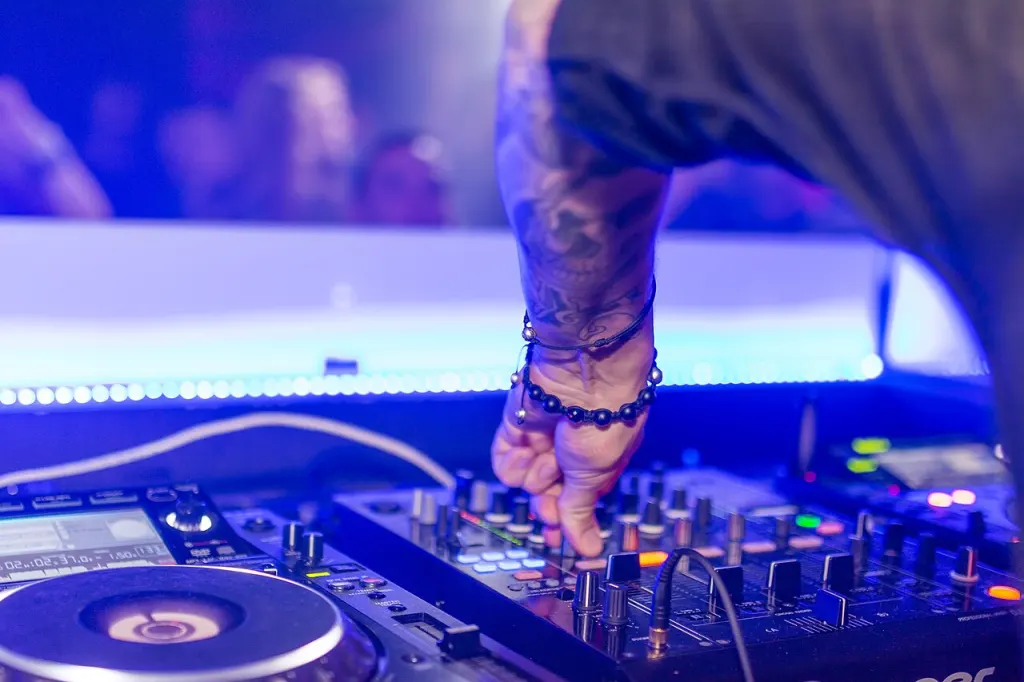
Then build in sixty seconds of buffer. If your set ends at midnight, aim for your last track to finish at 11:59. That minute catches the outro that runs a few bars longer than you expected. The worst endings happen when a DJ realises they’re already over. The best feel inevitable, because they were planned.
When You Can Play On
There are real reasons to extend. The next DJ cancels and the promoter asks you to cover. A technical fault ate part of your slot and the venue wants to give it back. The headliner is late and someone in charge of the schedule asks you to stretch. In every one of those, someone with authority over the schedule has told you to extend. If that hasn’t happened, you don’t have permission, however good your reason feels from inside the booth.
If you think the room deserves more, there’s a professional way to ask. Three tracks before your end time, catch the incoming DJ’s eye and ask whether they mind if you play one more. It’s their time and their call. Accept whatever they say, and if it’s yes, one track means one track.
The Handover Is Part of the Set
A good handover is something most of the crowd never notices, and that’s the point. The room keeps moving, the energy doesn’t break, and the people deep in the music when the DJ changed are still deep in it five minutes later.
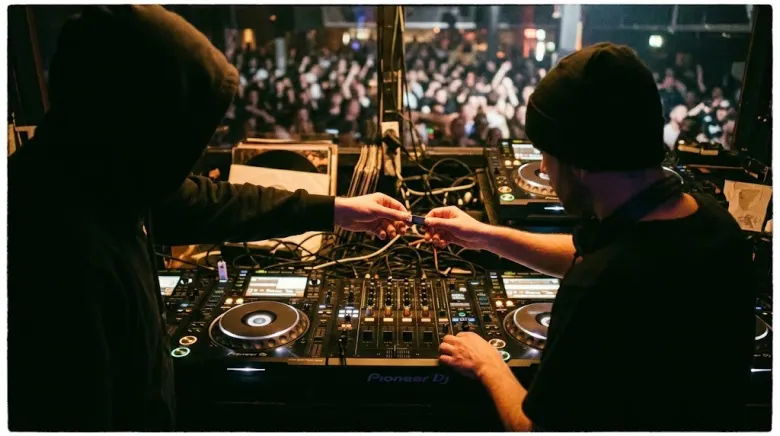
Think about where the incoming DJ wants to start before you decide where to end. If you’ve been building for an hour, bring the last two tracks down slightly and leave them room to build, rather than handing them a peak they can’t sustain. Before your last track, take ninety seconds to say hello, shake hands, ask about their cue points and check whether they’re on USB or a laptop.
That USB or laptop question now has a third answer. AlphaTheta’s CDJ-3000X, announced in September 2025, adds built in Wi-Fi and an NFC touchpoint for reaching online libraries, so also ask whether they need the booth’s network. Ninety seconds, and the rest of the night runs smoothly.
When Someone Runs Over You
It will happen. Stand where the DJ can see you, in their peripheral vision without crowding the booth, and give them a window to wrap up naturally. If they’re ten minutes over and showing no sign of stopping, quietly go to the promoter or the sound engineer. The booth isn’t the place for that conversation.
After the gig, if it was a real problem, text the promoter privately and frame it around what it did to your set, not around the other DJ’s character. Don’t take it to social media. DJs who go after other DJs online stop getting booked, and if you’re building a reputation on performance rather than politics, the patience to handle it privately is part of the work.
Frequently Asked Questions
How much over your set time is acceptable?
None, unless the promoter or the incoming DJ has explicitly approved it. Three extra minutes across a four DJ lineup means the headliner gets cut short. The calculation doesn’t change because your reasons feel compelling in the moment.
What do you do if the DJ before you runs over?
Stand where they can see you, give them a few minutes’ grace, then go quietly to the promoter or sound engineer if nothing changes. Don’t confront them at the decks. Afterwards, raise it privately with the promoter if it hurt your set, and never complain publicly about another DJ.
How do you practise ending on time at home?
Set a timer for sixty to ninety minutes and treat the last ten as a hard limit. Start your closing sequence early, with several track options at different energy levels. Most beginners skip this exercise and then learn it painfully in public.
How do you hand over to a DJ with a very different style?
Bring the room to a neutral groove before you hand over rather than peaking into their opening. Most style differences become manageable if the energy at the change gives the incoming DJ room to find their direction. The handover is about starting their story cleanly.
Further Reading
- Wikipedia: the opening act and the role of the warm up
- Wikipedia: the DJ mix and continuous sets
- Wikipedia: beatmatching and clean transitions
- Wikipedia: the disc jockey and the history of the role
- Reading the Room: DJ Programming
- Common DJ Mistakes and How to Avoid Them
Sources
Licensing Act 2003, section 136, legislation.gov.uk
Mixmag, The Secret DJ on the shift change
Resident Advisor, feature on warming up
Digital DJ Tips, AlphaTheta launches the CDJ-3000X, September 2025
Resident Advisor, review of Carl Cox closing at Space Ibiza, 2016
Written from Seoul, by someone who has been in the booth for more than twenty years. More on the site, or book a DJ.
Stay in the Loop
New writing on DJ culture, electronic music, and the Seoul underground, delivered when it matters.
More From The DJ Diaries


Play with the history
Four tools built from the same research as this site.