Hongdae and Itaewon serve two different ideas of what a night out in Seoul should be, and once you see the two models clearly, most of the confusion visitors have about Seoul nightlife disappears.
한국어 요약
홍대와 이태원, 같은 토요일 밤 서로 다른 두 개의 시계
제가 보기에 홍대와 이태원은 같은 손님을 두고 경쟁하는 곳이 아니라, 서울의 밤에 대한 서로 다른 두 가지 생각을 보여 주는 곳입니다.
- 홍대: 밤 11시에 문을 열어 자정에 절정을 찍고 새벽 4시쯤 끝나며, 입장료는 보통 1만 원에서 2만 원입니다. 20대 초반 한국 손님이 중심입니다.
- 이태원: 새벽 2시 전에는 달아오르지 않고 해 뜰 때까지 이어지며, 언더그라운드 공간의 입장료는 2만 원에서 3만 원 선입니다.
- 귀갓길: 홍대는 막차를 탈 수 있는 밤이고, 이태원은 첫차를 기다리는 밤입니다. 그 중간이 가장 곤란합니다.
- 2026년의 흐름: 외국인 카드 지출의 65%가 강남구, 중구, 마포구에 몰렸고, 이태원이 있는 용산구는 그 목록에 없습니다.
제 생각에 홍대는 로컬도 여전히 찾는 관광객의 밤이 되어 가고, 이태원은 관광객이 다시 배우는 로컬의 밤입니다. 10월부터 운행하는 반딧불이버스는 홍대를 지나지만 이태원은 노선에 없습니다.
잘못된 정보나 바뀐 날짜를 발견하셨나요? 연락 주시면 확인 후 바로 고치겠습니다. 현장에서 보고 들은 이야기도 언제나 환영합니다.
Two Saturdays, Side by Side
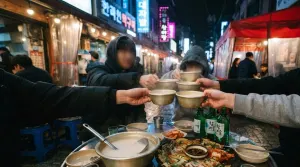
On a Saturday night in Hongdae, the streets around Hongik University and Sangsu station are packed from 11pm onward. The demographic is predominantly Korean, predominantly early twenties, and the venues are full by midnight. On the same Saturday in Itaewon, Cakeshop is quiet until 1am, fills slowly through the small hours, and runs until sunrise. Same city, same night, two entirely different clocks. The music is different, the crowd is different, and the social function is different.
Two Saturdays, Two Clocks
When each district fills, peaks and empties, against the hours the subway sleeps
홍대와 이태원, 서로 다른 두 개의 시계
The rulePlan the gap or plan to stay out. Hongdae lets you catch the last train. Itaewon assumes you will not try, so its nights end with sunrise food. Cover track runs from ₩0 to ₩30,000.
23.7% fewer weekday subway riders after midnight than in 2019, while overall ridership fell only 7.5%. Hongik University station is the second busiest after midnight, with 590 riders, just behind Gangnam on 599.
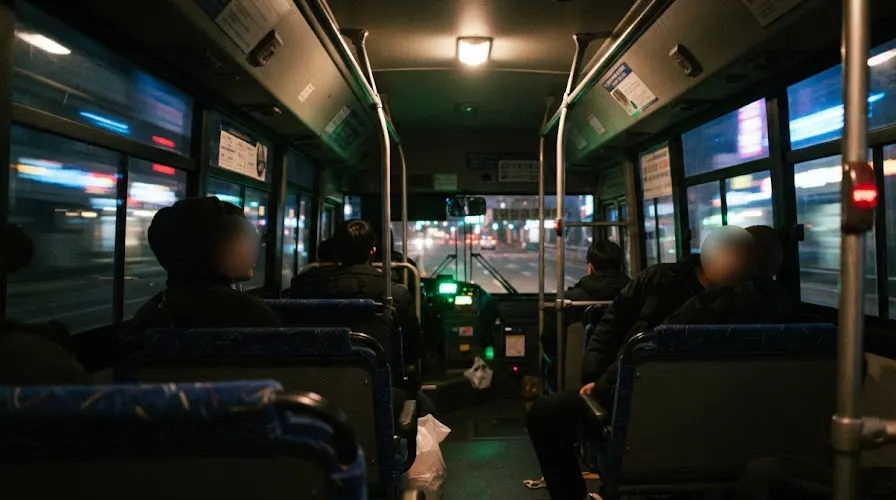
9.1% more late night bus riders in December 2025 than a year earlier. Seoul runs 14 Owl Bus routes from 11:10pm to 6am, and the new Firefly Bus links Hongdae and Gangnam from 11pm to 5:30am from October 2026.
Sources: Seoul Metro via Herald Business · Seoul Economic Daily · Korea JoongAng Daily · Asia Economy
Hongdae: Early, Loud, Cheap
Hongdae clusters around Hongik University in Mapo-gu, a district whose identity has been student-driven since the art school made it Seoul’s bohemian quarter in the 1990s. The big rooms, Club FF for live bands, NB2 for hip-hop, the rooftop floors above them, run capacities in the 500-plus range. Programming is mainstream electronic, hip-hop, and K-pop-adjacent rather than the deep house and techno of Itaewon. The timing is compressed: doors at 11pm, peak at midnight, closing around 4am. Covers commonly land between 10,000 and 20,000 won, often with a drink included, and the convenience-store pre-game outside is half the culture. The social function is straightforward: this is the default going-out district for young Seoul, the place you go with classmates rather than with a lineup in mind.
The best scholarly account of how that quarter became a club district is still Lee Moo-yong’s 2004 paper in Korea Journal, free to read in English. He dates the café culture to the early 1990s and the concentration of clubs to the late 1990s, and concludes that Hongdae club culture works at once as a carnivalesque space of communitas, a local culture space and a space of contested meaning.
Itaewon: Late, Deep, International
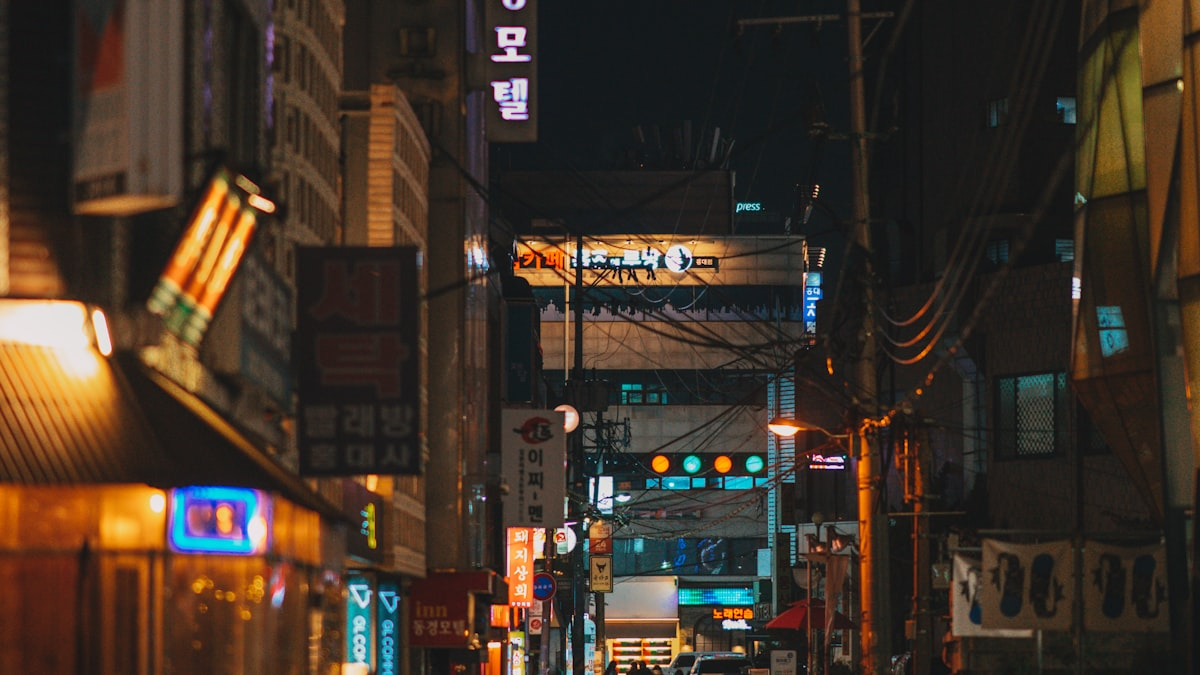
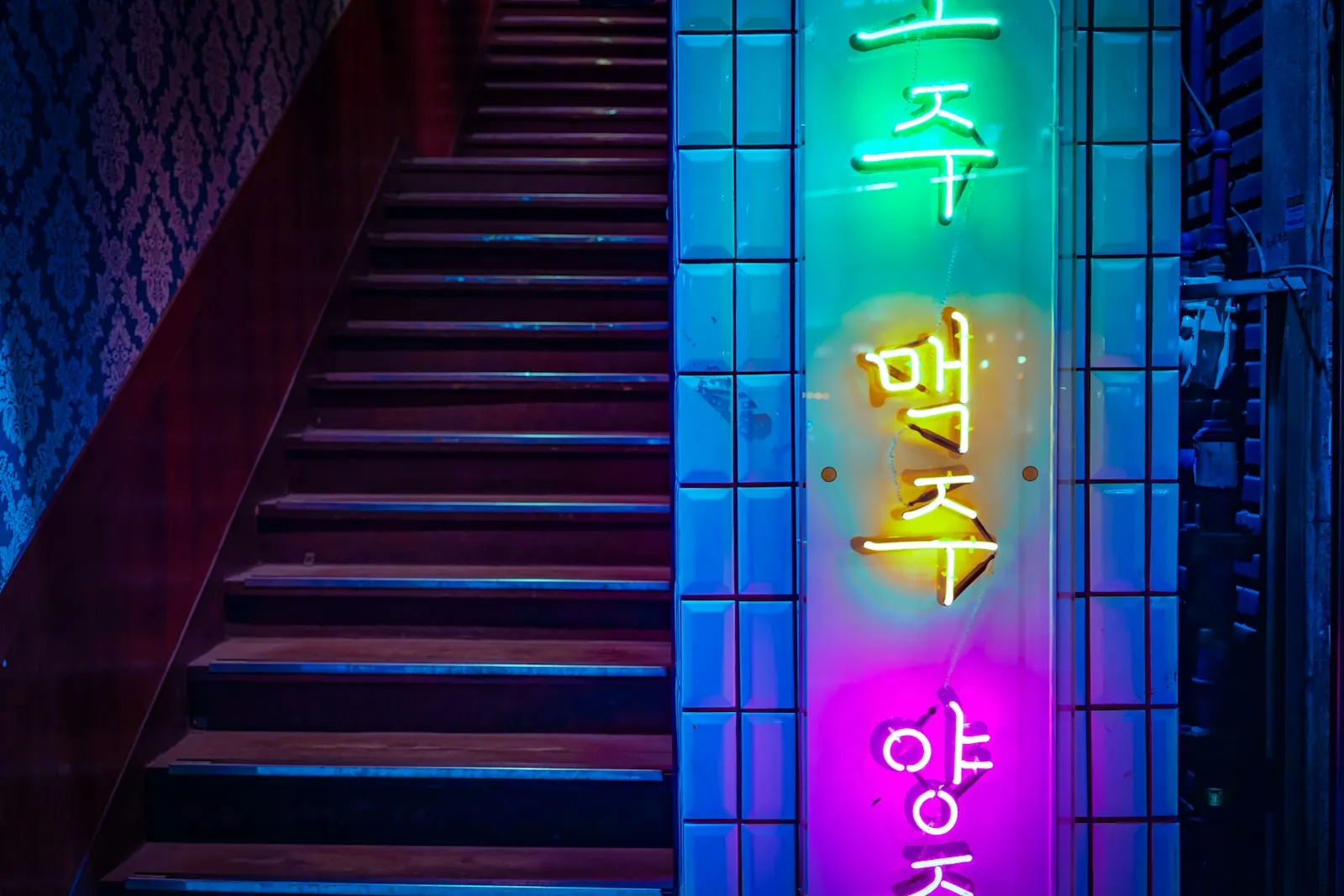
Itaewon runs the opposite model. The rooms are smaller, the music policy is the point, and the night is long. Nothing peaks before 2am, and the serious floors hold until after sunrise, a rhythm built around resident DJs playing long sets rather than a parade of guest slots. The crowd mixes Korean regulars, expats, and touring internationals, and the district’s history as Seoul’s foreign quarter, which I trace in Itaewon After Dark, still shapes who feels at home there first. Covers are higher, 20,000 to 30,000 won at the underground rooms, but table service is largely absent and drinks stay below Gangnam prices, and the listings worth checking are on Resident Advisor’s Seoul guide rather than on posters.
The Logistics That Decide Your Night
One practical constraint shapes both districts more than any music policy: the subway stops around midnight and restarts near 5:30am. Hongdae’s earlier schedule means leaving before the last train is a real option. Itaewon’s schedule assumes you won’t try, which is why the district’s nights end with sunrise food rather than a taxi queue, and why Kakao T surge pricing at 4am is a running joke among regulars. Plan the gap or plan to stay out. The middle path is the only mistake. The full district-by-district logistics, including ID checks and door etiquette, are in the neighbourhood guide.
The Crowd That Uses Both
Then there’s the domestic Korean audience that moves between both districts depending on the night they want, a choice visitors and expats rarely make: a birthday in Hongdae at midnight, a techno room in Itaewon the following weekend. The 2025 nightlife survey caught this directly, with respondents naming different home districts for different nights rather than one loyalty. If you want the three-way version of this comparison with Gangnam’s bottle-service economy included, that’s its own essay, and the wider five-scene picture is in Seoul’s club map.
Where This Stands in 2026
The two clocks still run, but the numbers around them have moved, and not in the same direction. Last Halloween showed the Hongdae (홍대) model at its most extreme. Reports put the crowd at roughly 105,000 to 110,000 people, with one-way fencing and billboard warnings that the area was very crowded. Across the city, about 4,900 police covered 14 hotspots, including Itaewon, Hongdae, Gangnam and Seongsu, during a special period from 24 October to 2 November.
Itaewon (이태원), where the 2022 crowd crush happened, got the heavier controls. According to the Korea Times, the alley beside the Hamilton Hotel was blocked and trains skipped Itaewon Station from 11pm. Phones in the area received crowd alerts at around 10:30pm. From the booth side, that’s a night when the district deliberately thins itself out, and I think it’s the right call. The Halloween crowd was never the Itaewon underground crowd anyway.
The rest of the year has been a recovery. By November 2025, Itaewon had drawn 1.3 million domestic visitors and more than 250,000 foreign ones. Much of the rebuilding is local and organised. A nonprofit called Itaewon Governance formed in July 2024, and the district now markets itself under a “Welcome All Itaewon” brand. A free autumn street festival on 3 and 4 October 2026 ran 400 metres between Itaewon and Noksapyeong, with 16 dance programmes, and organisers expected 30,000 people. Add Soap’s reopening at a new Itaewon venue and the late side of this comparison looks healthier than it has in years.
Follow the Tourist Money
One data point changes how visitors should read this comparison. Seoul drew 8.23 million foreign visitors in the first half of 2026, up 21.3 percent. Their card spending hit 5.6 trillion won (about CAD $5.4 billion), up 56.8 percent. According to Seoul city figures reported by Hankyung, about 65 percent of that spend landed in three districts: Gangnam, Jung-gu and Mapo. Mapo is Hongdae’s district. Itaewon sits in Yongsan, which isn’t on that list.
Locals, meanwhile, are spending less after dark. The same report counted Seoul pubs and bars falling from 16,292 in early 2024 to 13,924 two years later. It also found that 37 percent of Emart24 convenience store sales to foreigners happen between 8pm and 2am. That last number is the Hongdae pre-game I described above, now carrying a passport.
As I see it, Hongdae is becoming a tourist night that locals still use, and Itaewon is a local night that tourists are relearning. The city is also tilting the logistics west. Seoul’s new Firefly buses (반딧불이버스, bandiburi beoseu) were announced in August 2026 to start in October, with planned hours of 11pm to 5:50am. The announced links cover Hongdae, Gangnam, Myeongdong, DDP and Gwanghwamun, and the list doesn’t include Itaewon. For Itaewon regulars, the plan is unchanged: stay until the trains restart, then find soup. The deeper history of why each district drinks the way it does is in how Seoul’s nightlife districts were made.
Hongdae has been through a version of this before. Lee Kee-woong’s 2015 study in the Korean Journal of Urban History followed the cultural refugees (문화유민, munhwa yumin) pushed out from the mid-2000s as franchise coffee shops, fashion stores and large dance clubs moved in, and found many of them rebuilding in Yeonnam-dong and Sangsu-dong as places of alternative economy rather than copies of the old Hongdae.
My Hongdae, My Itaewon
When I first arrived in the early 2000s, Hongdae was fantastic. There were bars and clubs everywhere, mostly for the university students in that part of the city, and in my opinion it was the only place you could find underground music: house, techno, drum and bass, all of it.
An average night started at a barbecue place for the first round, then a beer bar, then bouncing from club to club and party to party. I didn’t go to Itaewon for about two years, because I was so happy with the community I found in Hongdae.
When I eventually went to Itaewon it was mostly for food, and it was mostly expats and GIs, the American soldiers. Quite rowdy, with a mix of rock, hip-hop, pop and dance music. The underground DJ scene there didn’t get going until the mid-2000s, with rooms like B1, Hollywood Basement and Spy Bar. I started playing in Itaewon in 2006.
The difference between the two was well known. Hongdae was for anyone under thirty. Itaewon was open to all ages. Back then Hongdae was very Korean with a good mix of expats, but it wasn’t the tourist trap it is now. Itaewon was where the tourists went, the people who wanted something more familiar.
Now Itaewon has become much more globalised, and the US military has moved away. It still keeps a lot of underground music, though: the rooms are smaller, and many of them have done well. It still delivers. Hongdae has moved away from the underground sounds it had before COVID, towards K-pop, hip-hop and pop, with a big tourist crowd. The venue I miss most is M2 in Hongdae.
My best memories of M2 are of playing alongside Todd and Dylan, as they were known, a Canadian and a New Zealander. They were the other expat DJs playing out at the time, and they opened the door for the foreign and local DJs who came after them. I still appreciate their mentorship and their friendship. M2 booked so many good international house DJs back then, and they would come in for one or two nights, which made a residency there feel like a front-row seat.
My first Itaewon gig was at B1, and that place was legendary. I could tell you a million stories. If anything started the gentrification of what Itaewon is today, it was B1: a lounge club, iconic, with great people, great drinks and fantastic music. I’ll leave the rest to your imagination.
None of the Hongdae venues I went to back then are still open. Itaewon has had a harder road. After 2022 things were very quiet, tragically, and a lot of locals avoided the area because of the stigma of what happened. Now it’s back with even more energy, more vibrant than before, and with safety built into the streets and alleys. Public workers still patrol and keep people moving, and there are cameras and even signs that show you how congested the street is. The city’s own account describes crowd-sensing CCTV that shows congestion in green, yellow and red, SOS bells linked to the police, and about 4,200 safety staff deployed in Itaewon around Halloween.
My honest advice: if you’re over thirty and you’re in Hongdae, you’re wasting your time. Go to Itaewon.
Go Deeper: Watch, Listen, Read
To hear both clocks for yourself and plan the night around them, start here.
- Boiler Room x Cakeshop, Seoul: a full streamed session from the room this article uses as Itaewon’s late clock.
- Live Club Day on YouTube: footage from Hongdae’s monthly live club night, the district’s other half beyond the dance floors.
- Visit Seoul: things to do in Hongdae: the official tourism site’s picks, useful for filling the hours before the clubs open.
- Kyunghyang on the 10·29 memorial path in Itaewon (2023): how the alley beside the Hamilton Hotel became the Memory and Safety Path, worth reading before you walk it.
- Seoul city guide to the owl night buses: the late-night network that still covers the gap between last and first train.
- Kyunghyang on the planned Firefly night buses (2026): the Korean report on the new late routes and the landmarks they link.
Frequently Asked Questions
Is Itaewon busy again after the 2022 crowd crush?
Yes. By November 2025, Itaewon had drawn 1.3 million domestic visitors and more than 250,000 foreign visitors, helped by a local nonprofit called Itaewon Governance. On big nights like Halloween, police now use blocked alleys, skipped subway stops and crowd alerts.
How crowded is Hongdae on Halloween?
Very. Reports from Halloween 2025 put the Hongdae crowd at roughly 105,000 to 110,000 people, managed with one-way fencing and billboard warnings. If you want to dance rather than queue, another weekend is the better bet.
Is Hongdae or Itaewon better for tourists?
Hongdae is easier: earlier nights, cheaper covers, and leaving before the last train is a real option. Itaewon rewards people who came for a specific DJ or music policy and will stay until the first train. Spending data puts Mapo, Hongdae’s district, among the three biggest tourist draws in Seoul.
How do you get home from Hongdae after the subway stops?
Taxis through Kakao T work but surge late. Seoul’s Firefly buses, announced in August 2026 to start in October, are planned to run from 11pm to 5:50am, linking Hongdae with Gangnam, Myeongdong, DDP and Gwanghwamun.
Sources
- Segye Ilbo: Halloween 2025 police deployment across Seoul hotspots
- Korea Times: Seoul’s Halloween stirs Itaewon tragedy memories as police tighten safety controls
- Money Today: Hongdae Halloween crowds and one-way fencing
- Korea Times: Itaewon sees visitors surge as local brand revival takes hold
- CBDaily: Itaewon autumn street festival, October 2026
- Korea JoongAng Daily: As locals spend less after dark, tourists keep Seoul nightlife buzzing
- Hankyung: Seoul’s 24-hour economy plan and Firefly night buses
- Resident Advisor: Seoul guide
- Lee Moo-yong (이무용), The Landscape of Club Culture and Identity Politics: the Hongdae area, Korea Journal 44(3), 2004
- Lee Kee-woong (이기웅), Gentrification Effects: cultural refugees around Hongdae, Korean Journal of Urban History, 2015
Written from Seoul, by someone who has been in the booth for more than twenty years. More on the site, or book a DJ.
Follow the rooms: Cakeshop on Instagram
Stay in the Loop
New writing on DJ culture, electronic music, and the Seoul underground, delivered when it matters.
More From The DJ Diaries
Play with the history
Four tools built from the same research as this site.