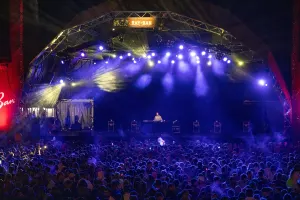
The worst mic moment I’ve seen firsthand was at a Saturday night residency years ago. The DJ was technically sound with good taste in music, and he’d worked out that the crowd responded when he talked over tracks. So he talked over every track. Welcome to the dance floor. This is a big one coming up. Make some noise for that bassline. You’re all looking beautiful tonight. By midnight the floor had thinned noticeably and the promoter was standing in a corner looking unhappy. The DJ, lost in his own MC fantasy, hadn’t noticed.
A microphone in a DJ booth works like a strong spice. Used with precision and restraint, it lifts everything. Used constantly, it drowns out the thing people came for, which is the music. Getting the mic right is less about technique than about knowing what it’s for, and in most DJ contexts that’s a lot less than what it gets used for.
Your Genre Sets the Rules
Your genre has clear things to say about the mic, and ignoring them puts you on the wrong side of the crowd before you’ve said a word. In hip hop and drum and bass, vocal interaction is part of the culture. A drum and bass crowd expects an MC, and some shows are built around the DJ and MC as a unit, with the vocal performance as central as the selection. There, the mic is a feature, and working well with an MC is a skill in its own right.
When the Mic Belongs in the Set
The genre and the moment decide, not the urge to talk
마이크, 언제 잡아야 할까
| Situation | Mic? | What works |
|---|---|---|
| House, techno, disco | Almost never | One welcome line, one thank you |
| Hip hop, drum and bass | Expected | An MC who knows the plan |
| Bar that wants a host | Ask first | Short lines between tracks |
| A big moment | Maybe | One sentence, in a breakdown |
| Emergency | Always | Clear, calm instructions |
The testWould the moment be worse without the words? If not, leave the mic down.
In house, techno and most genres built on continuity and groove, the mic is almost always an interruption. People stay on the floor through a three hour minimal techno set because the music never stops to explain itself. Every shout out and every “make some noise” is a crack in the immersion the music spent twenty minutes building. The crowd won’t necessarily leave, but something breaks, and they feel it without being able to name it.
When I play deep house, my mic use is close to zero. Sometimes a brief welcome at the start of the night. Sometimes a thank you at the close, if it feels right. The music is the communication, and it doesn’t need a spokesman.
Some Rooms Want a Talker
To be fair to the talkers, some rooms want exactly that. Some bars with a DJ programme want the DJ to be a personality, to talk between tracks and work the crowd the way an MC would. Some clubs would find the same behaviour bizarre. Some promoters have strong feelings about it, and others have never thought about it as a policy.
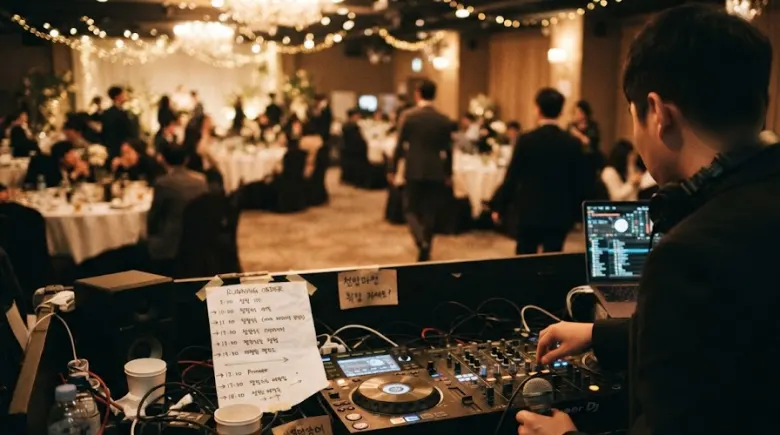
So find out before you start. When you arrive, ask the promoter or manager what the room usually expects from the DJ, and whether there’s a house mic policy. It takes thirty seconds and saves you from learning through the crowd’s body language that you’ve been doing it wrong for an hour.
One Sentence, at the Right Moment
When the mic adds something, it’s almost always brief: a single sentence timed to land in a breakdown or a transition, not across a track in full swing. “Enjoy this one” at the start of a special record. The venue’s name after a strong moment. An instruction when something needs to be said.
The test is simple. Would the moment be worse without the words? If not, leave the mic alone. A floor that’s already moving doesn’t need validation from the booth, and a track that’s already working doesn’t need narration. Save the words for moments where language does something the music can’t, which is rarer than most DJs think.
Restraint feels wrong because talking feels like engagement. Listening is engagement too, and a crowd lost in the music is more engaged than one that keeps being reminded a DJ is present. At the best sets I’ve been to on the dancefloor side of the booth, I forgot there was a DJ at all. The music just happened, and that takes discipline.
Settle the MC’s Job Before the Set
If you’re bringing a guest MC into the booth, the conversation before the set matters more than anything that happens during it. Agree how often they’re on the mic, what they will and won’t say, when they back off and let the music breathe, and the signal you’ll use when a moment needs quiet.
Without that talk, an enthusiastic MC will fill every gap with words, because silence feels wrong to them and nobody has told them otherwise. A good MC adds to sound that’s already there. One who hasn’t had the scope conversation just fills space.
Agree who’s in charge, too. In a DJ and MC pairing, the DJ usually sets the direction and the MC follows. If that isn’t clear in advance, you’ll spend the set sorting out the pecking order in real time, which is as awkward as it sounds and as audible to the crowd as you’d fear.
Kill the Feedback Before the Doors Open
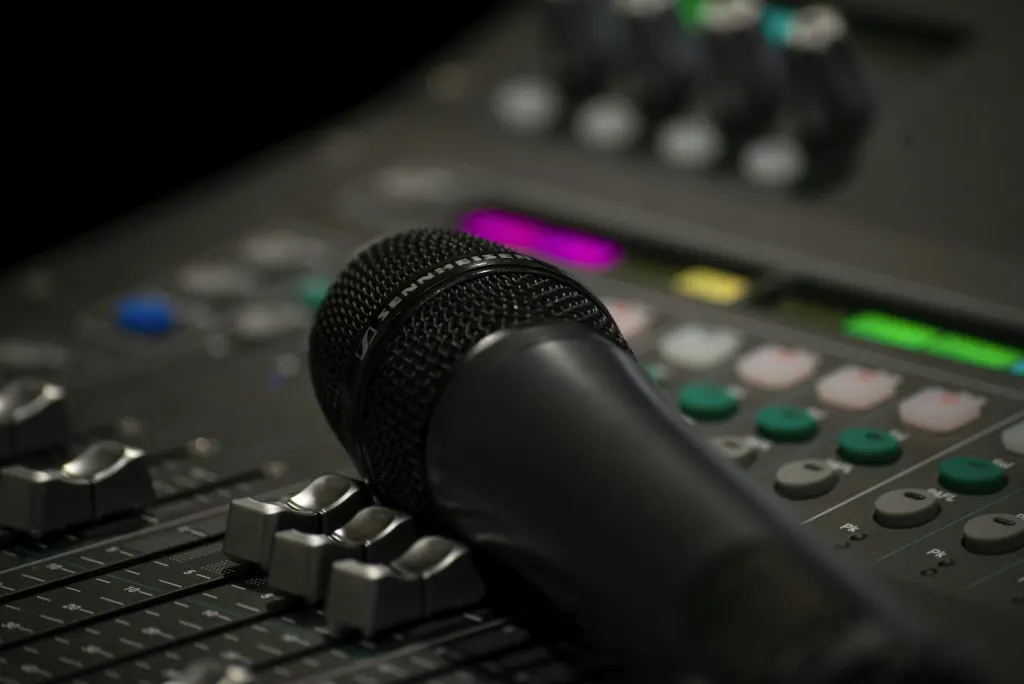
Microphone feedback is the audio version of a record skipping: instantly obvious, instantly embarrassing and completely avoidable. Run a sound check with the mic before the room fills. Ask the sound engineer where the monitor levels need to sit and where to hold the mic to stay out of the feedback zones. Most booth feedback comes from DJs who never had that conversation before picking up the mic mid set.
Keep the mic away from your monitors and your headphones when it’s live. Two engineer tricks are worth knowing: point the back of a cardioid mic, its least sensitive side, at the nearest monitor, and never cup the grille with your hand, which makes the mic behave more like an omnidirectional one and invites feedback. Set the mic channel so you can speak at a normal volume and still be heard. If you have to shout, the level is wrong. Your voice should sit in the mix, not on top of it.
When you’re done, put the mic down where it won’t get knocked against the CDJs or the mixer. A live mic bumping against gear makes a horrible sound that carries beautifully through a PA. Newer club mixers help. Pioneer DJ’s DJM-A9, announced in February 2023, has a Push To Talk button, so the mic is live only while you hold it, and phantom power for condenser mics.
When the Mic Is the Right Tool
There are moments when the mic is exactly the right tool, whatever your usual habits. Someone is hurt and you need to clear space. A security situation is developing. The gear fails mid set and you need to tell the room what’s happening so people don’t panic or leave. The venue is closing.
For those moments, the mic’s ability to cut through the music and reach three hundred people at once is what you need. It’s also why you should know where the mic is and how to switch it on fast, even if you never use it for anything else. I’ve used it for real emergencies twice. Both times I was glad I knew exactly where it was and that the channel was live before I needed it.
The same professionalism runs through everything I’ve written about timing and etiquette and sound management: look after the gear, treat the venue and its staff well, and be ready for the night to go sideways. The mic is one more piece of that.
Frequently Asked Questions
Should DJs use a microphone during their sets?
Rarely, and only when it adds something the music can’t say on its own. In house, techno and disco, the mic is best kept for brief, well timed moments or emergencies. In hip hop and drum and bass, regular mic work is expected. Read your genre and your room before you touch it.
How do I avoid microphone feedback in a DJ booth?
Run a sound check before the room fills and ask the engineer where the feedback zones are. Point the back of a cardioid mic at the nearest monitor, don’t cup the grille, and set the level so you can speak at a normal volume. Never leave a live mic lying against the gear.
What should a DJ say into the mic?
As little as possible. A brief welcome at the start of the night, a thank you at the close, and an emergency announcement when it’s truly needed. The urge to narrate the set, announce every track or call for crowd participation is almost always worth resisting.
How do you manage a guest MC who won’t stop talking?
Have the scope conversation before the gig, not during it. Agree how often they’re on the mic and the signal you’ll use when you need them to back off. An MC who takes over your set is a problem you prevent before the doors open, not one you fix at the decks.
Further Reading on The DJ Diaries
- Avoiding the Red: Volume Control and Sound Discipline in the Booth
- DJ Etiquette: Timing Your Set
- Reading the Room
- The Art of the Booth
Sources
Dancecult: Journal of Electronic Dance Music Culture, article 395
Dancecult: Journal of Electronic Dance Music Culture, article 387
Mixmag, The art of hip hop DJing
Shure, How to prevent microphone feedback
Shure, How to control feedback in a sound system
DJ Mag, Pioneer DJ announces new 4 channel mixer, DJM-A9, February 2023
Pioneer DJ store, DJM-A9 product page
Written from Seoul, by someone who has been in the booth for more than twenty years. More on the site, or book a DJ.
Stay in the Loop
New writing on DJ culture, electronic music, and the Seoul underground, delivered when it matters.
More From The DJ Diaries


Play with the history
Four tools built from the same research as this site.