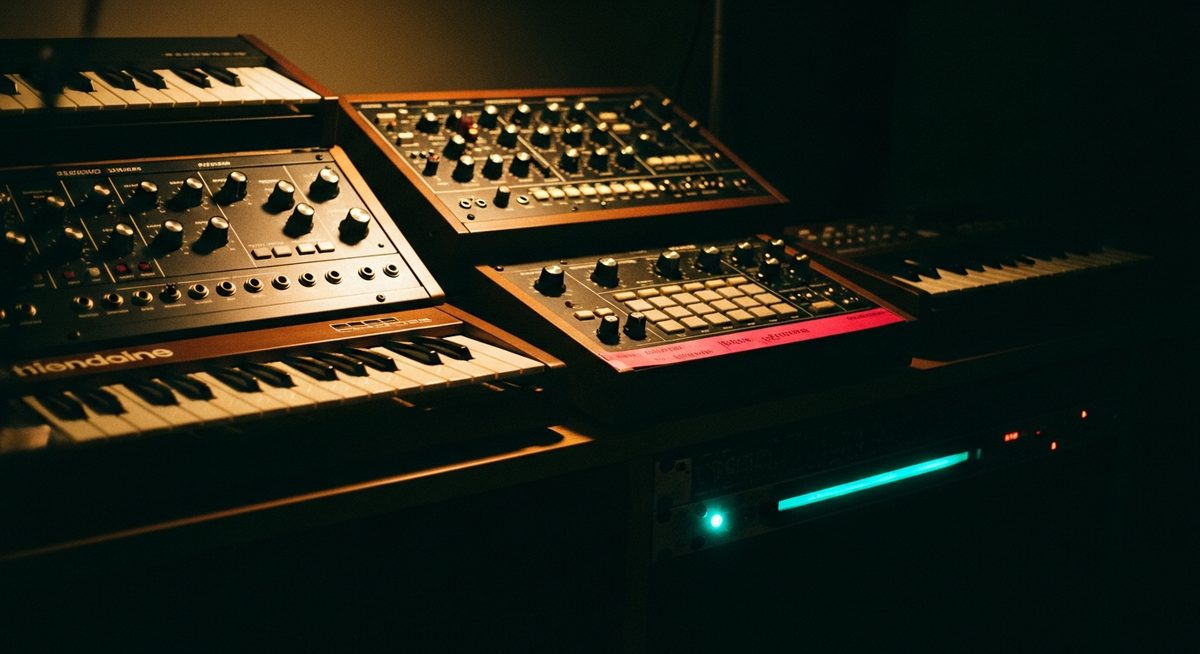
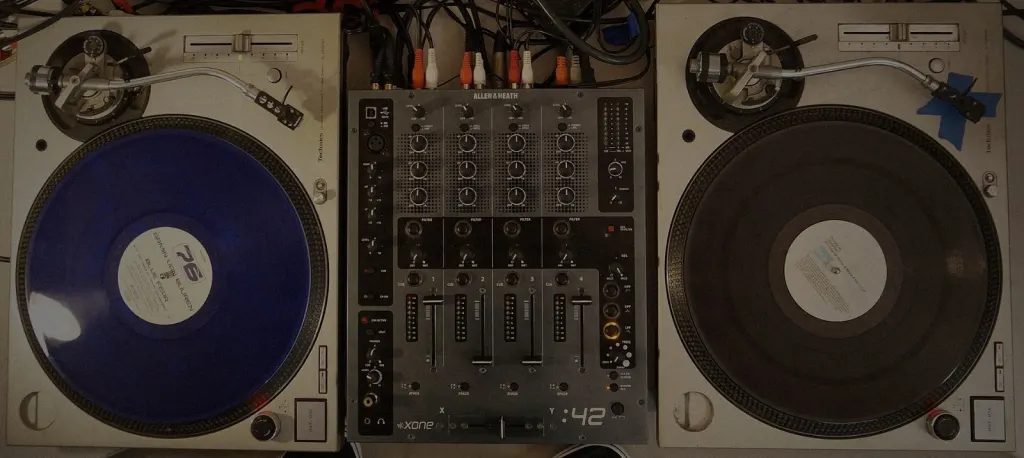
A pair of Technics SL-1200 MK2s sits in my studio, and I still play on them regularly. Partly that’s affection. Mostly it’s that the physical relationship between hands and vinyl keeps a set of skills sharp that fade without use. The CDJs I use for gigs are faster and more capable in almost every way you can measure, but when I’m learning a new track or working out a mixing idea, the 1200s are where I start.
That’s a small, practical point about what different tools teach you, and it runs through the whole history of DJ gear. Each new tool changed what DJs could play and how the music was made, from the 1200 to the drum machine, the CDJ and the laptop. Knowing those shapes explains where the music came from, and why your own gear choices matter beyond the spec sheet.
The First DJs Had to Be Engineers
The earliest DJs, radio hosts in the 1940s and 50s and the first club selectors in the 1960s, worked with gear that took real technical knowledge: reel to reel tape, tube amplifiers, broadcast turntables built for playback rather than performance. Anyone using them in a club was improvising at every step. Technical skill was the baseline, and the DJs who shaped the craft were engineers in all but name.
Kool Herc in the Bronx built the breakbeat out of two copies of the same record. David Mancuso at The Loft designed his system around audiophile equipment and treated sound quality as something close to spiritual. They built their own setups and modified what they had, and every technical decision was also a musical one.
Francis Grasso, at Manhattan’s Sanctuary in the early 1970s, is credited with some of the first real beatmatching, using his ears and the speed adjustment on his turntables to lock two records together. It looks basic now. It was revolutionary then, and it’s where DJing as a technical performance began: people working at the very edge of what their equipment could do.
The 1200 and the 808 Built Hip Hop and House
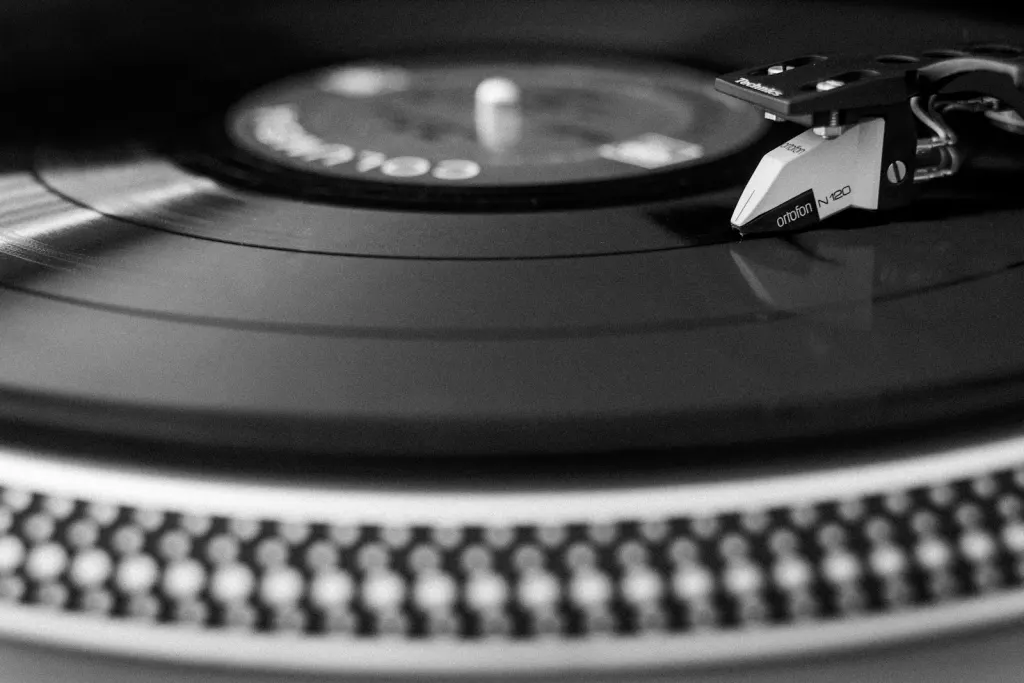
The Technics SL-1200, introduced in 1972 and refined through the 1980s, is the most consequential piece of DJ equipment ever made. Its direct drive motor, torque, speed stability and sheer toughness made it the platform for hip hop DJing, turntablism and most of club culture.
The Tools That Changed the Booth
Key releases, and what each one changed
턴테이블부터 CDJ-3000X까지, DJ 장비 50년
| Year | Gear | What it changed |
|---|---|---|
| 1972 | Technics SL-1200 | Direct drive, built to take a beating |
| 1979 | SL-1200 MK2 | Grandmaster Flash’s deck through 1988, now at the Smithsonian |
| 1980 | Roland TR-808 | The kick and snare under hip hop and house |
| 1994 | Pioneer CDJ-500 | The first CDJ |
| 2001 | Pioneer CDJ-1000 | Moved club booths from vinyl to digital |
| 2016 | SL-1200 returns | Back after Technics stopped making it in 2010 |
| 2020 | CDJ-3000 | A club player with no CD drive |
| 2025 | CDJ-3000X; Spotify in DJ apps | Wi-Fi in the player, streaming in rekordbox, Serato and djay |
The patternEvery new tool made something easier and changed what DJs chose to play. None of them replaced the ear.
When Grandmaster Flash and Afrika Bambaataa were building breakbeat culture in the South Bronx in the late 1970s, and Grand Wizzard Theodore was inventing the scratch, Technics decks were part of it. The SL-1200 MK2 of 1979 became the standard, and the one Flash used from 1979 to 1988 is now in the Smithsonian. When the rave era arrived and needed DJs who could hold two techno records together for minutes at a time, it happened on 1200s too.
The Roland TR-808, released in 1980, is the other machine from this era that’s hard to overstate. Its kick, its snare and its cowbell were dismissed as too artificial when it launched, then became the foundation of hip hop, house and most electronic pop since. Afrika Bambaataa’s Planet Rock in 1982 set the template. A lot of what followed comes from that decision to build a new music on a cheap drum machine nobody wanted.
Chicago and Detroit Made a Sound from What They Had
When Frankie Knuckles was developing house music at the Warehouse in Chicago in the early 1980s, his tools were modest: a reel to reel tape machine, turntables and a mixer. Later, at the Power Plant, he ran a Roland TR-909 bought from Derrick May underneath his records. As he put it, “every record I played that night had a 909 running underneath it.” The limits were the engine. Stretching records and building tension across hours of continuous music, with no memory, no cue points and no waveform, gave him an ear for structure that shaped the music itself.
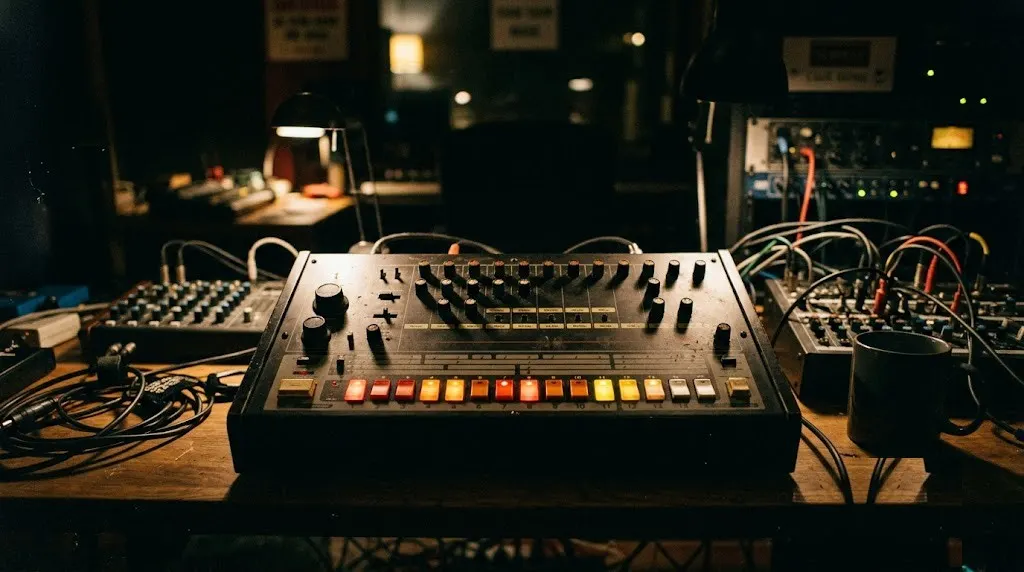
In Detroit, Juan Atkins, Derrick May and Kevin Saunderson worked with Roland’s 808 and 909 drum machines, synthesisers and, later, early samplers. They drew on Kraftwerk’s electronics, Parliament Funkadelic’s rhythm and their own technological present, in a city going through industrial collapse with no expectation of reward. Techno carries all of that in its design: machine rhythms with human feeling, precision with longing.
The CDJ Changed What DJs Chose to Play
Pioneer’s CDJ line began with the CDJ-500 in 1994 and reached the CDJ-1000 in 2001, the model that moved club booths from vinyl to digital. Instant cueing, waveforms and the jog wheel for fine pitch made precision easier and took away some of the physical memory turntable mixing demanded.
The argument over whether that made DJing easier interests me less than what it did to the music. When you can cue any track from a library of ten thousand in under a second, you choose differently than when you had to carry records and pick them in advance. CDJs encouraged wider, more responsive sets that the record bag made hard. Whether that’s better depends on what you value.
Then the CDJ-2000 Nexus became the standard in serious venues through the 2010s, and almost any DJ could walk into almost any professional club in the world and find the same setup waiting. That’s great for touring and for back to back sets. It also flattened some of the local gear differences that once gave cities distinct sounds. Detroit partly sounded like Detroit because of what gear was around. A global standard puts a different distance between tool and place.
Software and Streaming Moved the Work Before the Gig
Serato, Traktor and rekordbox arrived in the 2000s and were everywhere by the 2010s, taking the CDJ’s abilities further and opening DJing to far more people. The claim that software DJing isn’t real DJing is understandable and mostly beside the point. What matters is what you do with the tools, not which ones carry the most prestige.
What software changed most is the balance between preparation and performance. Track analysis, key detection, waveforms and harmonic mixing aids moved a lot of work from the set to the night before. A DJ who checks key compatibility in advance and builds crates around it makes different choices in the moment than one who worked it all out by ear. Both are valid. They’re different disciplines.
The newest shift is streaming inside the booth. In September 2025, Spotify Premium began working directly inside rekordbox, Serato and djay on desktop, in 51 markets. Since December 2025, rekordbox and djay have also carried it on iOS and Android, and in September 2026 VirtualDJ, Cross DJ and edjing Mix were added. On the hardware side, AlphaTheta’s CDJ-3000X, launched on 9 September 2025, has a 10.1 inch touchscreen, built in Wi-Fi and direct access to Beatport Streaming and Tidal with the right subscriptions.
Controllers from Pioneer DJ, Denon, Native Instruments and others grew up alongside the software, and made the physical shape of DJing more varied than at any time since the 1200 standardised the turntable. You can DJ credibly with a laptop and a small controller, a modular hardware rig, turntables and vinyl, or CDJs and a flagship mixer.
What Gear Matters When You’re Starting Out
For a new DJ, the equipment question matters less than it seems. Reading the room, building a musical identity and understanding energy across a set all develop whether you’re on CDJs or a mid range controller. What separates good DJs from average ones is almost never the hardware.
What matters is using what you have long enough and seriously enough to become fluent. A DJ with thousands of hours on a basic controller understands their tools better than someone who has upgraded constantly and played very little. Start cheap, work seriously, and upgrade only when you know exactly what the upgrade gives you that you can’t do now.
For the practical side, what to carry and how to prepare for unfamiliar gear, read the DJ bag guide, and for building a library, the music download guide covers where to find well mastered files. The dance music timeline shows what all these tools produced, 127 genres year by year. If gear reviews lose you in jargon, the DJ and club glossary covers 100 terms in plain language. And before you buy anything, try the What Kind of DJ Are You quiz, because the kind of DJ you want to be settles most of the gear question.
Frequently Asked Questions
What equipment do you need to DJ?
At minimum, two decks, a mixer and headphones. For most beginners that means a two channel controller, which combines the decks and mixer in one unit, plus a laptop and closed back headphones. Club DJs also need to know CDJs and a standalone mixer, and anyone playing out needs speakers or a venue sound system.
What’s the difference between a DJ controller and CDJs?
A controller is an interface for DJ software on a laptop, while CDJs are standalone players that read music from a USB drive, and newer models like the CDJ-3000X can also reach streaming and cloud libraries over Wi-Fi. My controllers vs CDJs guide covers which to learn on and when to switch.
Do DJs still use turntables?
Yes. Vinyl DJing never went away, and Technics brought the SL-1200 back in 2016 after discontinuing it in 2010, with the DJ focused SL-1200MK7 following in 2019. I still play my own 1200s regularly.
When did the first CDJ come out?
Pioneer released its first CDJ, the CDJ-500, in 1994. The CDJ-1000 followed in 2001 and moved club booths from vinyl to digital. Today’s CDJ-3000 has no CD drive at all, and the CDJ-3000X added Wi-Fi in 2025.
What’s the best DJ equipment for beginners?
A mid range controller with included software, such as the Pioneer DJ DDJ-FLX4 (which replaced the DDJ-400 in 2022) or the Denon MC4000, gives you everything you need to build core skills without the cost of club CDJs. Upgrade when you know exactly what you’re gaining.
Further Reading on The DJ Diaries
- The Technics SL-1200: Why a Hi Fi Turntable Became a DJ Standard
- Pioneer DJM Mixers: How a Channel Strip Became an Instrument
- The Machines That Made Dance Music
- The Roland SP-404
- A DJ’s Guide to BPM
- The Tempo Bridge Mix Planner
Sources
Smithsonian, Technics turntable used by Grandmaster Flash
Wikipedia, Grand Wizzard Theodore
Rolling Stone, Kool Herc and August 11, 1973
The Village Voice, David Mancuso’s message of love
The Guardian, Frankie Knuckles obituary, April 2014
Pioneer DJ, 30 years of the CDJ
Mixdown, Gear icons: Pioneer DJ
Digital DJ Tips, AlphaTheta launches the CDJ-3000X, September 2025
Digital DJ Tips, Pioneer DJ DDJ-FLX4 review
Watch and listen: 10 things to know about CDJs, Crossfader
Written from Seoul, by someone who has been in the booth for more than twenty years. More on the site, or book a DJ.
Stay in the Loop
New writing on DJ culture, electronic music, and the Seoul underground, delivered when it matters.
More From The DJ Diaries

Play with the history
Four tools built from the same research as this site.