The booth is the only workplace I know that is simultaneously a stage and a back office, and most writing about it picks one.
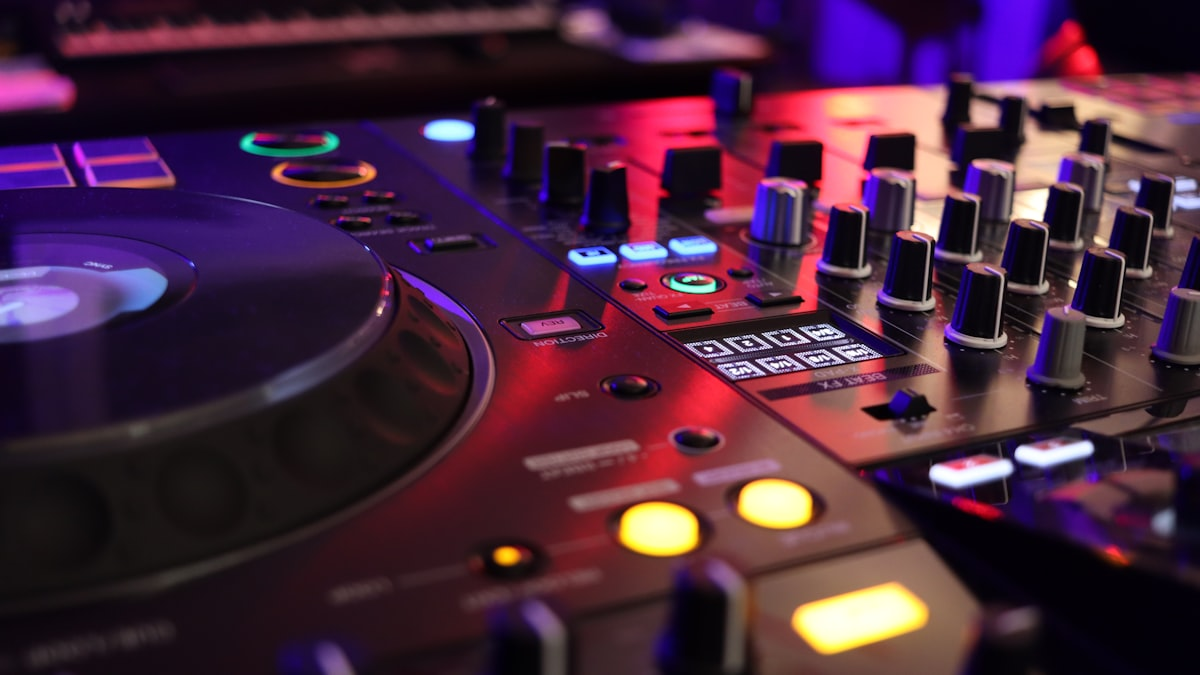
Everything the audience thinks the booth is, it mostly is not. It is not a throne and it is not a stage in any useful sense, because for most of the night nobody is looking at it. It is a workstation, about the size of a kitchen counter, containing four or five thousand pounds worth of equipment, one drink that must not spill, and a person making decisions in real time with no ability to undo any of them.
I have worked out of good booths and terrible ones for more than twenty five years, in Seoul and elsewhere, and the difference between the two has almost nothing to do with what the equipment costs. It has to do with whether whoever built the room had ever stood in one.
What the Booth Actually Is
It is a workspace first. Sightlines to the floor, monitor position, somewhere to put a drink that cannot spill into anything expensive. Rooms that get this wrong produce worse nights and nobody in the crowd knows why. They just feel that the music was slightly off all evening, and they are right, and the reason is that the DJ could not see them.
It is also a social boundary, and the etiquette around it is real. Requests handed over the rail, people wanting photographs, friends wanting to stand in it. A good venue manages that so the DJ does not have to, because a DJ managing their own door is a DJ not watching the floor.
The Things That Actually Matter In A Booth
Sightlines come first and everything else is negotiable. You need to see the floor, and specifically you need to see the middle and the edges of it, because the edges are where a room tells you it is losing interest before the middle does. A booth facing a wall, or set so low that the front row blocks the view, has removed the DJ’s primary instrument.
Monitor position is second, and it is the one venues get wrong most often. A monitor pointed at your knees or buried behind the mixer means you are mixing on what the room hears, which arrives late and smeared. It is why a DJ who sounds fine in one room sounds sloppy in another with the same records.
Then the dull things. Table height, because a night is four hours standing and a surface set for someone six inches taller than you will ruin your back and your posture over a residency. Cable runs, because a booth where the power and the RCAs share a tangle is a booth where somebody will eventually pull the wrong one. Light, enough to read a label and not so much that you cannot see the room. And a place for a drink that is not on top of the mixer, which is the single most expensive habit in this trade.
The Seoul Version
Korean booths are small, often raised, and frequently in the corner rather than facing the floor, which is partly a consequence of rooms designed as restaurants. That is not a stylistic choice. A great many Korean venues are registered in a category built for food service, and the room was laid out for tables before it was ever laid out for a dancefloor. The booth went where there was space left.
The best Seoul rooms treat the booth as part of the venue rather than as a platform, and the clearest signal of a well-run one is floor staff who are credited alongside the DJs rather than treated as invisible. If the sound engineer and the bar staff are named on the flyer, the booth will usually be fine too. It is a reliable proxy and I have never known it to fail.
If You Are Guesting In Someone Else’s Booth
Arrive earlier than you think you need to, and watch the resident work before you touch anything. You are inheriting a room that somebody else has spent an hour building, and the fastest way to waste that is to walk in and reset it to your own opening. Ask where the gain is set and leave it there. Do not rearrange the booth. Do not unplug anything you did not plug in.
And when you hand over, hand over properly: leave the room somewhere the next person can start from, at a tempo and an energy that gives them a door in. The DJ who plays their biggest record in the last three minutes of their slot has not had a great set, they have robbed the person following them.
Frequently Asked Questions
What is DJ booth etiquette?
Do not enter a booth uninvited, do not put drinks on equipment, and keep requests brief and accept a no. For DJs, the booth is a workspace before it is a stage: sightlines to the floor, monitor position and somewhere safe for drinks matter more to the quality of a night than anything the audience can see.
Why do DJ booths face away from the dancefloor in some clubs?
Usually because the room was not designed as a club. Venues converted from restaurants or bars put the booth wherever space remained after the tables, which often means a corner or a wall. It is a real handicap rather than a style, because a DJ who cannot see the edges of the floor loses the earliest signal that a room is drifting.
What makes a good DJ booth?
Clear sightlines to the whole floor including the edges, a monitor at head height and properly aimed, a work surface at the right height for standing, tidy separated cable runs, enough light to read a label, and somewhere to put a drink that is not the mixer. None of that is expensive. All of it is more important to the quality of a night than the brand on the CDJs.
Can you stand in the DJ booth?
Only if invited, and briefly. The booth is a working area with expensive and easily disturbed equipment in it, and a DJ managing visitors is a DJ not watching the room. A well-run venue handles this at the rail so the DJ never has to have the conversation.
Written from Seoul, by someone who has been in the booth for more than 25 years. More on the site, or book a DJ.
Stay in the Loop
New writing on DJ culture, electronic music, and the Seoul underground — delivered when it matters.