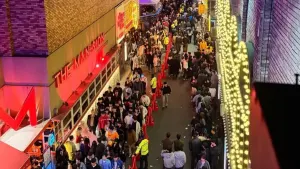
In Seoul in the early 2000s, crews drove around the city at night pasting posters for the big DJ nights onto construction site walls and building hoardings. By morning most of them had been torn down, and the next night they went back up.
A flyer, or a poster, was never only advertising. The rave flyer started life as a password, grew into a promise, and in 2026 it’s mostly a signature: the one image that tells you who a night is for before you read a word. That’s how a piece of photocopied paper turned into a design tradition people now archive by the tens of thousands.
The First Flyers Were Passwords
The UK rave flyer emerged in 1988, at the height of acid house, and it was an answer to a legal problem. The parties described in the rave era essay were illegal, and the location stayed a secret often until the very last minute. A flyer had to speak to two audiences at once: the ravers who knew what they were looking at, and the authorities who mustn’t.
The early answers were crude and clever. Flyers gave a meeting point and pager numbers rather than a venue, so people could avoid the police and make the event. The typography was often hard to parse on purpose, with overlapping letters and strange typefaces. If you could read it, you were meant to.
The symbols came early too. On its third flyer, Shoom introduced the smiley face that came to stand for the whole movement.
Then They Became Promises
As rave went semi legal in the early 1990s, the flyer stopped being a password and became a promise. This is the era collectors chase: airbrushed fantasy landscapes for Fantazia and Dreamscape, sci fi chrome for the hardcore end, and psychedelic computer graphics that defined a visual style before desktop publishing was common.
From Password to Phone Screen
How the flyer’s job changed, 1988 to 2026
레이브 플라이어의 역할 변화
| When | Where | The job |
|---|---|---|
| 1988 | UK | A password: meeting points and pager numbers |
| Early 1990s | UK | A promise: airbrushed art, big lineups |
| 2002 | Seoul | Posters on hoardings; 595,500 illegal ads removed in 8 months |
| 2012 | Korea | 67.6% of mobile users on smartphones; the post replaces the poster |
| 2026 | Incheon | Pentaport’s app carries the map and set times |
How to read itEach step took an information job away from paper. What’s left for the flyer is identity.
Flyer design became a career, and names like Pez and Junior Tomlin built recognisable house styles for competing raves. It was brand identity before anyone called it that, part of the economics I trace in where the money goes.
Paper Became the Archive
Because flyers were dated, located and disposable, they accidentally became the scene’s best historical record: who played where, for how much, and what a night claimed about itself. For scenes with no press coverage, the surviving paper trail is the history, the same role pirate radio recordings play for the sound.
The archives are now serious. Phatmedia’s online archive holds more than 22,500 flyers spanning 1985 to the early 2000s, mostly from the UK. In late 2025 Velocity Press published phatmedia presents UK Rave Flyers 1988/1989, more than 700 flyers from the acid house years with commentary from promoters, designers and ravers, the first book in a planned trilogy.
Seoul Put Its Nights on the Hoardings
I designed my own flyers, first about thirty years ago in Canada, and again when I arrived in Korea. The first party I ever held was called Metro, put on by Metro Productions and inspired by the underground scene in Montreal, hence the name. I’m digging some of those flyers out and will add them here.
In Seoul the big events had posters, not just flyers. Large posters went up on construction walls and hoardings for the upcoming DJ nights at the big hotels and larger clubs. The scale was enormous. In the first eight months of 2002 alone, Seoul City removed about 595,500 illegal advertisements, counting fixed signs, standing boards and banners together.
Social media marketing came into its own around 2012 and 2013. That fits the numbers: by 2012, 67.6 percent of Korean mobile users had a smartphone, the highest rate in the world, and the event poster on a construction wall started giving way to the event post on a phone.
What the Flyer Does in 2026
The flyer lost another job this year, at a rock festival. Pentaport in Incheon (인천) introduced its first official app in 2026, with a GPS venue map, real time congestion levels, split entry routes, set alerts and timetables, per Sports Kyunghyang. Everything a flyer once carried as information now lives in a phone and updates by the minute. I covered the weekend in my Pentaport review.
What’s left is identity, and that’s a harder brief. An event tile has to work at thumbnail size, in a feed, beside dozens of other tiles. The lineup has to be legible in two seconds, and in Seoul it often has to carry two scripts, Hangul and Latin, without looking crowded. The old illegibility filter doesn’t survive those conditions. What survives is the house style, a promoter whose artwork you recognise before you read a single word. From the booth, I can usually tell from the tile alone whether a promoter has thought about who the night is for.
Print has become the deliberate choice. Risograph printing, the stencil duplicator process behind a lot of small run art posters, gives an A5 flyer a grain and colour offset a screen can’t copy, and Seoul’s independent events still hand them out. The printed flyer refuses to die for the same reason vinyl refuses: physical objects carry commitment. The Fantazia flyers from the early 1990s still trade among collectors because they’re objects with dates on them, and dated objects turn into history.
For the DJ, the flyer is also the first promise to keep. If the artwork says dark room and long set, the crowd arrives expecting exactly that, and the first hour has to match it. I’ve written about club photography and the no photo floors that shape how a night looks online, and about social media for DJs. The flyer sits between the two. It’s the one image of the night that everyone agreed to share before anyone arrived.
Frequently Asked Questions
Why were rave flyers designed to be hard to read?
The UK parties they advertised from 1988 onward were illegal. Each flyer had to reach ravers while keeping details from the police, so flyers gave meeting points and pager numbers instead of addresses, and the lettering was often hard to parse on purpose. The wider story of those parties is told in this history of the rave era.
Who designed the most famous rave flyers?
In the early 1990s, designers such as Pez and Junior Tomlin built recognisable house styles for competing raves. Collectors chase this era most, from airbrushed fantasy landscapes for Fantazia and Dreamscape to sci fi chrome for the hardcore end of the scene.
Where can I see old rave flyers?
Phatmedia’s online archive holds more than 22,500 flyers from 1985 to the early 2000s, and its 2025 book with Velocity Press collects more than 700 from 1988 and 1989. Fantazia keeps its own scanned flyer library, and the Museum of Youth Culture holds photographs and ephemera from the acid house years.
Are rave flyers still printed today?
Yes. The event tile on social media took over the flyer’s information job, but Seoul’s underground still hands out riso printed A5 flyers at independent events, and early 1990s Fantazia flyers still trade among collectors. Printed flyers survive for the same reason vinyl does: objects carry commitment.
Further Reading
- Fantazia Rave Flyer Library: the promoter’s own scanned archive, organised by event
- Borosix UK Rave Flyer Archive: a long running fan archive covering hundreds of UK promoters
- Museum of Youth Culture: Acid House, photographs and ephemera from the late 1980s
- Mixmag: Junior Tomlin, the Salvador Dalí of rave
- i-D: Meet Pez, the rave flyer designer who ended up working with a fashion house
- Kyunghyang Shinmun (경향신문): Hongdae (홍대) club culture today, 2003
- The Rave Era: From Warehouse to Field, 1988 to 1994
- How Pirate Radio Built UK Club Culture
Sources
Dummy, The Dummy guide to acid house
Museum of Youth Culture, DIY flyering
AnOther Man, The story behind Coach’s collaboration with rave artist Pez
DJ Mag, Let us be your fantasy: how Fantazia brought UK rave to the masses
Hankook Ilbo (한국일보), Seoul illegal advertisement removals, September 2002
The Korea Herald, Korea’s smartphone penetration, 2012
Financial News (파이낸셜뉴스), Pentaport’s first official app, August 2026
Sports Kyunghyang, on the Pentaport app, August 2026
Written from Seoul, by someone who has been in the booth for more than twenty years. More on the site, or book a DJ.
Stay in the Loop
New writing on DJ culture, electronic music, and the Seoul underground, delivered when it matters.
More From The DJ Diaries

Play with the history
Four tools built from the same research as this site.