My main memory of Pentaport was mud. Standing in it, walking through it, giving up on shoes. The last time I’d been was around 2011, the year Korn played, and I spent my night in the dance tent while the monsoon turned the field into a pit. So when I went back this summer, more than ten years later, I went with fairly low expectations and a pair of boots I didn’t mind losing.
I didn’t need the boots. Pentaport has grown up, and it was the most civil festival I have ever been to. This site spends a lot of its time being sceptical about Korean festivals, and this one has earned the opposite.
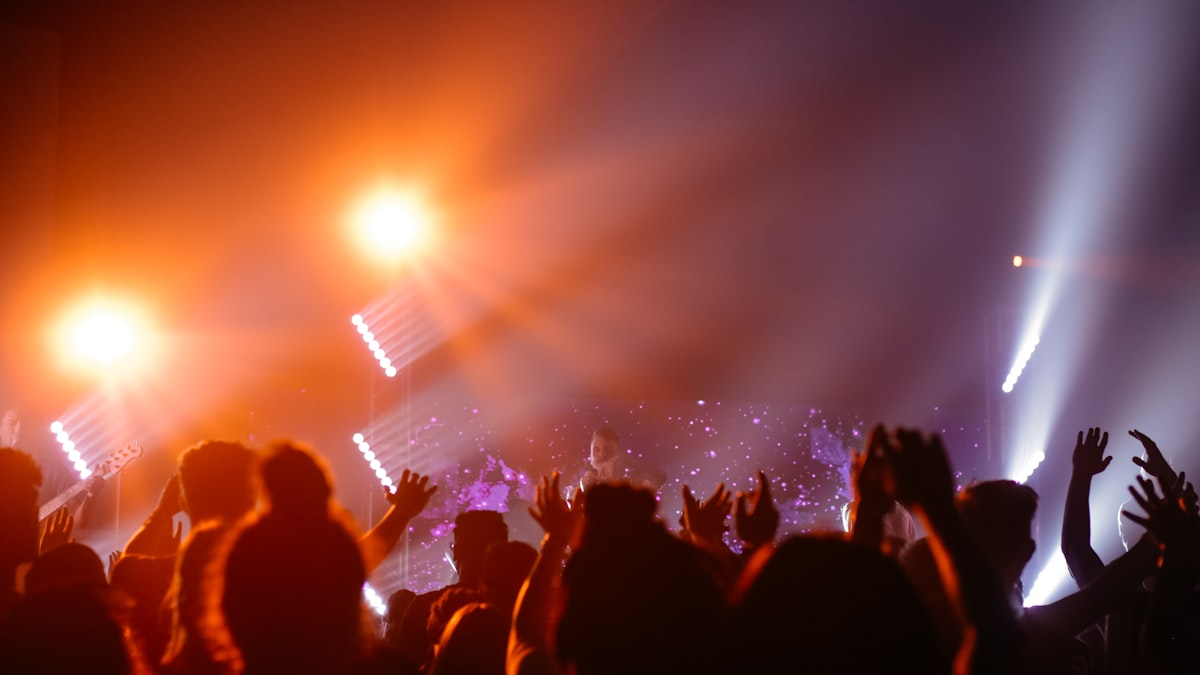
The 21st Incheon Pentaport Rock Festival (인천펜타포트락페스티벌) ran from 31 July to 2 August 2026 at Songdo Moonlight Festival Park (송도달빛축제공원), drawing around 150,000 people across three days with 66 acts under a RE:BOOT banner. I went for the Saturday, 1 August, the Massive Attack and Jesus and Mary Chain day, so this is a one day account of a three day festival.
한국어 요약
15년 만에 다시 찾은 펜타포트, 한국 록 페스티벌은 어른이 되었다
제 기억 속 펜타포트는 진흙뿐이었는데, 10년 넘게 지나 다시 찾은 2026년 토요일은 완전히 다른 페스티벌이었습니다.
- 규모와 공간: 7월 31일부터 8월 2일까지 송도 달빛축제공원에서 66팀이 무대에 올랐고 사흘간 약 15만 명이 찾았습니다. 화장실, 냉방 쉼터, 급수대가 넉넉하고 끝까지 깨끗했습니다.
- 더위: 매일 30도를 넘었고 토요일 습도는 94%였습니다. 팔토시, 챙 넓은 모자, 쿨링 타월을 챙기는 한국 관객의 방식이 정답입니다.
- 착한 물가: 맥주 한 잔이 6,000원이었고, 규정에 맞춘 개인 용기라면 음식과 물을 가져갈 수 있습니다.
- 무대: Massive Attack이 단연 최고였고, 혁오의 무대에서는 관객 모두가 가사를 따라 불렀습니다.
아침에 돗자리를 깔아 두고 몇 시간씩 자리를 비워도 아무도 건드리지 않는 관객 문화가 가장 인상적이었습니다. 서울에서 약 90분 거리라 귀가가 가장 큰 숙제이니, 송도에서 하룻밤 묵는 방법을 권합니다.
잘못된 정보나 바뀐 날짜를 발견하셨나요? 연락 주시면 확인 후 바로 고치겠습니다. 현장에서 보고 들은 이야기도 언제나 환영합니다.
The Move to Songdo Changed Everything
In 2011 the festival was at Dream Park in Seo-gu, in rain from Typhoon Muifa. It has been at Songdo Moonlight Festival Park since 2013, and that move is the whole story. What was reclaimed land is now a proper park inside a finished city, and everything downstream of that is better.
Pentaport, 2011 and 2026
The mud year I remember, and the edition I went back for
펜타포트, 2011년과 2026년
| Pentaport | 2011 | 2026 |
|---|---|---|
| Site | Dream Park, Seo-gu | Songdo Moonlight Festival Park |
| Crowd | A record 54,000 | About 150,000 over three days |
| Headliners | Korn | Khruangbin, Massive Attack, Pixies |
| Weather | Typhoon Muifa rain and mud | Over 30°C daily; 94% humidity on the Saturday |
The changeA bigger crowd on a better site. In 2011 a single day ticket was 88,000 won.
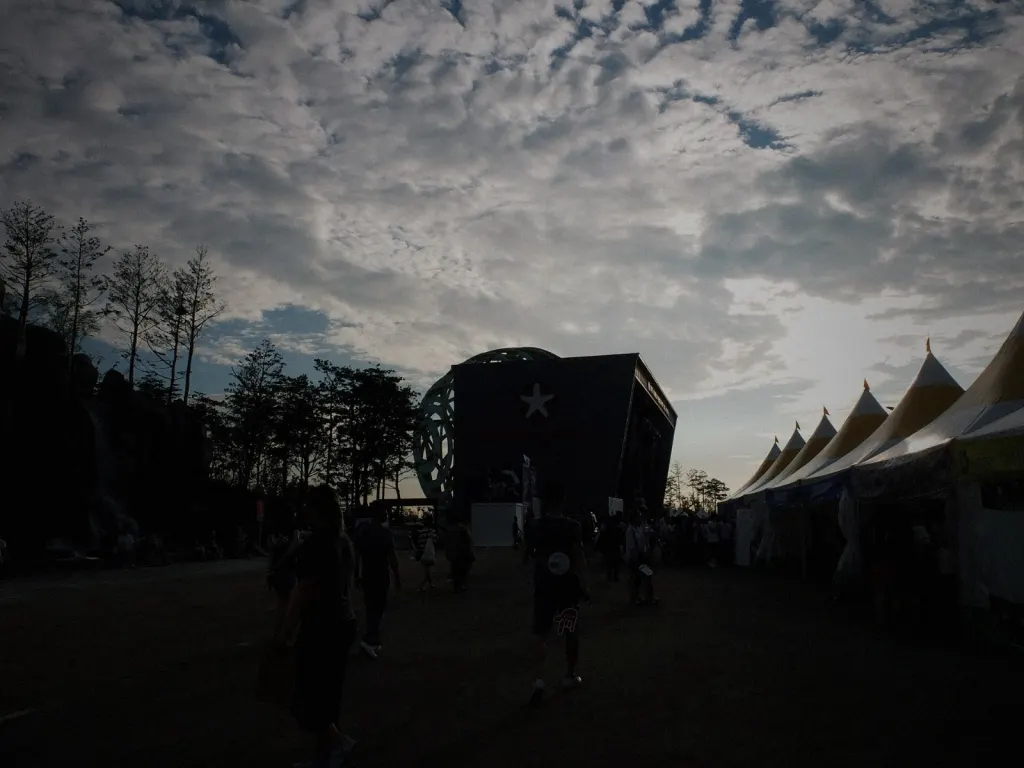
The facilities were excellent. There were serious numbers of toilets, which is the single most reliable measure of whether a festival respects its audience, plus large air conditioned zones, water stations throughout, clear signage and crowd flow that worked. And it was exceptionally clean, and still clean after the headliners had finished. Anyone who has picked their way across a North American festival site at 1am, or seen a Canadian festival field on a Sunday morning, will know how rare that is. That’s partly organisation and partly the crowd.
Around 150,000 people across three days felt like that many and never felt like a crush, which is down to the crowd flow work: split entry routes, separate exits, and an official app with GPS mapping and live congestion data. A drone show on the opening night put the Pentaport Peak symbol in the sky. I missed it and have been told about it repeatedly since.
Incheon (인천) has official backing for nights like this, too. A December 2023 Korea Policy Briefing (정책브리핑) release notes that the Ministry of Culture, Sports and Tourism and the Korea Tourism Organization chose Incheon as one of their night tourism specialised cities (야간관광 특화도시, yagan gwangwang teukhwa dosi) in the previous year’s round, a programme that backs each chosen city for four years.
The Heat Was the Real Headline
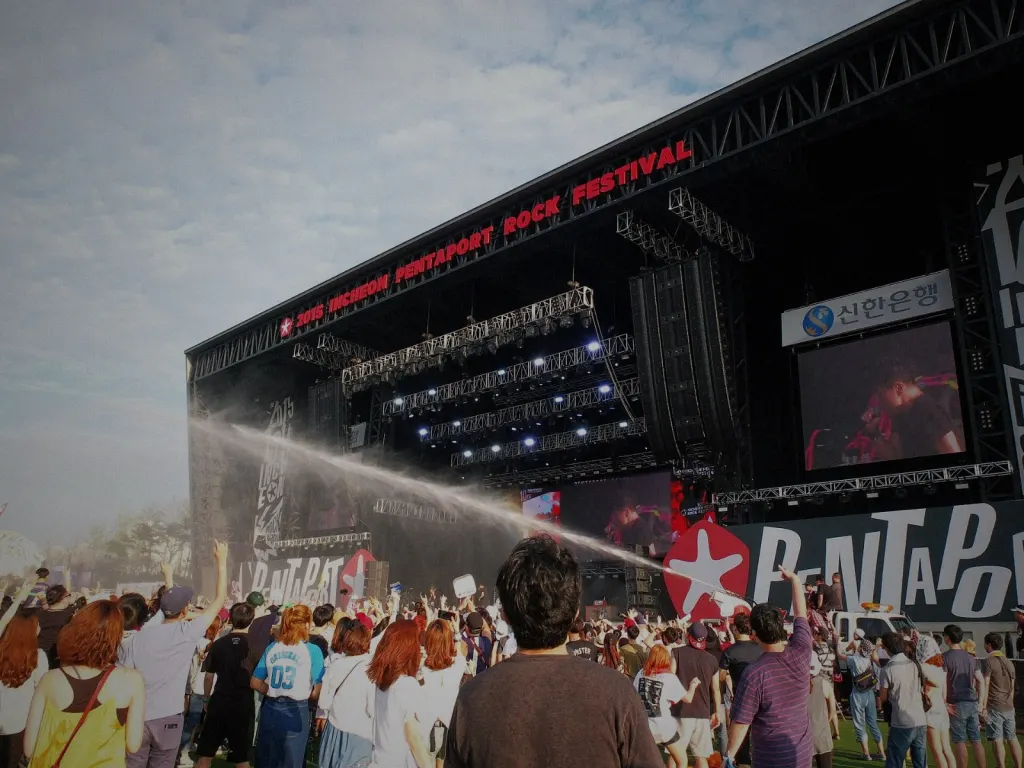
This is the thing that will shape your weekend. It was brutally hot, over 30 degrees every day, and on the Saturday, the Massive Attack day, humidity hit 94 percent under a cloudless sky. Reporting afterwards put daytime highs around 36 degrees, with extra ambulances on standby.
The organisers had planned for it: cool zones and expanded medical booths, medical staff and ambulances stationed across the site, water spray trucks, and split ticket booths to cut queue time in the sun. All of it helped and all of it was visibly used.
You still have to do your part, and the Korean crowd is much better at this than the foreign visitors were. Look around a Korean festival in August and you’ll see face masks, arm sleeves, wide brimmed hats, cooling towels, hand fans and umbrellas used as parasols. It’s correct, not excessive, and it’s why the Koreans around me were still standing at 9pm while some of the visitors had folded by four. Arm sleeves in particular are cheap, sold everywhere in Korea, and make a real difference.
Then there was the thing I’d put near the top of any list of reasons to go: the LUSH station. LUSH ran a cooling and washing setup on site, billed as We Will Wash You, with proper showers, and its staff walked around misting people to cool them down. In that heat, getting properly cooled and cleaned partway through the day is the difference between staying for the headliner and leaving at six. I used it, and I’d plan around it next time.
Bring Your Own Food, and Beer Is 6,000 Won
Pentaport lets you bring in your own food and water, which is unusual and generous, but the rules are precise, so read them on the official site before you pack rather than at the gate. In practice, food is fine in your own container, a Tupperware or similar, but not in commercial packaging. Coolers are allowed, though the contents matter, and ice was fine. You can bring water, and there are stations to refill.
Beer was 6,000 won a glass, at a major festival with that lineup, in 2026. That’s a little under six Canadian dollars. Osheaga ran on exactly the same weekend this year, 31 July to 2 August at Parc Jean-Drapeau, and you won’t find a beer there, or at Bluesfest or Veld or anywhere on the Canadian circuit, at anything close to six dollars. Twelve to sixteen is the normal range, and nobody blinks at it any more.
Add the fact that you can bring your own food and water, which almost no North American festival of this size allows, and the daily cost is in a different bracket. A day at Pentaport costs what a couple of beers cost at home. Set the ticket against a comparable bill in Canada or the United States and it’s good value, and it’s not close.
The Crowd Was the Best Thing About It
The crowd was exceptionally civil: respectful, kind, aware of the people around them, and looking after each other in conditions that would have produced real friction elsewhere. Nobody was pushing. Nobody was throwing anything. People moved aside, shared shade and checked on strangers who looked overheated, and everyone was dancing to the local acts too, with no problems over personal space.
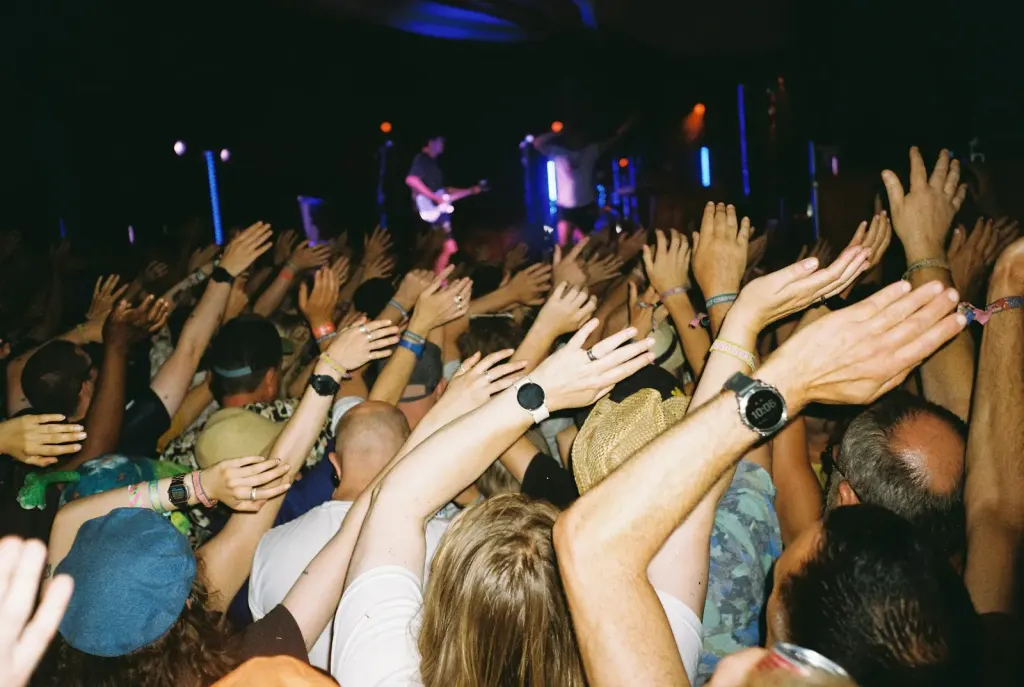
A large share of the crowd, close to half by my eye, treats Pentaport as a picnic. Mats down, cooler open, food out, faces covered and sleeves on to keep the sun off, settled in for the day. That means the good ground goes early. If you arrive mid afternoon expecting shade and space, you won’t find them. Get there early, claim a spot, and move around from that base.
Then came the part that stopped me, because it’s the most Korean thing at the whole festival. People put the mat down in the morning and then walk away from it, to the stage, the food stalls, the cool zone, for hours, with bags and belongings left on it. Nobody touches any of it. If you’ve spent time in Korea you already know this and have stopped noticing: it’s the same reason people in Seoul coffee shops leave a laptop and a phone on a table to hold it while they queue. Theft is rare enough that leaving your things at a festival of 150,000 people is not a decision anyone agonises over. It wouldn’t work in Montreal, or anywhere else back home in Canada, and it certainly wouldn’t work at Coachella.
It changes the texture of the day. Few people are pressed against a barrier. A lot of them are lying on a mat eating kimbap (김밥), listening, and getting up when their band comes on. Families were there, with a dedicated kids zone, and they were still there at the end of the night. Nobody was posturing or performing being there; people came to watch bands and have a nice weekend. After more than twenty years of festivals, I don’t take that for granted.
Massive Attack Were the Reason, Hyukoh Were the Surprise
Massive Attack were the reason I bought the ticket, and they were the best thing on the day by a distance. Cerebral is the word I keep coming back to. The screens do as much work as the music: text, data, imagery and political messaging delivered directly, synchronised to a set that’s heavy, slow and deliberate. Watching that land on tens of thousands of people in a Korean field at 30 degrees, most of them reading it in a second language, was remarkable. They also brought Elizabeth Fraser out for Teardrop, which needs no further comment from me.
The Jesus and Mary Chain sounded great and sounded exactly like themselves: the pre grunge eighties wall of guitar with a pop song buried inside it, played by people who make it look easy. Hyukoh (혁오) were the surprise of the day, and the crowd reaction was the loudest thing I heard all afternoon. They played a long, unbroken run of songs with guests, and the audience knew every word. That’s what a domestic act sounds like when it’s loved rather than politely received.
The Geeks were the most fun: Korean hardcore, played hard, ending with a proper stage dive while parents and children stood watching a few metres away, entirely relaxed about it. The other thing I didn’t expect to enjoy was Pentarobics, the festival’s group aerobics session run by comedian Kim Hye-sun: hundreds of people doing star jumps in 30 degree heat before a rock set. Between that, Penta Radio in the cool zone and the drone show, the festival had clearly thought about what people do between bands. Most festivals assume you’ll stand in a field and buy things.
The full bill ran to 66 acts from the US, UK, Japan, Taiwan, China and Indonesia. Khruangbin opened on the Friday, Massive Attack took the Saturday, and the Pixies closed on the Sunday with their first ever Korean show, part of a fortieth anniversary tour. The Korean side had Hyukoh, Silica Gel, Lee Seung-yoon, The Volunteers, Jang Pil-soon, Xdinary Heroes and SUMIN among a deep domestic bill. Several international acts were routing through Asia off Fuji Rock or other regional festivals, which is how a bill like this becomes affordable. Here’s the official final lineup announcement.
I’d like to see Korea taken more seriously for its rock and indie scenes, not only for K-pop and electronic music, and a festival like this is the argument. Pentaport also ran a pre festival showcase in Tokyo at Shibuya’s WWW X featuring Korean indie acts, and it sold out. The appetite is there.
Songdo Is a Trek, So Stay the Night
Songdo (송도) is around 90 minutes from central Seoul. The subway line ends out there, which is convenient in that you can’t miss your stop and inconvenient in that it’s a long ride, and buses also serve the site. Getting out is the harder half. Taxis back to Seoul after the finish are scarce, expensive and in demand from tens of thousands of other people at once, so plan this before you go, not at midnight in a queue.
The move most of my friends made, and the one I’d recommend, is to stay locally. Songdo has plenty of hotels at reasonable prices, and turning the festival into a proper weekend removes the most stressful part of the whole experience. You stay for the headliner, walk back, and do it again the next day.
The Verdict
Pentaport 2026 was a great weekend and a welcome change from the EDM festival circuit that dominates this site’s coverage: an excellent site, excellent facilities, a fair price, a strong bill weighted properly toward Korean artists, and a crowd that behaved better than any I’ve stood in for years. If you only know Korean festivals through Ultra and Waterbomb, this is a different proposition, and you should try it.
They have come a long way. Awesome work, Pentaport.
Frequently Asked Questions
Where is Pentaport Rock Festival held, and how do you get there?
Songdo Moonlight Festival Park in Incheon, roughly 90 minutes from central Seoul. The subway runs to the end of the line near the site and buses also serve it. Getting back is the harder part, since taxis to Seoul after the finish are scarce and expensive with tens of thousands of people leaving at once. Staying at a hotel in Songdo for the weekend is the more comfortable option, and prices are reasonable.
Can you bring your own food and drink into Pentaport?
Yes, which is unusual and a big part of why the festival is good value, but the rules are specific, so read the current version on the official site before packing. In 2026, food was permitted in your own container such as a Tupperware rather than in commercial packaging, coolers were allowed with ice, and you could bring water, with refill stations on site. Beer was 6,000 won a glass, a little under six Canadian dollars.
What should you wear to a Korean summer festival?
Cover up rather than strip down, which is what the Korean crowd does. Arm sleeves, a wide brimmed hat, a cooling towel and a hand fan are cheap and widely available in Korea, and many people also use face masks and umbrellas as parasols. At the 2026 edition temperatures ran above 30 degrees every day, humidity hit 94 percent on the Saturday, and Kyunghyang Shinmun reported a high of 36 degrees in Songdo.
Is Pentaport family friendly?
Yes, notably so. There’s a dedicated kids zone, and families were still there at the end of the night, which is unusual at a rock festival of this size. The crowd is civil and unpretentious, many people treat the day as a picnic on mats, and belongings left on those mats for hours were not touched.
Further Reading
- Pentaport official site: the current food, drink and cooler rules, plus 2027 dates when they’re announced.
- Kyunghyang Shinmun on the 2026 heat (Korean): 36 degrees in Songdo, 90,000 bottles of water handed out and at least three heat illness cases.
- Herald Economy on the 2011 lineup (Korean): the year Korn headlined, with single day tickets at 88,000 won.
- Edaily on Pentaport 2011 (Korean): a record 54,000 people at Dream Park despite Typhoon Muifa’s rain, the mud this review remembers.
- The Japan Times on Fuji Rock 2026: the other half of the Massive Attack and Khruangbin Asian run.
- Korea Meteorological Administration heatwave guide (Korean): the official advice behind the arm sleeves and cooling towels.
- The World’s Essential Dance Music Festivals: the festivals abroad worth planning a trip around.
- Korean DJs to Know in 2026: the artists rather than the events.
Sources
Aju News, Pentaport 2026 closes with 150,000 visitors, 2 August 2026
Kyeonggi Ilbo, on Pentaport at Songdo Moonlight Festival Park since 2013
RISS record, on Pentaport’s site management and cleanliness
Kyunghyang Shinmun, cool zones and medical booths at Pentaport 2026
Sports Kyunghyang, the drone show, Pentarobics and the Tokyo showcase
Newsis, on Massive Attack’s Pentaport set
Hankook Ilbo, Elizabeth Fraser joins Massive Attack for Teardrop
Etoday, LUSH’s shower station at Pentaport
Written from Seoul, by someone who has been in the booth for more than twenty years. More on the site, or book a DJ.
Watch and listen: Pentaport · Pentaport 2025 after movie, official
Stay in the Loop
New writing on DJ culture, electronic music, and the Seoul underground, delivered when it matters.
More From The DJ Diaries
Play with the history
Four tools built from the same research as this site.