Four years on, the question people still ask me about Itaewon is whether it came back. It’s the wrong question, and answering it honestly means saying something that sounds callous at first: the decline started before the night everyone remembers, and the thing currently closing dancefloors in Korea has nothing to do with it.
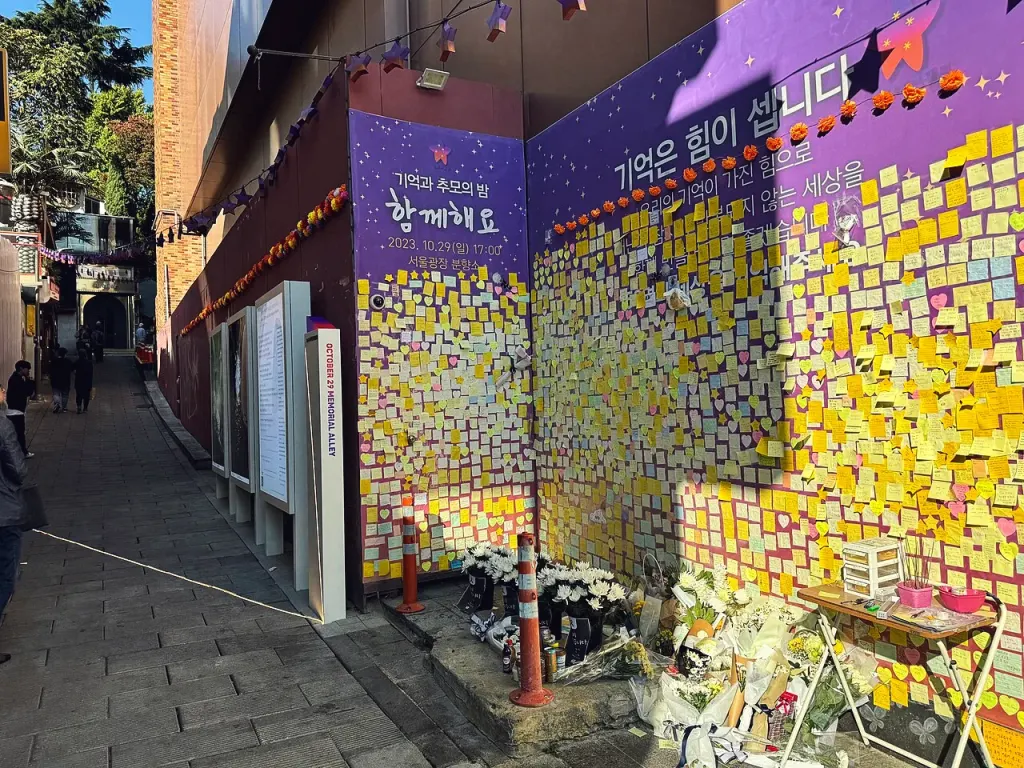
I want to be careful here. What happened on 29 October 2022 killed 159 people, most of them young, several of them people who worked in that district. Nothing in this piece is an argument about that. It’s an argument about what the numbers show afterwards, because the story that got told about Itaewon’s recovery is mostly wrong, and getting it wrong has consequences for anybody trying to work out where Seoul nightlife is going next.
Itaewon Was Already Emptying
Here’s the fact that reframes everything. In the second quarter of 2019, more than three years before the crush and before anyone had heard of a novel coronavirus, the retail vacancy rate in Itaewon was already above twenty six per cent. More than one shopfront in four was dark.
That didn’t happen by accident either. Itaewon existed because of the Yongsan garrison. The bars, the tailors, the record shops, the whole peculiar economy of the place was built on a permanent foreign population with money and nowhere else to spend it. The garrison relocation to Pyeongtaek ran through the 2010s, and the district’s underlying customer base walked out over a decade. Anyone who was playing in Seoul in that period watched it happen in slow motion. Rooms that used to be three deep at the bar on a Tuesday weren’t, and it wasn’t because the music got worse.
Then the pandemic arrived, and Itaewon caught the worst possible version of it. The May 2020 cluster traced to Itaewon venues was reported in a way that attached the district’s name to the outbreak, with consequences for the venues and for the people in them that went well beyond lost trade. Card sales in the district fell by more than fifty seven per cent.
So by late 2022 Itaewon had already absorbed a decade of structural decline and two years of the worst reputational damage any Seoul district has taken in my time here. The crush landed on a district that was already on the floor.
Itaewon Nightlife Map: Venues, Streets and What’s On
Here is Itaewon as it stands now: the venues, the streets worth knowing and what’s on in the next two weeks. Tap a pin for the sound, the address and directions on Naver or Kakao Map.
Itaewon nightlife map
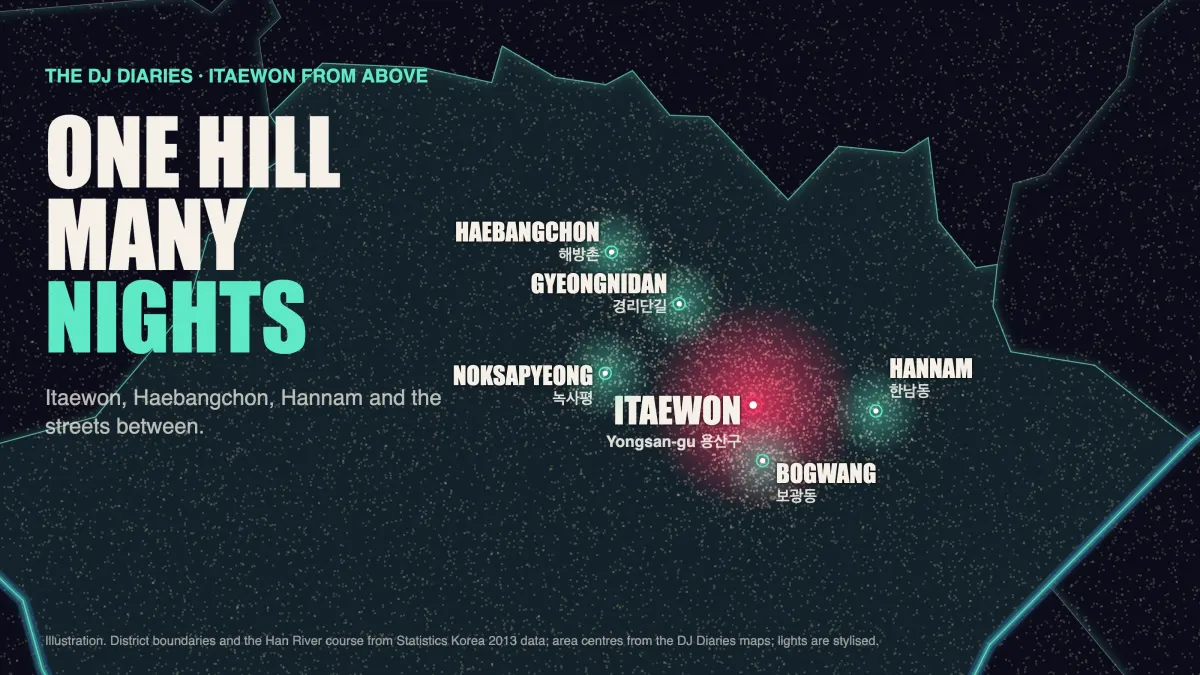
Itaewon is Seoul’s small room district: techno, house and disco clubs and whisky bars from Noksapyeong to Hannam-dong, along the main street, the alleys behind the Hamilton, up toward Homo Hill and in the small Hannam-dong pocket around Daesagwan-ro 31-gil.
Venues on this map: Cakeshop (케이크샵), B1, 134 Itaewon-ro; Blacklist (블랙리스트), 134 Itaewon-ro; Volnost (볼노스트), 142 Itaewon-ro; Seoul Community Radio (서울 커뮤니티 라디오), 22 Noksapyeong-daero 40na-gil; Coley (콜리), 214 Noksapyeong-daero; Southside Parlor (사우스사이드 팔러), 218 Noksapyeong-daero; Ring (링), 2F, 165-6 Itaewon-ro; Rack Seoul (랙), 2F, 4 Itaewon-ro 23-gil; Nué Seoul (누에), 2F, 45 Itaewon-ro 27ga-gil; Hamilton Hotel (해밀톤호텔), 179 Itaewon-ro; Prost (프로스트), 26 Itaewon-ro 27ga-gil; Glam (글램라운지), 26 Itaewon-ro 27ga-gil; Union (바유니온), 29 Bogwang-ro 59-gil; Pistil (피스틸), 9 Bogwang-ro 59-gil; Itaewon Station (이태원역), Itaewon-ro, Yongsan-gu (Line 6); Faust (파우스트), 3F, 7 Bogwang-ro 60-gil; Casa Corona (카사코로나), 7 Bogwang-ro 60-gil; Blank Site (블랭크 사이트), B2, 22 Bogwang-ro 60-gil; Nyapi (냐피), 187 Itaewon-ro; Flac (플랙), 2F, 5 Itaewon-ro 27ga-gil; Public (퍼블릭), B1, 192 Itaewon-ro; Teller (텔러), B1, 39 Usadan-ro; All That Jazz (올댓재즈), 216 Itaewon-ro; Bolero (볼레로), B1, 220 Itaewon-ro; Soap (소프 서울), B2, 217 Itaewon-ro; JJ Mahoney’s (제이제이 마호니스), Grand Hyatt Seoul, Grand Hyatt Seoul, 322 Sowol-ro; Stoked&stoned (스톡앤스톤드), 2F, 72 Daesagwan-ro; Kockiri (코끼리), 46 Usadan-ro; Atdge Seoul (엣지서울), B1, 29 Bogwang-ro 59-gil, Yongsan-gu; Paper (페이퍼), Rooftop, 37 Itaewon-ro 27ga-gil, Yongsan-gu; Shelter (쉘터), 5F, 37 Itaewon-ro 27ga-gil, Yongsan-gu; Hertz (헤르츠), 1F, 21 Usadan-ro 14-gil, Yongsan-gu; Rosso (로쏘 서울), B1, 17 Daesagwan-ro 31-gil, Yongsan-gu; RO Seoul (로서울), 1F, 19 Noksapyeong-daero 52-gil, Yongsan-gu; Lovehaus (러브하우스), B1, 6 Itaewon-ro 23-gil, Yongsan-gu; Grain Haus (그레인하우스), 1F, 40 Usadan-ro, Yongsan-gu; 232 (232), 232 Itaewon-ro, Yongsan-gu; Soko (소코), 47 Hannam-daero 20-gil, Yongsan-gu (Hannam); Pussyfoot Saloon (푸시풋살룬), B1, 7-6 Daesagwan-ro 31-gil, Yongsan-gu (Hannam); Bar Swallow (바 스왈로), 1F, 38 Itaewon-ro 55ga-gil, Yongsan-gu (Hannam); Gaenari Whisky Hannam (개나리위스키 한남), 2F, 78 Itaewon-ro 54-gil, Yongsan-gu (Hannam); Privilege Bar (몬드리안서울이태원 프리빌리지 바), Mondrian Seoul Itaewon, Rooftop, Mondrian Seoul Itaewon, 23 Jangmun-ro, Yongsan-gu; The Paris Bar (파리스 바), Grand Hyatt Seoul, Grand Hyatt Seoul, 322 Sowol-ro; Satz (재츠), 2F, 21 Daesagwan-ro 30-gil, Yongsan-gu; Blue Square Woori WON Banking Hall (블루스퀘어 우리WON뱅킹홀), 294 Itaewon-ro, Yongsan-gu; Lit Lounge (릿라운지), 1F, 34-65 Itaewon-dong, Yongsan-gu; Teta Lounge Bar (테타라운지바), 6F 601, 130-34 Itaewon-dong, Yongsan-gu; OWL Lounge (OWL라운지), B1, 123-5 Itaewon-dong, Yongsan-gu; Mu Lounge (뮤라운지), B1, 119-9 Itaewon-dong, Yongsan-gu; Midnight Lounge Club (미드나잇라운지클럽), B1, 126-15 Itaewon-dong, Yongsan-gu; Hype Rooftop Hookah Lounge (하이프 루프탑 후카라운지), 3F, 34-16 Itaewon-dong, Yongsan-gu; Trap Lounge (트랩라운지), 2F, 124-6 Itaewon-dong, Yongsan-gu; 6081 Records Mixshop (6081 레코드 믹샵), 1F, 274-2 Itaewon-dong, Yongsan-gu; Ilsim Records (일심레코드), 119-25 Itaewon-dong, Yongsan-gu; Elosm (엘로즘), 151-24 Itaewon-dong, Yongsan-gu; Vinyl & Plastic (현대카드 바이닐앤플라스틱), 1F, 683-131 Hannam-dong, Yongsan-gu; TW Records (TW레코즈), 2F, 682-5 Hannam-dong, Yongsan-gu; Haviture Records (해빗츄어레코드), 2F, 682-13 Hannam-dong, Yongsan-gu; Soul Train (소울트레인), 1F, 118-17 Itaewon-dong, Yongsan-gu; Off the Record (오프더레코드), 2F, 128-4 Itaewon-dong, Yongsan-gu; Reserve Records (리저브), 5F, 78-13 Itaewon-dong, Yongsan-gu; The Sound Closet (더사운드클로젯), B1, 74-10 Itaewon-dong, Yongsan-gu; The Beatles Live Pub (더비틀즈 라이브펍), B1, 738-23 Hannam-dong, Yongsan-gu; Cotton Club Sounds Hannam (코튼클럽 사운즈한남), 5F, 657-128 Hannam-dong, Yongsan-gu; Blue Cat (블루캣), B1, 657-133 Hannam-dong, Yongsan-gu.
Streets and corners: Itaewon-ro (이태원로), the main street, Itaewon-ro 27ga-gil, the alley behind the Hamilton, Bogwang-ro 59-gil and 60-gil, the south alleys, Homo Hill (우사단로12길), down to the fire station, Noksapyeong-daero (녹사평대로), Hannam-dong lanes (대사관로30길, 31길).
This week in Itaewon · 이태원
Who is playing in Itaewon this week
YBDG(Young Boy Dancing Group) 영보이댄싱그룹 X Palm Tree Academy
Layer Studio 20, Itaewon 이태원
Saturday Stoked&stoned
Stoked&stoned, Itaewon 이태원
Nue Saturday
Nué Seoul, Itaewon 이태원
SAKE, TOKYO
Evening, Itaewon 이태원
KUN
Pistil, Itaewon 이태원
KOCKIRI
Kockiri, Itaewon 이태원
FRISK: Yaya(IT/Tamango Records)
Flac, Itaewon 이태원
Rocket, Baxa, Mingsturn
Atdge Seoul, Itaewon 이태원
Patina Sound System x JADALAREIGN
Rosso, Itaewon 이태원
Bolero: 'Three Drunk Mice'
Bolero, Itaewon 이태원
KTX
Nyapi, Itaewon 이태원
Volnost Night
Volnost, Itaewon 이태원
Ring — 24 October 2026
Ring, Itaewon 이태원
INVITES: Schwefelgelb (Hybrid set)
Faust, Itaewon 이태원
Shelter Seoul
Shelter, Itaewon 이태원
Paper Seoul
Paper, Itaewon 이태원
Hertz 헤르츠 Selectors: Jesse You Junmo Jimin
Hertz, Itaewon 이태원
Papaya Allnight
Kockiri, Itaewon 이태원
Paper Seoul
Paper, Itaewon 이태원
Thursday Volnost
Volnost, Itaewon 이태원
Raputij
Nyapi, Itaewon 이태원
Fiction Halloween: The Spooky Rave House
Blank Site, Itaewon 이태원
Pistil x GLOW Orange Shower
Pistil, Itaewon 이태원
Trip Advisor with CVLT
Nyapi, Itaewon 이태원
Ring — 30 October 2026
Ring, Itaewon 이태원
Volnost Night
Volnost, Itaewon 이태원
FRISK Halloween Day 1: MALIKK(Fr/ Hot Creations)
Flac, Itaewon 이태원
3rd anniversary of teller
teller, Itaewon 이태원
THE DEAD DACNE - DUMBS 2nd Anniversary
Faust, Itaewon 이태원
Hertz 헤르츠: *Posture Club* with Baldo (Subwax, ES)
Hertz, Itaewon 이태원
The Recovery Number Is Measuring a Subsidy
In March 2023 a figure went around that Itaewon commercial activity had recovered to 98.2 per cent of its pre-crush level. It was quoted widely, including in English, and it was used to close the subject.
Look at what’s inside it. That period included a very large city voucher programme, hundreds of billions of won of discounted spending vouchers pushed deliberately into the district to prop it up. If you hand people money that can only be spent in one neighbourhood and then measure spending in that neighbourhood, you’ve measured your own intervention, not recovery.
This isn’t a conspiracy and nobody was lying. The vouchers were a reasonable policy response and the number was reported as what it was by anyone who read the release properly. But it travelled without its context, and the version that stuck was Itaewon is back, which meant attention moved on at exactly the moment the district needed attention.
The District Turned Inside Out
The most interesting thing in the Itaewon data is a reversal.
Historically, the main road commanded the rent. Frontage on the big street was the premium address, the back alleys were the cheap seats, and the difference was substantial. As of the first quarter of 2026, that has flipped. Back alley rents in Itaewon now run higher per square metre than main street rents.
If you’ve watched Seoul for a while you know what this means, because you’ve seen it in Euljiro and Seongsu and Haebangchon. It’s the signature of a district that has stopped being a destination and started being a discovery. The main road was built for volume, for people who came to Itaewon because Itaewon is where you go. That trade hasn’t returned. The alleys are built for people who came for one specific room, and that trade isn’t only back, it’s now paying more for the privilege.
Which is a real recovery, just not the one anybody was measuring. Smaller, more deliberate, less profitable per square metre for the big operators and considerably more interesting to work in. I’ve played more good rooms in Itaewon back alleys in the last two years than in the five before.
The Thing I Could Not Find
I went looking for the list of clubs the crush closed, because I assumed it existed and I wanted to write about it properly.
It doesn’t exist. I couldn’t find reporting anywhere, in Korean or English, attributing any named venue closure to the crush. Venues in Itaewon have closed since 2022, plenty of them, and every one I could trace has a stated reason that’s something else: rent, the operator moving on, the pandemic debt finally coming due, or licensing.
That absence is a finding, and I want to state it carefully rather than overstate it. It doesn’t mean the crush had no effect on the district’s venues. Of course it did, on trade, on staff, on the atmosphere of the street for a long time afterwards. It means that the specific causal claim, this club closed because of that night, isn’t something the record supports for any club I could identify. If someone has the counter example, I’d like to see it, and I’ll correct this.
What The Regulation Actually Did
The legislative response arrived in 2024 and it’s worth understanding what it targeted, because the assumption is that clubs got regulated and that’s not what happened.
The reforms brought crowd crushes properly within the disaster management framework and put obligations around dense public spaces. The unit of regulation was the street. Crowd density in public thoroughfares, responsibility for events without an organiser, that category of problem. It didn’t create a new venue regime, because the crush didn’t happen in a venue. It happened in an alley.
So the clean narrative, tragedy leads to crackdown leads to closures, doesn’t hold. The venues weren’t the target and the venues weren’t re-regulated.
What Is Actually Closing Dancefloors
A rule about food premises, written in 2015, tightened in 2020, and enforced in Busan in August 2026 with a two month suspension that made national news.
Korean venues that register as general restaurants, which is most small and mid-sized live rooms because it’s a notification rather than an expensive licence, are prohibited from having sound equipment installed and allowing customers to dance. Since a 2020 amendment, a venue caught can’t pay a fine instead of closing. When Kockiri went dark in January 2025 and returned in March 2026, the reason given publicly was licensing, not anything to do with 2022. I’m going on the reporting there rather than on any knowledge of the venue’s paperwork, and I’d encourage anyone writing about Korean venue closures to do the same, because guessing at a named venue’s licence status is both unfair and legally stupid.
This is the real story of Korean nightlife in the 2020s and it’s much less dramatic than the one people want to tell. It’s a category error in a food hygiene annex, quietly removing the possibility of a two hundred capacity room with a stage and a bar, which is the size of room where every scene I’ve ever cared about got built.
What I Actually Think
Itaewon isn’t what it was and it’s not coming back to what it was, and that was decided in Pyeongtaek, not in October 2022. The garrison left, and a district built for a garrison had to become something else. It’s currently becoming something smaller and better, one alley at a time, and the rent data says the market has already worked that out even if the coverage hasn’t.
The thing I’d ask people to stop doing is using 2022 as the explanation for everything that has happened to Seoul nightlife since. It flattens a decade of structural change into a single night, it’s not supported by the numbers, and worst of all it points attention away from the boring regulatory problem that’s doing the damage right now, in Busan and in Seoul, to venues that could otherwise be open.
Grief isn’t a business model and it’s not an urban policy. Itaewon deserves both a proper memorial and a proper analysis, and they’re separate jobs.
The Other Side Of This
The strongest objection to everything above is that I’m measuring the wrong things. Vacancy rates, card spend and rent per square metre don’t capture whether people feel like going out somewhere, and a district can be commercially fine and culturally hollow at the same time. People who worked those streets will tell you the atmosphere changed in ways no dataset holds, and they’re not wrong just because I can’t cite them.
There’s also a timing objection worth taking seriously. Itaewon may simply have been on a slow recovery from the pandemic that 2022 interrupted, in which case the crush cost the district years even if it closed no individual venue. That’s plausible and I can’t rule it out from the public data. What I can say is that the specific claims in circulation, that the crush emptied the district and that the district then bounced back to 98 per cent, are both wrong, in opposite directions.
Read next: What’s actually closing Korean dancefloors: the dancing rule, explained.
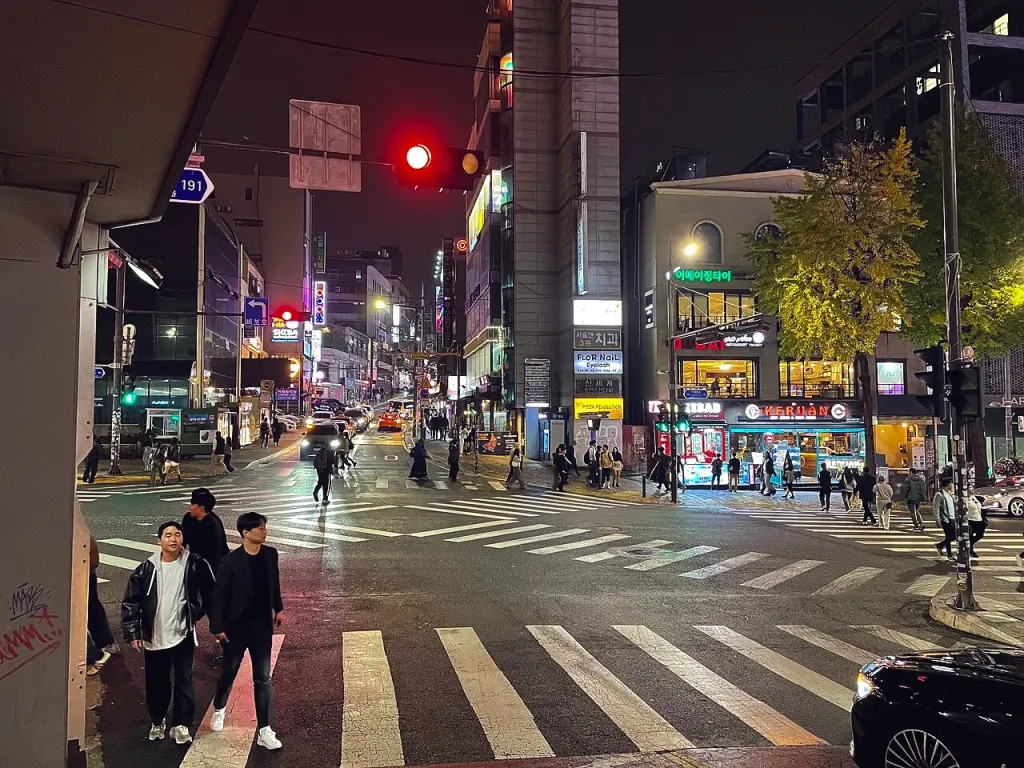
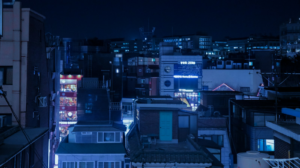
Itaewon at night, on foot
What the Numbers Say
In November 2022, the month after the crowd crush, sales in Itaewon 1-dong were down 61.7 percent, Newstomato reported. By May 2023 foot traffic and sales had climbed back to roughly three quarters of their earlier levels, according to KT and Shinhan data cited by Munhwa Ilbo. Vacancy in larger units sat at 19.9 percent through 2024 and fell to 14.4 percent in the first quarter of 2025 (Herald). On the third anniversary in October 2025, Nocut found queues on World Food Street and called it fully recovered, while a liquor supplier told a different reporter sales were still well below where they had been.
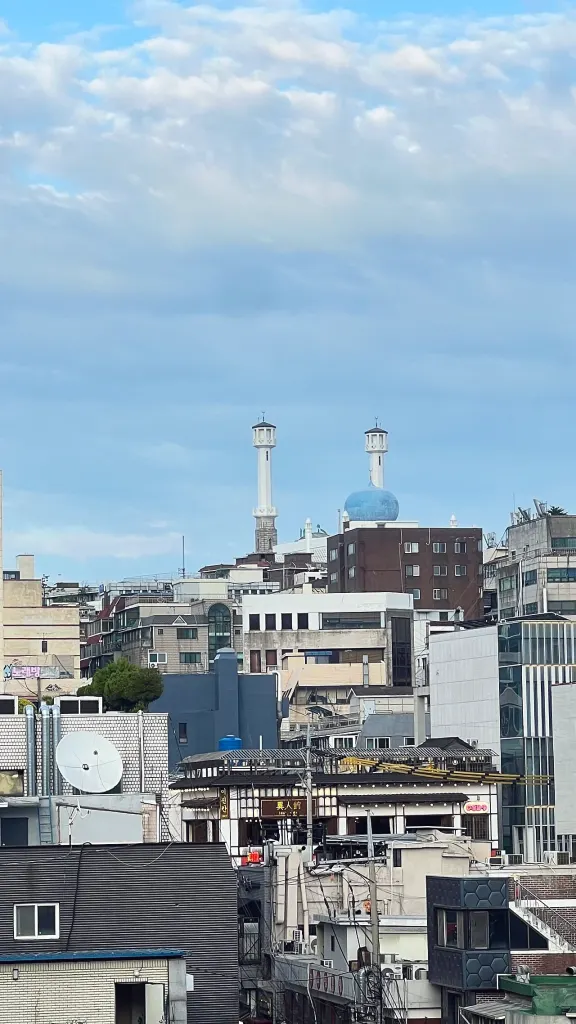
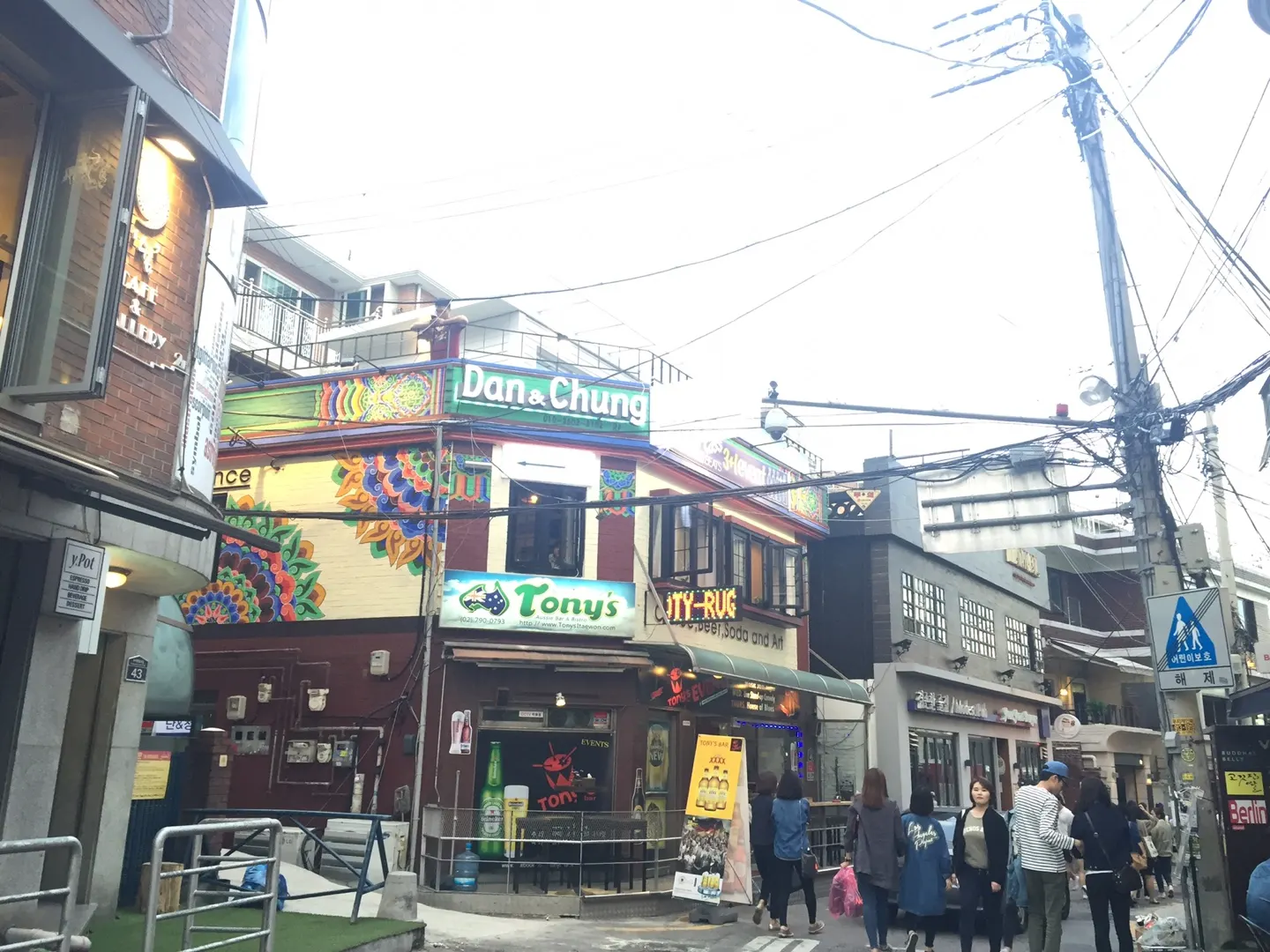
More reading for this section
Frequently Asked Questions
Did Itaewon recover after 2022?
Partly, and not in the way the headline figures suggested. The widely quoted March 2023 claim of 98.2 per cent recovery covered a period in which the city pushed a very large discounted voucher programme into the district, so it substantially measures that intervention. The more meaningful signal is that by early 2026 back alley rents had risen above main street rents, which indicates a smaller, destination-driven recovery rather than a return to previous volumes.
Why did Itaewon decline?
The relocation of the Yongsan garrison to Pyeongtaek removed the foreign customer base the district was built on, and retail vacancy was already above twenty six per cent by the second quarter of 2019. The pandemic then hit Itaewon harder than other districts, with card sales falling by more than fifty seven per cent, compounded by the reputational damage of the May 2020 cluster. The 2022 crush landed on a district that had already been declining for a decade.
Did clubs close because of the Itaewon crush?
No reporting I could find, in Korean or English, attributes any named venue closure to the crush. Venues have closed since 2022, but the stated reasons are rent, pandemic debt, operators moving on, or licensing. That’s an absence of evidence rather than proof of no effect, and the crush plainly affected trade and atmosphere. But the specific claim that it closed particular clubs isn’t supported by the public record.
What regulations changed after the Itaewon crush?
The 2024 legislative response brought crowd crushes into the disaster management framework and created obligations around dense public spaces and events without a designated organiser. It targeted streets rather than venues, because the crush occurred in an alley rather than inside a premises. No new licensing regime for clubs resulted from it.
Is Itaewon still worth going to?
Yes, but go for a specific room rather than for the district. The main road trade hasn’t returned and doesn’t look like returning. The back alleys are where the interesting operators are, which is exactly what the rent reversal is telling you, and it’s a considerably better night out than the district offered at its commercial peak.
Sources
Commercial data from Korea Real Estate Board quarterly commercial district statistics for Itaewon, including the Q2 2019 vacancy rate and Q1 2026 rent per square metre by street type. Card spend and recovery figures from Seoul city releases and contemporaneous Korean reporting, March 2023. Garrison relocation timeline from Ministry of National Defense and US Forces Korea public statements.
Venue status reported via Resident Advisor and Korean club listings, January 2025 and March 2026. Note that available accounts differ on the length of the closure period, and I have relied on the dates given in the reporting rather than resolving the discrepancy.
The 2024 disaster management amendments via the National Assembly bill records. The Food Sanitation Act dancing provision and the August 2026 Busan enforcement case via the Korean Law Information Center and Korean press including Newsis, OhmyNews, YTN and the Korea Times.
Stay in the Loop
New writing on DJ culture, electronic music, and the Seoul underground, delivered when it matters.
More From The DJ Diaries
Play with the history
Four tools built from the same research as this site.