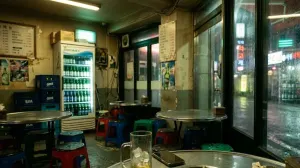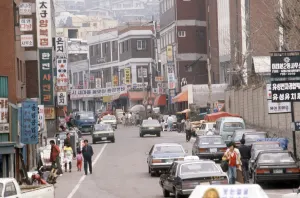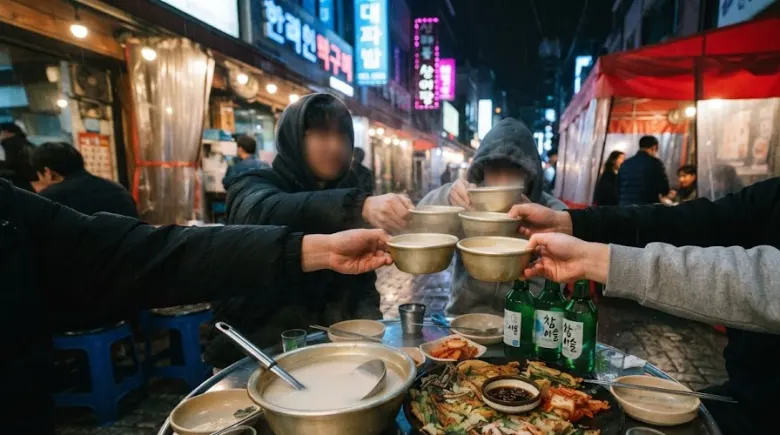
Every Seoul university comes with a street. Walk out of the main gate of almost any campus and within five minutes you’re in a 대학가 (daehakga), a university district: a dense grid of hofs, pochas, barbecue places, noraebang and the kind of bar where a pitcher costs less than a cocktail in Itaewon. For most Koreans, that street is where their drinking life began, long before a club ever saw them.
They aren’t all the same, and they aren’t all doing well. Some are emptying faster than any other commercial street in the city, some have reinvented themselves twice, and a couple are quietly busier than ever. Here’s where they are, what makes each one different, and what’s happening to them in 2026.
Which Student Streets Are Emptying
Empty shop rates by campus district, against the Seoul average
대학가 상권, 어디가 비어 가나
Empty shopsVacancy rates of small shops, each with its own date. Pink is above the Seoul average. Track runs from 0 to 25 percent.
| Street | Campus | Known for |
|---|---|---|
| Sinchon | Yonsei, Sogang, Ewha | Busking stages, the original student night |
| Konkuk | Konkuk, Sejong | The lamb skewer street by Exit 5 |
| Anam | Korea University | Makgeolli, and the Goyeonjeon rivalry |
| Sharosu-gil | Seoul National University | More than 380 shops, where the students moved |
| Hoegi | Kyung Hee | The pajeon alley by Exit 1 |
| Daehangno | None since 1975 | Theatres around Marronnier Park |
International students, 2025. 253,434 in all, up 21.3 percent. China and Vietnam are six in ten. Track runs from 0 to 80,000.
Vacancy dates. Sinchon is the 2023 figure. The others are the first quarter of 2026, from Financial News.
Sources: Hankyung · Financial News
Sinchon and Ewha: The Original, and Its Long Slump
Sinchon (신촌) is the university district Seoul measures every other one against. Seodaemun-gu counts nine universities around it, Yonsei, Sogang and Ewha the biggest, with about 94,000 students and roughly 12,000 from abroad. In the 1990s it was a centre for underground music and the student movement, and it was where Starbucks opened its first Korean store, in 1999, in front of Ewha.
Then it lost its crowd. A citizen research project published through the Seoul Institute in 2020 asked the question directly, 「사람들은 왜 신촌을 떠났을까」 (Why did people leave Sinchon?), and gave a list of answers: an ageing commercial strip, Yonsei moving its freshmen to the Songdo campus from the early 2010s, newer districts nearby, and a younger crowd that preferred Hongdae’s looser culture. In 2014 Yonsei-ro became Seoul’s first public transit only street, closed to private cars. Merchants blamed it for falling sales, a trial reopening ran through 2023, and the city lifted the restriction for good on 1 January 2025, after eleven years. The street threw a party at Sinchon Star Plaza to mark it, with the group Norazo and DJ Sepo.
The vacancy figures tell the rest. Small shops in Sinchon were fully let from 2015 into 2017. By the third quarter of 2023, 22 percent stood empty, against 5.6 percent across Seoul, according to Korea Real Estate Board figures reported by Asia Economy. A Lotteria at the Sinchon rotary closed in January 2024 after eighteen years. In late 2025 Hankyung found key money, the premium a new tenant pays the old one, had collapsed, and Newsis quoted a bar owner of fifteen years calling his sales effectively the lowest ever. An Ewha student told the same reporter she goes to Hongdae, Yeonnam or Hapjeong instead.
There are signs of life. Busking permits on Sinchon’s streets rose from 755 in 2023 to 1,328 in 2024, and on weekends the stages rotate every twenty minutes with dance crews battling in between. The Sinchon Global University Culture Festival drew about 490,000 people over three days in 2025. And in the Seoul commercial district figures Financial News compared this year, Sinchon was the only university district whose vacancy rate improved between the first quarters of 2025 and 2026.
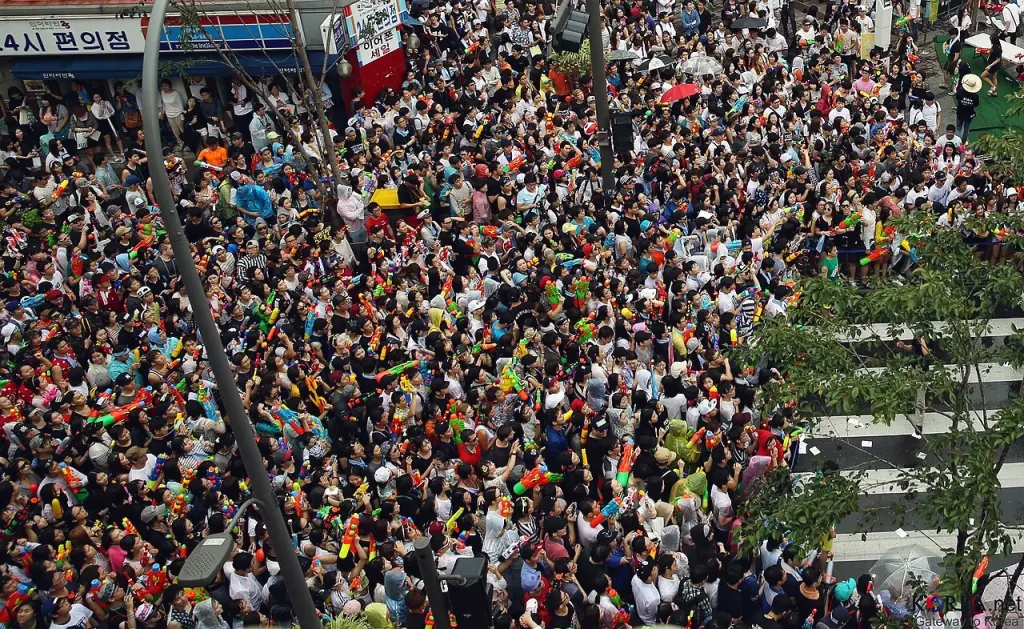
Hongdae, Hapjeong and Yeonnam
Hongdae (홍대) is the university district that became something bigger. Hongik’s art school drew cheap studios in the 1980s, the studios drew live clubs in the 1990s, and the rest is in our Hongdae, Itaewon and Gangnam comparison. It had its own slump in 2023, when one ground floor unit sat empty for more than four years and its asking rent fell from 32 million to 20 million won a month, but Cushman and Wakefield counted about 2,200 shops there in 2025, a five year high.
What’s changed is the clock. Cushman’s data shows the share of Hongdae spending between 6 pm and 1 am falling from 44 to 42 percent, and upper floors turning into dermatology and plastic surgery clinics. Hongdae is now an official tourism special zone. The student nights have drifted into Hapjeong, Sangsu and Yeonnam, and Mapo’s Red Road walking route pulls foreign visitors down the old rail line.
Konkuk: The East Side’s Big Night Out
Konkuk University station (건대입구), on Lines 2 and 7, is the biggest night out in east Seoul. Konkuk and Sejong students are the base, but the crowd comes from all over the east side. The area’s rougher past sits just behind it: in the 1990s, Hwayang-ri (화양리) between the two campuses was a vice district, and its designation as a youth protection zone in 1995 pushed the crowds toward the station. Cheongdam Bridge in 1999, Line 7 in 2000 and the Star City complex in 2007 did the rest.
Two things make Konkuk different. The first is the 양꼬치거리 (yangkkochi geori), the lamb skewer street by Exit 5, about 700 metres of Chinese and Joseonjok restaurants started by ethnic Koreans from China who once worked in Gwangjin’s sewing factories. In 2013 more than 80 percent of Konkuk’s foreign students were Chinese, and many lived nearby. The second is scale: the food street (맛의거리) held its sixteenth festival in October 2025, with a DJ party, and the shipping container mall Common Ground sits by Exit 6.
It’s wobbling. Sales in the first half of 2025 were 520.6 billion won, down 3.6 percent and below 2019, with spending by people in their twenties down by double digits. Vacancy rose from 7 percent to 10.8 percent between the first quarters of 2025 and 2026, and Hwayang-dong saw 96 closures against 59 openings in early 2026. Local cable news put it bluntly in March: Seongsu rises, Konkuk sinks.
Anam and Korea University: Makgeolli and the Rivalry
Anam (안암), outside Korea University, is a makgeolli district by tradition. The school’s old 사발식 (sabalsik) had freshmen drink makgeolli from a big bowl while seniors sang, and while the pressure behind it had largely disappeared by 2011, the university still has a cheer song called Ode to Makgeolli. The big night of the year is the 고연전 (Goyeonjeon), or 연고전 (Yeongojeon) when Yonsei hosts, the annual sports rivalry between the two schools. After the 2011 games students said they could drink free at any bar in Anam or Sinchon. The 2025 edition in September marked its sixtieth anniversary, and going into it the overall record stood level at 20 wins each, with 11 draws.
Daehangno: The Campus That Became a Theatre District
Daehangno (대학로) literally means university street, and it lost its university half a century ago. Seoul National University moved out to Gwanak in 1975, and the arts council and theatres took the space around Marronnier Park. It was named a cultural district in 2004, land prices rose more than 10 percent a year, small theatre rents rose 126 percent over a decade, and troupes moved out toward the Hansung University area. The famous small theatre 학전 (Hakchon) closed in March 2024 after 33 years. Sungkyunkwan and a medical campus are still nearby, but Daehangno is a night of theatre and dinner rather than a drinking street, and many restaurants close by nine.
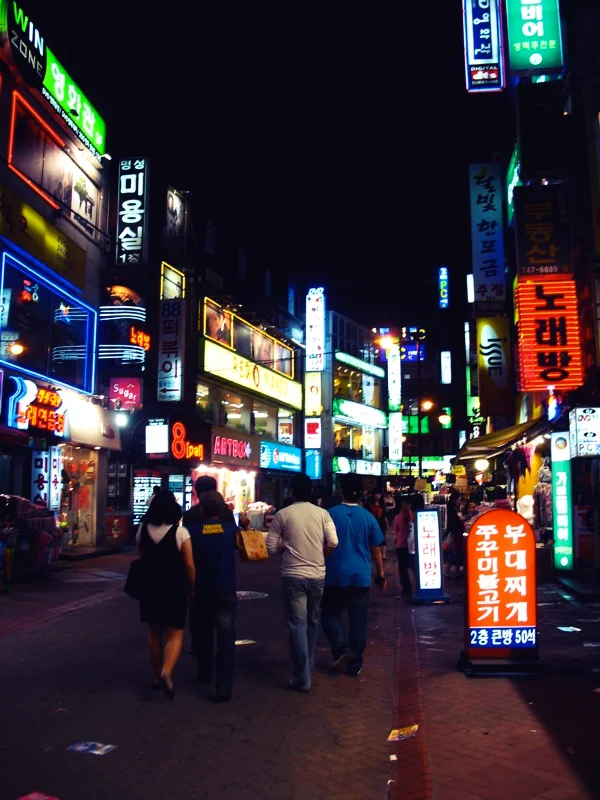
Nokdu-geori and Sharosu-gil: Seoul National University’s Two Streets
Seoul National University has two districts and a generational split between them. Nokdu-geori (녹두거리), about ten minutes down the stream from the main gate in Daehak-dong, takes its name from an early 1980s bar that served makgeolli and mung bean pancakes. The bookstore 그날이 오면 has been there since 1988. Around it sat the 고시촌 (gosichon), the exam village, which peaked at about 30,000 residents in 1998 before law schools arrived in 2008 and the old bar exam ended in 2017. It’s chain cafés and pubs now.
The students moved to Sharosu-gil (샤로수길), about 600 metres from Seoul National University station’s Exit 2. The name is a pun on Gangnam’s 가로수길 (Garosu-gil), swapping in 샤, the shape of the university gate. More than 380 shops line it, Seoul named it a local brand district in 2024, and its vacancy rate was 3.2 percent in early 2026, one of the healthiest of any campus street.
Hoegi: Pajeon Alley
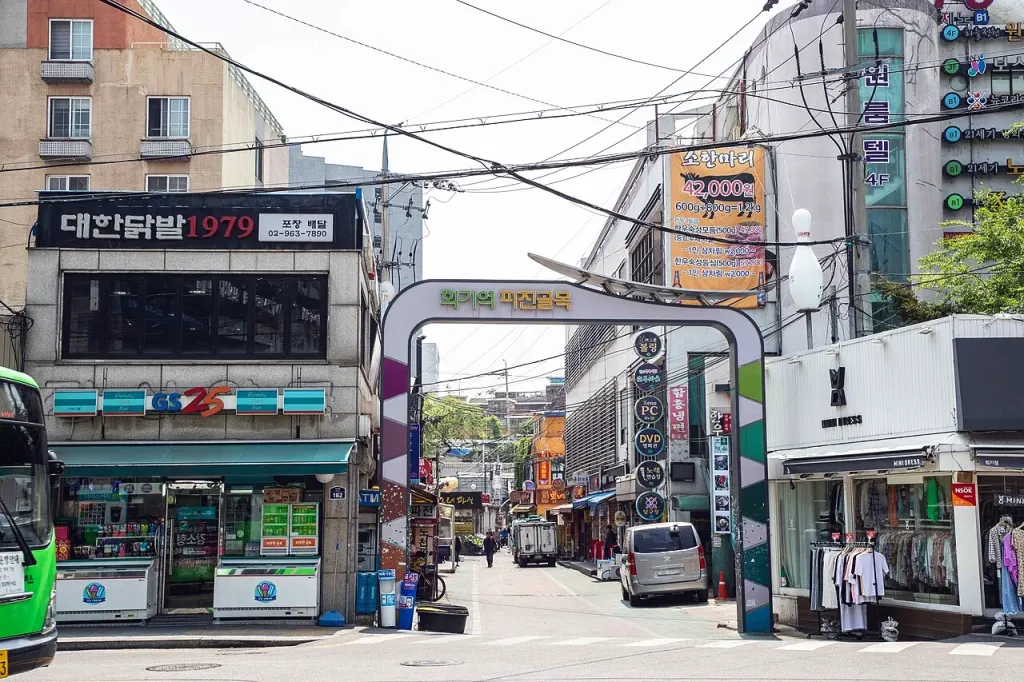
Hoegi (회기), near Kyung Hee University, is the simplest pleasure on this list: the 파전골목 (pajeon golmok), the pancake alley by Exit 1 of Hoegi station, with seafood, kimchi and meat pajeon, plain and fruit makgeolli, big portions and low prices. It’s one of the steadiest campus streets in the city, too, with vacancy around 3 percent in 2025 and 2026.
The Smaller Streets
Below the big names, the picture is harder. Outside Sookmyung Women’s University in Cheongpa-dong, vacancy rose from 0.8 to 4.7 percent in a year, with 41 closures against 27 openings in early 2026. Near Sungshin Women’s University in Donam-dong it rose from 9.9 to 11.8 percent, with 23 closures and only six openings. Financial News, which compiled the figures, described the smaller university streets as the first to feel it.
The Rituals: Festivals, MT and the End of Forced Drinking
The university year has its own nightlife calendar. The 축제 (chukje) season in May and September brings campus festivals that most Seoul schools spend 150 to 300 million won on, about half of it on celebrity performers. Tickets have become a black market: in May 2026 resale prices ran from 100,000 to 500,000 won, student IDs and school jackets were being rented to outsiders, and Seoul National University warned of suspension or expulsion. At Kyung Hee in 2022, the queue stretched 600 metres.
The other rituals are the orientation (OT) and the membership training (MT) trip, and they’ve changed the most. Student deaths from forced drinking in the mid 2000s led to a long backlash. Sungshin has run alcohol free orientations since 2012, Dongguk introduced “human rights bracelets” in 2017 that students wear to refuse drinks, and the education ministry inspected orientations in 2019. Drinking games survive, but the bowl of makgeolli you couldn’t refuse mostly doesn’t.
Students Are Drinking Less
Behind the empty shopfronts is a bigger shift. National Tax Service figures reported by Newsis show liquor shipments in 2025 fell under 3 million kilolitres for the first time in 27 years. An Opensurvey poll of 2,000 people in their twenties and thirties found 67.2 percent had drunk in the past month, down nearly five points since 2024, while 77.4 percent had tried non alcoholic drinks, mostly for health or cost. A non alcohol bottle shop with more than 80 products opened in Yeonnam in 2025, and Budweiser threw an alcohol free morning rave in Itaewon that October.
It isn’t a straight line. Hite Jinro says soju sales in fifteen Seoul university districts rose about 20 percent in March and April 2026 compared with January and February, and beer about 32 percent. Students still go out. They go out less often, spend less, drink less once they’re there, and they’re increasingly joined by the 253,434 international students now studying in Korea, a record. For a DJ, the lesson is in Sinchon’s busking numbers: its comeback is being built on performers, dance crews and festivals, not on cheaper soju.
If you DJed a campus festival, ran a bar in Sinchon or Konkuk, or have a story from Nokdu-geori before the exams ended, the contact page is always open.
Frequently Asked Questions
What is the best university district in Seoul for a night out?
For sheer size, Konkuk University station and Hongdae. For makgeolli and pajeon, Hoegi near Kyung Hee. For the classic student street, Sinchon, which is quieter than it was but recovering.
Why is Sinchon so empty now?
A mix of reasons: Yonsei moved its freshmen to Songdo from the early 2010s, crowds shifted to Hongdae, Yeonnam and Hapjeong, rents stayed high, and young Koreans drink less. Vacancy peaked at 22 percent for small shops in 2023 and has eased since.
When are Seoul university festivals?
Most run in May and September. Entry to the main stage is usually limited to students, and in 2026 universities were cracking down on tickets and student IDs being resold to outsiders.
What is Sharosu-gil?
A street of more than 380 restaurants and bars near Seoul National University station, named as a pun on Garosu-gil. It replaced Nokdu-geori as the main hangout for Seoul National University students.
Sources and Further Reading
Every fact above comes from the reports below. Vacancy figures come from two systems, the Korea Real Estate Board and Seoul’s commercial district data, so compare them within a source rather than across.
- Herald Corporation: Sinchon global university festival (2026)
- Korea Times: Sinchon festival (2026)
- Seoul Media Hub: 사람들은 왜 신촌을 떠났을까 (2020)
- Asia Economy: Sinchon closures and vacancy (2024)
- Newsis: Yonsei-ro reopening trial (2023)
- Korea JoongAng Daily: a face lift for Sinchon (2024)
- SBS Biz: Yonsei-ro restriction lifted (2024)
- Seoul Shinmun: Sinchon lifting party (2025)
- Korea Times: decline in Seoul’s university areas (2024)
- Hankyung: Sinchon rents and key money (2025)
- Newsis: Sinchon’s lowest sales (2026)
- Hankyung: Sinchon busking boom (2025)
- Financial News: vacancy across university districts (2026)
- Daum News: Hongdae and Mangwon vacancy (2024)
- Herald Corporation: Cushman and Wakefield on Hongdae (2025)
- Seoul Shinmun: Mapo Red Road (2024)
- Newsis: non alcohol bottle shop in Yeonnam (2026)
- Business Hankook: how Konkuk became a hub
- Korea JoongAng Daily: Konkuk’s lamb skewer street (2013)
- Herald Corporation: Konkuk food street festival (2025)
- Seoul Media Hub: Common Ground (2021)
- Hankyung: Konkuk sales at an inflection point (2025)
- Hankyung: makgeolli and the Korea University games (2011)
- Korea University: Ode to Makgeolli (2024)
- University News: the 2025 games (2025)
- Dailian: Daehangno rents
- Money Today: Hakchon closes, Hyehwa vacancy (2024)
- Seoul Shinmun: Nokdu-geori and the exam village (2026)
- Seoul Shinmun: Sharosu-gil (2024)
- Daum: Hoegi pajeon alley
- Kyeongin Ilbo: what universities spend on festivals
- Daum News: festival ticket resale (2026)
- Nocut News: Kyung Hee festival queue (2022)
- University News: drinking at orientation
- Sidae News: soju sales in university districts (2026)
- Newsis: liquor shipments and drinking habits (2026)
- Korea JoongAng Daily: Korea’s younger drinkers (2025)
- eToday: record international students (2025)
Written from Seoul, by someone who has been in the booth for 25 years. More on the site, or book a DJ.
Stay in the Loop
New writing on DJ culture, electronic music, and the Seoul underground, delivered when it matters.
More From The DJ Diaries


Play with the history
Four tools built from the same research as this site.