Every English language guide to Seoul nightlife districts gives you the same three names. Hongdae for students, Itaewon for foreigners, Gangnam for money. I’ve been playing in this city since 2006, and that list isn’t wrong, exactly. It’s just the surface.
Because none of Seoul’s drinking districts happened by accident. Every one of them was made by something: a palace road, a railway, a factory, an army base, a government plan, a university, a printing trade. Once you know what made each one, the whole city becomes readable. You can look at a street and know why the bars are that size, why they close at that hour, and who they were originally for.
This is the version of that map I wish someone had handed me when I arrived. It runs roughly in chronological order, because Seoul’s nightlife spread outward and southward in a sequence, and the sequence is the story.
What Built Each Seoul Nightlife District
Every district started with something that gathered people in one place
서울 밤거리는 이렇게 만들어졌다
| What gathered people | When | |
|---|---|---|
| Jongno | The main road of the Joseon capital. Commoners ducked into the side lanes, 피맛골 (Pimatgol), to avoid officials on horseback | Joseon era |
| Yeongdeungpo | Flat land and a railway, then factories and tens of thousands of workers | Industrial zone by 1936, a ward in 1943 |
| Itaewon | Yongsan garrison, Japanese and then American after 1945 | A market and entertainment strip in the 1960s and 1970s |
| Gangnam | The Yeongdong plan to house 600,000 people, then the elite high schools | Farmland until November 1970 |
| Sinchon, Daehangno, Hongdae | Universities: Yonsei, Ewha and Sogang, the old Seoul National University campus, Hongik | Sinchon peaks in the 1980s and early 1990s |
| Euljiro and Seongsu | Working industry. About 1,100 print shops still in the Inhyeon-dong alleys | Now |
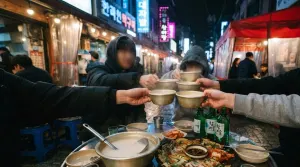
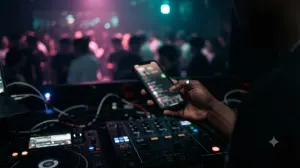
Read any streetEverything about Seoul nightlife has moved over sixty years. The kitchen behind the DJ booth has never moved.
18.94 million foreign visitors came to Korea in 2025, a record and 108% of the 2019 level.
5.7% of all foreign card spending in Korea in May 2026 happened in Seongsu, second only to Myeongdong. The newest district on this list is already the second biggest draw.
₩311.8 billion is spent in Seoul every night between 5pm and 6am, by card data. The city wants an extra ₩5 trillion a year.
Sources: KTO via Herald Economy · Korea Herald · Asia Economy
Jongno: The Oldest of Seoul’s Nightlife Districts
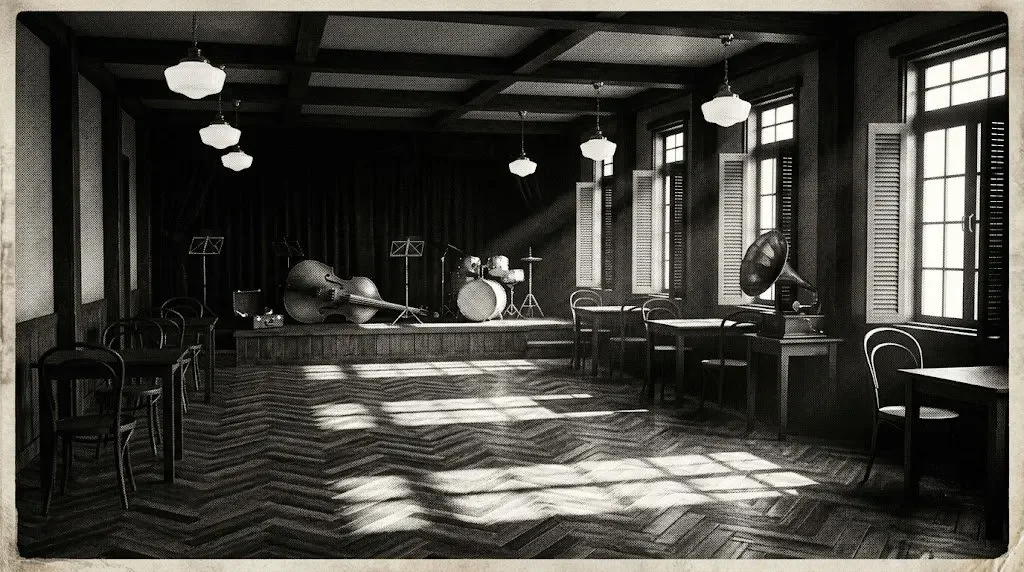
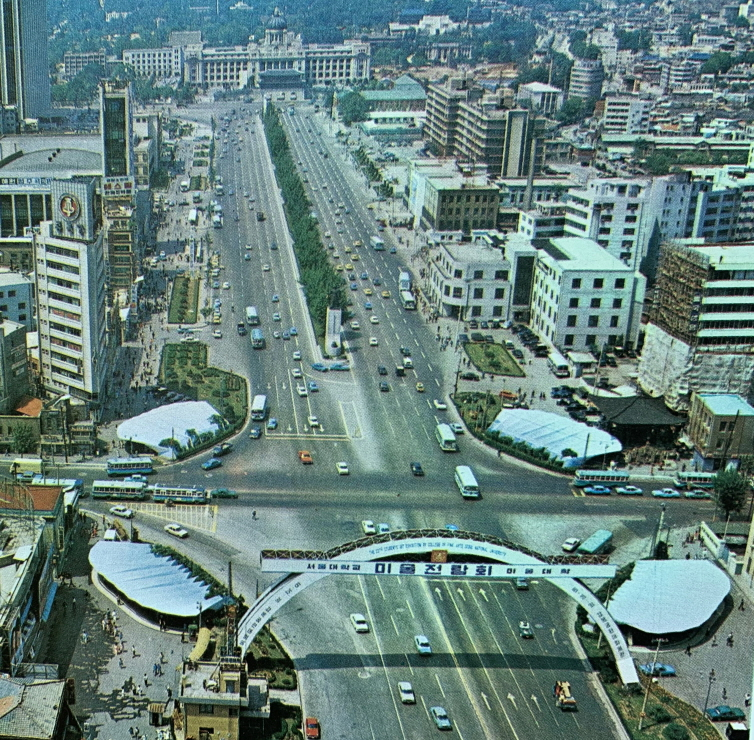
Start where Seoul started. Jongno was the main road of the Joseon capital. It produced Korea’s first drinking district through a piece of social friction I love.
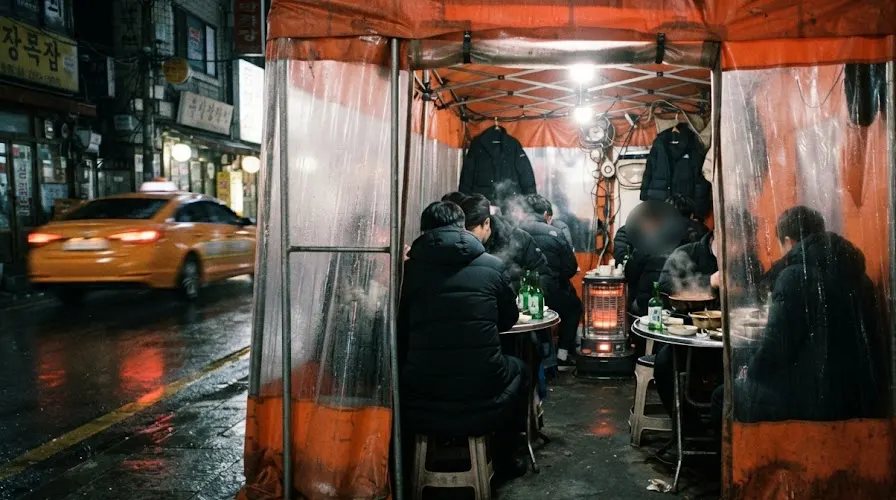
The road was for officials on horseback. Commoners were expected to bow as they passed, which is a tedious way to get anywhere. So people used the back lanes instead. Those lanes became known as 피맛골, Pimatgol, roughly the alley for avoiding horses. As Korean coverage of the alley’s history lays out, it filled with the businesses that serve people who are avoiding the main road: cheap taverns, 선술집 stand-up bars, 빈대떡 griddle shops. The ancestors of every pocha in this country. A pocha (포차, short for pojangmacha) is a cheap tented or open-fronted bar serving soju and anju, the food that comes with drinking.
How the Districts Connect
Read that again, because the pattern repeats for the next six hundred years. Seoul’s drinking culture began in the side street, serving the people who weren’t on the main road. It has never stopped being that.
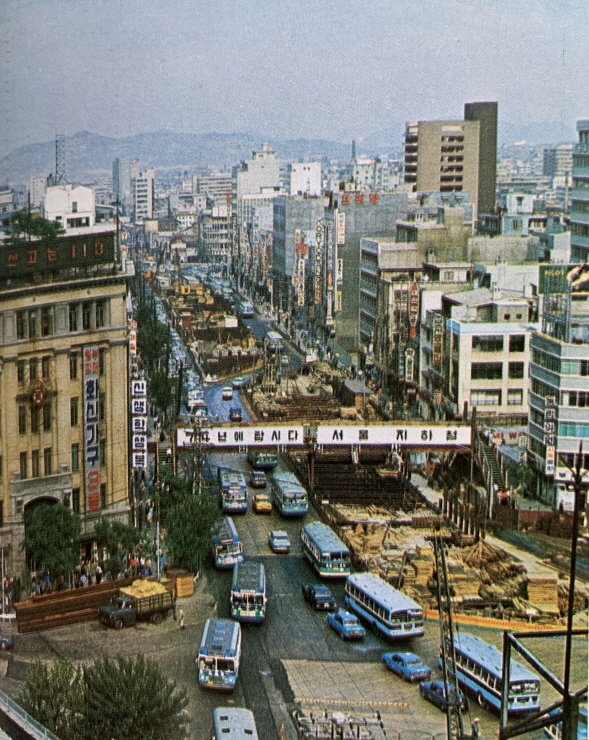
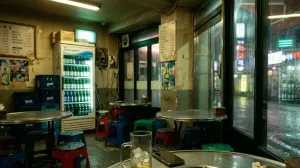
Much of the original Pimatgol was lost to the redevelopment that put the towers along Jongno. What remains is partly a reconstruction inside those buildings. But the district as a whole kept its function. Jongno is still where the older generation drinks, still where the last music dabang DJ works, still full of 3,000 won 국밥 places and standing bars. It’s the least Instagrammed and most Korean night out in the city.
That may not hold for long. On 17 September 2026 Time Out ranked Jongno 3-ga the coolest neighbourhood in the world, pointing to the pocha tables along Donhwamun-ro 11-gil, the younger crowd now sharing them with office workers, and queer-friendly bars that took root there as early as the 1970s.
Seoul Nightlife Map: Clubs and Districts Now
Here is where Seoul goes out now, district by district. Tap a pin for the venue, its sound and directions, and the list below the map shows what’s on in the next two weeks.
Seoul nightlife map
Venues on this map: Cakeshop (케이크샵), B1, 134 Itaewon-ro; Blacklist (블랙리스트), 134 Itaewon-ro; Volnost (볼노스트), 142 Itaewon-ro; Seoul Community Radio (서울 커뮤니티 라디오), 22 Noksapyeong-daero 40na-gil; Coley (콜리), 214 Noksapyeong-daero; Southside Parlor (사우스사이드 팔러), 218 Noksapyeong-daero; Ring (링), 2F, 165-6 Itaewon-ro; Rack Seoul (랙), 2F, 4 Itaewon-ro 23-gil; Nué Seoul (누에), 2F, 45 Itaewon-ro 27ga-gil; Hamilton Hotel (해밀톤호텔), 179 Itaewon-ro; Prost (프로스트), 26 Itaewon-ro 27ga-gil; Glam (글램라운지), 26 Itaewon-ro 27ga-gil; Union (바유니온), 29 Bogwang-ro 59-gil; Pistil (피스틸), 9 Bogwang-ro 59-gil; Itaewon Station (이태원역); Faust (파우스트), 3F, 7 Bogwang-ro 60-gil; Casa Corona (카사코로나), 7 Bogwang-ro 60-gil; Blank Site (블랭크 사이트), B2, 22 Bogwang-ro 60-gil; Nyapi (냐피), 187 Itaewon-ro; Flac (플락), 2F, 5 Itaewon-ro 27ga-gil; Public (퍼블릭), B1, 192 Itaewon-ro; Teller (텔러), B1, 39 Usadan-ro; All That Jazz (올댓재즈), 216 Itaewon-ro; Bolero (볼레로), B1, 220 Itaewon-ro; Soap (소프 서울), B2, 217 Itaewon-ro; JJ Mahoney’s (제이제이 마호니스), Grand Hyatt Seoul, Grand Hyatt Seoul, 322 Sowol-ro; Stoked&stoned (스톡앤스톤드), 2F, 72 Daesagwan-ro; Vurt (버트), 11 Dongmak-ro; Modeci (모데시), 5F, 64 Wausan-ro; The Henz Club (헨즈클럽), B1, 64 Wausan-ro; Escape_bar, 16 Yonsei-ro 5ga-gil; Hongik Univ. Station (홍대입구역); Lion Super Club (라이언), 1F, 535 Dosan-daero; Muse Seoul (뮤즈), B1, 71-1 Apgujeong-ro 46-gil; Frame Seoul (프레임), 36 Eonju-ro 170-gil; Luka (루카), B1, 46 Gangnam-daero 152-gil; The Edge Seoul (디 엣지), 8 Eulji-ro 12-gil; Jushindang (주신당), 399 Toegye-ro; Sewoon Sangga (세운상가); Inhyeon Market (인현시장); Seoul Art Space Mullae (문래예술공장), 5-4 Gyeongin-ro 88-gil; MH Live Hall (명화라이브홀), 30 Beodeunaru-ro; Yeongdeungpo Market (영등포시장); Times Square (타임스퀘어); Mullae Station (문래역); UNDERCITY (언더시티), B1, 61 Seongsui-ro 22-gil; Seongsu Station (성수역); Kunst Kabinett Seoul, 21 Changgyeonggung-ro 35-gil; Space Nodeul K, 11 Hyunchung-ro; Eulji OB Bear (을지OB베어), 49-2 Chungmu-ro; Kockiri (꼬끼리), 46 Usadan-ro; Atdge Seoul (엣지서울), B1, 29 Bogwang-ro 59-gil, Yongsan-gu; Paper (페이퍼), Rooftop, 37 Itaewon-ro 27ga-gil, Yongsan-gu; Shelter (쉘터), 5F, 37 Itaewon-ro 27ga-gil, Yongsan-gu; Hertz (헤르츠), 1F, 21 Usadan-ro 14-gil, Yongsan-gu; Rosso (로쏘 서울), B1, 17 Daesagwan-ro 31-gil, Yongsan-gu; Cul Sec (큐섹), 1F, 242 Noksapyeong-daero, Yongsan-gu (Haebangchon side); RO Seoul (로서울), 1F, 19 Noksapyeong-daero 52-gil, Yongsan-gu; Lovehaus (러브하우스), B1, 6 Itaewon-ro 23-gil, Yongsan-gu; Grain Haus (그레인하우스), 1F, 40 Usadan-ro, Yongsan-gu; 232 (232), 232 Itaewon-ro, Yongsan-gu; Department.en (Den) (디파트먼트이엔), 1F, 48-22 Yeonhui-ro, Seodaemun-gu (Yeonhui-dong); Thila Ground (틸라 그라운드), 2 Tojeong-ro 9-gil, Mapo-gu (Sangsu); Chunhee (춘희), B1, 193 Seongmisan-ro, Mapo-gu (Yeonnam); Club FF (클럽FF), B1, 12 Wausan-ro 17-gil, Mapo-gu; Club Ocean (클럽오션), B2, 6 Jandari-ro, Mapo-gu; Rolling Hall (롤링홀), B1, Sinbo Bldg, 35 Eoulmadang-ro, Mapo-gu; Club Evans (클럽에반스), 2F, 63 Wausan-ro, Mapo-gu; Live Club Bbang (라이브클럽 빵), B1, 12 Wausan-ro 29-gil, Mapo-gu; ACE (formerly Race) (에이스 (구 레이스)), B1, 597 Gangnam-daero, Seocho-gu (Sinsa Station); Times (타임즈 압구정), B1, 25 Apgujeong-ro 54-gil, Gangnam-gu; Lowkey (로우키), B1, 75 Apgujeong-ro 46-gil, Gangnam-gu; Plus82 (+82) (플러스82), B1, 539 Dosan-daero, Gangnam-gu (Cheongdam); Graphic Hangang (그래픽 한강), 37-53 Apgujeong-ro 11-gil, Gangnam-gu (Jamwon Hangang Park); Ximxim Bar (심심), Rm 308, 3F Bldg B, S-Factory, 11 Yeonmujang 15-gil, Seongdong-gu; TCC Seoul (tcc), 1F, 302 Gwangnaru-ro, Seongdong-gu; Dumb Seoul (덤서울), 2F, 394 Ttukseom-ro, Seongdong-gu; Bar Piment (바피망), 3F, 32 Myeongdong 4-gil, Jung-gu; Objktt Record Bar (오브옉트 레코드바), 4F, 58 Myeongdong 8ga-gil, Jung-gu; FFF (FFF), 3F, 7 Hangang-daero 54-gil, Yongsan-gu (Samgakji); Zest (제스트), 1F, 26 Dosan-daero 55-gil, Gangnam-gu (Cheongdam); Alice Cheongdam (앨리스), B1, 47 Dosan-daero 55-gil, Gangnam-gu (Cheongdam); Bar Cham (참), 1F, 34 Jahamun-ro 7-gil, Jongno-gu (Seochon); M+MS (Malt + Mixology Space) (엠엠에스), 1F, 32-1 Dosan-daero 49-gil, Gangnam-gu (Sinsa); Le Chamber (르챔버), B1, 42 Dosan-daero 55-gil, Gangnam-gu (Cheongdam); Gong Gan (공간), 1F, 66-4 Yulgok-ro 3-gil, Jongno-gu (Anguk); Soko (소코), 47 Hannam-daero 20-gil, Yongsan-gu (Hannam); Pine & Co (파인앤코), B1, 33 Seolleung-ro 157-gil, Gangnam-gu (Apgujeong); Cobbler (코블러), 1F, 16 Sajik-ro 12-gil, Jongno-gu (Sajik-dong); Kiez (키즈), B1, 45 Dosan-daero 55-gil, Gangnam-gu (Cheongdam); Bar Tea Scent (바티센트), 1F, 16 Seolleung-ro 162-gil, Gangnam-gu (Cheongdam); Pussyfoot Saloon (푸시풋살룬), B1, 7-6 Daesagwan-ro 31-gil, Yongsan-gu (Hannam); Boogie Woogie (부기우기), 2F, 21 Hoenamu-ro, Yongsan-gu (Haebangchon side); Bar Swallow (바 스왈로), 1F, 38 Itaewon-ro 55ga-gil, Yongsan-gu (Hannam); Gaenari Whisky Hannam (개나리위스키 한남), 2F, 78 Itaewon-ro 54-gil, Yongsan-gu (Hannam); The Lion's Den Cheongdam (더라이온스덴 청담), B1, 7 Seolleung-ro 158-gil, Gangnam-gu (Cheongdam); d.still (디스틸), 1F, 10 Wausan-ro 15-gil, Mapo-gu (Sangsu); Antisocial Whisky Club (안티소셜위스키클럽), 2F, 43 Donggyo-ro, Mapo-gu (Mangwon); Brown Study (브라운스터디), 1F, 37 Wausan-ro 3-gil, Mapo-gu (Sangsu); Gu Seoul (구 서울), 2F, 82 Majang-ro, Jung-gu (Sindang); Bar Bam (바밤), 2F, 872 Gyeongin-ro, Yeongdeungpo-gu; Charles H. (포시즌스호텔 서울 찰스H), Four Seasons Hotel Seoul, B1, Four Seasons Hotel Seoul, 97 Saemunan-ro, Jongno-gu; The Timber House (파크하얏트 서울 더 팀버하우스), Park Hyatt Seoul, LL, Park Hyatt Seoul, 606 Teheran-ro, Gangnam-gu (Samseong); Bar 81 (시그니엘서울 바81), Signiel Seoul, 81F, Lotte World Tower, 300 Olympic-ro, Songpa-gu (Jamsil); The Library (서울신라호텔 더 라이브러리), The Shilla Seoul, 1F, The Shilla Seoul, 249 Dongho-ro, Jung-gu; The Distillers' Library (서울신라호텔 더 디스틸러스 라이브러리), The Shilla Seoul, 1F, The Shilla Seoul, 249 Dongho-ro, Jung-gu; 1914 Lounge & Bar (1914라운지&바), Josun Palace, 24F, Josun Palace, 231 Teheran-ro, Gangnam-gu (Yeoksam); Lounge & Bar (웨스틴조선서울 라운지앤바), The Westin Josun Seoul, Lobby, The Westin Josun Seoul, 106 Sogong-ro, Jung-gu; The Griffin (JW메리어트동대문스퀘어서울 더그리핀바), JW Marriott Dongdaemun Square, 11F, 279 Cheonggyecheon-ro, Jongno-gu; Privilege Bar (몬드리안서울이태원 프리빌리지 바), Mondrian Seoul Itaewon, Rooftop, Mondrian Seoul Itaewon, 23 Jangmun-ro, Yongsan-gu; Side Note Club (라이즈호텔 사이드노트클럽), RYSE Hotel, 15F, RYSE Hotel, 130 Yanghwa-ro, Mapo-gu; M29 (M29 페어몬트 앰버서더 서울), Fairmont Ambassador Seoul, 29F, Fairmont Ambassador Seoul, 108 Yeoui-daero, Yeongdeungpo-gu (Yeouido); Rooftop Bar Cloud (AC메리어트호텔 루프탑바클라우드), AC Hotel Seoul Gangnam, 21F, AC Hotel Seoul Gangnam, 10 Teheran-ro 25-gil, Gangnam-gu (Yeoksam); Mobo Bar (JW메리어트호텔서울 모보바), JW Marriott Hotel Seoul, 7F, JW Marriott Hotel Seoul, 176 Sinbanpo-ro, Seocho-gu (Banpo); Latitude 32 (라티튜드32), Sofitel Ambassador Seoul, 32F, Sofitel Ambassador Seoul, 209 Jamsil-ro, Songpa-gu (Jamsil); Marque d'Amour (마크다모르), L'Escape Hotel, 26F, L'Escape Hotel, 67 Toegye-ro, Jung-gu; H. Bar (에이치 바), Four Seasons Hotel Seoul, Four Seasons Hotel B1 (inside Charles H.), 97 Saemunan-ro; Peninsula Lounge & Bar (페닌슐라 라운지 앤 바), The Grand Lotte Seoul, The Grand Lotte Seoul 1F, 30 Eulji-ro; Moon Bar (문 바), Banyan Tree Club & Spa Seoul, Banyan Tree Club & Spa Seoul, 60 Jangchungdan-ro; WXYZ Bar (WXYZ 바), Aloft Seoul Myeongdong, Aloft Seoul Myeongdong 2F, 56 Namdaemun-ro; The Paris Bar (파리스 바), Grand Hyatt Seoul, Grand Hyatt Seoul, 322 Sowol-ro; Bar VOISIN (바 부아쟁), Hotel Naru Seoul MGallery, Hotel Naru Seoul 22F, 8 Mapo-daero; LUX BAR (럭스 바), Grand Walkerhill Seoul, Grand Walkerhill Seoul 16F, 177 Walkerhill-ro; Lobby Lounge & Bar (로비 라운지 앤 바), Grand InterContinental Seoul Parnas, Grand InterContinental Seoul Parnas 1F, 521 Teheran-ro; Hotel Cappuccino Rooftop Bar (호텔카푸치노 루프탑바), Hotel Cappuccino, Hotel Cappuccino rooftop, 155 Bongeunsa-ro; Hanuk (하눅), B1, 18 Samil-daero 19-gil, Jongno; Cham Jecheol (참제철), 133-10 Sajik-ro, Seochon; Bar Jiro (바지로), B1, 29 Pirundae-ro, Seochon; Omusa (오무사), 1 Pirundae-ro 9-gil, Seochon; Beopwon (법원), 33 Changdeokgung 1-gil, Bukchon; Wa-ok (와옥), 3-7 Bukchon-ro 5na-gil, Bukchon; Myeongdong Sookhee (명동 숙희), 7-9 Myeongdong 10-gil; Blue Hour Jazz Club (블루아워 재즈클럽), B1 to B2, 6 Samil-daero 15-gil, Jonggak; Mutual Sound Club (뮤추얼 사운드 클럽), 23 Jahamun-ro, Seochon; Seochon Blues (서촌블루스), 17-1 Jahamun-ro, Seochon; Slowhand (슬로우핸드), 1 Sajik-ro 12-gil, Seochon; Satz (재츠), 2F, 21 Daesagwan-ro 30-gil, Yongsan-gu; KSPO Dome (KSPO DOME (올림픽체조경기장)), 424 Olympic-ro, Songpa-gu; Olympic Hall (올림픽홀), 424 Olympic-ro, Songpa-gu; Ticketlink Live Arena (티켓링크 라이브 아레나), 424 Olympic-ro, Songpa-gu; Woori Art Hall (우리금융아트홀), 424 Olympic-ro, Songpa-gu; 88 Lawn, Olympic Park (88잔디마당), 424 Olympic-ro, Songpa-gu; Seoul Olympic Stadium (서울올림픽주경기장), 25 Olympic-ro, Songpa-gu; Jamsil Auxiliary Stadium (잠실종합운동장 보조경기장), 25 Olympic-ro, Songpa-gu; Seoul Land (서울랜드), 181 Gwangmyeong-ro, Gwacheon-si, Gyeonggi; Paradise City (파라다이스시티), 186 Yeongjonghaean-ro 321beon-gil, Yeongjong-gu, Incheon; Inspire Arena (인스파이어 아레나), 127 Gonghangmunhwa-ro, Yeongjong-gu, Incheon; KINTEX (킨텍스), 217-60 Kintex-ro, Ilsanseo-gu, Goyang-si, Gyeonggi; Gocheok Sky Dome (고척스카이돔), 430 Gyeongin-ro, Guro-gu; YES24 Live Hall (예스24 라이브홀), 20 Gucheonmyeon-ro, Gwangjin-gu; Blue Square Woori WON Banking Hall (블루스퀘어 우리WON뱅킹홀), 294 Itaewon-ro, Yongsan-gu; Jangchung Arena (장충체육관), 241 Dongho-ro, Jung-gu; Dongdaemun Design Plaza (DDP) (동대문디자인플라자), 281 Eulji-ro, Jung-gu; Nanji Hangang Park (난지한강공원), 162 Hangangnanji-ro, Mapo-gu; Oil Tank Culture Park (문화비축기지), 87 Jeungsan-ro, Mapo-gu; S-Factory (에스팩토리), 11 Yeonmujang 15-gil, Seongdong-gu; Incheon Munhak Stadium (인천문학경기장), Munhak-dong, Michuhol-gu, Incheon.
Yeongdeungpo: The Factory Belt Nobody Writes About
Now cross the river, forty years before Gangnam existed.
Yeongdeungpo became Seoul’s industrial district in the colonial period, for the flattest of reasons: flat land and a railway. Rail arrived, factories followed, and by 1936 the area had been folded into Seoul as an industrial zone, becoming one of its first formal wards in 1943. Textiles, breweries, heavy manufacturing. Tens of thousands of workers.
And workers drink where they work. That’s the entire mechanism, and it explains a Seoul most visitors never see. The southwest of this city has a dense, cheap, unglamorous drinking economy that grew up around shifts ending, not around students or tourists, and it’s still there. I’ve written a whole piece on that belt, because it deserves one.
The same logic built the areas further south. The Guro export industrial complex opened in 1967 with 2,460 workers and reached about 114,000 by the end of 1978. Most of them young women who had come from the countryside and lived in the notorious honeycomb rooms of Garibong-dong. Around a workforce that size, an entire service economy of cheap food and cheap drink assembled itself. Traces of it survive today even though the complex became a digital industrial park in 2000.
Itaewon: Built by a Base
Itaewon exists in its modern form because of Yongsan garrison, a piece of ground that has been military for over a century, Japanese first and then American after 1945.
A large foreign population with money, unusual tastes and no interest in Korean licensing conventions produces a specific kind of district, and it did. Through the sixties and seventies the area developed as a market and entertainment strip serving the base, the one part of Seoul where you could hear foreign music, eat foreign food and behave slightly outside Korean norms. Every wave since has been built on that foundation: the tailors. The tourist zone designation in the nineties. The arrival of the underground clubs, the spread up into Gyeongnidan and Haebangchon.
Two things have changed the district recently and you should know both. The US military began moving to Pyeongtaek in the late 2000s, which slowly removed the population Itaewon was originally built for. And the Halloween crowd disaster in October 2022 killed 159 people and changed the atmosphere of the area in ways that are still working through it.
Itaewon in 2026 isn’t the base town it was. It’s the centre of Korea’s electronic music scene. the venue map tells that story better than the history does.
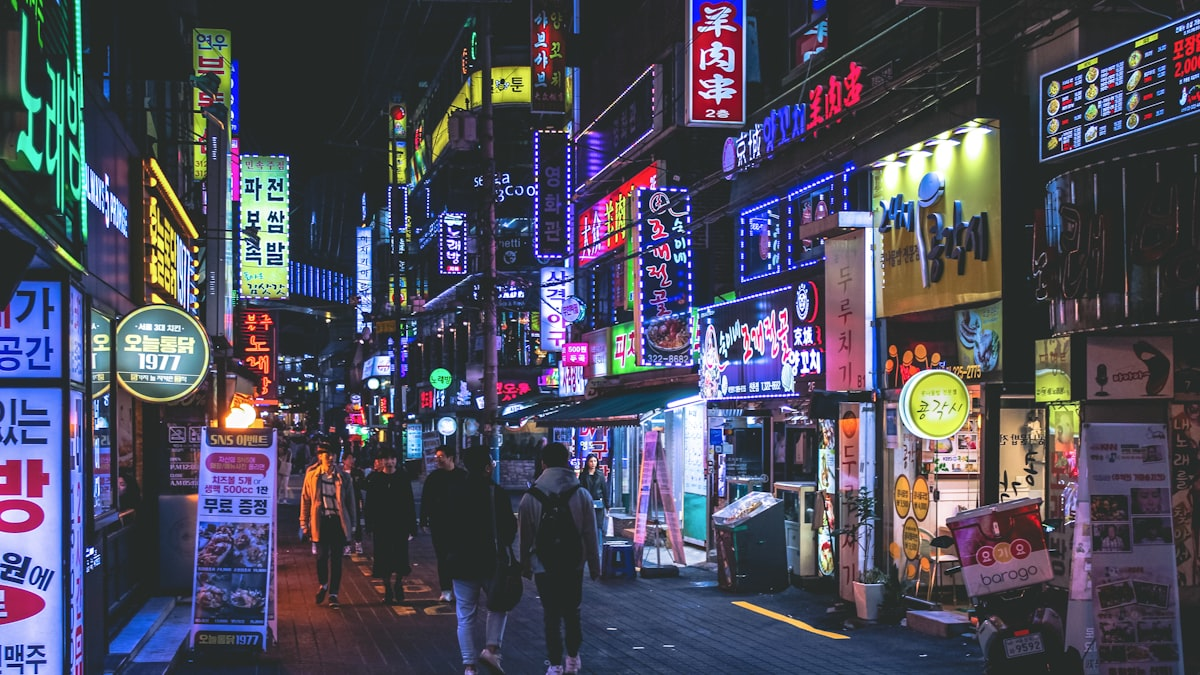
Downtown Seoul at night, on foot
Gangnam: A Seoul Nightlife District That Was Planned
This is the one people get most wrong, because they assume Gangnam is old money. It’s about fifty years old.
Until 1970 the area south of the river was mostly farmland, even though it had been moved from Gyeonggi Province into Seoul in 1963. The Yeongdong development plan of November 1970 set out to house 600,000 people there, given urgency by the 1968 North Korean incursion. That made the south bank look strategically safer. The name Gangnam became official in 1975.
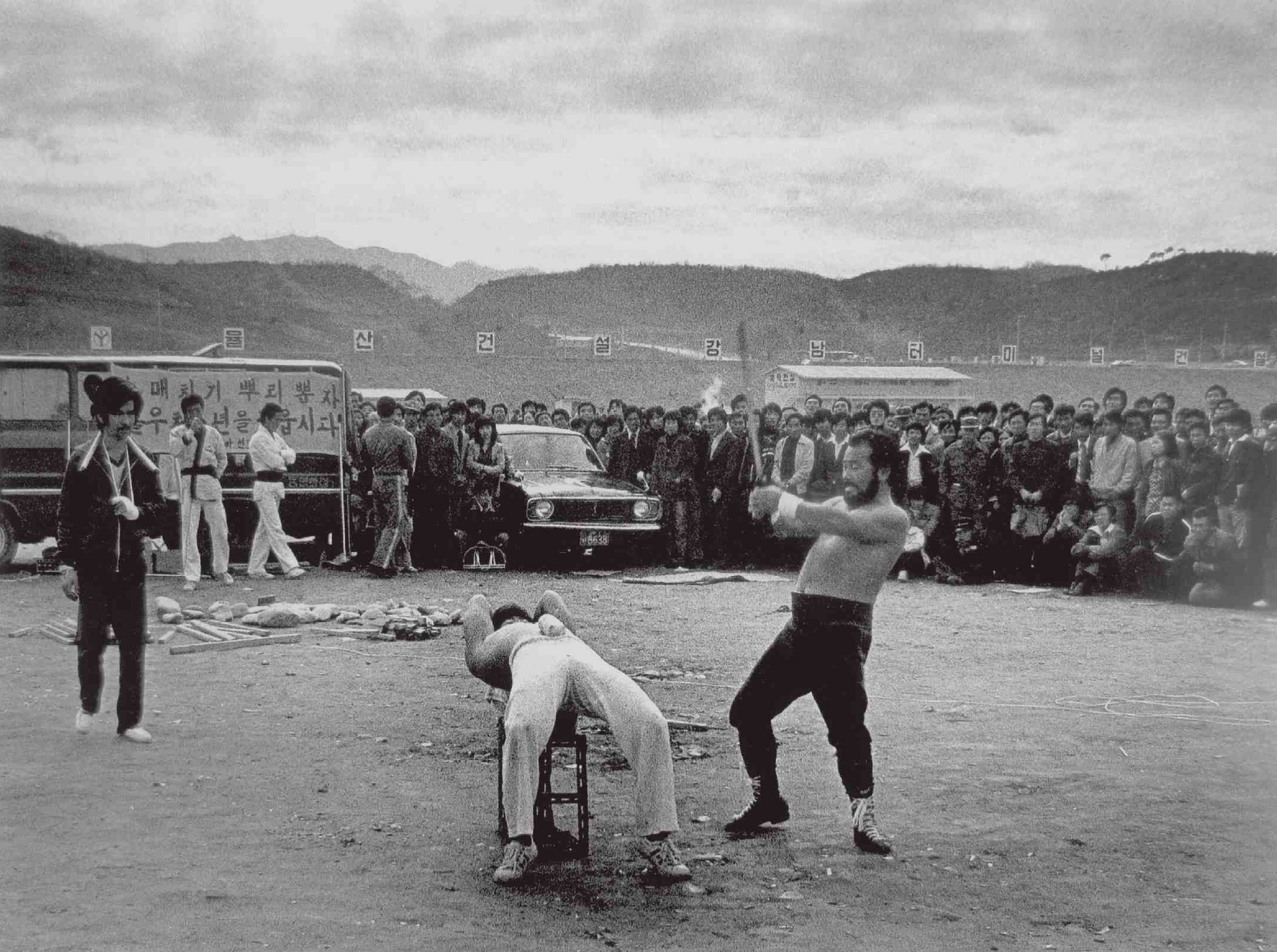
Then the state did the thing that built it: it moved the schools. The elite high schools relocated from Jongno and the old city, creating the famous eighth school district. Korean families followed their children’s education across the river in enormous numbers. Between 1970 and 1999, the population north of the river grew by a factor of about 1.2. South of the river it grew by about 4.2. Subway Line 2 was rerouted into a loop to serve the new district.
A nightlife economy grew on top of that, and it’s the exact nightlife you’d predict from the inputs: expense-account, table-service, corporate. Big rooms, bottle service, hostess-bar economics on the other side of a wall. It’s a separate industry that happens to use the same equipment as the rest of the city. Its last decade has been rough.
Sinchon, Daehangno, Hongdae: The University Districts
Universities make nightlife districts everywhere on earth, and Seoul has three generations of them.
Sinchon came first, the classic student strip serving Yonsei, Ewha and Sogang, and it dominated young Seoul in the eighties and early nineties. It has struggled since, for a simple reason: student districts survive on cheap rent and lose it the moment they become popular. Seoul Institute research on why people left Sinchon is a small case study in how a district can be loved to death.
Daehangno got its name from the old Seoul National University campus and kept a cultural function after the campus moved, becoming Korea’s theatre district. That gives it a different evening rhythm: shows end, everyone eats and drinks at the same time, and it’s quiet after midnight.
Hongdae is the one that mattered most for music. Hongik University’s art school anchored a population of art students and cheap studio space in the eighties. By the nineties that had become Korea’s indie and live club scene. The first place in this country where a small room with a stage and a door charge made economic sense. Everything in Korean underground music descends from that decade in some way, including the lineage that eventually produced the rooms I play. Hongdae is now largely a mainstream commercial strip. The interesting music moved to Mapo proper, Yeonnam and Mangwon, which is the standard lifecycle.
Euljiro and Seongsu: Seoul’s Industrial Afterlife Nightlife Districts
The newest pattern, and the one currently reshaping Seoul, is nightlife moving into working industrial districts rather than replacing them outright.
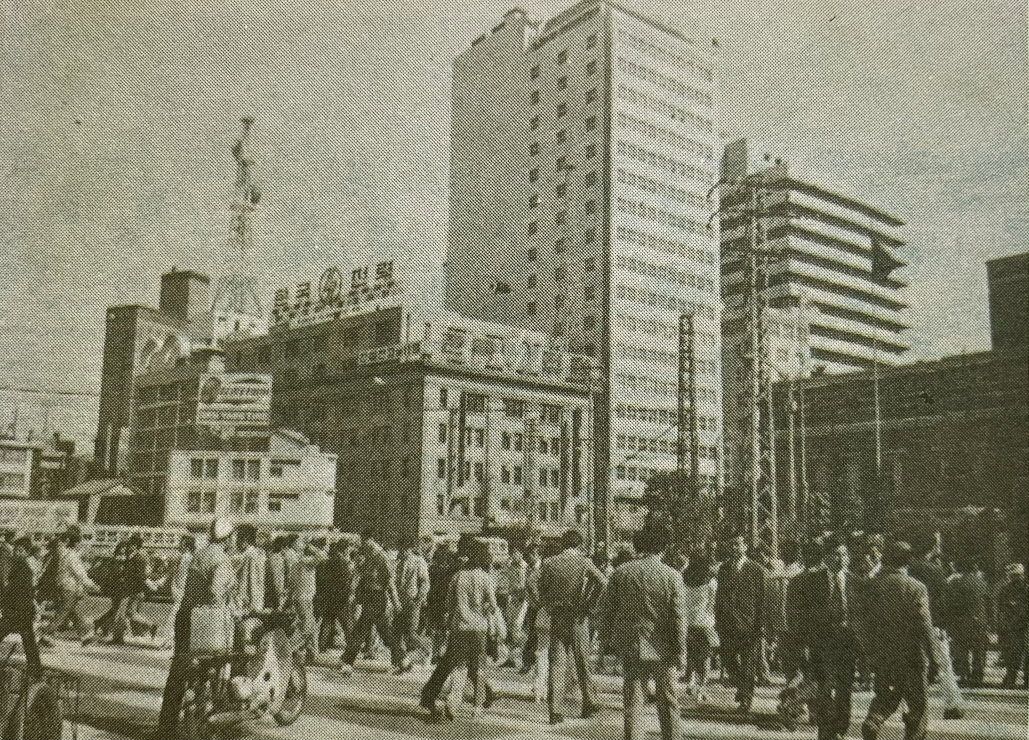
Euljiro is the clearest case. Seoul city counts about 1,100 print shops in the Inhyeon-dong alley alone, and roughly 5,000 printing firms across Chungmuro and Euljiro, a supply chain where each step of a job is done by a different shop on the same block. Around eleven hundred printing businesses still operate in the Inhyeon-dong alleys. The bar scene that everyone now calls Hipjiro grew directly out of the conditions that industry created: cheap rent, unrenovated buildings, no residents to complain, and a district that empties at six. I’ve written about those alleys separately, because they’re on a redevelopment clock. The nightlife depends on them.
The city now treats that street life as policy. A Seoul Metropolitan Government press release of 15 July 2026 names Jongno 3-ga and Euljiro as the places where outdoor drinking, 야장 (yajang), has become the main draw, and plans 25 “Seoul Moonlight Yajang” (서울 달빛야장, Seoul dalbit yajang) zones by 2028, after five pilots in 2026.
Seongsu is the same story at a later stage. Shoe factories and light industry, then artists, then cafes, then the current situation where it’s one of the most active event districts in the city. Mullae is Seongsu five years behind, steel workshops with galleries and bars between them, and the same pressure now building.
If you want to know where Seoul’s nightlife goes next, look for the district that still has working factories, low rents and no residential objection. That formula has produced every interesting room in this city for thirty years.
A 2025 study in the Journal of the Economic Geographical Society of Korea by Shin Ji-min, Hong Chan-young, Lee Ga-in and Woo Young-jin tested the map with business and living population data. It found the Konkuk University area, Seongsu and Guro-Gasan growing as night-time commercial districts, Sinchon, Dongdaemun and Sindang relatively declining, and people in their 20s and 30s concentrated at night in Yeoksam 1-dong, Seogyo-dong, Sinchon-dong and Hwayang-dong.
The Pattern Underneath Every Seoul Nightlife District
Five mechanisms built every district on this list, and once you can name them you can read any street in Seoul.
Something concentrates people in one place, whether it’s a palace road, a factory, a base, a school district or a university. The people need somewhere to go after the concentrating thing stops for the day. Cheap space near that place fills with rooms that serve them. If the rooms get famous, rents rise and the interesting part moves one district over. And underneath all of it sits Korean licensing, which keeps almost every one of those rooms officially a restaurant, which is why there’s a kitchen behind the DJ booth.
That last one is the constant. It still bites: in August 2026 Busan’s Ovantgarde was suspended for two months because a crowd danced at a gig on a general-restaurant licence, and a National Assembly petition now asks for a separate live-venue category. Everything else about Seoul nightlife has moved south, west, east and back again over sixty years. The kitchen has never moved.
FAQ
Why is Gangnam Seoul’s wealthy district?
Because it was planned that way. The area was farmland until the Yeongdong development plan of November 1970, drawn up partly for security reasons after the 1968 North Korean incursion made the south bank of the Han look safer. The state relocated elite high schools there, creating the eighth school district. Families followed, so the south of the river grew roughly four times faster than the north between 1970 and 1999.
What’s the oldest drinking area in Seoul?
Jongno, and specifically the Pimatgol alleys running behind the main road. The name refers to avoiding the horses of officials travelling along Jongno, since commoners were expected to bow to them. The back lanes filled with cheap taverns and griddle shops serving people using the alternative route. Much of it was lost to redevelopment, but Jongno remains the city’s most traditional drinking district.
Why is Itaewon Seoul’s international district?
It grew up around Yongsan garrison, which has been a military base for over a century, Japanese during the colonial period and American from 1945. The district developed through the 1960s and 1970s as a market and entertainment area serving base personnel. It became the part of Seoul where foreign food, foreign music and foreign customers were normal. The base has since moved to Pyeongtaek, and Itaewon has become the centre of the country’s electronic music scene instead.
Where do Koreans drink that tourists don’t?
The industrial southwest, mainly Yeongdeungpo, Guro and Mullae, where drinking culture grew around factory shifts rather than students or visitors. Also Jongno’s older streets, the neighbourhood pockets around Konkuk University and Seongsu, and the ordinary residential 골목 near any subway station. These areas are cheaper, later, and far more typical of how Koreans actually go out than the three districts that dominate English language guides.
How did Hongdae become a music district?
Through Hongik University’s art school, which anchored a population of art students and cheap studio space in the area during the 1980s. That developed into Korea’s indie and live club scene in the 1990s. The first place in the country where small venues with stages and door charges were commercially viable. The area has since become a mainstream commercial strip, with the more serious music moving to Mapo proper, Yeonnam and Mangwon.
Sources and Archives
District by district. Jongno and Pimatgol: Financial News on the alley’s Joseon origins and Asia Economy on what happened to its taverns. Gangnam: the National Archives record of the development and Seoul Solution on the Gangnam development plan. Guro and the industrial belt: the National Archives record of the Guro complex. Itaewon: Visit Seoul’s district guide and our own history of Itaewon after dark. Dance venues across the century: Kyunghyang, from the 1937 dance hall petition to the club era. Sinchon: the Seoul Institute’s study asking why people left. Hongdae: Belocal on how the district formed. Mullae and Seongsu: Yeongdeungpo-gu on the Mullae art village and Seoul Love on Seongsu’s move from factories to art.
The current chapter. Time Out on Jongno 3-ga as the world’s coolest neighbourhood in 2026, the Seoul Metropolitan Government night economy press release of 15 July 2026, and Shin Ji-min and colleagues on where Seoul’s night-time demand actually sits (2025).
District by District
See the districts as they were. This is the part I’d actually spend an evening on. Seoul Photo Archive (서울사진아카이브) and Seoul History Archive (서울역사아카이브) hold the city’s own photography going back to the colonial period, searchable by district name in Korean. Seoul Institute, Seoul in Photographs organises the same material by decade. Search 종로, 영등포, 구로, 이태원, 신촌 and 강남 in turn and watch each one change. e영상역사관 national archive photography and National Archives of Korea digital collections add the national newsreel footage, including the Gangnam development and the industrial complexes being built.
Looking at 1975 Gangnam as bean fields with a single road through it does more for your understanding of this city than any article, including this one.
Picture Credits
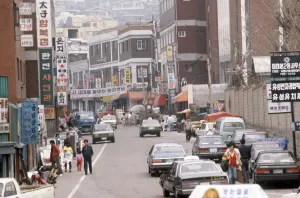
- Jongno during Line 1 subway construction, 1971
공유마당, via Wikimedia Commons. Licence: KOGL Type 1. View the original file and its full licence terms. - Gwanghwamun avenue from the air, 1971
공유마당, via Wikimedia Commons. Licence: KOGL Type 1. View the original file and its full licence terms. - Euljiro crossing, Seoul, 1971
공유마당, via Wikimedia Commons. Licence: KOGL Type 1. View the original file and its full licence terms. - Medicine hawkers at the Gangnam Express Bus Terminal, 1976
National Museum of Korean Contemporary History, via Wikimedia Commons. Licence: Public domain. View the original file and its full licence terms. - Present day photographs
The DJ Diaries.
Historical images on this site are used under the licence stated for each file. KOGL Type 1 is the Korean public sector open licence permitting commercial use and adaptation with attribution; public domain items carry no restriction. If you hold rights in any image here and believe it has been used in error, get in touch and it will be removed.
Written from Seoul, by someone who has been in the booth for more than twenty years. More on the site, or book a DJ.
Stay in the Loop
New writing on DJ culture, electronic music, and the Seoul underground, delivered when it matters.
More From The DJ Diaries
Play with the history
Four tools built from the same research as this site.