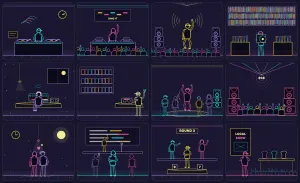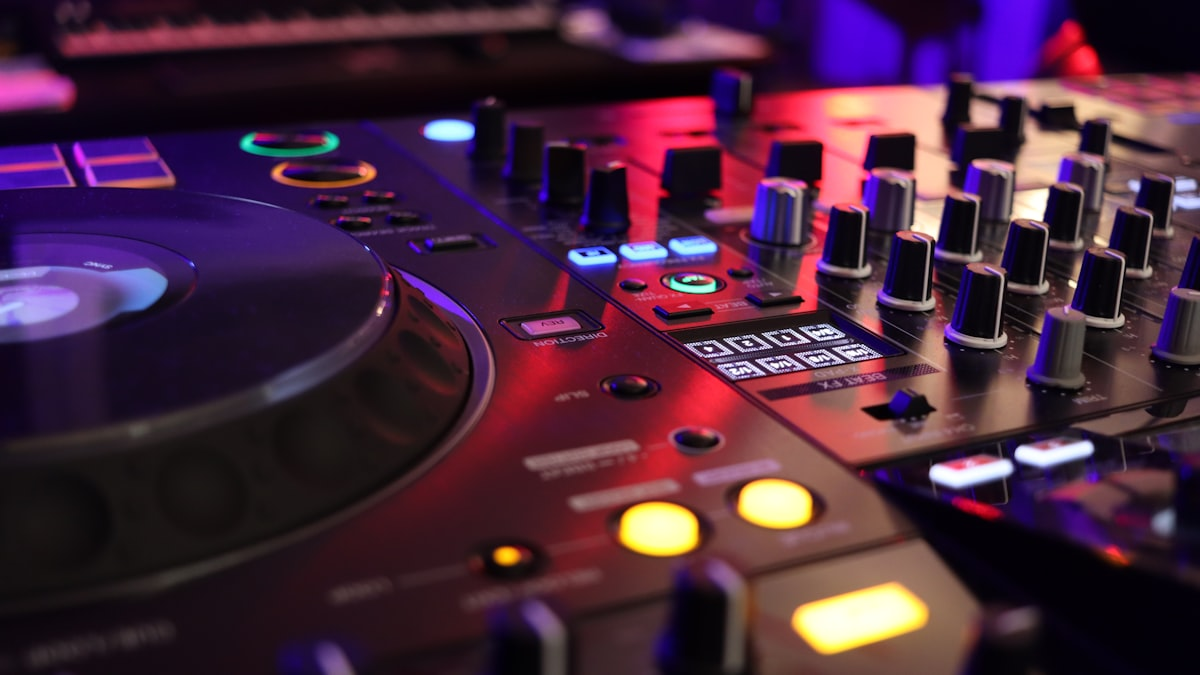
A counter about the size of a kitchen worktop. Two or three players and a mixer, one drink that must not spill, and a person making decisions in real time with no way to undo any of them. That’s a DJ booth, and for most of the night nobody on the floor is looking at it.
I’ve worked out of good booths and terrible ones for more than twenty years, most of them in Seoul, and the difference between them has almost nothing to do with what the equipment costs. It comes down to whether whoever built the room had ever stood in one. The booth is a workspace first and a stage second, and the etiquette on both sides of the rail follows from that.
The booth is the only workplace I know that is simultaneously a stage and a back office, and most writing about it picks one.
A Booth Is a Workspace Before It’s a Stage
Start with what’s on the counter. A single flagship CDJ-3000X listed at £2,399 in the UK when AlphaTheta launched it in September 2025, and most club booths carry two or three of them plus a mixer.
What the DJ needs from that space is plain: a clear view of the floor, a monitor they can hear, and somewhere to put a drink that can’t spill into anything expensive. Rooms that get this wrong produce worse nights and nobody in the crowd knows why. They just feel that the music was slightly off all evening, and they’re right, because the DJ couldn’t see them.
The booth is also a social boundary, and the etiquette around it is real. Requests handed over the rail, people wanting photographs, friends wanting to stand inside. A good venue manages all of that so the DJ doesn’t have to, because a DJ managing their own door is a DJ not watching the floor.
Sightlines Come First, the Monitor Second
You need to see the floor, and specifically the middle and the edges of it, because the edges are where a room tells you it’s losing interest before the middle does. A booth facing a wall, or set so low that the front row blocks the view, has taken away the DJ’s main instrument.
How Late the Main Speakers Reach the Booth
Delay from a main speaker at each distance, at 343 metres per second
메인 스피커 소리가 부스에 닿기까지
The ruleA blend that sounds tight in a well placed monitor sounds flammed if you are mixing off the room. Thirty milliseconds is enough to hear.
Monitor position is where venues go wrong most often. A monitor pointed at your knees or buried behind the mixer means you’re mixing on what the room hears, which arrives late and smeared. That’s plain physics: sound travels about 343 metres per second, so a main speaker ten metres away reaches you roughly 30 milliseconds late, enough to make a tight blend sound flammed.
Then the dull things. Table height, because a night is four hours standing and a surface set for someone six inches taller than you will wreck your back over a residency. Cable runs, because a booth where the power and the RCAs share a tangle is a booth where somebody will eventually pull the wrong one. Light, enough to read a label and not so much that you can’t see the room. And a place for a drink that isn’t on top of the mixer, the single most expensive habit in this trade.
In Seoul, the Booth Goes Where the Tables Didn’t
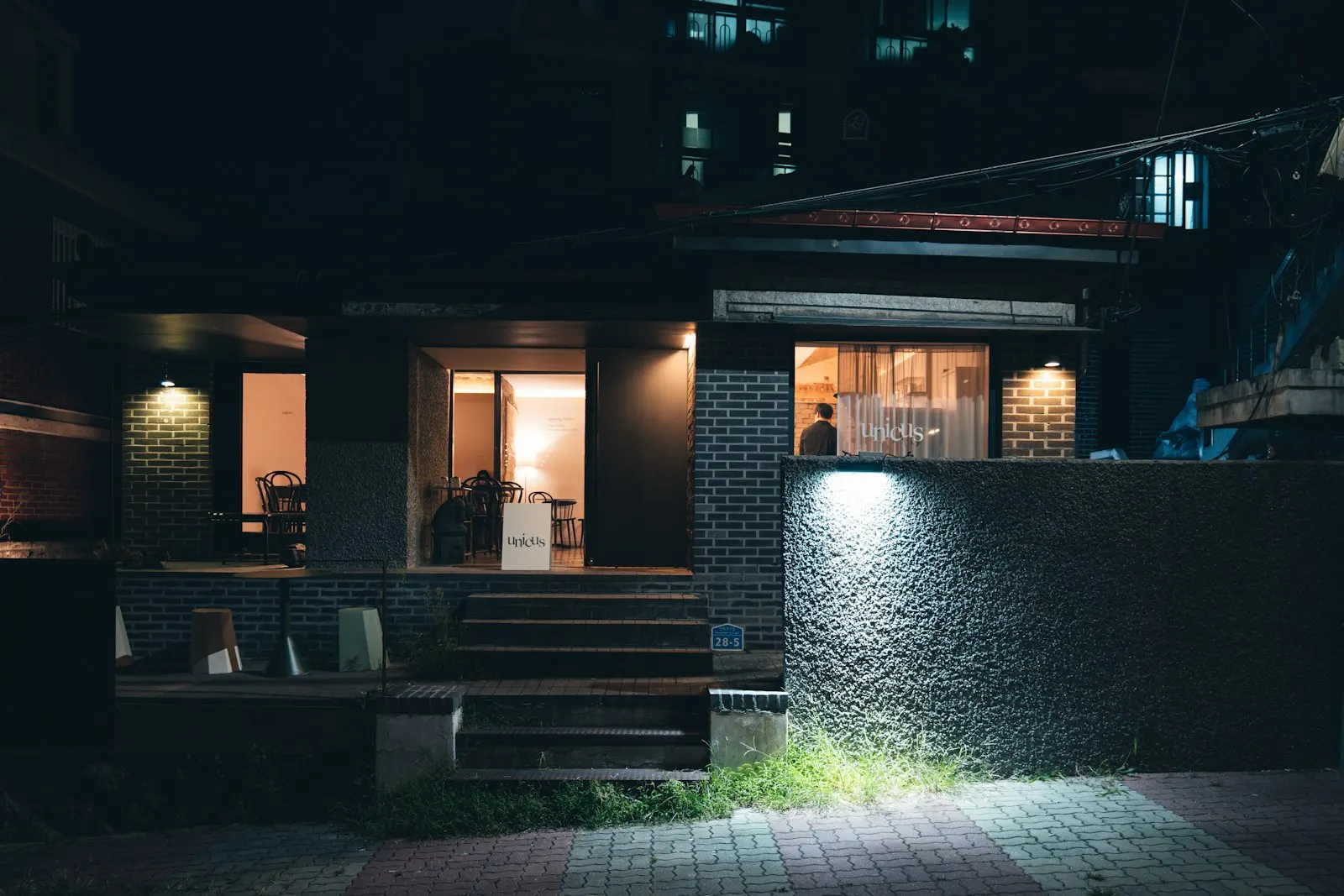
Korean booths are small, often raised, and frequently tucked in a corner rather than facing the floor. That’s partly because so many are rooms designed as restaurants. A great many Korean venues are registered in a category built for food service (Korean), so the room was laid out for tables before it was ever laid out for a dancefloor, and the booth went wherever there was space left.
That registration became national news in 2026. After Busan’s Ovantgarde was suspended for letting an audience dance, the culture minister called the dancing rule an outdated regulation (Korean). Within two weeks two lawmakers had filed bills (Korean, via Yonhap) to let audiences stand and move at small live venues, and in September the government promised to revise the rules. Some districts had already moved on their own: The Korea Herald counted eight that allow dancing in general restaurants by local ordinance, Mapo-gu (마포구) and Yongsan-gu (용산구) among them. What that means for any one room is a question for the district office, not for me.
To be fair to the venues, the corner booth is often the result of rules they didn’t write rather than indifference. The best Seoul rooms still treat the booth as part of the venue rather than a platform, and the clearest sign of a well run one is floor staff who are credited alongside the DJs. If the sound engineer and the bar staff are named on the flyer, the booth will usually be fine too. I’ve never known that test to fail.
A Guest Leaves the Booth as They Found It
Arrive earlier than you think you need to, and watch the resident work before you touch anything. You’re inheriting a room somebody else has spent an hour building, and the fastest way to waste that is to walk in and reset it to your own opening. Ask where the gain, the input level on each mixer channel, is set and leave it there. Match the level the resident has been running rather than pushing above it, so the room doesn’t hear a jump in volume when you take over. Don’t rearrange the booth, and don’t unplug anything you didn’t plug in.
Then hand over properly. Leave the room somewhere the next person can start from, at a tempo and an energy that gives them a door in. The DJ who plays their biggest record in the last three minutes of their slot has robbed the person following them.
Frequently Asked Questions
What’s DJ Booth Etiquette?
Don’t enter a booth uninvited, don’t put drinks on equipment, and keep requests brief and accept a no. For DJs, the booth is a workspace before it’s a stage: sightlines to the floor, monitor position and somewhere safe for drinks matter more to the quality of a night than anything the audience can see.
Why Do DJ Booths Face Away from the Dancefloor in Some Clubs?
Usually because the room wasn’t designed as a club. Venues converted from restaurants or bars put the booth wherever space remained after the tables, which often means a corner or a wall. In Korea many venues are registered in a food service category, so the room was laid out for tables first. It’s a real handicap, because a DJ who can’t see the edges of the floor loses the earliest signal that a room is drifting.
What Makes a Good DJ Booth?
Clear sightlines to the whole floor including the edges, a monitor at head height and properly aimed, a work surface at the right height for standing, tidy separated cable runs, enough light to read a label, and somewhere to put a drink that isn’t the mixer. None of that is expensive, and all of it matters more to the night than the brand on the CDJs.
Can You Stand in the DJ Booth?
Only if invited, and briefly. The booth is a working area with expensive and easily disturbed equipment in it, and a DJ managing visitors is a DJ not watching the room. A well run venue handles this at the rail so the DJ never has to have the conversation.
Further Reading
- Wikipedia: stage monitor systems and why booth monitors matter
- Wikipedia: the DJ mixer at the centre of every booth
- Pioneer DJ: the CDJ-3000, the club standard player
- Wikipedia: the disc jockey and the history of the role
- Why Seoul clubs have kitchens
- Reading the room
Sources
Resident Advisor, on the launch of the AlphaTheta CDJ-3000X, September 2025
Herald Business, on the registration category most Korean venues use (Korean)
Hankook Ilbo, the culture minister on the dancing rule, August 2026 (Korean)
Yonhap via Supple, two bills filed after the Ovantgarde suspension, September 2026 (Korean)
The Korea Herald, on live venues and local dancing ordinances, September 2026
The Korea Times, government vows to end the outdated dance ban, September 2026
Written from Seoul, by someone who has been in the booth for more than twenty years. More on the site, or book a DJ.
Stay in the Loop
New writing on DJ culture, electronic music, and the Seoul underground, delivered when it matters.
More From The DJ Diaries

Play with the history
Four tools built from the same research as this site.