
A lot of people have needed a moment to process it when I explain my job. Associate professor of business communications and marketing at a Seoul university. DJ for more than twenty years. Both of these things are simultaneously true and both of them, in different contexts, are the answer to the question “what do you do?”
The reactions are varied. Some people find it charming. A few colleagues found it mildly unprofessional when they first found out, before they understood that the two things were not in conflict in any way that mattered. Students find it the most interesting fact about me, which is either a good sign or a comment on the state of business school pedagogy. People in the music scene, when they find out about the academic side, sometimes look at me slightly differently, as if I have revealed that the whole thing is a hobby rather than a commitment. That reaction is the one I find least interesting, because it misunderstands what a hobby is.
I have been playing in clubs since I was old enough to get through the door. I have spent more time thinking about music, listening to music, preparing for gigs, writing about music, and being in rooms where music happens than I have spent on most other activities in my life. That is not a hobby. It is a parallel career that happens to be economically structured differently from the university side.
Why DJs Have Day Jobs
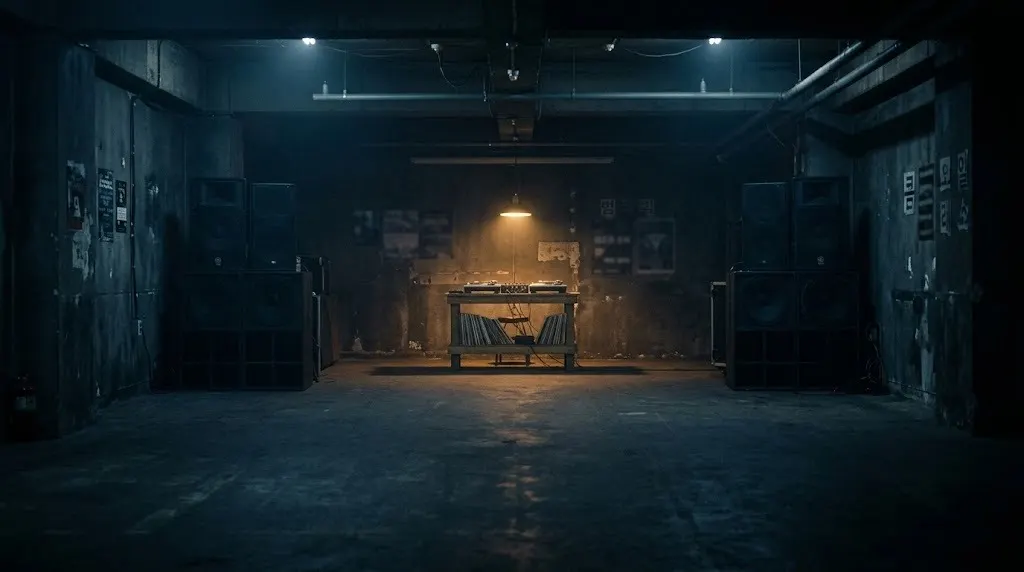
The economics of club DJing below the top several hundred names in the world are not designed for financial sustainability on their own. A working DJ in a city with a real scene might earn between fifty and three hundred dollars per gig, play once or twice a week on a good run, and have significant gaps during slower periods. That is a reasonable supplementary income and a very difficult primary one, especially in cities with high costs of living.
This reality is older than the Instagram version of DJ culture would suggest. The foundational figures of the music, the Chicago house DJs, the Detroit techno originators, the UK rave-era artists, almost all had other employment while they were building careers in music. Frankie Knuckles studied textile design while he was starting out. Larry Heard worked for the US government as a benefits authorizer. These were not temporary situations they were escaping; they were sustainable frameworks that gave them the stability to pursue music without the desperation that comes from needing music to pay rent.
The idea that a DJ who has a day job is somehow less serious or less committed than a full-time one is a category error. Commitment is a function of time, attention, and discipline, not of how your taxes are structured. I have met part-time DJs who are more deeply invested in their music than some full-time ones I know.
What the Day Job Does for the Music

This is the part that surprises people most when I explain it. The two sides of my professional life do not just coexist; they actively inform each other in ways I have come to think of as structural.
Teaching communication and marketing gives me a specific kind of analytical vocabulary for thinking about what happens between a DJ and a crowd. How does information get transmitted? What makes a message land? When does the medium become the message in a way that overwhelms the content? These are questions that business communication theory has developed frameworks for, and those frameworks are genuinely useful for understanding what I am doing behind the decks at two in the morning even if the terminology does not travel.
The DJ side does something different for the classroom. I teach marketing partly through the lens of how scenes and cultures build around music, how identity gets constructed through consumption, how the economics of creative industries work. I have more than twenty years of firsthand observation of all of that. When I teach about brand community formation, I have actual examples from the house music scene in Canada and Korea. When I teach about how to communicate under pressure to a live audience, I am doing it as someone who performs live to audiences regularly. The material is not abstract for me in the way it sometimes is for teachers who have only ever read about it.
The Working DJ Ecosystem
Calvin Harris bagged groceries in a Scottish supermarket before he had a record deal. Nina Kraviz left Irkutsk in Siberia to study dentistry in Moscow, and qualified there and built one of the most distinctive careers in contemporary techno. Deadmau5 was a web developer before his music took off. These examples are often cited to illustrate the improbability of success, but I think they are more interesting as illustrations of what adjacent professional lives actually contribute to artistic development.
The years of doing something else before or alongside music are rarely wasted in the way the narrative of “overnight success” implies. They build the financial buffer that allows musical risk-taking. They develop skills, communication, problem-solving, technical competence, that turn out to be applicable across domains. They provide the material that eventually goes into the music: the perspective of someone who has lived a full life rather than only the narrow experience of a professional musician’s career from the age of eighteen.
My DJ sets are partly made of everything I have done and read and observed in the years I was not behind the decks. The way I think about set structure is influenced by how I think about narrative in my academic work. The patience I have for long, slow builds in a set comes partly from having learned, in a completely different context, the difference between sustained argument and quick impact. I do not think I would make the same music if I had only ever been a DJ.
The Time Management Reality
The honest version of the dual-career life is that it requires very deliberate choices about time in a way that neither career alone would demand. University teaching has variable intensity across the academic calendar, research periods, assessment seasons, summer availability, and I plan my gigging around those rhythms. The gigs themselves are predictably Friday and Saturday, which does not conflict with teaching on weekdays, but the preparation, the music sourcing, the writing and thinking about music, those happen in the margins of whatever else is happening professionally.
What this forces is prioritisation. Every hour spent on music is an hour not spent on something else, and vice versa. That constraint is actually useful. It removes the option of treating music time carelessly because there is always another hour coming. There is not always another hour coming. The time I have for music is specific and finite, which means I use it with more intention than I might if it were unlimited.
This is a version of the creative constraint argument, and it applies more broadly: many DJs who also work full-time report that the limitation actually sharpens the music. When you can only dig for records two hours on a Saturday morning, those two hours are focused. When you have all day every day to prepare for a gig, the preparation can expand to fill the space without necessarily producing better results.
Finding Your Own Balance
There is not a single right answer to the question of how much DJing should dominate your professional life. The full-time DJ who has found a sustainable path at a level where the economics work is living a legitimate version of the life. The DJ with a demanding professional career who plays monthly and takes it seriously is also living a legitimate version. The range between those two points contains most of the people doing this work.
What I would push back on is the idea that only one of those versions is “real” DJing. The reputation that matters in this industry is built from what you do when you are behind the decks, not from how many hours per week DJing occupies relative to other activities. A DJ who plays twelve times a year with full preparation and deep investment in their sets will consistently be more interesting than one who plays three hundred nights a year on autopilot. Frequency is a means, not an end.
If you are figuring out the financial dimension of making this work, there is a harder conversation about how pay and bookings relate to artistic standards that I would recommend reading alongside this. The answer is almost never “quit your day job immediately.” It is usually something more gradual and more strategically considered.
Frequently Asked Questions
Can you have a successful DJ career while working a full-time day job?
Yes, and many working DJs do. Success in DJing depends on the quality of your playing and your relationships in the scene, not on how many hours per week you dedicate to it relative to other work. A DJ who plays monthly and takes every gig seriously will build a stronger reputation than one who plays constantly without preparation or investment in their craft.
How do DJs balance day jobs with late-night gig schedules?
Through deliberate planning rather than improvisation. Most club gigs are on Friday and Saturday nights, which does not conflict with standard weekday work schedules. The harder balancing act is the preparation, music sourcing, library management, gig research, which has to happen in whatever time is available around the primary career. Many DJs find that the constraint improves their efficiency rather than harming it.
What day jobs do famous DJs have or had before they went full-time?
Many of the most celebrated names had entirely ordinary careers before music took over. Calvin Harris worked in a supermarket. Nina Kraviz practised dentistry. Deadmau5 was a web developer. Diplo worked as a schoolteacher in Philadelphia. These backgrounds are rarely incidental, they typically contributed the perspective, discipline, or financial stability that made the musical career possible.
Does having a day job make you less serious as a DJ?
No. Seriousness is a function of investment, preparation, and commitment, not of how DJing relates to your other income sources. The history of electronic music is full of people who built significant careers while working other jobs, including some of the most creatively important figures in the culture. What matters is what you do when you are behind the decks and how consistently you show up.
How do you decide when to pursue DJing full-time?
When the bookings and income are consistently sufficient to replace the day job income without requiring you to take every gig regardless of artistic fit. Most DJs who transition to full-time do not do it because the music is finally good enough, they do it when the economics have reached a point where the day job income is no longer necessary for stability. That is usually a gradual transition rather than a single decision.
Further Reading
- Wikipedia: Frankie Knuckles, the Chicago house pioneer
- Wikipedia: Larry Heard, the Chicago producer behind Mr. Fingers
- Wikipedia: an overview of the disc jockey profession
- Musicians Union: the UK union offering advice for working and part time musicians
Written from Seoul, by someone who has been in the booth for more than twenty years. More on the site, or book a DJ.
Stay in the Loop
New writing on DJ culture, electronic music, and the Seoul underground, delivered when it matters.
More From The DJ Diaries


Play with the history
Four tools built from the same research as this site.