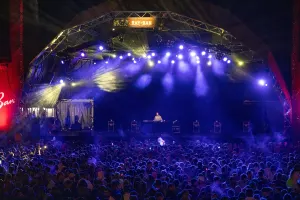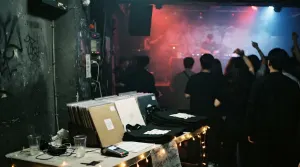
Every Wednesday and every Friday, sometimes a Saturday too, the same guy sat at the promoter’s table in a Seoul club and ordered another round of bottle service. In all he spent about three thousand dollars, not on equipment or lessons, but on trying to buy himself a residency. It worked, narrowly. They gave him a monthly Sunday deep house night at decent hours. Then he played to an empty room for four straight months because he couldn’t read a crowd, and the promoter stopped answering his messages.
Meanwhile a DJ I know had been playing opening sets at the same venue for two years, turning up at nine when the doors opened and playing properly to twelve people whether anyone was watching or not. He got the slot after the bottle service guy disappeared, and he still has it. Patronage gets you in the door once. Performance decides whether you’re ever asked back.
Who You Know Only Works If There Is Something to Know
“It’s all about who you know” floats around electronic music like a universal excuse, and it holds a truth that gets badly misread. Relationships matter enormously. The promoter who books you has usually seen you play, heard your mixes through someone they trust, or been told about you by a DJ whose judgment they respect. Look at what’s doing the work in that chain: a mix, a set someone witnessed, a recommendation based on what you can do.
Bottle Service or Opening Sets
Two DJs, one Seoul venue, the same slot
같은 무대, 다른 길
| The route | Bottle service | Opening sets |
|---|---|---|
| What it cost | About three thousand dollars in rounds | Two years of 9pm sets |
| What it got | A monthly Sunday night | The same slot, once it opened |
| The room | Empty for four months | Twelve people at 9pm |
| Today | The promoter stopped replying | Still holds the slot |
The ruleA connection can get you one booking. Only the playing gets you the second.
Knowing people delivers a reputation; it can’t stand in for one. What you need is something worth knowing you for, and in a DJ career that’s always, in the end, what happens when you stand behind the decks.
I’ve been playing rooms for more than twenty years. The DJs I know who’ve built lasting careers, who get booked consistently without hustling for every gig, share a profile. They’re good at the job, they’re reliable, and they treat people well. Compounded over years, those three things do more than any amount of promoter networking without the substance underneath.
Reading the Room Is the Skill That Gets You Rebooked
Technical ability is the baseline. By the time you’re considered for a real booking at a real venue, everyone assumes you can beatmatch, that your transitions are clean, and that you won’t crash the next intro into the last vocal. What separates the DJs who get booked again is what they do in the moments when the room is telling them something.

The energy drops at 11:30 and you have forty minutes of peak hour material left. What do you do? A dancer comes to the booth and shouts a request that’s wrong for the mood but tells you something about the crowd’s temperature. Do you hear what they’re asking for underneath the song title? The promoter says at midnight that a second room stays open only if this one fills by one. How does that change the next forty minutes?
Those are judgment calls you only develop through repetition, in real rooms with real people, and no tutorial video teaches them. My piece on timing your set gives you a framework, but the instinct comes from getting it wrong a few times and paying attention. That’s why the opening set years matter so much, even when they feel like they’re leading nowhere. They’re building the memory you’ll draw on when it counts.
Professionalism Multiplies Everything Else
Once your playing is consistent, professionalism becomes the thing that compounds it, and I mean the unglamorous kind. Arrive thirty minutes before your set. Introduce yourself to the sound engineer instead of treating them as furniture. Bring a backup drive. Don’t touch the outgoing DJ’s equipment without asking. Leave the booth clean, and finish on time.
It sounds like basic decency, and it is. What’s remarkable is how rare it seems to be, judging by how many sound engineers and venue managers have named these things to me as what sets a DJ apart. A sound engineer at a club I used to play regularly told me that maybe one DJ in five introduced themselves to him, and he remembered every one. When the venue needed to recommend someone to a promoter starting a new night, those were the names that came up.
The people who run venues talk to each other: sound engineers, bar managers, door staff. Nothing conspiratorial, just the ordinary way people in the same trade share experiences. Your reputation with the technical and operations staff follows you in ways that are almost invisible but real. Treat them as collaborators and the goodwill circulates. The reverse circulates too.
The Scene Is Smaller Than It Looks
Every city’s underground, whatever the size of the city, runs as a tight community where most working DJs are within two or three connections of each other. When I moved to Seoul knowing nobody, I could map the main players in the scene I cared about within a few months, just by showing up to events, listening, and noticing who got mentioned again and again.
That has two practical consequences. Anything that reflects badly on you travels faster than you expect: talking down other DJs, being difficult with promoters, failing to show and not saying so, treating gigs carelessly. Good behaviour travels too. Go to other DJs’ nights when you’re not playing. Buy the opener a drink. Recommend someone for a gig that isn’t right for you. Those gestures are remembered.
The DJs I know with the most sustainable careers, working steadily for a decade or more without rebuilding their network from scratch, are people who are liked, not just tolerated. If you’re building a public profile alongside your live reputation, read how to approach social media as a DJ without letting the metrics distort what matters. The online side supports the live reputation; it doesn’t replace it.
Control the Three Things You Can
Much of what decides whether a gig goes well is out of your hands. The sound system has a problem. The crowd isn’t what the promoter expected. The headliner runs over and you lose thirty minutes. The venue closes the room early because it’s not hitting its numbers. None of that is your fault, and none of it is an excuse when you judge your own performance honestly.
Preparation, Consistency, Behaviour
The three things that build a reputation over years
내가 통제할 수 있는 세 가지
| The thing | What it means in practice |
|---|---|
| Preparation | Know your music well enough to adapt when the plan breaks. Carry more than you need. |
| Consistency | The same care for every set, whether the room holds three hundred or thirty. |
| Behaviour | Treat it as a craft and a profession, not a stepping stone or a social accessory. |
The timelineCompounded over three, five or ten years, these are what a DJ reputation is made of.
What you control is preparation, consistency and how you behave. Preparation means knowing your material deeply enough to adapt when the plan breaks down, with more music and more directions than you need. Building a serious music library is the unglamorous groundwork that pays off for years. Consistency means the same care for every set. Behaviour means treating this as a craft.
I’ve watched people look for faster routes. I’ve never seen one that worked for longer than a season or two.
It Takes Five to Ten Years, and Some People Get Lucky
A career with consistent bookings at decent venues, in any city with a real scene, typically takes five to ten years to build from a standing start. That number comes from watching dozens of DJs go through it in several cities over two decades. Some get there faster because they meet the right person at the right moment, or because their instincts develop unusually quickly. Most take longer than they expected.
That isn’t discouraging if you love the music and the craft. Five years of developing a serious skill, building real relationships and contributing to a scene you care about is the thing itself, not a price you pay for it. The DJs who burn out or disappear are usually the ones who treated it as a queue to stand in rather than a practice to develop.
Money is a harder conversation, and it’s worth reading about balancing pay, bookings and artistic standards alongside this. Reputation and money are separate questions, but they cross in ways that can derail a career if you don’t think about both. In the end the strategy is plain: play as well as you can every time, be a decent person, and do it for long enough.
Frequently Asked Questions
How Do I Get My First DJ Bookings Without Any Reputation?
Start at open deck nights, bars with casual music programmes and small venues that are looking for new DJs rather than established names. Build a consistent presence over six to twelve months in one room or scene rather than spreading yourself thin. A strong recorded mix that shows your taste and technique opens doors when it’s paired with real involvement in your local scene.
Is It Worth Paying for DJ Gigs to Build Exposure?
Generally not. Pay to play arrangements rarely lead to lasting bookings because the promoter has no reason to invest in you as a draw. A charity event or a showcase might be an exception. As a career strategy, money spent on equipment, music and your craft returns far more than money spent buying slots, or buying rounds.
How Long Does It Take to Build a DJ Reputation?
In a real scene with real venues and discerning promoters, plan for five to ten years of consistent work before your reputation generates bookings without constant effort. Some DJs get there faster in smaller cities or niche scenes, or through good timing. Playing regularly and treating every set as a chance to develop shortens it.
What’s the Most Common Mistake DJs Make When Building a Reputation?
Putting visibility ahead of ability. That looks like chasing prominent venues before the skills are ready, or posting heavily on social media while rarely playing real rooms. A strong online presence with weak live sets creates a credibility gap. The reputation that lasts is built skill first, relationships second and visibility third.
Further Reading
- Wikipedia: the role of the promoter in who gets booked
- Wikipedia: pay to play and why buying a slot rarely builds a career
- Wikipedia: word of mouth and how reputations spread through small communities
- Wikipedia: the history of the DJ as a profession
- How to Get Booked: The DJ Booking Ecosystem
- How to Write a DJ Bio That Gets You Booked
Sources
Dancecult: Journal of Electronic Dance Music Culture 3(1), 2011
Mixmag, Watch the throne (on opening sets)
Mixmag, The dos and don’ts of residencies
Written from Seoul, by someone who has been in the booth for more than twenty years. More on the site, or book a DJ.
Stay in the Loop
New writing on DJ culture, electronic music, and the Seoul underground, delivered when it matters.
More From The DJ Diaries

Play with the history
Four tools built from the same research as this site.