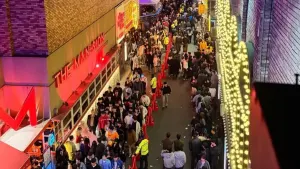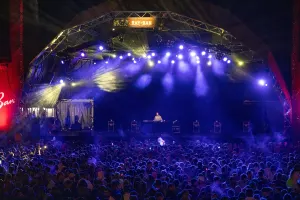
Ultra Korea sold out a single day at Oil Tank Culture Park (문화비축기지) in Mapo in September 2025, with Hardwell, Steve Angello and Adam Beyer on the bill. More than a year later, its official site still lists no 2026 date. A sold out day followed by silence tells me the problem is the cost stack, not demand.
The bar is the single biggest subsidy keeping mid size dance music festivals alive, and it usually belongs to the venue, not the promoter. Once you see that, most of what looks irrational about festival economics makes sense, including why so many good ones die in their third year and why the ones that last tend to share the bar, cap capacity, or lean on city and sponsor money.
Ticket Money Doesn’t Cover the Show
Here’s a worked example in pounds, since the UK’s independent festivals publish the most detail on their costs. Take a hypothetical 5,000 person festival selling tickets at £45. That’s £225,000 in gross ticket revenue, minus 10 to 12 percent in ticketing platform fees, leaving roughly £198,000. Running the event costs between £200,000 and £250,000, and a promoter counts year one or two as a success at break even. At this scale, the headline business of selling festival tickets loses money.
Why the Bar Is the Business
What the festival industry data says about costs, losses and where the spending goes
The squeezeEnergy, production, staging and security rose more than 30 percent since 2019, up to 80 percent in places, while tickets rose about 12. From an AIF survey of its members, 2023. Track runs from 0 to 40 percent.
One in three lose moneyAustralia counted 535 music festivals in 2022 to 2023. The average one cost A$3.9 million to run, and the average loss was A$779,000. Creative Australia, Soundcheck. Track runs from 0 to 100 percent.
Where the spending goesUK festival goers spend £139 on food and drink at a festival, 60 percent of what they spend on site. Monzo, May 2026. Whoever owns the bar owns most of that.
592 UK music festivals in the AIF 2025 count, against a peak of 800 to 900 in 2018 and 2019. 334 are small and 214 are micro, under 1,000 people.
20.3% of UK independent festival spending went on music talent in 2023, £36 million of £177 million.
At least 72 UK festivals were cancelled or postponed in 2024, by the AIF count that November.
Sources: AIF Festival Forecast 2025 · AIF Festival Forecast 2023 · Music Week
Everything else in the model exists to close that gap, and the biggest closer, the bar, usually belongs to the venue rather than the independent promoter. At £10 to £15 average bar spend, 5,000 people generate £50,000 to £75,000, which is why venues host festivals at all, and why the money map of dance music so rarely favours the person whose name is on the risk.
Where the Money Goes
The spend stack is consistent across markets. Production, meaning PA, lighting and staging, is the largest single line at £50,000 to £100,000 in that example, and it’s the one you can’t cheat, because sound is the product. Security, medical and licensing compliance take the next slice, scaling hard with capacity. Then artists: at mid size, the lineup budget fights production for every remaining pound, and headliner fee inflation over two decades has made that fight steadily harder to win. Insurance, once an afterthought, has climbed every year since 2020. Marketing gets whatever is left, which is why so much of it is now unpaid social reach and a good poster.
Underneath those headline lines sit the costs that surprise first time organisers, none of which appear on a ticket and all of which are paid before the gates open. Licences and permits from local government, police and fire, with noise approvals and road closures that can change the date or the layout late. Insurance for liability, cancellation, weather and equipment. Door staff, bag checks, barriers and trained marshals, which scale with attendance rather than ticket price. First aid points and ambulances on standby, a real cost when heat and alcohol meet an outdoor summer event.
Then the site itself: portable toilets, hand washing, accessible units and free drinking water, serviced all day, because too few washrooms is the complaint people remember longest. Generators, fuel, cabling, fencing, ground protection if it rains, and a restoration bill afterwards. Bins, cleaning and strike crews, and waste hauling, since leaving a site clean is how you get invited back. Artist costs beyond the fee: flights, hotels, ground transport, hospitality, riders, backline, translators and work permits for foreign acts. Shuttle buses, paid for whether or not they fill. Platform fees, refunds and chargebacks. And cash flow, with deposits to artists, production and site hire falling due months before ticket money arrives.
I’m describing that these costs exist, not advising on how to price them. For licences, insurance, permits and tax, ask the local authority, a specialist event broker or an accountant. Add the lines up, though, and the break even point moves further away than the ticket price suggests. That’s why so many festivals look healthy from the front and fragile behind the stage.
Why Festivals Die in Year Three, and What Saves Them
Regulars recognise the pattern. A festival survives its first two loss making years on founder savings and goodwill, then dies just when it should be maturing. The causes are structural. Weather risk compounds every year until one wet Saturday erases three years of margin. Headliner costs rise faster than what ticket buyers will tolerate. And the break even capacity creeps upward, pushing events to grow into a scale their site, licence or audience can’t support. The UK’s mid size festival graveyard is full of good ideas that hit year three undercapitalised.
The survivors share traits. Some anchor to a venue partnership where bar revenue is shared rather than surrendered. Some, like the boutique tier on the world circuit, sell scarcity: higher tickets, capped capacity, no growth ambition. Some attach to cities and sponsors, trading independence for stability, the model Korea’s festival calendar leans on heavily. A few run as community events where volunteers replace payroll.
What none of them do is rely on ticket revenue alone. The bar is the business. The music is the reason the bar has customers.
Korea Runs the Same Numbers
Korea runs the same arithmetic with fewer independent promoters and more corporate money behind the big brands, and the last two seasons showed both ends of the market straining.
Five Festivals, Four Business Models
Who runs what, where, and at what scale
한국 페스티벌, 다섯 가지 모델
| Festival | Where | Scale | Model |
|---|---|---|---|
| Ultra Korea | Oil Tank Culture Park, Sept 2025 | One day, sold out | Global brand; no 2026 date yet |
| EDC Korea | INSPIRE resort, Incheon, Oct 2026 | About 50,000 in 2025 | The resort owns rooms, food and bar |
| World DJ Festival | Seoul Land, June 2026 | 86 teams, 17 countries | Local brand, 20th edition |
| The Air House | Nami Island, May 2026 | 48 hours, six stages | Boutique, sells scarcity |
| TOR Festival | Anseong, Aug 2026 | 20 hours plus, one stage | Boutique, one PA, one crew |
How to read itThe big brands rent scale; the survivors either share the bar or keep the build small.
Ultra Korea, the brand that taught a generation of Seoul kids what a main stage looks like, ran its 2025 edition as a single day and still placed 70th in DJ Mag’s Top 100 Festivals for 2026. EDC Korea took the other road. First held in 2019, it returned in April 2025 after six years away and drew about 50,000 people. Its third edition ran on 3 and 4 October 2026 at INSPIRE Entertainment Resort in Incheon, moved to the Foundation Day long weekend, with Tiësto, DJ Snake, Fisher and Sara Landry on the lineup. A resort site means the venue owns the rooms, the food and the bar: the venue partnership model, at casino scale.
Then there’s the World DJ Festival, which reached its 20th edition at Seoul Land in Gwacheon this June with 86 teams from 17 countries. Twenty years is a real achievement in a market where most brands never see year three. For a reader in Calgary or Toronto, think of it as a suburban Veld that the whole city treats as the first weekend of summer.
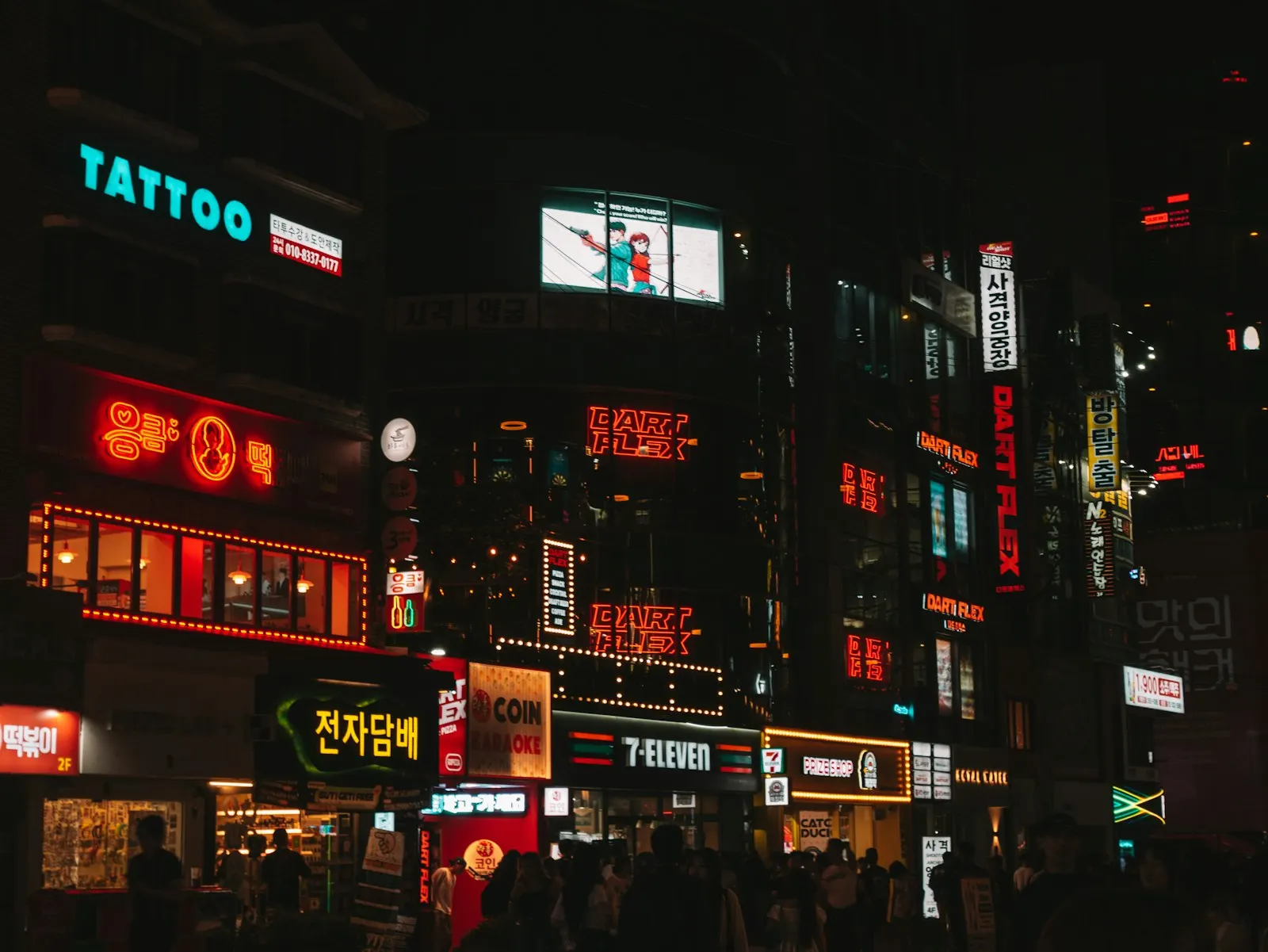
The more interesting money in 2026 was small. The Air House ran 48 hours on Nami Island in May across six stages, including a forest stage, a hanok (한옥) stage and a wellness stage with a sauna and forest runs. TOR Festival debuted at a campsite in Anseong at the end of August as a single stage techno camp running more than 20 hours, with Marcus L of Faust, Siot and Stann Lumo. Both sell scarcity rather than scale. One stage means one PA, one lighting rig and one crew, which is how a boutique event keeps production honest without cheating the sound.
Capacity Is the One Line You Can’t Cheat
The cautionary tale is still Boiler Room Seoul at Sfactory in July 2024. Resident Advisor reported that the night was stopped early as Peggy Gou took the stage. Fire services estimated around 4,500 tickets for a 2,000 capacity venue, and at least five people had breathing difficulties. Boiler Room disputed that it oversold, and I’m in no position to settle that.
What I’ll say, after a lot of nights near a lot of doors, is that capacity is the one budget line where chasing margin can end the whole event in an hour. To be fair to promoters, the pressure to sell one more ticket is real, and the arithmetic above explains it. The cost of giving in to it falls on the crowd.
Ticketing is shifting under all of this too. Revisions to the Performance Act that ban ticket scalping came into force on 28 August 2026. I’m not a lawyer and won’t guess how enforcement lands on festival resale; the Ministry of Culture, Sports and Tourism and the ticketing platforms are the people to read on that. For promoters it should change the demand signal, though. A sell out ought to mean dancers, not resellers, and that makes the next year easier to budget.
Choosing a Festival in Korea Now
I’ve been to World DJ Festival, Ultra Korea and Pentaport, among others, and I was honoured to play two World DJ Festival events. They were well organised, and it was great to see a local brand doing the best work in South Korea.
On value: if you want to see a lot of big name DJs, the big festivals make sense. Location shapes the night. Events in the city tend to finish earlier because of municipal noise rules, while the ones outside it can run late; EDC Korea, at the Inspire resort on the Incheon airport island, runs from 5pm to 3am. The problem with festivals outside Seoul is transport. The minute a festival isn’t near a subway, it’s hard to get to and, more importantly, hard to get home from, and ticket sales suffer. Many of the more established festivals handle it well, with plenty of shuttle buses.
I like the smaller boutique festivals, such as The Air House on Nami Island. It sits near the far end of the Gyeongchun Line, close enough to Seoul but out in the countryside where people can camp. It’s a great event and I’d recommend everyone check it out. We need more events like this.
Lineups work like tours. The big DJ festivals get the who’s who of international DJs, but band festivals find it much harder, because of the cost of bringing in not only a band but its crew and sound techs. When big overseas bands do come, it’s usually festival season and part of a regional run: in 2026, Massive Attack and Khruangbin played Fuji Rock in Japan and then Pentaport in Incheon. DJ lineups work the same way. Ultra Japan and Ultra Korea ran on consecutive weekends in September 2025, which lets a headliner play both on one trip. Long gone are the days of an artist flying to one city for one event. For the full calendar, see my honest guide to Korean festivals, and for the small end of the market, the Korean rave circuit.
Go Deeper: Follow the Money
- Association of Independent Festivals: 72 UK festivals cancelled in 2024: the trade body’s running count of the mid size graveyard described above.
- Mixmag: UK festival scene at risk: promoters explaining in plain terms why costs outran ticket prices.
- IMS Electronic Music Business Report 2026: the annual snapshot of where the money in dance music sits.
- Dailian on recycled festival lineups (Korean): KOPIS figures showing Korean festival numbers more than doubling while lineups overlap, the packaging effect in numbers.
- Newspim on first half 2026 ticket sales (Korean): the overall size of Korea’s live market, about 809.5 billion won in six months.
- KOPIS (Korean): the government’s box office system, where anyone can check reported ticket sales for festivals and concerts.
- Where the Money Goes in Dance Music: our map of who gets paid on a night out.
Frequently Asked Questions
Is Ultra Korea happening in 2026?
As of 23 October 2026, no date has been announced. The 2025 edition ran as a single day on 20 September at Oil Tank Culture Park in Seoul and was reported sold out. Watch the official Ultra Korea channels before making plans.
When and where was EDC Korea 2026?
EDC Korea 2026 ran on 3 and 4 October at INSPIRE Entertainment Resort in Incheon. It was the third edition, after 2019 and April 2025, and moved to the Foundation Day holiday weekend.
Why do so many music festivals lose money?
At mid size, ticket revenue rarely covers production, security, artists and insurance on its own. The bar usually closes the gap, and the bar often belongs to the venue rather than the promoter. Festivals that survive tend to share bar income, cap capacity, or lean on city and sponsor money.
Is reselling festival tickets legal in Korea now?
Revisions to the Performance Act banning scalping came into force on 28 August 2026. I’m not the person to explain the details or penalties. Check with the Ministry of Culture, Sports and Tourism and the terms of the ticketing platform you bought from.
Sources
Sports Kyunghyang: Ultra Korea 2025, one day at Oil Tank Culture Park, sold out
Ultra Korea official site (checked 23 October 2026)
DJ Mag Top 100 Festivals 2026: Ultra Korea, No. 70
Newsis: EDC Korea 2026 announced for 3 and 4 October, June 2026 (Korean)
DJ Mag: EDC Korea 2026 full lineup announced
DJ Life: Insomniac confirms new October dates for EDC Korea 2026
Hankook Ilbo: World DJ Festival 20th edition at Seoul Land
Mixmag Asia: Festivals in Asia to look forward to in 2026
Resident Advisor: Boiler Room Seoul stopped early over crowding
Korea Herald: Performance Act revisions ban ticket scalping
Music Week: AIF, 72 UK festivals postponed or cancelled in 2024
Written from Seoul, by someone who has been in the booth for more than twenty years. More on the site, or book a DJ.
Stay in the Loop
New writing on DJ culture, electronic music, and the Seoul underground, delivered when it matters.
More From The DJ Diaries


Play with the history
Four tools built from the same research as this site.