A Tuesday at 1am, the room half empty, and the resident behind the decks has to rescue a night that’s dying. Nobody posts about that set, and it’s where most booking careers are built. A Resident Advisor artist page is a calling card that tells a promoter you understand the market; it doesn’t book you.
I’ve been booked, and have booked others, in Seoul for more than twenty years. DJs get booked mostly through people rather than platforms: a promoter books someone they’ve heard, or someone a person they trust has vouched for. What follows is how the tiers work, what earns those recommendations, how Seoul differs, and the ways I watch people waste years. Some of it is unflattering. It’s meant to be useful rather than encouraging.
The Tiers Are Real, and You Can’t Skip One
The path from your first club night to bookings you didn’t have to chase isn’t linear and it isn’t fast. Most DJs who end up regularly booked internationally spent five to ten years building four things at once: a local audience, a recorded body of work, a visible digital presence, and a network built by playing wherever they were asked.
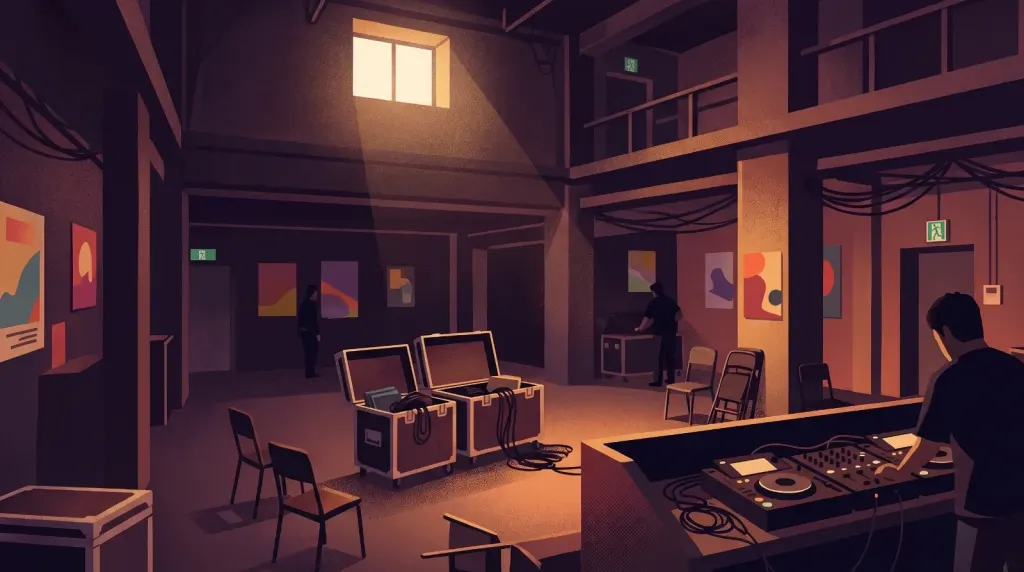
The first tier is the local residency: playing regularly at one venue, building an audience and learning to read a room over months rather than one night. It’s the tier almost everyone tries to skip, and the one that matters most. A resident learns what a Tuesday feels like at 1am, what happens when the room half empties, and how to rescue a night. You can’t learn that from a festival slot.
The regional tier is being booked in cities that aren’t yours, usually because a promoter heard you at your residency or was told about you by someone who did. The mechanism is almost always a person, not a platform. The international tier is where agencies, riders and fees enter and the economics change completely. It has a trapdoor, too: international bookings don’t always mean more money, only more travel.
You Cannot Skip a Rung
Five to ten years, three tiers, and the one almost everyone tries to skip
Built at the same timeA local audience, recorded work, a visible digital presence and a network. In Seoul, Instagram DMs are the booking system, so keep them open.
What gets you rebooked0 of 5 done
Reliability, Recordings and Someone to Vouch for You
I’ve watched this from both sides of the booth for more than twenty years, and the pattern is consistent and slightly boring. Being reliable outranks being brilliant. Promoters rebook the DJ who turned up on time, played the set the night needed rather than the one they’d prepared, didn’t drink themselves useless, and left the booth tidy. I know DJs who are technically better than people twice as busy. The busy ones answer messages within a day.
Recorded work does the arguing for you. A promoter deciding between two unknowns will listen to two minutes of a mix and stop. A monthly recorded set with a clear identity is worth more than a hundred posts about DJing, and it’s the part of this job you fully control, which is rare.
Somebody also has to vouch for you. Nearly every booking I’ve had that mattered came through a person, not an application. So the career strategy is to be a good colleague for a long time: turn up to other people’s nights, share their events honestly, don’t undercut anyone, and be someone a promoter would want to have a drink with at 4am.
Seoul Books Through Instagram, at Short Notice
Seoul (서울) runs differently from the standard advice, and the wider regional picture is in building a DJ career in Asia. Instagram is the booking system here: not RA, not email, not a website. Korean venues programme late, announce late and book through DMs. If your DMs are closed or you take a week to reply, you’re invisible.
The Standard Advice Next to Seoul
What changes when you try to get booked here
서울에서 DJ가 섭외되는 방식
| The question | Standard advice | In Seoul |
|---|---|---|
| How you reach a venue | Email, RA, a press kit | Instagram DMs |
| When lineups go up | Months ahead | Days out |
| What the door pays | The fee | Less, after guest lists and drink tickets |
| Who books | One industry | Underground and megaclub, separately |
For newcomersFollow the venue and promoter accounts you want to play for, turn on post notifications, and keep your DMs open to people you don’t follow.
For newcomers, that means following the venue and promoter accounts you want to play for, turning on post notifications and keeping your DMs open to people you don’t follow. The venue accounts are the noticeboard for the entire scene. Lineups go up days out, not months, so turn up, be around and be reachable at short notice, and you’ll get slots that never appear on any platform.
The underground and the megaclub are separate industries. A Gangnam (강남) table service room and an Itaewon (이태원) basement use the same equipment and share almost nothing else, including how they book. Decide which one you’re approaching, because the pitch is completely different.
One warning I mean seriously. If you’re not Korean, check that you’re legally allowed to be paid for performing here before you accept anything. Visa status is a real issue for foreign performers, a promoter won’t necessarily raise it, and the consequences land on you rather than the venue. I’m a DJ, not an immigration lawyer, so ask your embassy or a Korean immigration specialist before the first paid booking, not after.
Late Lineups and Thin Fees Have Reasons
Foreign DJs regularly read the late announcements as disorganisation. They come from a scene operating in rooms where committing early carries risk, for reasons I’ve written about in why Seoul venues are licensed the way they are. Korean venues also hand out a lot of free entry and drink tickets, so door revenue is thinner than an outsider assumes, and that caps fees. Every operator I know says a version of this privately.
If you arrive expecting the fee structures of bigger touring markets, you’ll be disappointed and you’ll be annoying about it. If you’re pricing your first paid gigs, our breakdown of what it costs to hire a DJ in Seoul shows the client side of the same numbers.
The Mistakes I Watch People Make
Mass messaging venues is the most common, and a promoter can tell instantly. One specific message about one specific night, showing you’ve been to the room, outperforms fifty templates. Sending a link with no context comes close behind. Nobody clicks a bare SoundCloud URL, and one line about what the set is and where you play regularly changes the response rate completely.
Chasing the big room first is another. The headline venue is the hardest door and the least forgiving. Smaller rooms book faster, teach you more, and are where the people who later book the big rooms are standing.
Playing for exposure indefinitely does lasting damage. The first few free sets are an investment. After that it’s a habit, and it teaches a scene what you’re worth, with no polite way to reverse it. And treating the booth as a stage rather than a job catches people out: sound checks, backups, your own headphones, a USB that isn’t corrupted. Half the professional gap in this industry is admin.
If You Are the One Doing the Hiring
This site also gets read by people booking a DJ rather than trying to be one. What you’re buying is judgment, not a playlist. A DJ who asks what the event is for, who’s coming and what has to happen by 10pm is worth more than one who sends you a genre list. Our booking page covers how it works in practice.
Frequently Asked Questions
How Do DJs Get Booked?
Mostly through people rather than platforms. A promoter books a DJ they have heard, or one recommended by someone they trust. Recorded mixes with a clear identity, a regular local residency and a reputation for reliability are what generate those recommendations. Applications and cold links have a low success rate everywhere.
How Do You Get DJ Bookings in Seoul?
Through Instagram, in most cases. Korean venues programme and announce late, and they book through direct messages rather than email or Resident Advisor. Being present in the scene and reachable at short notice matters more here than a polished press kit, because slots often open days rather than months in advance.
How Long Does It Take to Get Regularly Booked as a DJ?
For most DJs who reach consistent bookings, five to ten years of building a local audience, recorded work, a digital presence and a professional network. The local residency is the stage people most often try to skip, and the one that most reliably builds the skills promoters rebook for.
Should a DJ Play for Free?
A few unpaid sets early on are a reasonable investment in relationships and experience. Continuing indefinitely sets your value in the local market and is hard to reverse. The practical test is whether a specific unpaid booking opens a specific door you can name.
Further Reading
- Resident Advisor: what RA is and how its artist and event listings work
- Wikipedia: the history of Resident Advisor as an electronic music platform
- Wikipedia: what a promoter does in booking and running events
- Wikipedia: the role of booking agents in an artist career
- Wikipedia: pay to play and why it’s controversial for performers
- Building a DJ Reputation on Performance, Not Patronage
- How to Write a DJ Bio That Gets You Booked
Sources
Dancecult: Journal of Electronic Dance Music Culture, on DJs and digital presence
Mixmag, The dos and don’ts of residencies
Written from Seoul, by someone who has been in the booth for more than twenty years. More on the site, or book a DJ.
Stay in the Loop
New writing on DJ culture, electronic music, and the Seoul underground, delivered when it matters.
More From The DJ Diaries

Play with the history
Four tools built from the same research as this site.