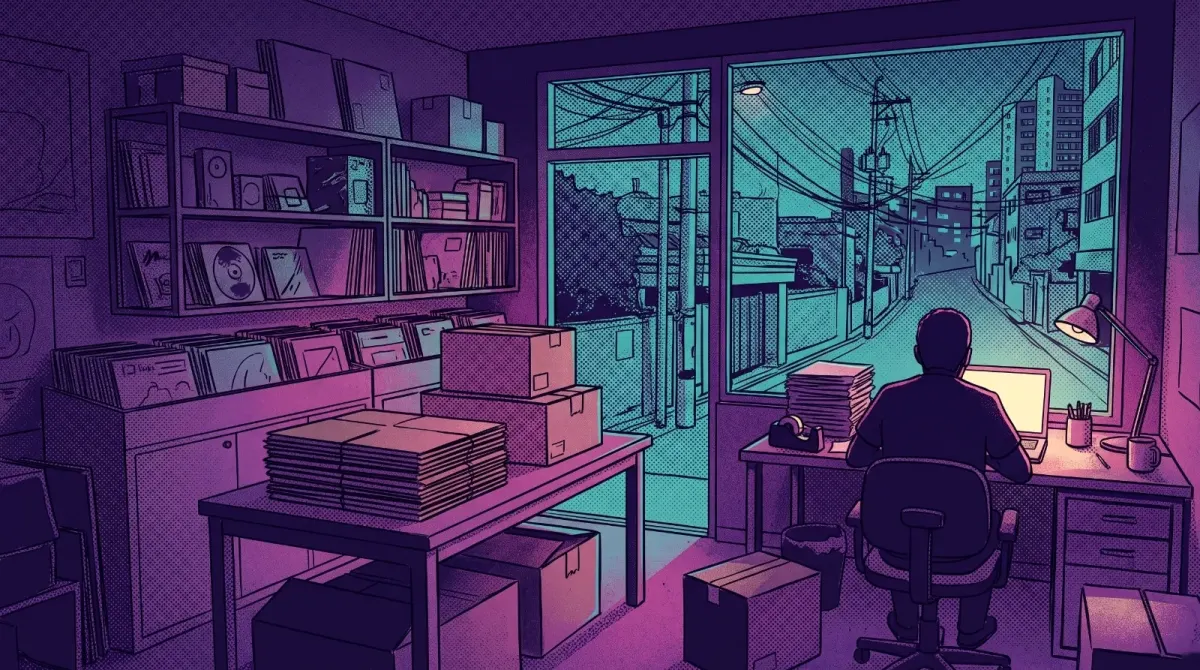
Warp started behind the counter of a Sheffield record shop. Local producers kept bringing in tracks that went off in the clubs, nobody was releasing them, and in 1989 Steve Beckett and the late Rob Mitchell decided to do it themselves. Beckett later described the original plan as nothing grander than “Let’s see if we can sell these 500 records.”
That’s still how most small labels start, and it’s still the right size of ambition. Small labels rarely make money on the records. The ones that last are subsidised by something else, release slowly, own their audience directly, and stand for a point of view people trust. In 2026, with machine made tracks pouring onto every streaming service, that last part is worth more than it has been in twenty years.
I’ve watched friends run labels, and the ones that last share a few things, none of them glamorous. Here’s what they are, where the money goes, and how to start one, including here in Korea.
Every Era Had a Safe Harbour, and Every One Moved
The independent dance label began as a practical answer to a simple problem: the music being played in clubs wasn’t being released by anyone else. Trax Records came out of Chicago in the mid 1980s because its founder, Larry Sherman, owned a vinyl pressing plant on the South Side and could press records cheaply for young producers with nowhere else to go. Trax released foundational house and acid records and became the cautionary tale: artists said for decades they were underpaid or not paid at all, Larry Heard and Robert Owens won a case in 2022 reclaiming rights to their compositions, and Vince Lawrence led a class action in 2023. Rocky Jones’s DJ International was founded in 1985, when only a handful of house records existed on vinyl; its first release was JM Silk’s Music Is The Key, and Steve “Silk” Hurley’s Jack Your Body became a surprise UK number one in 1987. In New York, Mark Finkelstein and Gladys Pizarro founded Strictly Rhythm in 1989. A joint venture with Warner around 2000 nearly destroyed it, and Finkelstein spent years in legal disputes before regaining the catalogue and trademark in 2007.
In Britain and Germany the pattern was shops and aliases. Ninja Tune followed Warp in 1990, when Coldcut’s Matt Black and Jon More, frustrated that they couldn’t release what they wanted on a major, set up aliases and a label of their own; Black says they agreed from the start to split everything 50/50. In Cologne, Wolfgang Voigt and Jörg Burger opened a record shop in 1993, and the Kompakt name was adopted in 1998 to bring order to the labels the shop had spawned. In London, Kode9 launched Hyperdub in 2004 for his own productions; it soon released Burial’s early records, then work by Ikonika, Scratcha DVA, Jessy Lanza and Coby Sey, all from a small office with minimal staff. The pattern holds across every one of them: a shop or a pressing plant, a local scene making more music than anyone could release, and a few people willing to front the money.
What kept changing was where the records went. Through the 1990s and 2000s, small labels lived or died by their distributor. When Amato went under in November 2007, more than seventy dance labels were left owed money and unable to recover their stock, and in 2019 RPM, which handled labels such as Ostgut Ton and PAN, shut down abruptly and cancelled existing orders. Beatport launched in January 2004 with 79 labels, mostly house; by 2016 a former executive estimated that around 40 percent of independent labels relied on it for 50 to 70 percent of their revenue, and today it says it supports over 80,000 labels.
Bandcamp became the other pillar. Bandcamp Fridays, introduced in March 2020, have contributed more than 150 million dollars to artists and labels, though ownership has been less steady: Epic Games bought it in 2022 and sold it to Songtradr in October 2023, when about half the staff were let go. Then on 1 June 2026 Juno Download, a DJ store since 2006, stopped trading without warning. Every era has had its safe harbour, and every one has eventually moved. The two survivors are compared in Beatport vs Bandcamp.
People Start Labels for Reasons That Aren’t Money
The oldest reason is still the most common: nobody else will release your music. In one academic study of Vienna’s techno and drum and bass scenes, seven of the eighteen DJs interviewed had started their own labels to get around the difficulty of finding one. The same study found that releases mattered less for sales than for status. A record proves you belong in the scene, and it helps get you booked.
The other good reasons are practical too. Warp, Kompakt and DJ International formalised what was already happening in their cities. Coldcut built Ninja Tune specifically to escape a major label’s decisions about what they could release. And a label can be the spine of a party, a radio show and a merch line at the same time.
The bad reasons are just as recognisable: expecting the label to make money quickly, wanting a logo more than a catalogue, or starting one because a friend has a few tracks and it seems easy. As Axel Boman of Studio Barnhus told Mixmag, you first have to decide what success means to you. His label’s founders take no salary from it. Start a label because something needs releasing, not because you need an income.
The Records Rarely Pay, So the Labels That Last Are Subsidised
Almost every small label that survives a decade is subsidised by something: mastering, a shop, a residency, a day job. Treating that as failure is why people quit. The Vienna DJs who ran labels reported selling between 100 and 3,000 units per release, downloads included, and normally made no profit after production and promotion costs. That was in 2011, before streaming took over.
Pressing Fewer Records Costs More per Record
Standard black 12 inch with a printed jacket, before shipping, in US dollars
소량 프레싱일수록 장당 단가는 올라간다
How to read itPer record, a run of 100 costs almost three times as much as a run of 500. Standard turnaround is eight to ten weeks.
Vinyl is where the cash gets tied up. At Precision Record Pressing, a GZ Media plant, a standard black 12 inch with a printed jacket is listed at 1,509 US dollars for 100 copies, 2,265 dollars for 300 and 2,782 dollars for 500, before shipping, and the plant has described its standard turnaround as eight to ten weeks. Boman’s advice in the same Mixmag piece was to look for a pressing and distribution deal, so the label isn’t fronting the roughly 3,000 euros a vinyl release could cost on its own, and to check artwork obsessively, because mistakes on vinyl are permanent.
Getting music out, by contrast, is cheap. Label Worx says it has no upfront or recurring fees and takes a commission that varies with the size of the label. Direct sales pay well: Bandcamp takes 15 percent on digital sales, falling to 10 percent after 5,000 dollars in sales, and 10 percent on physical goods, plus payment processing of roughly 4 to 6 percent, and says an average of 82 percent of each sale reaches the artist or label. A good release keeps working for years, too, and you own the relationship with every artist on it.
Streaming is the hard part. Since April 2024 Spotify has required tracks to reach at least 1,000 streams in the previous 12 months before they earn recorded music royalties at all; it says tracks below that line were earning an average of three cents a month. For a small label with deep cuts and B sides, that quietly removes part of the catalogue. Outside money exists, from grants such as the PPL Momentum Music Fund run by PRS Foundation in the UK to label nights and merch, but how any of it is taxed, split or reported is a question for an accountant who knows music, not for this site.
The AI Flood Makes a Human Filter Worth More
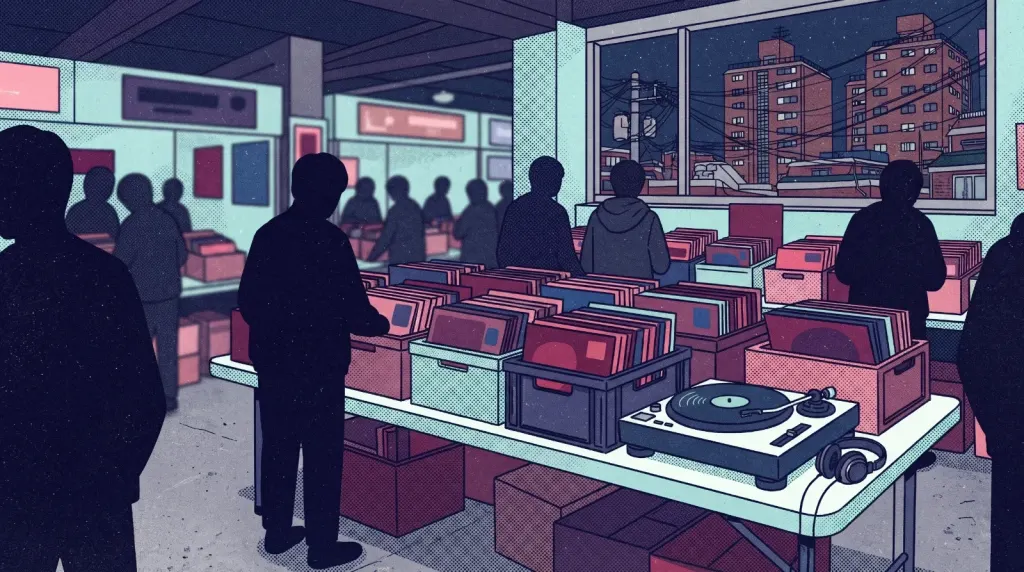
With tens of thousands of machine made tracks uploaded to streaming platforms every day, a small label’s core function, a trusted human saying “this one matters,” is worth more than at any point in the streaming era. Spotify said in September 2025 it had removed more than 75 million “spammy” tracks over the previous year, and Bandcamp went further in January 2026, banning music generated “wholly or in substantial part” by AI. That makes Bandcamp more valuable for a label run by people, and it also means discovery depends on fewer, more crowded places.
The music is moving the right way. Dance and electronic music posted the biggest US streaming growth of any genre in early 2026, and the sounds driving it, afro house, fast techno and UK garage revivals, are the ones independents broke first. The catalogue matters, but the judgement behind it is what people follow. The same argument from the majors’ side is in who controls dance music in 2026.
Download stores are shrinking. When Juno Download closed, its chief operating officer, Lucas Garcia, said the role of the music webstore was “becoming less significant” now that labels reach fans directly. Beatport and Traxsource remain, and Label Worx notes that without a label, music generally won’t reach specialist stores like these, only streaming platforms: one concrete reason to run a label rather than self release. Bandcamp reports that fans spent 225 million dollars in the past year, including 1.65 million vinyl records, and there are eight Bandcamp Fridays in 2026. A label in 2026 works as a small direct to fan business with a release schedule, not as a streaming play.
Digital work now matters as much as A&R. YouTube works as an archive and a discovery tool, and Spotify editorial pitching is a skill worth learning. The labels that grew big mostly did it on catalogue: Warp and Ninja Tune built back catalogues earning steady streaming and sync licensing income that pays for new signings. Others make the party the business and the records the brand, the way Hessle Audio and Rupture have.
The Risks Are Real, and Most of Them Are Paperwork
The failure I see most often is a label that becomes a favour distribution system for friends. It feels generous, and it destroys the one asset a label has, which is the credibility of its no.
The label also carries the risk. It usually fronts the costs, and even under the common 50/50 profit share, a release that loses money leaves the label out of pocket and the artist with nothing. How costs and splits are written into a deal is contract work. Put every deal in writing, even with friends, and have a music lawyer look at your template before anyone signs.
Admin never stops. Royalty statements, metadata corrections, takedowns and tax are permanent once you have a catalogue. Send statements on a fixed schedule even when the numbers are zero, and leave the tax and royalty accounting to an accountant who works with music businesses.
The ground keeps shifting, too. Distributors have gone under owing labels money, Bandcamp has changed hands twice since 2022, FUGA is part of Downtown, which is now part of Virgin Music Group, and in March 2026 Ninja Tune was sold to Concord, a US music company. None of that is a reason not to start. It is a reason to own your mailing list and keep copies of everything.
How to Start a Label in 2026
Write a simple plan first. Nick Sadler, author of The Label Machine, recommends starting with a business plan: what music, how often, what it costs, who distributes and who does the work. Established electronic distributors will ask to see one when you apply. Check that your name isn’t already used by another label or trademark, and have at least three releases finished before the first one comes out, so the label looks alive. Sadler’s advice for building an audience is to commission remixes for your first ten releases, which borrows other artists’ fans.
Four Ways to Distribute, by Size
What each one suits, and what it charges
레이블 규모별 유통사 비교
| Distributor | Best for | What it costs |
|---|---|---|
| Label Worx | Dance labels that want Beatport and Traxsource | No upfront fee; commission |
| Symphonic | Starting out, then growing | Starter $29.99 a year; Partner deals by approval |
| FUGA | Established music companies | Business to business; part of Virgin Music Group |
| DistroKid | Self release more than a label | $24.99 a year; label name from $44.99 |
The ruleWithout a label distributor, music generally reaches streaming platforms but not the specialist dance stores.
Choose a distributor that fits your size; the table above sets out four, from Label Worx, which works on commission and reaches the dance stores, to DistroKid, which suits self release more than a label. Note that FUGA now sits inside a major group, if independence matters to you. Every track needs an ISRC, which permanently identifies a sound recording but not the composition behind it, and every release needs a UPC barcode; most distributors issue both. Keep a master spreadsheet of titles, mix names, writers, publishers, ISRCs and release dates from day one, because fixing metadata later is slow and sometimes impossible.
Budget for mastering and artwork as part of the label’s identity. Mastering matters most in club music, where DJs treat the master as raw material to be reworked in performance, and a consistent artwork template makes a small label recognisable in a store list. Promote to DJs, not just playlists. Inflyte, which says it reaches over 125,000 industry tastemakers, delivers promos and collects feedback, but a short list of DJs and radio shows who play your sound, followed up personally, still drives early sales. Put every release on the label’s Bandcamp page, plan launches around Bandcamp Fridays, when the site waives its share, and collect emails from the start.
Treat vinyl as a separate decision: press only what you have evidence you can sell, and get quotes from more than one plant. Register recordings with a neighbouring rights society (in the UK, PPL has membership for recording rightsholders), and make sure writers on the label register their compositions with their own collection society. Many distributors, Symphonic included, offer publishing administration and neighbouring rights collection as add ons.
If you’re unsure, run a test year: three records, digital and Bandcamp only, on proper contracts with a proper distributor. First ask yourself whether you can name ten releases you’d be proud of by other artists, afford to lose the first year’s money, send accurate statements on releases that earn almost nothing, reach an audience through a party, a show or a mailing list, say no to friends, and say what happens to the artists’ rights if you stop. If the year leaves you wanting more, you have a label. If it feels like a chore, you’ve saved the cost of a vinyl run.
Starting a Label in Korea Means More Paperwork and Fewer Pressing Plants
In Korea the basics are the same, but the paperwork and the platforms differ. Local labels already doing it include Davotab, ECI Korea, Oslated and Carousel; there’s more on them in Korean labels worth following. This names the steps, not the rules behind them: a tax accountant (세무사, semusa) and a lawyer who works in entertainment are the people to check your own situation with.
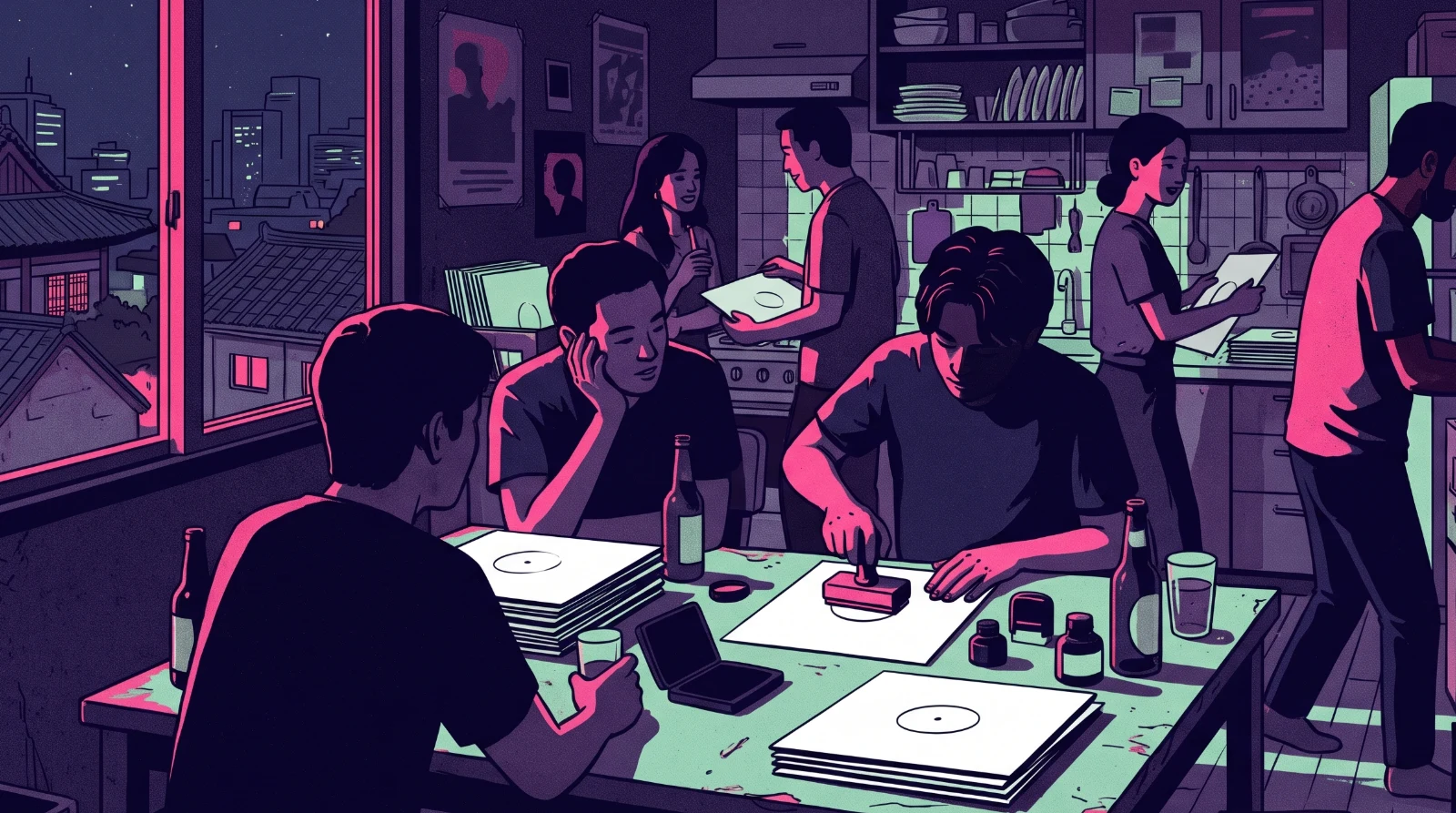
Start with business registration (사업자등록). The National Tax Service requires it before starting business or within 20 days of starting, at a tax office or online through Hometax (홈택스). Under Article 16 of the Music Industry Promotion Act, anyone running a record production or distribution business must file a notification with the local city, county or district office (음반·음악영상물제작업 신고). Songwriters sign with a collective management organisation: for about fifty years that meant only KOMCA (한국음악저작권협회), until KOSCAP (함께하는음악저작권협회) launched as a second organisation in 2014. The two are in a long running dispute, so ask around before choosing. For the label’s own neighbouring rights, the Ministry of Culture revoked the Recording Industry Association of Korea’s designation (한국음반산업협회) to collect producers’ remuneration in 2019, and the Korea Entertainment Producers’ Association (한국연예제작자협회) took over that collection. RIAK still offers trust management for online distribution.
Melon (멜론), Genie (지니) and Bugs (벅스) are reached through Korean distributors. A 2026 guide from a Seoul studio names Kakao Entertainment and Genie Music among the main options, suggests allowing two to four weeks for review, and describes a global distributor overseas plus a domestic one at home as the indie norm. Distributors focused on indie music, such as Mirrorball Music and Poclanos, are selective, and commissions ranged from about 10 to 20 percent in a 2021 survey.
Pressing vinyl here is still hard. Machang Music & Pictures (마장뮤직앤픽처스) opened in 2017 as the country’s first active plant since Seorabul Records closed in 2004. In March 2024 the Hankook Ilbo still described it as the only LP plant in Korea, with Artbuster preparing another; Artbuster’s plant, 제작소 화수분, had first announced its launch in 2023. By October 2025 Newsis counted three vinyl plants operating in Korea. The same 2024 report quoted Machang’s chief executive saying domestic LP sales had fallen to 30 to 40 percent of their 2022 peak.
My advice is the same here as anywhere. Start a label if it has a reason to exist that doesn’t depend on money: a scene nobody is documenting, producers with nowhere to release, a party that needs a recorded voice. Those conditions produced Warp, Kompakt and Ninja Tune. As a plan for income, it’s a long shot.
Frequently Asked Questions
How do small record labels survive?
Usually through subsidy and patience. Most independent labels that last a decade are supported by other income, such as a shop, mastering work, a residency or a day job. They release slowly, because the catalogue rather than any single record is what people follow, and they build direct relationships with fans through Bandcamp and a mailing list rather than relying on platform placement. Some, like Hessle Audio, lean on their parties; a few, like Warp, live on a big back catalogue.
Is it worth starting a record label in 2026?
It can be, if the label has a purpose beyond income, such as documenting a scene or releasing music nobody else will. Spotify pays nothing on tracks under 1,000 streams a year and download stores are shrinking, so most small labels now work as direct to fan businesses built on Bandcamp, a mailing list and DJ support. The flood of AI music has made a trusted human filter more valuable.
How much does it cost to start a small dance music label?
Digital releases can cost very little: some label distributors charge no upfront fee and take a commission instead. The real costs are mastering, artwork and promotion, and vinyl if you press it. One North American plant lists 100 standard 12 inch records at about 1,500 US dollars and 500 at about 2,800 dollars, before shipping. For what a label owes in tax, ask an accountant.
Do I need to register a business to start a label in Korea?
Yes. The National Tax Service requires business registration (사업자등록) before or within 20 days of starting, and the Music Industry Promotion Act requires a record production or distribution business to notify its local district office. Songwriters join KOMCA or KOSCAP, and producers’ broadcast and performance remuneration is collected by the Korea Entertainment Producers’ Association. A tax accountant (세무사) can walk you through your own case.
Further Reading
- Why DJs start record labels anyway: the benefits and the drag
- Beatport vs Bandcamp: the battle for electronic music sales
- Sync licensing: how dance music gets into film and TV
- The Label Machine: Nick Sadler’s book and resource site on running an indie label
- IMPALA: the trade body for independent labels in Europe, with policy and market reports
- Worldwide Independent Network (WIN): the global network of independent music associations, including Asian members
- Association of Independent Music: the UK trade body for independent labels
- Korea Copyright Commission: registering works in Korea, explained in English
- KOSCAP (함께하는음악저작권협회): Korea’s second songwriting society
- Mixmag Asia: labels to look out for in 2024, including two from Seoul
- Wikipedia: Hyperdub, the label founded by Kode9
- Wikipedia: Kode9, the producer, DJ and label founder
- Wikipedia: Burial, whose early records launched Hyperdub
- Hyperdub: the label’s official site
Sources
Dancecult: Vienna techno and drum and bass DJs and their labels, 2011
Deutsche Nationalbibliothek: study of how independent labels are subsidised
Resident Advisor: Amato Distribution goes into liquidation, 2007
Resident Advisor: RPM Distribution shuts down, 2019
Precision Record Pressing: price list
Spotify for Artists: track monetization eligibility
Bandcamp: what are Bandcamp’s fees
DJ Mag: Ninja Tune acquired by US music company Concord, 2026
National Tax Service (국세청): business registration
Newsis: three vinyl plants operating in Korea, October 2025
Written from Seoul, by someone who has been in the booth for more than twenty years. More on the site, or book a DJ.
Stay in the Loop
New writing on DJ culture, electronic music, and the Seoul underground, delivered when it matters.
More From The DJ Diaries


Play with the history
Four tools built from the same research as this site.