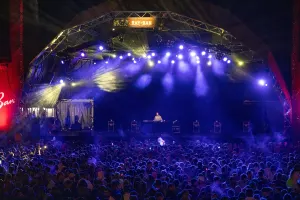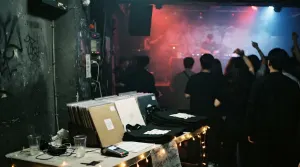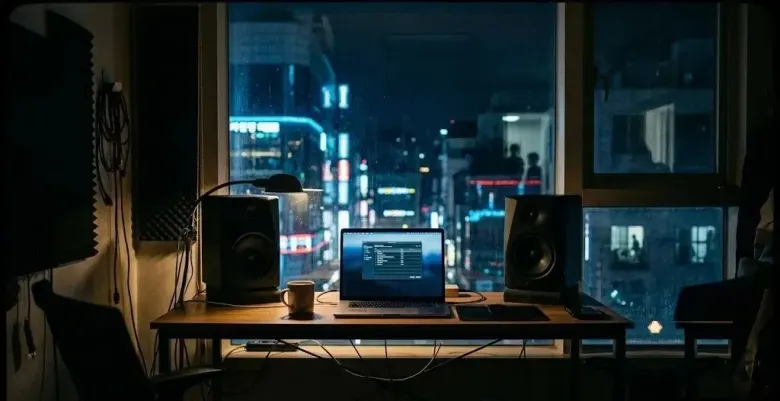
Beat Street Records in Vancouver has been a mecca for DJs since 1996, and shops like it were where my buying started: Beat Street, the smaller record stores on Saint-Laurent in Montreal, and whatever I could find on a trip downtown. Then came Stompy, a download site long gone now, so curated it felt like someone with taste had picked every house, funky house and jackin’ house record on it. These days it’s Beatport and Traxsource, mostly, with Bandcamp open in another tab.
People set Beatport and Bandcamp against each other as if one of them has to win. They sell to different people. Beatport sells tools to working DJs, sorted by genre and tempo; Bandcamp sells the link between a fan and an artist, and sends the artist most of the money. This year they also drew almost the same line on AI music, which says a lot about what both sets of buyers want. If you make records, you want to be on both.
Two Stores Built for Two Different Buyers
Beatport launched in 2004 in Denver, Colorado, as a download store for DJs, organised by genre and BPM rather than by artist name. It did one professional job better than any competitor, and within a decade it was the main retail infrastructure for electronic music.
Beatport or Bandcamp
Who buys, who gets paid and what changed in 2026
| Beatportsince 2004 | Bandcampsince 2008 | |
|---|---|---|
| Who buys | Working DJs looking for tools | Fans and collectors |
| Organised by | Genre and BPM | Artist and label page |
| Store keeps | Not published | 15% digital, 10% after $5,000 in sales, 10% physical |
| What you get | A chart placement the industry reads | A direct relationship with fans |
| AI music | Fully or mostly AI banned, Aug 2026 | Wholly or substantially AI banned, Jan 2026 |
Paid outBandcamp lifetime payouts to artists and labels, $225 million of it in the past year. Bandcamp says artists get 82 percent of each sale on average. Track runs from $0 to $2 billion.
Be on bothBeatport is where the industry checks your pulse. Bandcamp is where your supporters pay your rent.
Physical formats sold on Bandcamp in the past year. Alongside 15.7 million digital albums. Vinyl outsells CDs about two to one.
Over $150 million paid out on Bandcamp Fridays by December 2025, up from over $120 million in March 2024.
Sources: Bandcamp, about · Hypebot, March 2024 · Hypebot, December 2025
For a producer, a Beatport chart placement is a credential and a marketing opportunity. A track in the top 10 of its category is being bought by professional DJs who understand that sound. On Beatport you’re selling to people who will use the record at work. The store is also getting bigger: in March 2026 it began folding its sister DJ store, Beatsource, into Beatport, with the standalone Beatsource to be shut down after the move. And the sound that sells there is clear. Tech house led Beatport sales for the third year running in 2025, according to the IMS Business Report 2026.
Bandcamp, launched in 2008, took the other road: an artist platform that takes 15 percent of digital sales and 10 percent of physical ones, so artists keep roughly 80 percent of a digital sale once payment fees are paid. An artist’s page works like a small website, with images, notes, video and the story of the release. Fans buy there because they want the person who made the record to get paid.
Both stores exist because they solve problems that streaming doesn’t. The two audiences overlap without being identical, and the economics of each store reflect what its buyers are willing to pay for.
Where Working DJs Buy
Most working DJs I know buy from the same short list. Beatport has the biggest electronic catalogue and is built into the DJ software most booths run. Traxsource is the house specialist, strongest on soulful, deep, jackin’ and underground house. Bandcamp is direct from artists and labels. The big name missing is Juno Download, which closed in June 2026 after about twenty years, though Juno still sells vinyl.
The Stores Working DJs Use
Digital, vinyl by mail, and the Seoul end of it
디제이들이 음악을 사는 곳
| Store | Where | Best for |
|---|---|---|
| Beatport | Online | The biggest electronic catalogue |
| Traxsource | Online | House, soulful to underground |
| Bandcamp | Online | Direct from artists and labels |
| Juno Records | London | Deep vinyl catalogue |
| Phonica | Soho, London | House and techno |
| Hard Wax | Berlin | Techno and dub |
| Rush Hour | Amsterdam | A shop and a label |
| Decks.de | Germany | Long running mail order |
| Yoyaku | Paris | Vinyl, shipping worldwide |
| Discogs | Sellers everywhere | Used and out of print |
| Gimbab Records | Near Hongdae, Seoul | Vinyl and CDs, dance included |
GoneJuno Download closed in June 2026. Juno still sells vinyl.
For vinyl, the shops in the table ship worldwide, and Discogs covers used and out of print records from sellers everywhere. In Seoul, Gimbab Records (김밥레코즈) near Hongdae (홍대) has a wide vinyl and CD selection that includes electronic and dance. For the LP bars and the rest of the city’s record shops, see Seoul on Wax.
I look at Bandcamp too. The interface still feels dated and finding things takes longer, but the same could have been said of record shops. You have to dig, and I’m happy that the money goes to the artists.
Both Stores Drew the Same Line on AI
The biggest shift this year had nothing to do with revenue splits. Both stores drew a line on AI generated music, and they drew it in almost the same place. Bandcamp went first. In a January 2026 post titled “Keeping Bandcamp Human”, it said music “generated wholly or in substantial part by AI is not permitted,” and banned using AI tools to impersonate other artists or styles.
Beatport followed in August. As Digital Music News reported, it banned music that is fully or mostly AI generated and began tagging tracks that use AI but remain mostly human made. Assistive tools for mixing, mastering and stem separation are still fine. The detection comes from Beatdapp, a Vancouver company that already handled Beatport’s fraud screening, which is a nice Canadian footnote to a Denver story. The number that stuck with me: Beatport said only 8 percent of its users are open to playing AI music.
That fits everything above. Working DJs want to know a person made the record, and an AI track has no artist for a Bandcamp fan to support. Traxsource went a step further. Since 1 July 2026 it has labelled new releases as human made or AI assisted, with a big H on the human made tracks, and it removes music that’s fully AI generated. The detection isn’t perfect, and producers can dispute a wrong label, but the idea is right. More stores should do this.
Copyright bodies are less settled. In Korea, KOMCA reversed (한국음악저작권협회) its decision to accept AI assisted song registrations about 22 days after allowing them.
What Each Store Gets Wrong
Bandcamp’s standing was built on goodwill as much as on its split. Bandcamp Friday, a recurring day when Bandcamp waives its revenue share, built loyalty and a story that Bandcamp was on the artists’ side against the corporate music industry. By December 2025 those Fridays had paid out more than $150 million.
Then the owners changed. Bandcamp joined Epic Games in March 2022, and in October 2023 Epic sold it to Songtradr, which offered jobs to only about half of Bandcamp’s staff. Artists said it felt as if a community platform had become a corporate music administration tool. The Fridays survived, though the 2024 schedule announced in March was no longer monthly, and eight are scheduled for 2026. The platform has stabilised, but its cultural position took real damage.
Beatport’s weakness is transparency. It doesn’t publish one simple share the way Bandcamp does. Labels get a pricing structure with catalogue, new release and exclusive tiers, and a producer is left to work out what a sale is worth.
In Seoul, Self Release Is the Business Plan
Korean listeners mostly stream, on Melon (멜론) and the global services, so neither download store is part of everyday life here. For Seoul producers, though, both matter, and in my experience they use them the way this post describes. Beatport is where a techno or house track reaches DJs in other countries. Bandcamp is where a small run of a record, a tape or a zine finds the few hundred people who care.
Park Hye Jin (박혜진) shows the arc. Her 2021 album Before I Die came out on Ninja Tune. Her third album, So Much Have Fun, released in February 2026, was written, produced, mixed and mastered by her alone. That’s self release culture at its most complete, and it fits a scene that has never had much of a local label system built for club music.
The domestic industry is paying attention: KIRARA won Best Electronic Album at the 2026 Korean Music Awards. For artists like these, keeping most of the money and owning the fan relationship is the whole business plan. More on how small outfits survive is in the independent labels piece.
How to Use Both
If you produce, the practical conclusion is unromantic: be on both, because they do different jobs for you. Release everywhere, let streaming do your discovery for free, and take the money from the fans and professionals who are willing to pay. Beatport is where the industry checks your pulse. Bandcamp is where your supporters pay your rent.
If you’re still building a collection, start with the legal downloads guide before either storefront gets your card number. Then buy by job: Beatport or Traxsource for what you’ll play this weekend, Bandcamp for the artists you want to keep making records.
Frequently Asked Questions
Does Beatport allow AI generated music?
Not if it’s fully or mostly AI generated. Since August 2026 Beatport rejects or removes that music and tags tracks that use AI but are mostly human made. Tools for mixing, mastering and stem separation are still allowed.
Does Bandcamp ban AI music?
Yes. Since January 2026 Bandcamp doesn’t permit music generated wholly or in substantial part by AI. It also bans using AI to impersonate other artists, and it can remove tracks suspected of being AI generated.
Should I sell my music on Beatport or Bandcamp?
Most producers are better off on both. Beatport reaches DJs looking for tools, while Bandcamp pays artists a larger share, roughly 80 percent of a digital sale after fees, and builds a direct relationship with fans. Our look at how streaming changed the DJ economy explains why sales still matter.
Where do Korean electronic producers release music?
Many self release. In my experience they use Bandcamp for direct fan sales and download stores to reach DJs, alongside the streaming services Korean listeners use. Park Hye Jin moved from a Ninja Tune album in 2021 to a 2026 record she made entirely herself.
Further Reading
- Bandcamp: Bandcamp Fridays Return in 2026: the eight official dates for this year and the running total paid out since 2020.
- Bandcamp Help: What Are Bandcamp’s Fees?: the exact revenue share on digital and physical sales, before you price a release.
- Beatport Greenroom: Pricing Structure: how catalogue, new release and exclusive price tiers work from the label side.
- Resident Advisor: Half of Bandcamp Staff Laid Off as the Songtradr Deal Closes: the October 2023 report on what the sale meant for the people who built Bandcamp.
- DJ Mag on Traxsource’s human made and AI assisted labels: the clearest explainer of how the new labels and AI removals work.
- Harper’s: The Ghosts in the Machine, by Liz Pelly: a long read on why stores where you own the music matter more as streaming fills up with filler.
- Record labels: who controls dance music in 2026
- Who controls music discovery
Sources
Bandcamp Daily blog: Keeping Bandcamp Human (13 January 2026)
Digital Music News: KOMCA reverses its AI policy
Bandcamp: about (payout and format figures)
Beatportal: Beatport and Beatsource to unite into one premium DJ platform (2 March 2026)
MusicTech: IMS Business Report 2026, electronic music grew to $15.1 billion in 2025 (22 April 2026)
Park Hye Jin on X: So Much Have Fun announcement
Allkpop: Winners of the 2026 Korean Music Awards
Written from Seoul, by someone who has been in the booth for more than twenty years. More on the site, or book a DJ.
Stay in the Loop
New writing on DJ culture, electronic music, and the Seoul underground, delivered when it matters.
More From The DJ Diaries

Play with the history
Four tools built from the same research as this site.