The mixer is not supposed to be heard. The DJM forced everyone to listen.
The Pioneer DJM-500 was released in the mid-1990s as a four-channel professional DJ mixer with a crossfader, a three-band EQ on each channel and built-in beat effects. It performed its job competently. The machine was a utility, a tool that got out of the way so the DJ could focus on the records.
The 800 Turns the Mixer Into an Instrument
The DJM-800 arrived in 2006 and introduced the feature that would transform the mixer from utility to instrument: Sound Colour FX, a filter on a knob in every channel strip. Beat effects could already be sent to one channel on the DJM-500, but the colour knob put an effect under every channel’s fingers at once. Rather than one effect for the whole mix, the DJM-800 gave each channel its own colour control. You could isolate a sound coming from the left turntable, apply reverb to it, and the effect would only affect that channel. A DJ could use effects creatively, in real time, as part of the performance.
The 900 Becomes the World Standard
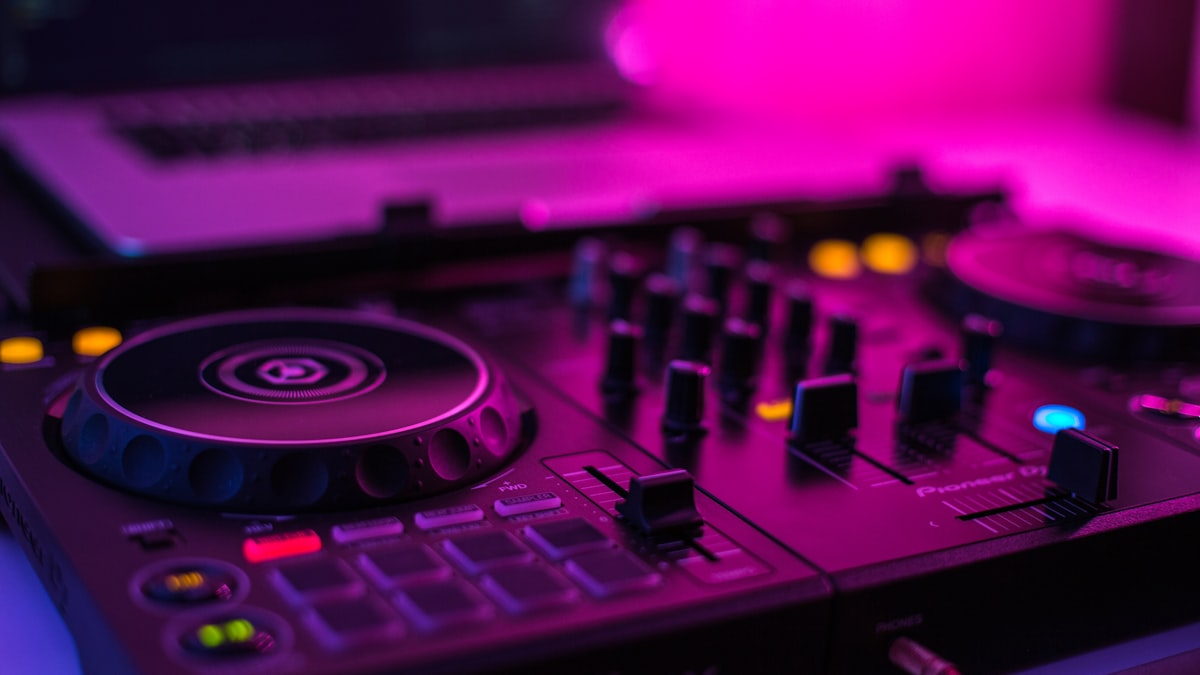
The DJM-900NXS arrived in 2011 and became the professional standard that every club in the world eventually purchased. It expanded the effect section, refined the colour knob the 800 had introduced, and created an interface that made real-time effect manipulation feel natural and intuitive. By the 2010s, a DJ’s performance could involve as much effect manipulation as it did track selection.
The three-band EQ, treble, mid, bass, that became standard on DJM mixers established a new compositional practice. A DJ could drop the bass from track A before bringing in track B, creating a smooth transition. Then the DJ could bring the bass from track B back in. The bass transition became the standard mixing technique for house and techno. The EQ was not a corrective tool. It was a compositional one.
The DJM-V10 arrived in 2020 with six channels, allowing DJs to mix between multiple sources simultaneously. The V10 represented Pioneer’s acknowledgment that DJ performance had evolved beyond two-deck mixing. DJs were now performing with Ableton Live running alongside CDJs, or with multiple modular synthesizers feeding into the mixer simultaneously. The mixer needed to accommodate this expansion of the DJ’s instrument collection.
2026 update: at NAMM 2026 AlphaTheta showed the DJM-V5 and the RMX-Ignite effects unit, the first significant rethink of the booth effects box in a decade. AlphaTheta is Pioneer DJ’s parent company and has released new gear under its own name since 2024, as MusicTech explained; the V5 is a three-channel mixer built on V10 sound. The channel strip keeps evolving; the language it created stays the same.
Thirty Years of Muscle Memory
The DJM’s real legacy is not any single feature. It is that a working DJ can now walk into a booth in Seoul, Berlin or Toronto, close their eyes, and know where every knob is. I have started sets in rooms where the monitor was dead and the light over the mixer was broken, and it did not matter, because my hands knew the layout better than my eyes did. That standardisation is invisible until you lose it: land in front of a rotary mixer or an unfamiliar Xone and you spend the first twenty minutes rediscovering your own hands.
There is a cost, and I will label it as opinion: the colour knob flattered a generation into mistaking effect-riding for mixing. The filter sweep became what the air horn was to an earlier era. The DJs worth studying still treat the effects section the way the machine’s designers apparently intended, as punctuation rather than vocabulary. If you are just starting out, learn the three-band EQ first and earn the knobs later. The history is worth knowing too: Pioneer DJ did not win by accident.
What I Play On, and What I Tell Other DJs
As far as I can remember, the first Pioneer mixer I ever played on was a DJM-500. Since then, it has mostly been the 1000 in the booths I play. The one that has really won me over is Pioneer’s six-channel flagship, the DJM-V10. The sound and the options on it are something else. I like Allen & Heath too, and plenty of DJs swear by them, but I actually prefer the V10.
When it comes to effects, I keep it pretty clean: some low and high-pass filtering, a little echo or delay here and there, and nothing wrong with a touch of reverb on a build, as long as it is not too much. Personally, I think some DJs are far too performative with their effects. The track should be the star, not the buttons.
I also love rotary mixers. The sound quality is beautiful, and every DJ should learn to play on one. If you want to see what that looks like done properly, watch Little Louie Vega on a rotary. My one wish is that more of them had a couple of built-in effects, even just a filter or an echo, because some songs really suit them.
In most gigs and venues around Seoul, the industry standard is still Pioneer DJM mixers and CDJs, or Pioneer’s all-in-one units in smaller rooms. But recently I played on a pair of Denon DJ SC6000 players for the first time, and honestly, they were fantastic: intuitive, with platters that feel great, and cheaper than Pioneer. The trouble is that a lot of DJs would be intimidated by them, and venues keep hearing that they have to buy the industry standard.
Personally, I can play on anything, and I encourage every DJ to aim for the same. Before any gig, ask the venue ahead of time what is in the booth. If it is not what you expected, do your research, learn the layout, and still show up ready to deliver your best. Until you are a superstar with your preferred setup written into your rider, treat every unfamiliar booth as a chance to grow.
Go Deeper: Watch, Listen, Read
Where to read the mixer’s history from the people who built it, and to look beyond the Pioneer booth.
- Pioneer DJ: Meet the DJM-500: the company’s own account of its first mixer and the layout that still survives.
- DJ Resource: The Pioneer Pro-DJ History: a model-by-model timeline for anyone who wants the dates straight.
- MusicRadar: AlphaTheta DJM-V5: the 2026 three-channel mixer that brings V10 sound to smaller booths.
- Denon DJ: SC6000 Prime: the official page for the main alternative to CDJs in the booth.
- Red Bull Music Academy: Masters At Work lecture (2013): Louie Vega and Kenny Dope on decades of New York house, the context for the rotary sound.
- DJ TechTools: Rane MP2015 video review: a clear look at how a modern rotary mixer works and why DJs love it.
Frequently Asked Questions
What is the Pioneer DJM mixer?
The Pioneer DJM is the line of DJ mixers that became the standard in club booths, starting with the DJM-500 in the mid-1990s. That first model had four channels, a crossfader, a three band EQ on each channel and built-in beat effects. Later models turned the mixer from a utility into an instrument through per-channel colour effects.
What is the difference between the DJM-800 and the DJM-900NXS?
The DJM-800 arrived in 2006 and introduced Sound Colour FX, a filter or effect knob on every channel, so a DJ could shape one record without touching the other. The DJM-900NXS arrived in 2011, expanded the effect section and refined the colour knob introduced on the 800. It became the professional standard that clubs around the world eventually bought.
How do DJs use the EQ on a DJM mixer?
The standard technique is to drop the bass from the outgoing track before bringing in the next one. The DJ then brings the bass of the new track back in. That bass swap became the standard mixing technique for house and techno. It made the three band EQ a compositional tool rather than a corrective one. Beginners are better off learning the EQ first and earning the effects knobs later.
Why is the Pioneer DJM the club standard?
Its layout became so standardised that a working DJ in Seoul, Berlin or Toronto knows where every knob is without looking. That muscle memory matters when a monitor is dead or the light over the mixer is broken. Facing an unfamiliar rotary mixer or Xone can mean spending the first twenty minutes relearning your own hands. The same finished design quality shows up in the Technics SL-1200 turntable.
Written from Seoul, by someone who has been in the booth for more than twenty years. More on the site, or book a DJ.
Stay in the Loop
New writing on DJ culture, electronic music, and the Seoul underground, delivered when it matters.
More From The DJ Diaries
Play with the history
Four tools built from the same research as this site.