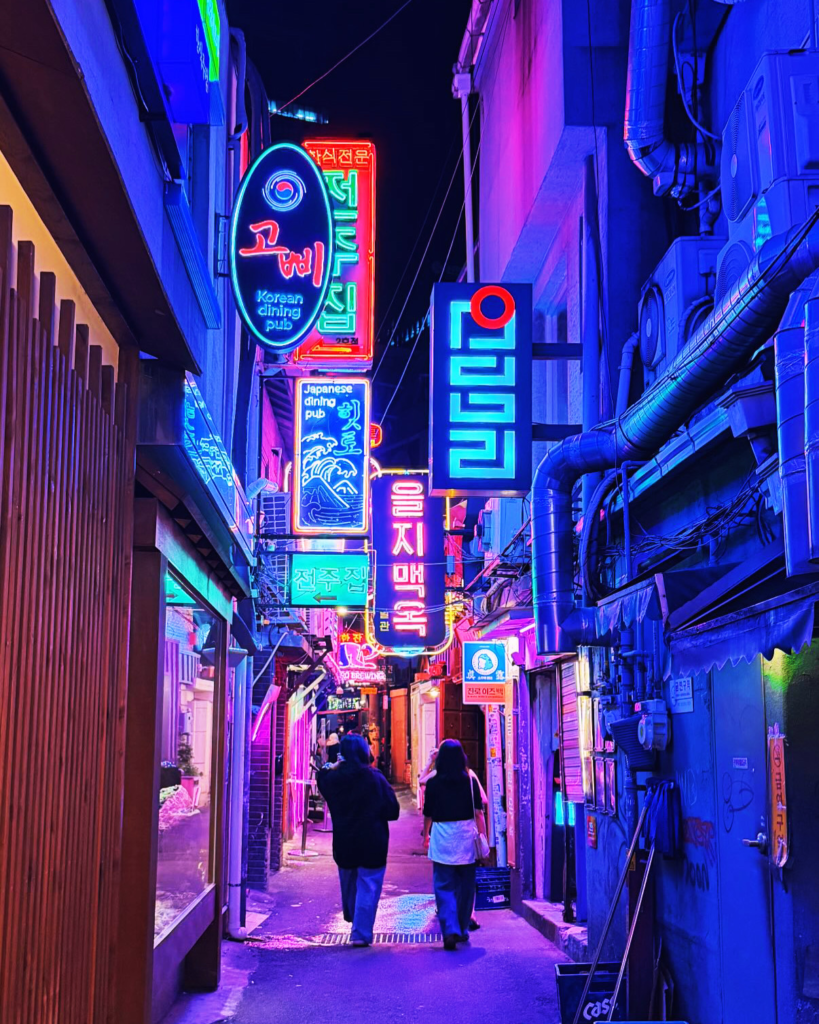
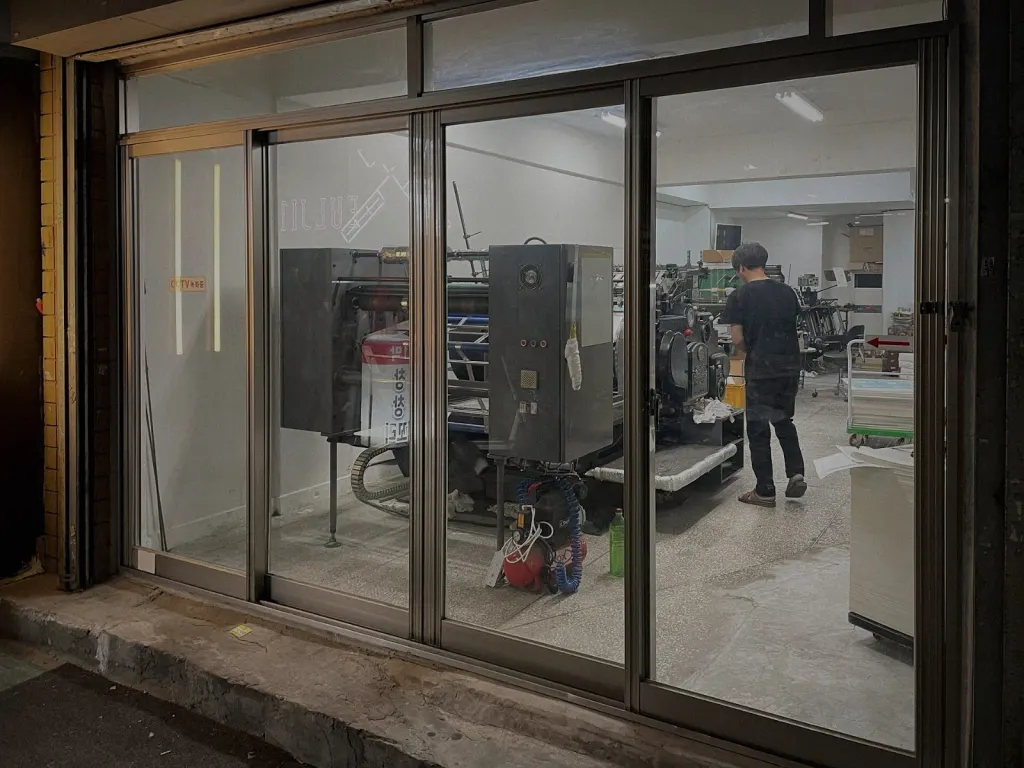
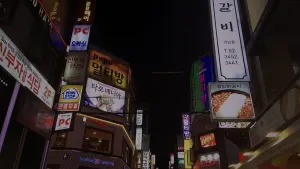
By day, Euljiro is printing presses, tile wholesalers, and alleys of tool shops that have supplied the city’s builders since the war. By night, behind unmarked doors on those same alleys, it’s Seoul’s most interesting drinking and music district. Koreans nicknamed it Hipjiro, hip Euljiro, half in affection and half in irony, and both halves are earned.
What Euljiro Was
Euljiro runs east from City Hall through the old industrial heart of central Seoul, a district rebuilt after the Korean War into a dense ecosystem of micro-manufacturing: print shops, lighting stores, metalworkers, sewing machine dealers, each alley a specialised supply chain. For decades its nightlife was strictly functional, the nogari alley beer halls where workers drank cheap lager over dried pollack after shifts, a scene anchored by institutions like the decades-old OB Bear stall whose eviction fight later became a preservation cause. Nobody visited Euljiro for atmosphere. Euljiro was where atmosphere got manufactured for elsewhere.
Euljiro and Sindang Nightlife Map: Venues, Streets and What’s On
Here is Euljiro and Sindang as it stands now: the venues, the streets worth knowing and what’s on in the next two weeks. Tap a pin for the sound, the address and directions on Naver or Kakao Map.
Euljiro and Sindang nightlife map
Euljiro is the old print and tool quarter where Hipjiro bars opened upstairs. As redevelopment moves in, the bar scene has drifted east to Sindang-dong.
Venues on this map: The Edge Seoul (디 엣지), 8 Eulji-ro 12-gil; Jushindang (주신당), 399 Toegye-ro; Sewoon Sangga (세운상가); Inhyeon Market (인현시장); Eulji OB Bear (을지OB베어), 49-2 Chungmu-ro; Gu Seoul (구 서울), 2F, 82 Majang-ro, Jung-gu (Sindang).
Streets and corners: Nogari Alley (노가리골목), Sewoon Sangga (세운상가), Printing alleys (인쇄골목), Euljiro 3-ga Station (을지로3가역), Sindang-dong (신당동).
This week in Euljiro · 을지로
Who is playing in Euljiro this week
Sake Party (Tokyo) at The Edge
The Edge Seoul, Euljiro 을지로
Nature Remix
Kunst Kabinett Seoul, Euljiro 을지로
Green Tang 01 with Shuto & weaver
The Edge Seoul, Euljiro 을지로
Euljiro, From OB Bear to the Cranes
How the print and tool quarter became Hipjiro, and what redevelopment is taking, drawn to scale
을지로, 힙지로가 되기까지
How to do a night hereCome out at Euljiro 3-ga, search 노가리골목 on Naver Map or Kakao Map, and budget time for getting lost. It is not a 4am district.
- 11980Eulji OB Bear opens One of OB's first franchises, credited with pairing nogari and draft beer
- 22015Seoul Future Heritage For the nogari and draft beer culture of the alley. Outdoor tables follow in May 2017
- 3Mid 2010sHipjiro begins Unsigned bars up the stairs of workshop buildings, opened by actors, designers and musicians
- 4Apr 2022OB Bear is evicted After six attempts
- 5Jul 2025The Sewoon park plan advances A first temporary park is approved
- 6Oct 2025Height limit raised to 145 metres On the Cheonggyecheon side of Sewoon zone 4, beside Jongmyo
- 7Sep 2026Time Out crowns Jongno 3-ga The coolest neighbourhood in the world
The price of a nogari. 17 draft beer bars along 465 metres of alley. Track runs from ₩0 to ₩1,500.
3rd to 1st Jongno 3-ga in Time Out's coolest neighbourhoods, 2021 to 2026.
6 sites, none here. Seoul picked its first Moonlight Yajang night market sites on 14 September 2026. The plan named Euljiro as its inspiration, but none of the six is in Jongno or Jung-gu.
Sources: Weekly Kyunghyang · Time Out · SBS Biz
How Hipjiro Happened
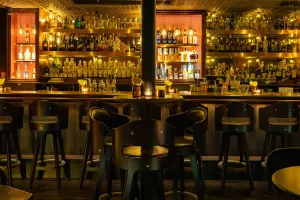
The turn began in the mid-2010s, and it happened for the classic reason: cheap upstairs rents in a district the city had scheduled for redevelopment. Artists took studios above the tool shops. Then came the bars, deliberately unmarked, up staircases that still smell of machine oil, rooms that kept the tube lights and the linoleum because the aesthetic was already perfect. Cafes like the herbal-medicine-shop conversion Coffee Hanyakbang proved the district could draw a daytime crowd; cocktail rooms and natural wine bars followed; and by the late 2010s Instagram had done the rest, hence Hipjiro. The parallel to what I describe in the club map is exact: it’s Seoul’s answer to Montreal’s Mile End, raw space converted faster than the city could rezone it.
The Music Layer
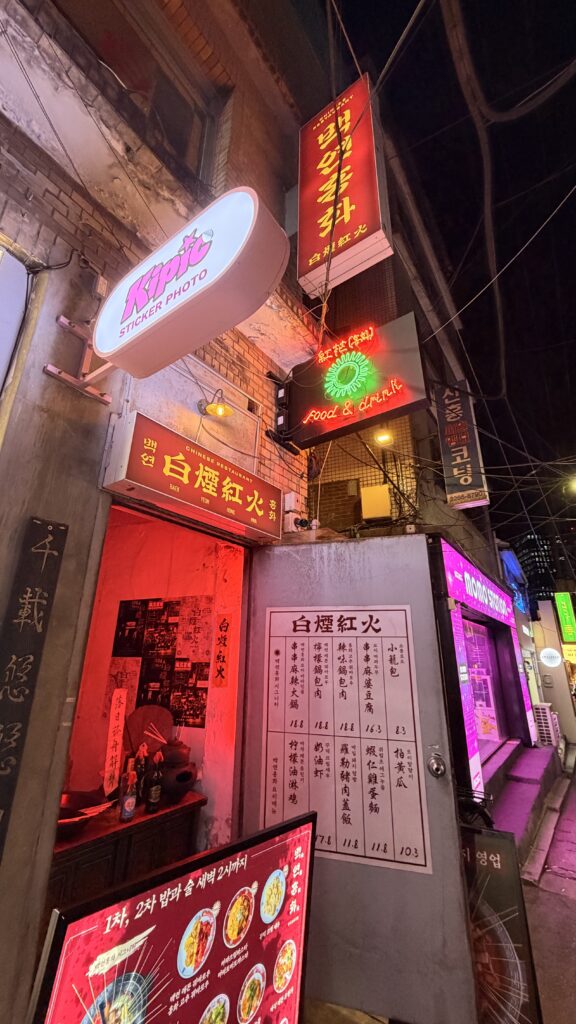
The music scene arrived with the second wave. Euljiro’s contribution to Seoul nightlife isn’t the megaclub or even the proper club, it’s the venue-shaped room: listening bars with serious systems, vinyl rooms run by collectors, gallery spaces that host one-off parties under exhibition permits, and floors like the district’s club-adjacent art spaces where experimental programming fits because nothing about the room suggests commerce. The coffee-rave circuit loves it here for the same reason. In the 2025 survey, Euljiro registered 5 percent as a preferred going-out district, tiny beside Itaewon, but five years ago it would have polled at zero.
Why It Still Matters
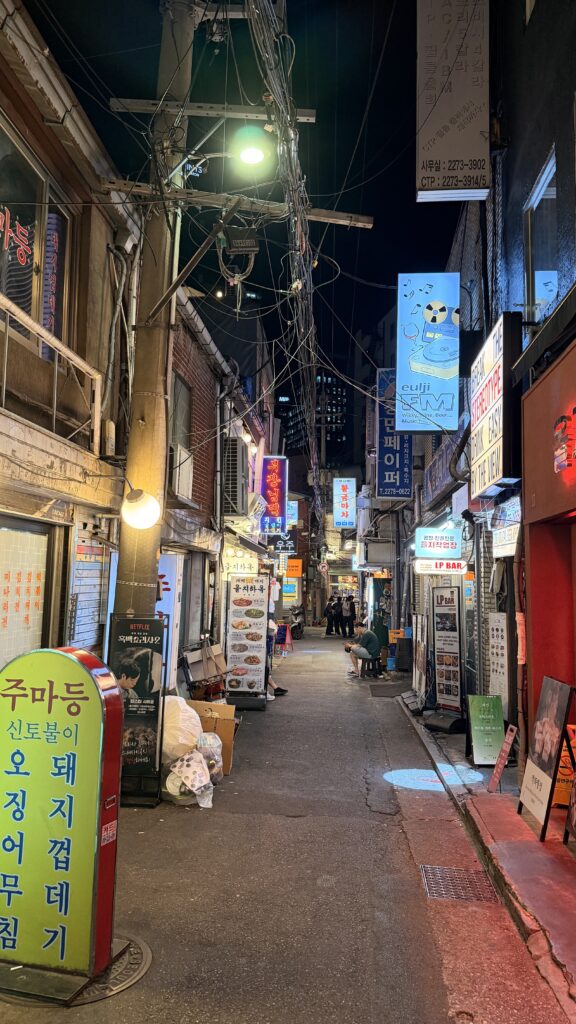
Every scene needs a district where rent forgives experiments, the role HBC played for the last generation. Euljiro is playing it for this one, with one crucial difference: the clock is visible. Redevelopment blocks are already falling, the cranes move a street closer each year, and every bar in the district operates knowing the building may not survive the decade. The biggest scheme cleared a legal hurdle on 6 November 2025, when the Supreme Court upheld Seoul’s ordinance change raising the height limits for the Sewoon 4 redevelopment opposite Jongmyo to as much as 145 metres, despite heritage authorities warning that towers there threaten the shrine’s UNESCO World Heritage landscape. That impermanence is part of the appeal and the whole risk. The workshops that make the district feel real are exactly what the district’s success prices out, the same squeeze that took so many venues before. Go now, drink in the nogari alley, find one unmarked staircase, and understand Seoul’s scene-making machine while it’s still running in the open.
Euljiro at night, on foot
Further Reading
- Wikipedia: the history of Euljiro, the central Seoul street that gives the district its name
- Wikipedia: Seun Sangga, the electronics and workshop complex at the heart of the old industrial district
- Wikipedia: Jung District, the central Seoul ward that contains Euljiro
- Wikipedia: Cheonggyecheon, the restored stream that runs alongside the Euljiro workshop alleys
- VISITKOREA: the official Korea Tourism Organization guide for planning a visit to Seoul
- Seoul Metropolitan Government: night economy co-prosperity zones and Seoul Moonlight Yajang, press release (15 July 2026)
- Time Out: Jongno 3-ga, the coolest neighbourhood in the world in 2026 (17 September 2026)
Written from Seoul, by someone who has been in the booth for more than twenty years. More on the site, or book a DJ.
What Is Actually Underneath Hipjiro
The bars everyone photographs sit on top of a working industry, and that industry is the reason they can afford to exist.
Around eleven hundred printing businesses still operate in the Inhyeon-dong alleys a few minutes from the bar streets. They kept the rents low for decades, left the buildings unrenovated, and emptied the district every evening at six, which produced exactly the conditions a bar scene needs: cheap, characterful, centrally located rooms with nobody living upstairs to complain about noise. I’ve written about that trade and how to walk it in a separate piece.
If you like drinking here, this matters. The print district is on a redevelopment clock, and what replaces industrial buildings is never cheaper. When those alleys go, the economics that made Euljiro possible go with them.
How to Actually Do a Night Here
Go late but not too late. The good rooms fill from about nine and the interesting hour is between ten and one. The easiest way in is Euljiro 3-ga Station on Lines 2 and 3; type 을지로 (Euljiro) or 노가리골목 (nogari golmok, the nogari alley) into Naver Map or Kakao Map rather than relying on Google Maps. Euljiro isn’t a 4am district in the way Itaewon is.
Accept that you’ll get lost, and budget for it. The bars are unmarked on purpose, often on a third floor, up a staircase with nothing on the door. The finding is part of the format and it takes longer than you think.
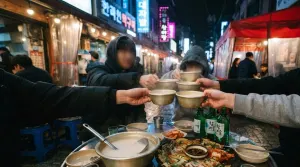
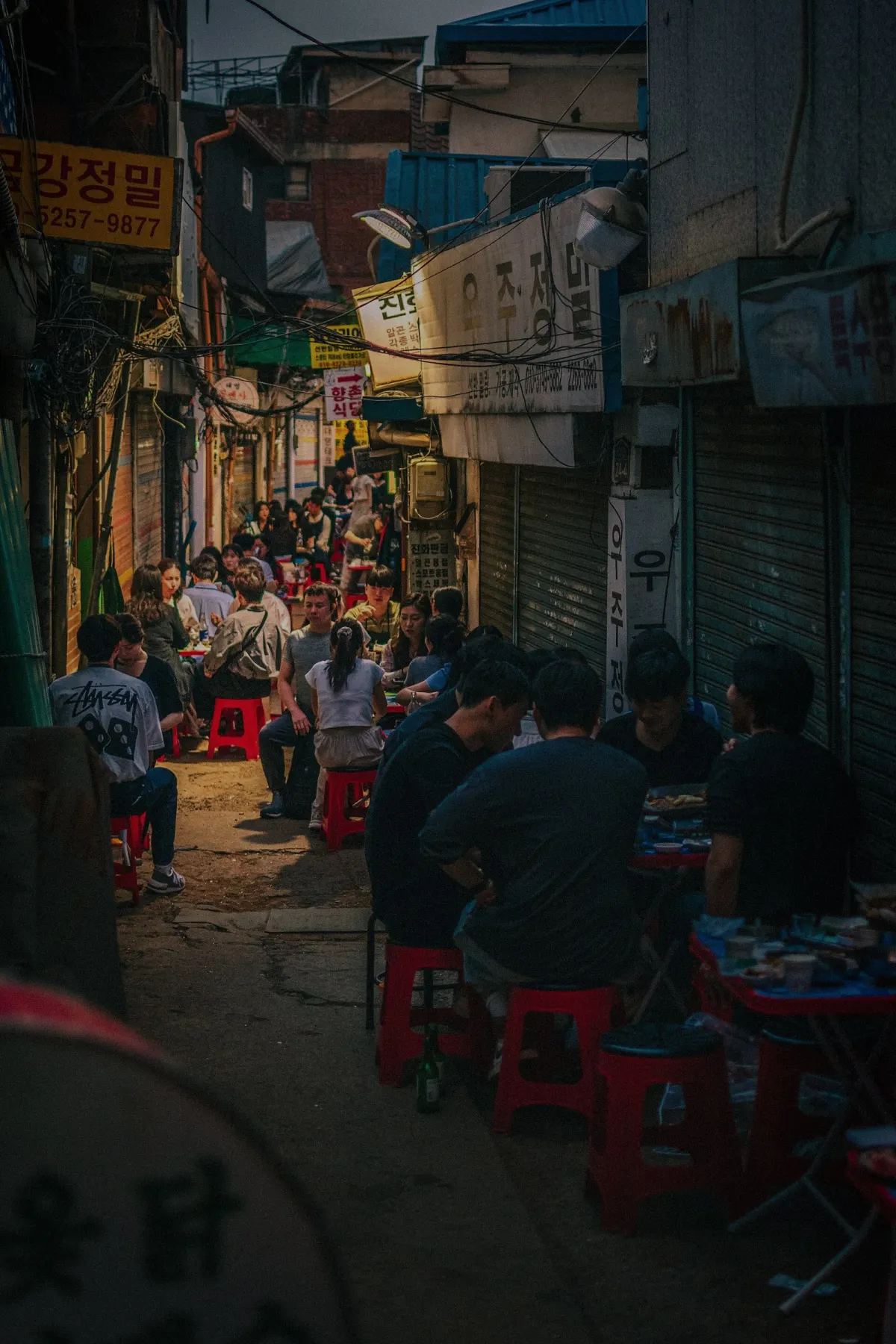
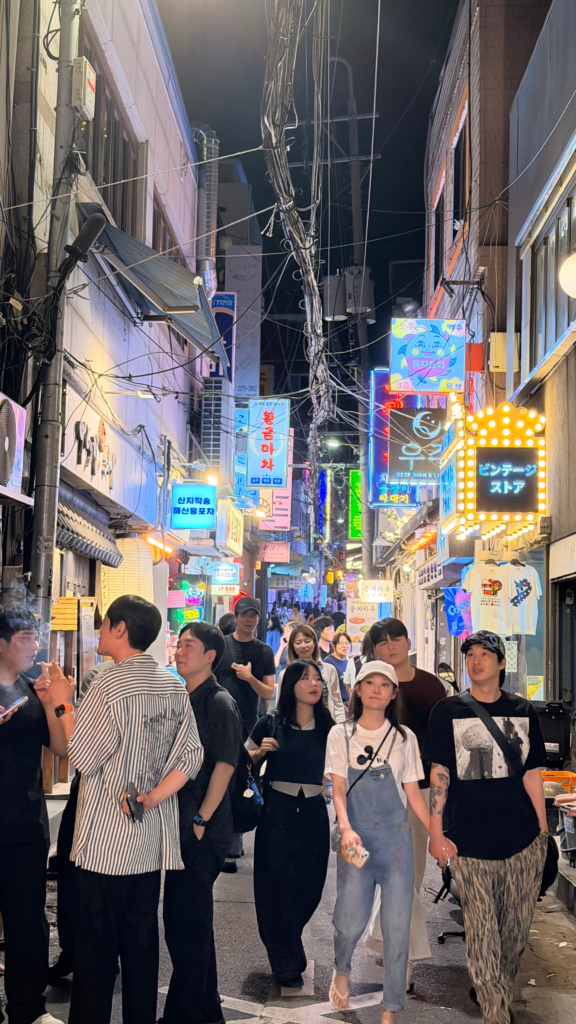
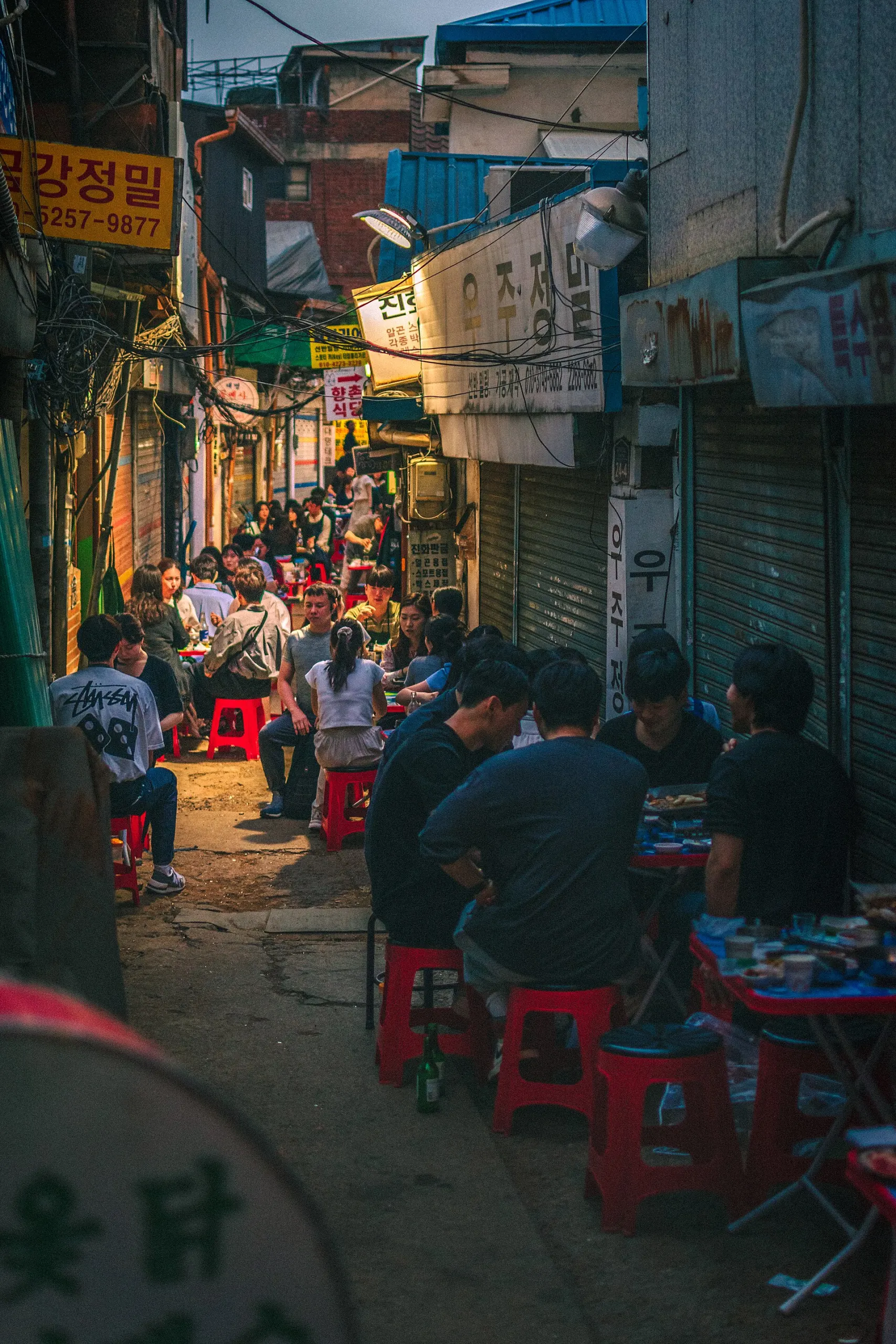
Do the street beer. In summer, 노가리 with draft beer on plastic stools in the middle of the road is one of the great Seoul experiences and costs almost nothing. The alley was named Seoul Future Heritage in 2015, but that didn’t save Euljiro OB Bear, the 1980 beer hall credited with starting the nogari and draft beer pairing, which was forcibly evicted on 21 April 2022 after losing its lease case at every level of the courts. It’s also the most local thing in the district.
The city has noticed. A Seoul Metropolitan Government press release of 15 July 2026 names Jongno 3-ga and Euljiro as the places where outdoor drinking, 야장 (yajang), has become a crowd draw, acknowledges the noise, rubbish and pavement complaints that come with it, and says the city will move from crackdowns to a managed model, with five “Seoul Moonlight Yajang” (서울 달빛야장, Seoul dalbit yajang) pilots in 2026 and 25 by 2028.
Rooms are tiny. Twelve to twenty seats is normal. Turning up as a group of eight without asking first is how you spend the evening standing on a landing.
Go once on a weekday afternoon too. Walk the print alleys while the presses are running, then come back at night. You’ll never see the district the same way again.
A Warning
Euljiro has been discovered, thoroughly, and some of what’s there now is a bar that has read about Euljiro bars. The tell is straightforward: if the unmarked door has a queue and a photographer, it’s no longer the thing it’s imitating. The rooms still worth the walk are the ones where the owner is behind the bar and nobody is documenting anything.
Discovery is spreading one stop north as well. Time Out named Jongno 3-ga the coolest neighbourhood in the world for 2026, and a café owner it quoted on Seosulla-gil, beside Jongmyo, said the lane has become a premier destination for yajang.
The People Who Built Hipjiro
Long before anyone said Hipjiro, Euljiro had a nightlife. Marie Claire Korea counted about 80 dabang (다방, tea rooms) in the area in the 1970s and 80s and a well known nightclub called Holiday. In 1980 강효근 opened 을지OB베어 (Eulji OB Bear), the first franchise of Dongyang Beer, and his daughter 강호신 (Kang Ho-sin) was still running it through an eviction fight in 2019, Seoul Shinmun reported. It was forced out in 2022 and reopened in February 2024, according to Esquire Korea.
The 2010s wave came from people who chose the upstairs rooms. Stage actor 강윤석 roasts at 커피한약방 (Coffee Hanyakbang). Antoine, who DJs as Odd J, started Clique Records with Curtis and told Marie Claire, “을지로에는 ‘리얼 피플’의 진짜 삶이 있어요” (Euljiro has real people living real lives). A printer of thirty years, 조종대, put the other side plainly to the Korea Herald in 2018 as redevelopment moved in: “We are nervous.”
Kyunghyang described the switch in 2023: presses and forklifts by day, and by night alleys that turn into another world, where a sign that says print shop turns out to be a skewer bar.
More reading for this section
- Marie Claire Korea: 2016 을지로 웨이브
- Seoul Shinmun: 을지OB베어 (2019)
- Esquire Korea: Euljiro (2024)
- Korea Herald via Daum (2018)
- Kyunghyang: 을지로의 밤 (2023)
Euljiro Now: How Hipjiro Is Adapting
Euljiro (을지로) was never meant to be a night out. It’s Seoul’s old workshop quarter, printing presses, tile wholesalers, lighting shops and tool stalls in low buildings between Euljiro 3-ga and Cheonggyecheon. The Hipjiro (힙지로) wave of the late 2010s put unsigned bars on the upper floors of those buildings, opened by actors, designers and musicians, as BizHankook reported in 2019. Seven years on, the district is changing again, and this time the buildings themselves are going.
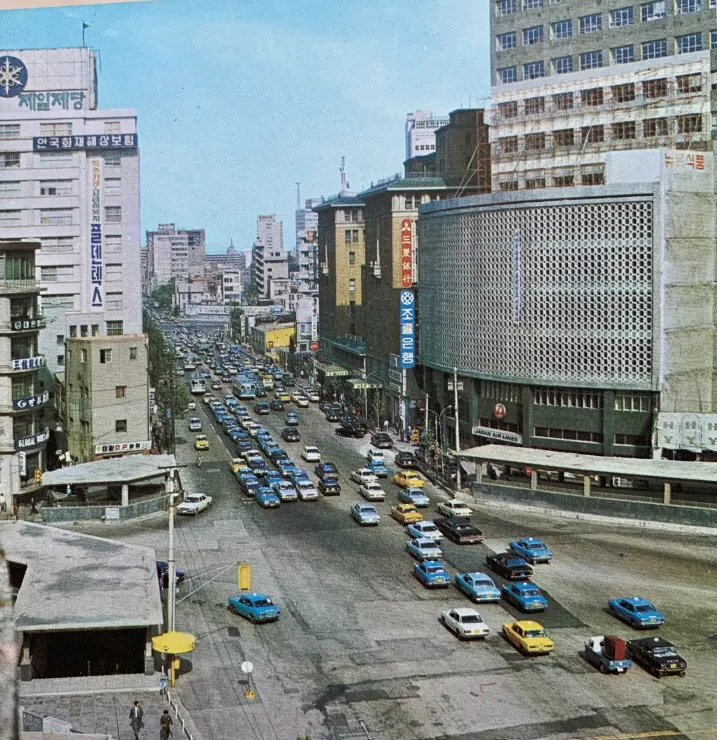
The losses started with the institutions. Eulji OB Bear, the hof that opened around 1980 and is credited with pairing dried pollack (노가리, nogari) with draft beer, was forcibly evicted in April 2022 after six attempts, as the Weekly Kyunghyang documented. Two months later, the Seoul High Court ordered the noodle house Euljimyeonok to hand its building to the developer of Sewoon zone 3, Seoul Shinmun reported. Along Cheonggyecheon, more than 400 tool shops in Ipjeong-dong had already closed since demolitions began in 2018, and in 2024 the city announced a 33 storey tower for the site, according to Kyunghyang.
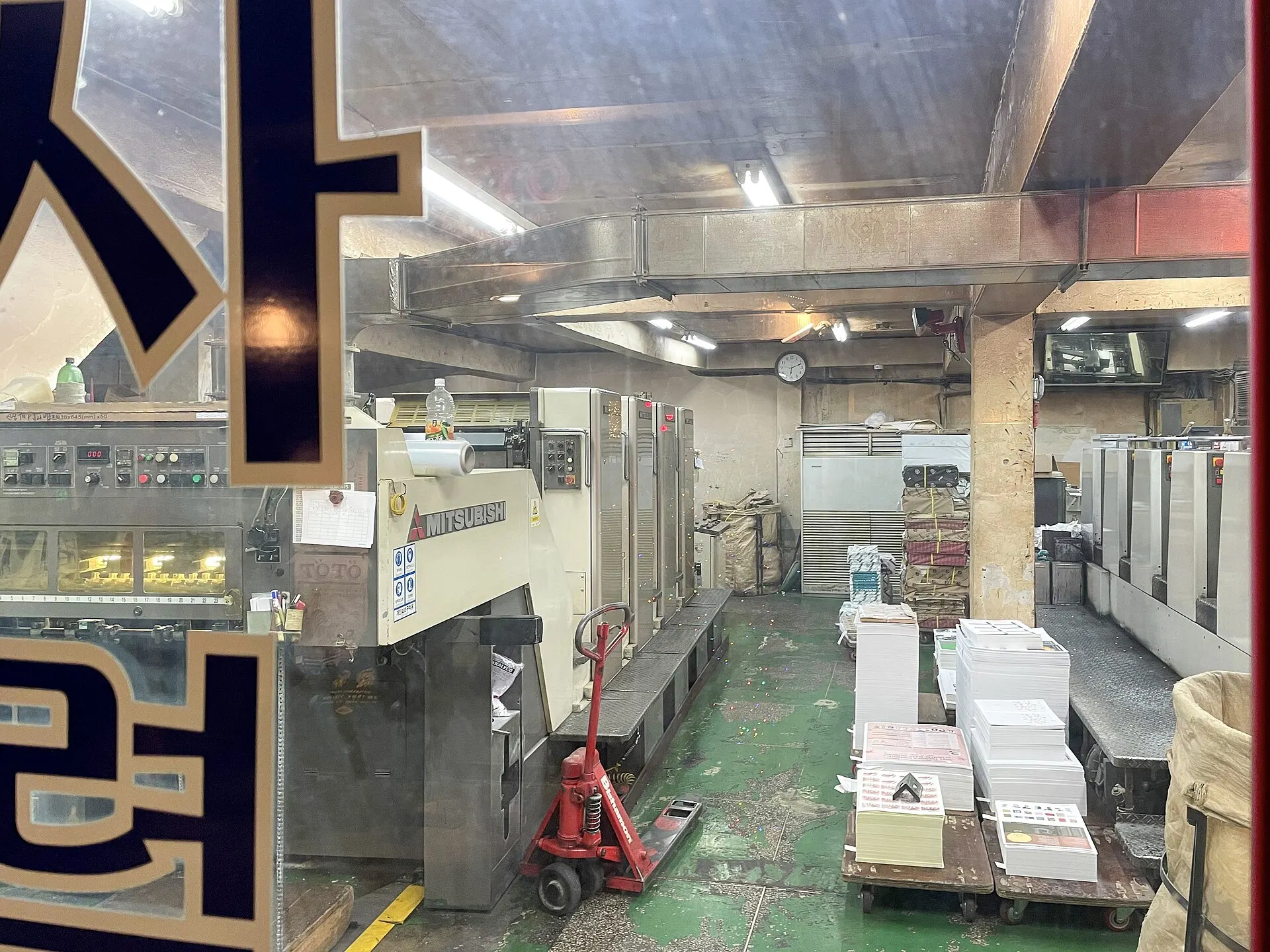
The biggest change is still coming. Seoul’s plan to replace the Sewoon arcades with a long green park advanced in 2025, with a first temporary park approved that July, Dailian reported. In October 2025 the city raised the height limit for Sewoon zone 4 to about 142 metres, the Supreme Court backed its ordinance change in November, and UNESCO’s World Heritage Centre asked for a heritage impact assessment because of the view from Jongmyo Shrine, as Financial News and Herald covered. In June 2026 Jongno-gu approved the project plan amid protests, according to Kukinews.
The bars are adapting the way bars always do, by moving. Esquire Korea tracked the next wave east to Sindang-dong (신당동), where cocktail bar Jushindang (주신당) and others opened near the old market, and argued it wasn’t a second Euljiro because people still live there. Back in Euljiro, the rooms that stay are the ones built for listening, like the Listening Zone that opened in 2021 at Local Stitch, as HEYPOP covered. Columnist Lee Kwang-pyo described the two faces of Hipjiro for Kyunghyang in 2023: the old trades that made it interesting, and the crowds that are slowly pricing them out.
More reading for this section
- BizHankook: How Hipjiro started (2019)
- Weekly Kyunghyang: OB Bear eviction (2022)
- Seoul Shinmun: Court ruling on Euljimyeonok (2022)
- Kyunghyang: The Cheonggyecheon tool street (2025)
- Dailian: Sewoon park plan (2025)
- Financial News: Supreme Court and the Sewoon height limit (2025)
- Herald: UNESCO letter on Jongmyo (2025)
- Kukinews: Jongno-gu approval and protests (2026)
- Esquire Korea: Sindang-dong is not a second Euljiro (2023)
- HEYPOP: Listening Zone at Local Stitch (2021)
- Kyunghyang: Lee Kwang-pyo on Hipjiro (2023)
Watch and listen: Euljiro at twilight, Seoul Walker
한국어 요약
힙지로 (을지로) 밤 즐기는 법
힙지로는 인쇄소와 조명 가게가 모인 을지로 골목 안에 생긴 바 문화를 부르는 별명입니다. 간판 없는 작은 바가 오래된 건물 위층에 숨어 있습니다.
- 가는 법: 2호선과 3호선 을지로3가역에서 내리세요. 구글 지도보다 네이버 지도나 카카오맵에서 을지로 또는 노가리골목을 검색하는 편이 정확합니다.
- 시간: 밤 9시 무렵부터 시작해 밤 10시에서 새벽 1시 사이가 가장 붐빕니다. 이태원처럼 새벽까지 이어지는 지역은 아닙니다.
- 찾기: 간판이 없는 곳이 많고 3층에 있는 경우도 흔합니다. 헤매는 시간까지 계획에 넣으세요.
- 인원: 좌석이 12석에서 20석 정도인 곳이 많아 단체라면 미리 확인하는 게 좋습니다.
잘못된 정보나 바뀐 날짜를 발견하셨나요? 연락 주시면 확인 후 바로 고치겠습니다. 현장에서 보고 들은 이야기도 언제나 환영합니다.
FAQ
What’s Hipjiro?
The nickname for the bar scene that grew up inside Euljiro, a working industrial district in central Seoul dominated by printing, lighting and small manufacturing. The bars are typically small, unmarked and on upper floors of ageing commercial buildings, and the district’s industrial character is what made the rents and the atmosphere possible.
Why are Euljiro bars hidden and unmarked?
Partly aesthetic and partly practical. The spaces are upper floors of working commercial buildings rather than retail units, so they were never designed to be visible from the street, and the low profile suited both the rents and the rooms’ small capacity. The difficulty of finding them became part of the appeal and then part of the branding.
When should you go to Euljiro?
Evenings from around nine, with the best hours between ten and one; it is not a late-night district in the way Itaewon is. Rooms are small, often twelve to twenty seats, so large groups should check ahead. In summer the outdoor beer and 노가리 tables in the street are the district’s signature experience, and a weekday afternoon walk through the working print alleys is worth doing separately.
Written from Seoul, by someone who has been in the booth for more than twenty years. More on the site, or book a DJ.
Stay in the Loop
New writing on DJ culture, electronic music, and the Seoul underground, delivered when it matters.
More From The DJ Diaries
Play with the history
Four tools built from the same research as this site.