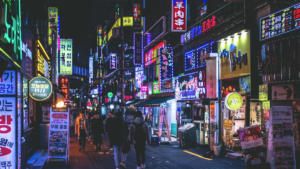
Tokyo’s electronic music audience is the most demanding in Asia. It will not tolerate a poor sound system, a lazy programme, or a DJ who treats the room as a warm-up for somewhere more important. Every serious selector on the circuit knows this, and plays Tokyo accordingly.
Yellow: The Room That Opened the Door
Yellow opened in a Nishi-Azabu basement in 1990, and before it, Tokyo had no real infrastructure for booking the DJs then defining house and techno in Chicago, Detroit and New York. Yellow built that pipeline: seventeen years of programming that treated Black American dance music with archival seriousness, a sound system tuned like a studio, and a crowd that listened. When it closed in 2007, the wake included tribute nights on three continents. Its alumni and its standards seeded everything that followed, the same one-room-changes-a-city pattern as Cakeshop in Seoul and the Haçienda in Manchester.
Womb, Ageha, and the Ecosystem
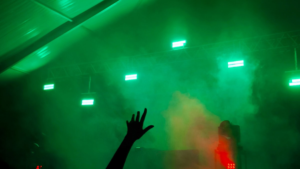
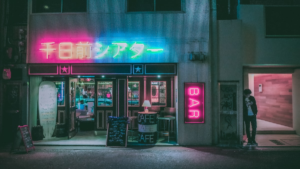
Womb, open in Shibuya since 1999 and still running in 2026, carries the specialist flag: genre-loyal nights, a famously physical sound system, and a twenty-five-year international booking record that makes it one of the longest-lived serious clubs on earth. The other end of the scale told a harsher story: Ageha at Shin-Kiba, the 2,400-capacity mega-venue with the pool and the festival production, closed in January 2022 when its Studio Coast home was lost, Tokyo’s own chapter of the venue-death economics that also ended Gangnam’s megaclub era. Between those poles sits Tokyo’s real depth: Vent’s audiophile techno room in Omotesando, Circus’s bass programming, and dozens of 100-capacity listening bars that treat a Tuesday night record selection as a craft discipline.
The Listening Culture
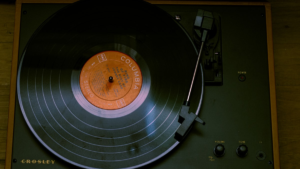
That last layer is Tokyo’s unique export. The city invented the jazz kissa, the listening cafe where records are played on serious systems to silent rooms, and that DNA runs through its modern music bars: the JBL stacks, the rotary mixers, the reverence. It is the culture that made Seoul’s LP-bar wave possible as an import, and it explains the Tokyo paradox: a city whose flagship clubs number few but whose per-capita density of rooms with world-class sound is unmatched anywhere. Sound-as-architecture is a Tokyo religion practised at bar scale.
Tokyo’s Position in 2026
In the four-city Asian picture, Tokyo is the deep end: the strictest audience, the best small-room infrastructure, and a scene whose conservatism is both its armour and its ceiling. It absorbs international music without being colonised by it, sustains domestic heroes for decades, and forgives nothing sloppy. Playing there taught me more about programming discipline than any other city in Asia, and the lesson transfers: rooms built on listening outlast rooms built on spectacle. Yellow is gone, Ageha is gone; Womb and a hundred tiny perfect rooms remain. That is not an accident. It is a philosophy.
Written from Seoul, by someone who has been in the booth for more than 25 years. More on the site, or book a DJ.
Stay in the Loop
New writing on DJ culture, electronic music, and the Seoul underground — delivered when it matters.