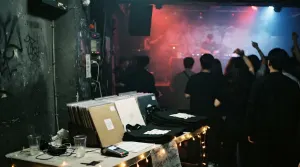
On a Seoul campus on any weeknight, a student is learning to blend two records on shared gear in a club room, with an older member standing behind them pointing at the EQ. These are the university DJ clubs, the dongari (동아리), and Mixmag Asia called them the hidden incubator of the Seoul scene in March 2026. Some have more than 100 members. That room is now the first rung of a DJ career in Korea.
For a long time the path to international bookings from Asia ran through Europe. Peggy Gou left Seoul for London in her teens, spent years building a career in Berlin, and came home with her status established. That route still works, but it’s no longer the only one: a Seoul DJ can now build from a home room to radio, a national circuit and the regional market before anyone needs a plane ticket to Germany. What hasn’t changed is that every route rewards being undeniable at home first.
The Berlin Route Works, and It Costs
Peggy Gou’s story is instructive even for people who won’t repeat it. She went to the city where the underground circuit’s credibility is manufactured, did the work there, and returned to Korea as an international name. The route worked, and it required leaving.
A Berlin club credit still tells a Seoul promoter something a Bangkok credit doesn’t: that you’ve been accepted by the establishment. The cost of getting it is the problem. Moving to Germany from an Asian starting point takes money, time, a visa and years away from the people who’d fill your room at home.
I’ve known plenty of DJs who left for Europe. Several did well and have budding careers ahead of them. Others didn’t, and came back to Korea. Hardly anyone asks me whether they should start saving for Berlin, and when they do, my answer isn’t a plane ticket. The Peggy route is one path among several now.
The First Rungs Are Korean Now
The bottom of the ladder is more organised than it used to be. The dongari include SNAP at Korea University and Nuit at HUFS, alongside EAT, SNoL, VERITAS and MOCIT. Members mentor each other on the decks, and alumni now hold club residencies. That’s the first piece of advice I give anyone: build a room that’s yours before you build a passport. A residency, even a small one, teaches you more and signals more than a year of scattered single bookings.
How a Seoul DJ Career Builds Now
Each rung and what it gives you
서울 DJ 커리어, 한 계단씩
| Rung | In Seoul | What it gives you |
|---|---|---|
| Start | University dongari, bar nights | Reps, mentors, shared gear |
| Residency | A small room, every week | A crowd and a sound |
| Document | SCR, MIXMIXTV, an RA profile | A record the circuit can read |
| Tour Korea | Gwangju to Jeju | New rooms and promoters |
| Region | Tokyo, Taipei, Bangkok | Your first foreign market |
The ruleNo rung is skippable, and the first two are where most of the learning happens.
The second rung is documentation, in the formats the wider circuit reads: a maintained RA profile, mixes with full tracklists, and radio. Seoul has two platforms people outside the country watch. Seoul Community Radio gives a DJ a recorded, archived show, and MIXMIXTV spent a decade putting Seoul DJs on camera in real rooms.
The proof that these channels travel is in who gets invited abroad. Mixmag Asia’s 2025 A to Z noted Seoul panellists Rich from SCR, 7ip7o3 and Jun Kim speaking on K bass at SXSW London. That’s Seoul voices carried to an international stage by a scene that documents itself.
Treat the Region as Your First Foreign Market
Tokyo, Taipei and Bangkok are your first international market, not a consolation prize for missing Europe. Building from Seoul to Tokyo to Shanghai to Bangkok through Asia based promoters is a real path. Its ceiling is that regional credibility still doesn’t reliably turn into global bookings, and Boiler Room sets have become one of the few signals that cross both audiences.
Sinqmin is a good example of the path working in 2026. The Seoul DJ cofounded Carve Out Records in September 2025, and Mixmag Asia reported in July 2026 that he was marking the label’s first anniversary with dates in Tokyo, Osaka and Chiba, with a compilation of South Korean, Japanese and European artists on the way as the label’s first vinyl. A label, a regional tour and a release that crosses borders: that’s the regional ladder in one year.
The regional route half works now, which is more than could be said five years ago. Nobody in Seoul’s listings is owed a Berlin booking, but everyone who fills a local room for two straight years ends up on somebody’s radar.
The Road Outside Seoul, and the Festival Bill
The regional ladder has a domestic version too. In June and July 2026, Cakeshop ran its first South Korea tour, starting in Gwangju on 13 June and moving through Busan, Daegu and Paju before ending in Jeju on 11 July. GGAX2, quoted by Mixmag Asia, said the tour shows “the Korean underground scene does not only exist in Seoul.” A national circuit means reps in front of new rooms, new sound systems and new promoters before the first flight to Tokyo. Think of the way a Montreal DJ proves it in Toronto and Vancouver before anyone in New York pays attention.
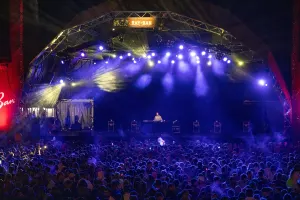
Festivals are the other doorway, and here my view is mixed. The big ones book locals, but mostly in the lower slots. The World DJ Festival put 86 teams from 17 countries on its 20th edition bill in June 2026, and the headline names were Marshmello, Zedd and Armin van Buuren. An early afternoon set on a big stage looks good on a profile, and it teaches you a festival PA.
The better sign came from the small end. TOR Festival, a single stage techno camp in Anseong in August, billed Marcus L of Faust, Siot and Stann Lumo alongside each other, with real time on the decks. Take the lower slot when it comes, but put more weight on the long set in the small room.
Visas Decide More Than Talent
This is the part people skip. Performing professionally in another country means having the right visa for it, and the rules depend on who you are and where you play. Getting that wrong limits what a career can become.
It isn’t only Korea. Plenty of people dream of DJing in Thailand or Bali, and both countries treat a paid set as work. An American DJ was arrested mid gig in Chiang Mai in June 2026 for working without a permit, and in 2025 three foreign musicians in Pai were fined and faced deportation for the same thing. In Indonesia, a DJ booked to play Bali needs a sponsored performer visa, and immigration officers there have pulled foreign DJs mid set.
I’m a DJ, not an immigration lawyer, so check your own status with one, or with the embassy, before you pack the headphones. What I can tell you is that few venues here will sponsor a performer visa.
What I Tell DJs Who Want to Move Here
Look at it like a business. The music is fantastic, but what are you going to do for money while you develop your sound, your following and the trust of the people who book you? It’s a bit like what search engines ask of good content: experience, expertise, authority and trust. A rare few make the move on talent and timing alone. To those who have, congratulations, and to those who have tried, respect.
Domestic bookings always come down to networking. Support the venues, support other DJs, and go to their events first. It never hurts to ask: they can say no, or they can give you a chance. As I kept DJing, people started reaching out to me. I’ve been lucky to play a couple of smaller gigs abroad, including in Mongolia, and I treat every one as a great opportunity.
Even for local bookings, people have to know about you. You have to be a draw in the local community, and you need someone who believes in your music. Saying you’re from New York or from some famous venue doesn’t make you a good DJ. Some people come here on holiday, play once and promote it like a world tour. That’s fine, and it might help their scene back home, but it isn’t building something here. It’s also why I don’t push my own international bookings.
In the end, ask yourself what you bring to the table. How are you supporting the venue and the crew? Can you sell tickets? That’s an uncomfortable question, especially for international DJs, but you have to be able to answer it. Canadians in Seoul won’t come out to see a DJ just because the flyer says Canadian. If you’re coming, have a plan and a good job, immerse yourself in the culture, and find your crew. Call it a little tough love.
Frequently Asked Questions
How do you start DJing in Korea?
For students, the university DJ club, or dongari (동아리), is the most common entry point, with peer mentoring and shared gear. Outside university, the usual path is small bar nights, a steady residency and recorded mixes. The beginner’s guide covers the gear side.
Do Korean festivals book local DJs?
Yes, though usually in earlier and smaller slots at the large festivals. The World DJ Festival’s 2026 bill had 86 teams from 17 countries, led by international headliners. Smaller events such as TOR Festival have given Korean DJs more prominent billing, and a local following is what gets you onto those bills.
Is there a club scene outside Seoul?
Yes. Cakeshop’s first national tour in 2026 ran from Gwangju on 13 June through Busan, Daegu and Paju to Jeju on 11 July, and GGAX2, quoted by Mixmag Asia, said the underground doesn’t only exist in Seoul.
Do you need to move to Berlin to make it as a DJ from Asia?
Not any more, though Berlin still helps. Seoul now has university clubs, radio, video platforms, a national touring circuit and a regional market in Tokyo, Taipei and Bangkok that can carry a DJ a long way. Being undeniable at home remains the step nobody can skip.
Further Reading
- Boiler Room: Contemporary Scenes Seoul, a 2023 session led by DJ co.kr with BRLLNT, H4RDY, Liu Lee and L-Like
- Boiler Room: BUDx Seoul, Seoul sets, local and visiting, side by side
- Seoul Community Radio on Mixcloud, the archive a Seoul radio show ends up in
- Mixmag Asia: Zach Kim on Blackout Agency, a Singapore agent on how the regional circuit books
- DJ Mag: the clubs, festivals and DJs shaping South Korea
- Beatportal: artists and labels in Asia to watch, including Seoul’s Closet Yi
- Seoul Community Radio
- The dance music glossary
Sources
Mixmag Asia: University DJ dongari, the hidden incubator of Seoul dance music
Mixmag Asia: 2025 in the bag, an A to Z
Mixmag Asia: Cakeshop’s first South Korea tour
Mixmag Asia: Artists exciting us in 2026, July (Sinqmin and Carve Out Records)
Hankook Ilbo: World DJ Festival 20th edition
Hankyung: World DJ Festival 2026 headliners
Resident Advisor: TOR Festival 2026 event listing
Resident Advisor: Seoul club guide
Mixmag: the impact of Peggy Gou
Groove: Peggy Gou feature, 2018
Hankook Ilbo: performance visas for foreign entertainers
Written from Seoul, by someone who has been in the booth for more than twenty years. More on the site, or book a DJ.
Stay in the Loop
New writing on DJ culture, electronic music, and the Seoul underground, delivered when it matters.
More From The DJ Diaries
Play with the history
Four tools built from the same research as this site.