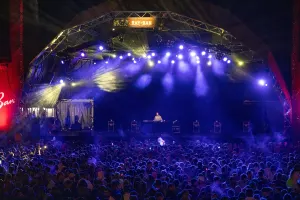
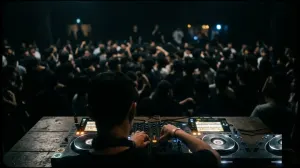
From the booth, you see the phones first. DJs see them before anyone else does, because we’re the only people facing the crowd. Every DJ knows the deflating two song stretch when a floor stops dancing for the lens: backs turn toward the booth, arms go up holding rectangles instead of nothing, and the room’s energy drops a visible notch.
The camera changes the room. Once it’s in, the room is no longer just a room; it’s a room being photographed. Whether that’s allowed comes down to consent, and in Seoul, where a club stands on cameras now tells you who the night is for before a single track plays.
The Case for the Camera Is Marketing
The business argument for club photography is simple. Photographs are marketing. They create memory and they bring press coverage. A venue photographed and shared on Instagram reaches people word of mouth never could.
The photos become proof that the venue is real and worth the trip. Without them, a venue is invisible to the wider culture. With them, it becomes a destination.
The Case Against Is Consent
The argument against is just as simple. A person in a club agreed to be in the club. They didn’t agree to be documented for public circulation. A photograph of someone dancing in the middle of an emotional experience is a violation of their privacy, and using it for marketing turns them into content without their agreement.
Some clubs take that all the way. Berghain’s no photography policy is enforced by the door, the staff and the culture: no cameras, no phones used as cameras, no documentation of any kind. The rule exists for ethical reasons, not artistic ones. The people in the club have a right not to be documented. The faces, the bodies and the moments of abandon aren’t public property.
The idea has crossed to North America. Complex19, a new club in Toronto’s old Consumers’ Gas Building at 19 Toronto Street, launched over Pride weekend in 2026 with a simple rule: every guest’s phone camera gets a sticker at the door. Peel the sticker off and you’re asked to leave.
Most Rooms Settle on Consent, Imperfectly
What most venues have landed on is consent based photography: a designated photographer with credentials, a clear policy communicated at the door, and a way for people to ask for their image to be removed from published photos.
It’s imperfect. Many people don’t know a photographer was working until they see themselves online. Implied consent in a public venue isn’t good enough for a space where privacy is part of what’s being sold.
Seoul Splits Down the Middle
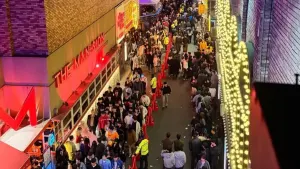
Seoul is divided on this. The Gangnam megaclubs in Gangnam (강남) were built to be photographed; the table, the sparklers and the post are the product. The underground rooms lean toward no cameras, and the crowds that choose them increasingly choose them for exactly that reason.
Filming Someone Without Consent
Article 14, Act on Special Cases Concerning the Punishment of Sexual Crimes
성폭력처벌법 제14조, 카메라 등 이용 촬영
What it coversFilming someone’s body against their will in a way that could cause sexual shame.
Where a room stands on cameras has become part of its door policy. It tells you who the night is for before a single track plays.
In Korea this is also a legal line. Under Article 14 of the Act on Special Cases Concerning the Punishment of Sexual Crimes (성폭력처벌법), filming someone’s body against their will in a way that could cause sexual shame carries up to seven years in prison or a fine of up to 50 million won (Korean).
Shooting the Dark Well
The craft problems are their own: low light, high contrast, movement, and flash that wrecks the atmosphere. The best club photographers work in available light, shoot fast and edit for mood rather than technical perfection. A photograph that catches the feeling of a room at 4am is worth more than one that’s well exposed but emotionally flat.
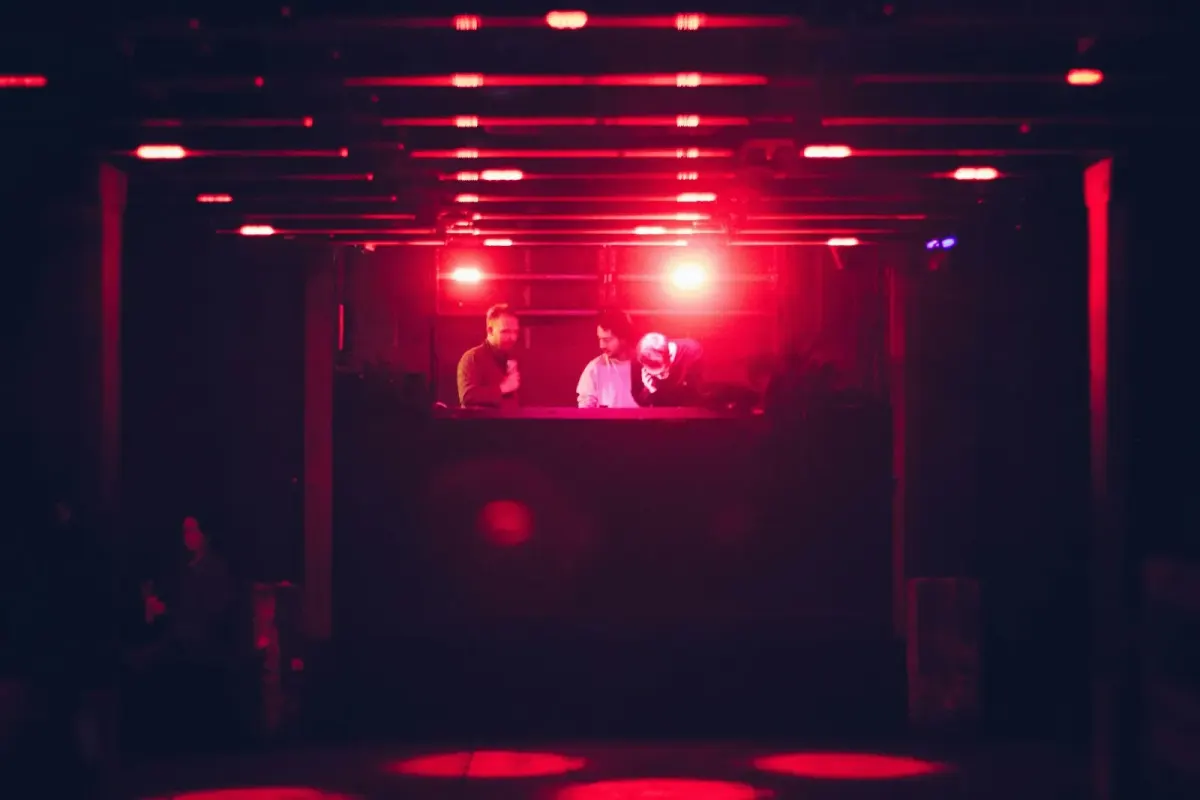
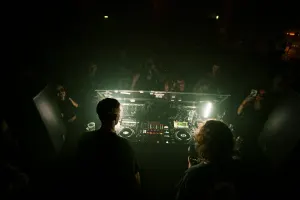
If you’re shooting a night with permission, the simplest courtesy is to photograph the room, the booth and the lights, and to ask before anyone’s face becomes the subject of the frame.
From the booth you learn to read the phones and play through them, and you learn your own rule. Mine is simple and I hold to it: nothing recognisable from the booth gets posted without asking, ever. The booth sees people at their most unguarded, and that view is a loan, not a possession.
Frequently Asked Questions
Why do some clubs ban photography?
Clubs that ban photography do it for ethical reasons rather than artistic ones: the people inside have a right not to be documented. They agreed to be in the club, not to have their faces, bodies and moments of abandon circulated in public. At Berghain, the best known example, the rule is enforced by the door, the staff and the culture of the room.
Is it ethical to take photos of people in a nightclub?
Only with real consent, because implied consent in a public venue isn’t enough for spaces where privacy is part of what’s being sold. Most venues now use consent based photography, with a credentialed photographer, a policy communicated at the door and a way to request removal of an image. That system is imperfect, since many people only learn a photographer was working when they see themselves online.
How do you take good club photographs in the dark?
Work in available light, shoot fast and edit for mood rather than technical perfection. Low light, high contrast, movement and the way flash destroys the atmosphere are the core challenges. Photograph the room, the booth and the lights, and ask before anyone’s face is the subject of the frame.
Can you take photos inside Seoul clubs?
It depends on the room. The Gangnam (강남) megaclubs were built to be photographed, and there the table, the sparklers and the post are the product. Underground rooms lean toward no cameras, and crowds increasingly choose them for that reason. In Korea, filming someone’s body against their will in a way that could cause sexual shame is also a crime, with up to seven years in prison or a fine of up to 50 million won.
Further Reading on The DJ Diaries
- Door Policy and Club Culture
- Reading the Room: DJ Programming
- The Gangnam Megaclub Decline
- Seoul’s Club Map
Sources
Mixmag, on clubs that ban photos and videos on the dancefloor
Mixmag, Dancing in the dark: is club photography really necessary?
Mixmag, The hard cell: should phones be allowed in clubs?
Mixmag, 70 per cent of UK gig goers are irritated by phones on the dancefloor
RISS record, Korean research cited here on Seoul club culture (Korean)
Dazed, Could phone free clubs save nightlife?
Written from Seoul, by someone who has been in the booth for more than twenty years. More on the site, or book a DJ.
Stay in the Loop
New writing on DJ culture, electronic music, and the Seoul underground, delivered when it matters.
More From The DJ Diaries
Play with the history
Four tools built from the same research as this site.