In 2018, the Gangnam megaclub was the most visible nightlife format in Korea, and its biggest rooms sat in international club polls. Eight years later the model survives in only a handful of rooms. This is the story of how a district that once defined Korean clubbing lost the format that built it, in three blows: a scandal, a pandemic, and a generational walkout.
Update, October 2026: The megaclub is smaller, but Gangnam’s clubs aren’t dead. They’ve had to change and adapt. Lion Super Club in Cheongdam opened in January 2026, listed on Resident Advisor with a capacity of 700, and books Korean collectives alongside international headliners. Down the road in Apgujeong, small basements such as Muse Seoul, a house club RA lists at 82 people, run on the music rather than the tables.
Gangnam, From Hotel Basement to Megaclub and Back
The rise, the ranking years and the three blows, drawn to scale
강남 클럽 45년
The room got smallerCapacity, then and now. Track runs from 0 to 4,000 people. Tables at Lion still start around a million won, so the table economics did not leave. The floor did.
- 11981Mul Night opens Riverside Hotel, Jamwon-dong. About 50 private rooms around a dance floor. It runs 33 years
- 21994Juliana opens Emerald Hotel basement, Cheongdam. A queue about 100 metres long
- 32007Juliana closes Its basement becomes Club Ellui, built for about 4,000
- 4Nov 2011Octagon opens New Hilltop Hotel basement, Nonhyeon. Capacity about 3,000
- 52016 and 2017Octagon ranks 5th in the world DJ Mag Top 100 Clubs, two years running
- 628 Jan 2019Burning Sun goes public MBC reports the case. The club closes on 17 February
- 72020COVID, and Octagon closes Still 10th in the world the year it shut
- 82026Lion Super Club opens Cheongdam, capacity 700. The only Korean club in the DJ Mag Top 100 Clubs 2026, at 57
Rank in the DJ Mag Top 100 Clubs. A longer bar is a higher place. Octagon climbed 85 places in one year.
3 years, then 18 months. Seungri was sentenced to three years and a ₩1.15 billion fine in August 2021, cut to 18 months on appeal in January 2022. He was released on 9 February 2023.
₩16.2 billion in unpaid tax that Arena's owner was accused of, over 2014 to 2017. He was arrested in March 2019.
Sources: DJ Mag Top 100 Clubs · Reuters via Cyprus Mail · Mothership · Korea Herald via Daum
What the Megaclub Model Was
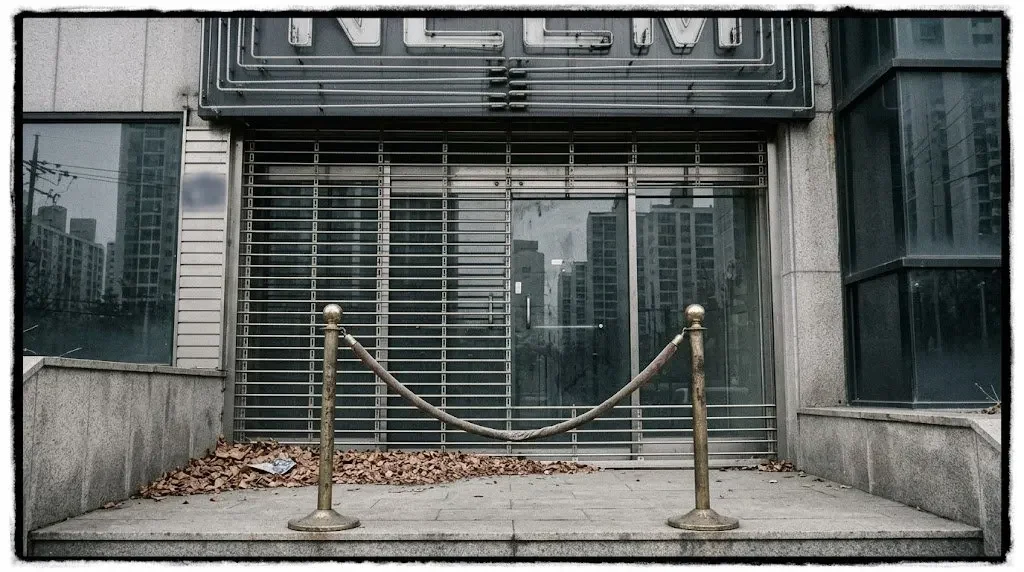
The Gangnam formula was barely about music. A megaclub ran on tables: a floor of bottle-service booths with minimum spends running from several hundred thousand won into the tens of millions for the front rows, an EDM soundtrack imported from the festival mainstage, and a door that curated for spectacle. The DJ was set dressing for a status economy, which is why the same era produced the superstar booking fee. Octagon, a fixture of DJ Mag’s Top 100 Clubs poll through the 2010s and seventh in both 2018 and 2019, Arena, Burning Sun and their neighbours made Gangnam one of the best known club districts in Asia, and the model looked untouchable. I have held numerous residencies in Seoul over the years.
The district had been through one turnover before. Newspim (뉴스핌) described in 2017 how the early 2000s Gangnam nights, hotel nightclubs such as Julianna in Cheongdam and Boss in Apgujeong, gave way to hip hop clubs, and how a Julianna night near Gangnam Station had passed through club NB to become Totoga.
Gangnam Nightlife Map: Venues, Streets and What’s On
Here is Gangnam as it stands now: the venues, the streets worth knowing and what’s on in the next two weeks. Tap a pin for the sound, the address and directions on Naver or Kakao Map.
Gangnam nightlife map
Gangnam’s megaclub years are over. What runs now is smaller and more music led: Lion and Plus82 on Dosan-daero, basements in Apgujeong Rodeo, ACE by Sinsa Station, and the Cheongdam cocktail bars that keep Seoul on the Asia’s 50 Best Bars list. The hotel bars sit along Teheran-ro.
Venues on this map: Lion Super Club (라이언), 1F, 535 Dosan-daero; Muse Seoul (뮤즈), B1, 71-1 Apgujeong-ro 46-gil; Frame Seoul (프레임), 36 Eonju-ro 170-gil; Luka (루카), B1, 46 Gangnam-daero 152-gil; ACE (formerly Race) (에이스 (구 레이스)), B1, 597 Gangnam-daero, Seocho-gu (Sinsa Station); Times (타임즈 압구정), B1, 25 Apgujeong-ro 54-gil, Gangnam-gu; Lowkey (로우키), B1, 75 Apgujeong-ro 46-gil, Gangnam-gu; Plus82 (+82) (플러스82), B1, 539 Dosan-daero, Gangnam-gu (Cheongdam); Graphic Hangang (그래픽 한강), 37-53 Apgujeong-ro 11-gil, Gangnam-gu (Jamwon Hangang Park); Zest (제스트), 1F, 26 Dosan-daero 55-gil, Gangnam-gu (Cheongdam); Alice Cheongdam (앨리스), B1, 47 Dosan-daero 55-gil, Gangnam-gu (Cheongdam); M+MS (Malt + Mixology Space) (엠엠에스), 1F, 32-1 Dosan-daero 49-gil, Gangnam-gu (Sinsa); Le Chamber (르챔버), B1, 42 Dosan-daero 55-gil, Gangnam-gu (Cheongdam); Pine & Co (파인앤코), B1, 33 Seolleung-ro 157-gil, Gangnam-gu (Apgujeong); Kiez (키즈), B1, 45 Dosan-daero 55-gil, Gangnam-gu (Cheongdam); Bar Tea Scent (바티센트), 1F, 16 Seolleung-ro 162-gil, Gangnam-gu (Cheongdam); The Lion's Den Cheongdam (더라이온스덴 청담), B1, 7 Seolleung-ro 158-gil, Gangnam-gu (Cheongdam); The Timber House (파크하얏트 서울 더 팀버하우스), Park Hyatt Seoul, LL, Park Hyatt Seoul, 606 Teheran-ro, Gangnam-gu (Samseong); 1914 Lounge & Bar (1914라운지&바), Josun Palace, 24F, Josun Palace, 231 Teheran-ro, Gangnam-gu (Yeoksam); Rooftop Bar Cloud (AC메리어트호텔 루프탑바클라우드), AC Hotel Seoul Gangnam, 21F, AC Hotel Seoul Gangnam, 10 Teheran-ro 25-gil, Gangnam-gu (Yeoksam); Lobby Lounge & Bar (로비 라운지 앤 바), Grand InterContinental Seoul Parnas, Grand InterContinental Seoul Parnas 1F, 521 Teheran-ro; Hotel Cappuccino Rooftop Bar (호텔카푸치노 루프탑바), Hotel Cappuccino, Hotel Cappuccino rooftop, 155 Bongeunsa-ro.
Streets and corners: Apgujeong Rodeo (압구정로데오), Dosan-daero (도산대로), Garosu-gil (가로수길), Cheongdam (청담), Gangnam Station (강남역), Teheran-ro (테헤란로).
This week in Gangnam · 강남
Who is playing in Gangnam this week
WE ARE FESTIVAL vol.3
Lion Super Club, Gangnam 강남
BOTL: FROM VERKNIPT PARIS TO SEOUL
Luka, Gangnam 강남
2019: Burning Sun
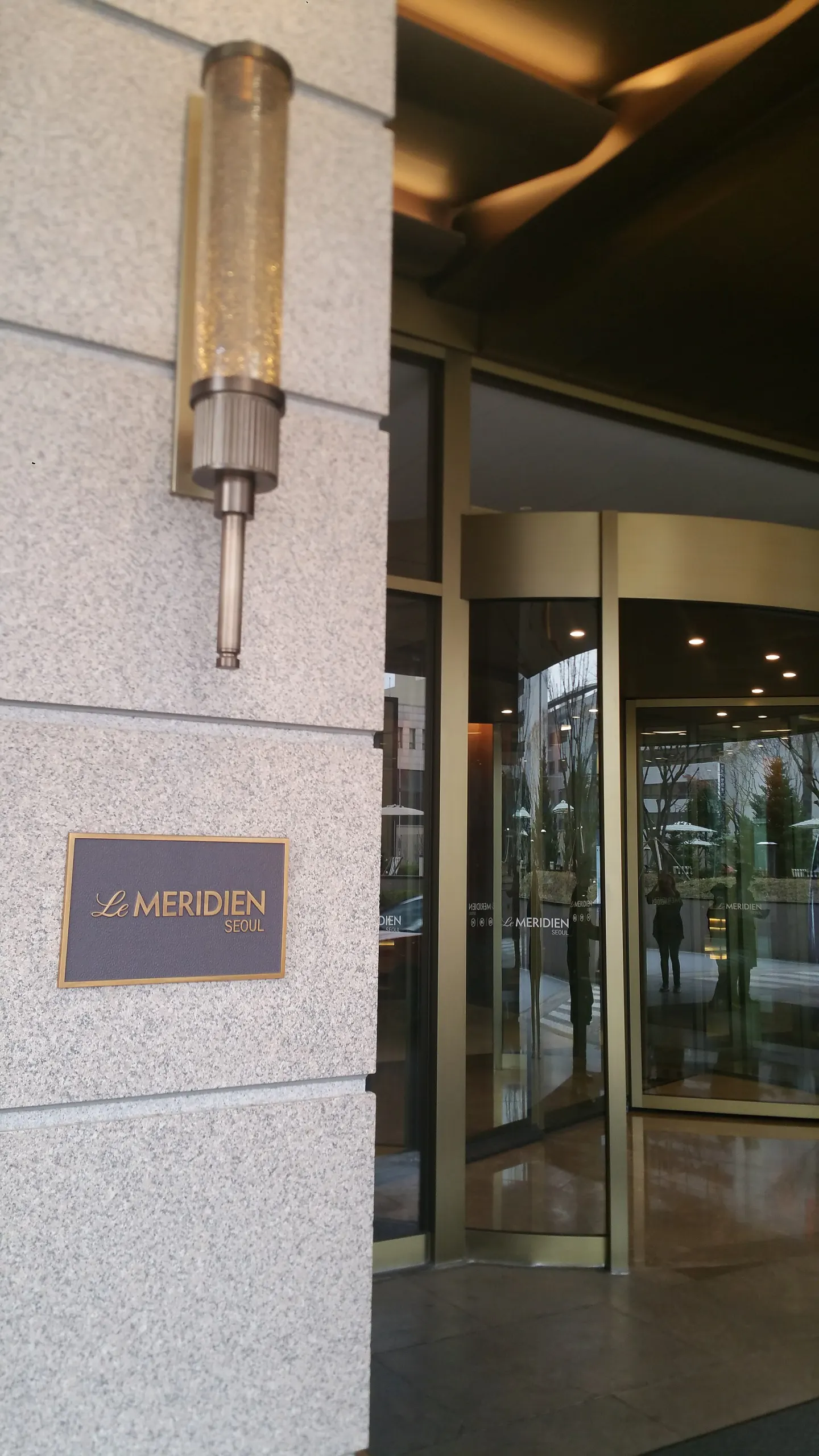
Then it turned on itself. The Burning Sun scandal began with a single assault complaint about staff inside the club in the Le Méridien hotel in November 2018 and became public when MBC reported it on 28 January 2019, and unravelled into what was widely called the biggest nightlife scandal in Korean history, with allegations of drug distribution and the drugging of patrons, hidden camera footage traded in celebrity chat rooms, prostitution, and police collusion. Several people were later convicted, though not, as the critique below notes, on every central allegation. A K-pop star, Seungri of Big Bang, went to prison for 18 months and was released in February 2023. Burning Sun closed within weeks; Arena was raided in a tax evasion investigation the same year. But the deeper damage was reputational: for young Koreans, the scandal confirmed every suspicion about what the table floors were. Gangnam clubbing became something a careful person explained away, and the domestic audience began quietly relocating to other districts.
One Korean critique is worth reading beside that. Sisa Journal (시사저널) pointed out in August 2021 that the nine charges on which Seungri was convicted at his first trial concerned his own business dealings and conduct, not the wider Burning Sun allegations of drugging and sexual assault of guests. Its argument was that coverage built around celebrities let the wider questions about Gangnam’s big clubs go unanswered.
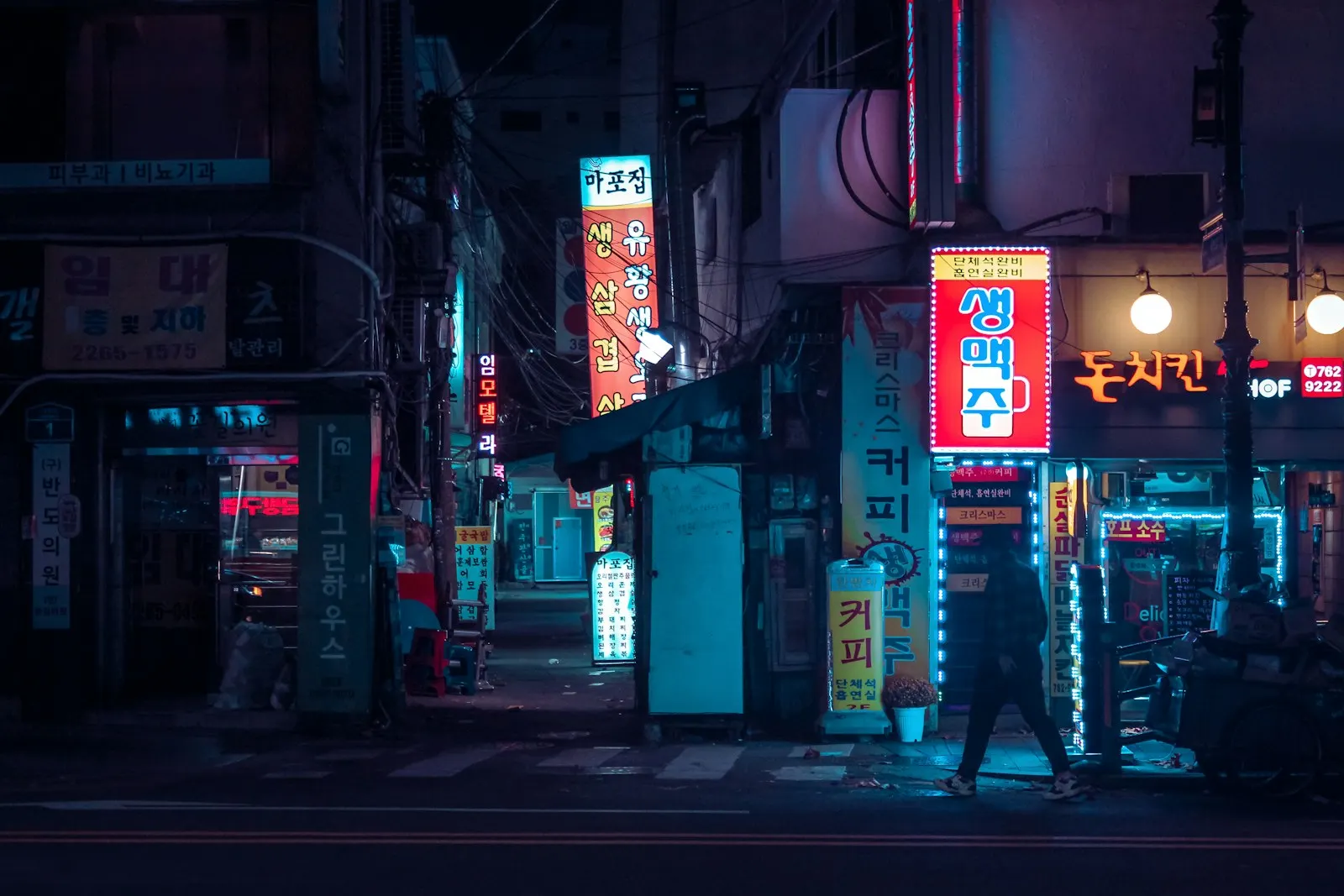
Gangnam at night, on foot
2020: The Doors Close
COVID finished what the scandal started. The megaclub’s economics, high rent, high headcount, imported headliners, only work at full density, and two years of curfews and capacity caps are exactly the conditions the format can’t survive. The small basements of Itaewon and Haebangchon could hibernate on takeout beer and landlord goodwill. A floor for 2,000 people with a hotel lease couldn’t. Several Gangnam rooms never reopened, and the ones that did came back into a market whose centre of gravity had moved.
The Quiet Third Blow
The third blow was generational and got less press than the first two. The audience that came of age after 2020 shows measurably different behaviour: less alcohol, earlier nights, more festivals, and a taste for rooms where the music is the point rather than the table. The 2025 reader survey of 343 club-goers put Gangnam at 9 percent as a first-choice district, behind Itaewon, Hongdae and even Haebangchon, a neighbourhood with no marquee venue. The spectacle economy migrated: to the festival circuit, where World DJ Festival and EDC Korea sell the same production values two weekends a year without the reputational baggage, and to a handful of surviving rooms that now share the district with pop up formats and rentable floors.
The format has shrunk and sharpened rather than died. Lion Seoul (LION SUPER CLUB) opened on Dosan-daero in Cheongdam in January 2026, in the space that was once Answer and Cheongdam Made, and entered DJ Mag’s 2026 Top 100 Clubs at 57. It holds 700 people rather than Octagon’s 3,000, runs a Funktion-One system, and books everyone from MEDUZA and Artbat to Central Cee, with hard techno and trance nights alongside the EDM (Resident Advisor). Tables still start around a million won. The rooms are smaller, but the table economics haven’t gone away. The other true superclub is outside the city: Chroma, the 3,000-capacity room at the Paradise City resort near Incheon Airport, which placed 59th in DJ Mag’s 2020 poll. Lion and Chroma are the best examples of superclubs in Korea today. Back in the day there were Octagon, Arena, Ellui, Syndrome, Made and Mass, to name a few. They’re all gone.
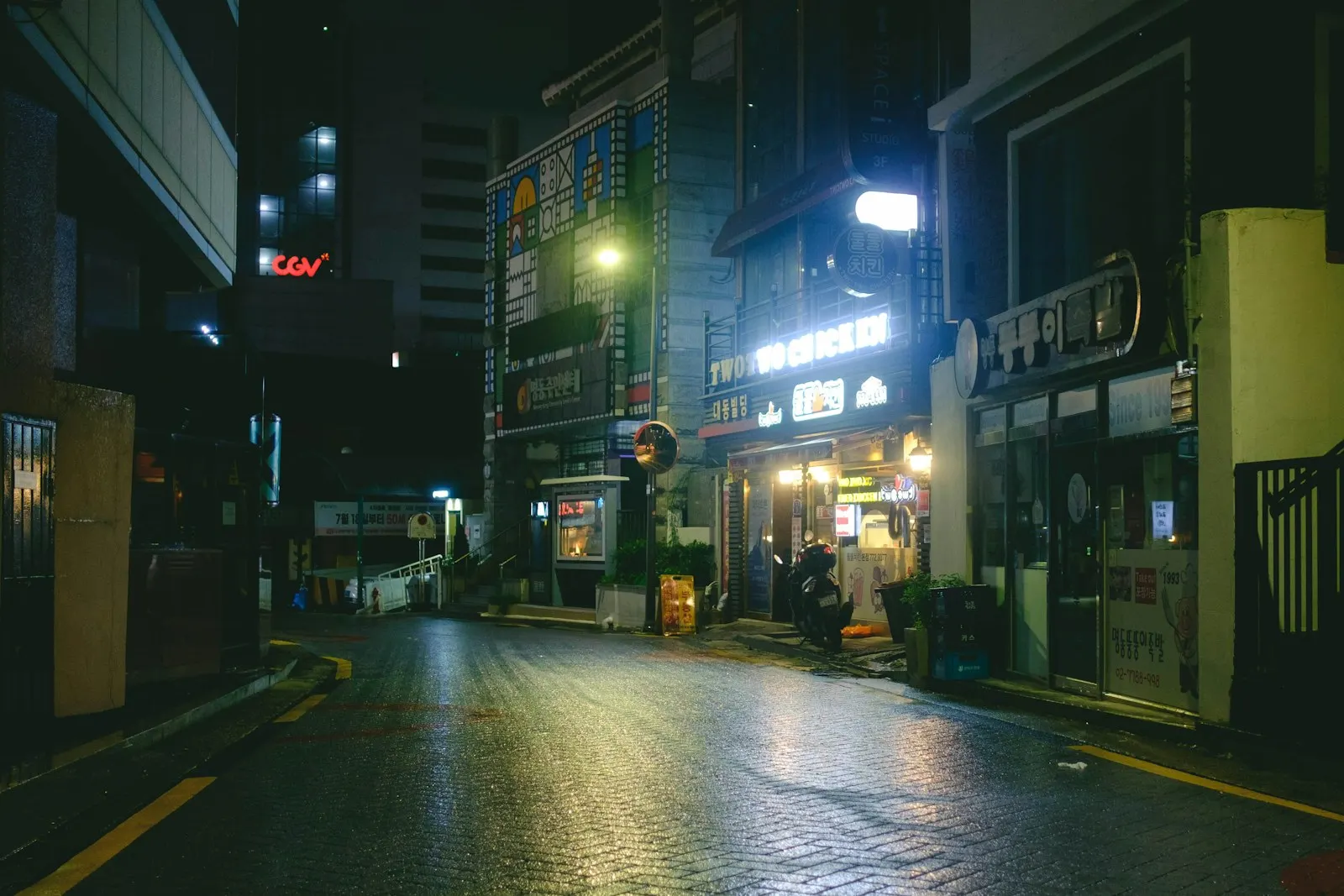
What Replaces It
Seoul’s nightlife didn’t shrink, it redistributed. The energy went into the five-scene map: Itaewon’s underground rooms, with Soap’s 2026 reopening as the strongest signal yet that mid size, music first venues are the growth format, the HBC bar circuit, Hongdae’s student floors, and the independent promoter economy that COVID accidentally legitimised. The megaclub’s one glass tower descendant is the luxury lounge, smaller, more expensive, and honest about being a bar rather than a club. Venues that don’t invest in sound have always frustrated me, whatever the postcode. As someone who played through the whole arc, I don’t mourn the format much. The money was real, but the rooms taught a generation that clubbing meant bottle sparklers and a velvet rope, and Seoul’s scene has spent the years since teaching them otherwise, one basement at a time.
Before the Megaclub: Gangnam’s Hotel Basements
Gangnam’s big rooms didn’t start with EDM. They started in hotel basements. In 1981 the Riverside Hotel in Jamwon-dong opened 물나이트 (Mul Night), a nightclub with more than 50 private rooms around a dance floor, where Cho Yong-pil once performed. It ran for 33 years, closed in November 2014 and became a lounge and steakhouse, as the Seoul Shinmun reported.
The most famous of the hotel nightclubs was 줄리아나 (Juliana), in the basement of the Emerald Hotel in Cheongdam (청담), later renamed Hotel Ellui. From 1994 to 2007 it drew a line about 100 metres long. Its former chief, 오득수 (Oh Deuk-su), told the Chosun Ilbo it took about ₩1.8 to 1.9 billion a month even through the 1997 financial crisis. Each table had a red lamp that worked as a call button, and booking (부킹, buking) waiters ran the room. In 2025 he and Cool’s Kim Sung-soo brought the name back near Hakdong Station, for a crowd mostly in its 40s and 50s.
Club Ellui, Octagon and the DJ Mag Years
Around 2010 and 2011 the old Juliana basement became Club Ellui, built for about 4,000 people, with Funktion-One systems across its zones and 44 MC2 amplifiers, according to the installer’s own account. In November 2011 Octagon opened in the New Hilltop Hotel basement in Nonhyeon, at about 1,000 pyeong (roughly 3,300 m²) and a capacity of about 3,000, as Ilyo Sisa and DJ Mag described it.
For a few years, Seoul ranked. In DJ Mag’s Top 100 Clubs poll, Ellui rose from 91st in 2012 to 39th in 2013, and Octagon climbed from 97th in 2012 to 12th in 2013, then 5th in 2016 and 2017. Octagon was still tenth in 2020, the year it closed. Eden, in the Ritz-Carlton basement on Bongeunsa-ro, never made the list, but that same basement later became Base and then, in 2018, Burning Sun.
Ellui’s end was a money story rather than a scandal. Competition among the big rooms grew, the hotel’s finances failed, and the club was gone by somewhere between 2014 and 2016 (sources differ on the year). The hotel was sold in July 2016 for an estimated ₩80 to 100 billion, Sisa Journal-e reported, then demolished and replaced by The Penthouse Cheongdam, which by 2024 carried the highest assessed apartment value in Korea, according to eToday. One Cheongdam address went from a 1990s nightclub to a world ranked superclub to the most expensive home in the country.
More reading for this section
- Seoul Shinmun: 강남 유흥문화의 상징 ‘물나이트’ 역사속으로 (2014)
- Chosun Ilbo via Daum: 줄리아나가 돌아왔다 (2025)
- eToday: ‘줄리아나’를 아시나요 (2024)
- Sisa Journal-e: 청담동 ‘호텔 엘루이’ 고급 빌라로 바뀐다 (2016)
- MC2 Audio: Korea’s King of Clubs (2011)
- DJ Mag Top 100 Clubs 2013: Ellui
- DJ Mag: Top 100 Clubs profile, Octagon
- Ilyo Sisa: 국내 최고 클럽 ‘옥타곤’에선 지금 (2014)
Frequently Asked Questions
What happened to the Gangnam megaclubs in Seoul?
The Gangnam (강남) megaclub model was hit by three blows. They were the Burning Sun scandal in 2019, COVID in 2020, and a generational shift in how young Koreans go out. In 2018 it was the most visible nightlife format in Korea. A handful of rooms survive, but the centre of gravity in Seoul nightlife has moved elsewhere.
What was the Burning Sun scandal?
The Burning Sun scandal began with a single assault complaint at the club in the Le Méridien hotel in Gangnam in November 2018 and became public in January 2019. As reported, it grew into the biggest nightlife scandal in Korean history. The allegations included drug distribution, hidden camera footage traded in celebrity chat rooms, prostitution and police collusion. Seungri of Big Bang went to prison, and Burning Sun closed within weeks.
How did a Gangnam megaclub make money?
A Gangnam megaclub ran on tables rather than music. The floor was built around bottle service booths. Minimum spends ran from several hundred thousand won into the tens of millions for the front rows. An EDM soundtrack from the festival mainstage and a door that curated for spectacle completed the formula. The DJ was largely set dressing for a status economy.
Where do people go clubbing in Seoul now instead of Gangnam?
Seoul nightlife did not shrink after the megaclub era; it redistributed. The energy moved to the underground rooms of Itaewon (이태원), the Haebangchon (해방촌) bar circuit, Hongdae (홍대) student floors and independent promoters. Meanwhile the spectacle side migrated to festivals such as World DJ Festival and EDC Korea. Each neighbourhood is compared in a working DJ’s map of Seoul.
Sources
- Newspim (뉴스핌): forty years of Friday nights, from disco night to hip hop club (2017)
- Sisa Journal (시사저널): how Burning Sun became the Seungri case (21 August 2021)
Written from Seoul, by someone who has been in the booth for more than twenty years. More on the site, or book a DJ.
Follow the rooms: Soap on Instagram
Stay in the Loop
New writing on DJ culture, electronic music, and the Seoul underground, delivered when it matters.
More From The DJ Diaries
Play with the history
Four tools built from the same research as this site.