Calling a genre “intelligent dance music” implies that other dance music is not intelligent. The people it was applied to mostly rejected the term. The music survived the name.
The term IDM appeared in a 1993 mailing list discussing music that Warp Records was releasing on its Artificial Intelligence compilations. The artists involved included Aphex Twin, Autechre, Black Dog Productions, and B12. None of them particularly liked the label IDM. The term implied a hierarchy of intelligence that did not exist in reality. All dance music involves intellectual decisions about rhythm, arrangement, timbre, and structure. The distinction was simply marketing terminology intended to differentiate Warp Records’ catalogue from mainstream house and techno.
Aphex Twin (Richard D. James) had already released Selected Ambient Works (1992) before the Artificial Intelligence compilations. The album established his aesthetic: minimal, sparse, synthesizer-based compositions designed for headphone listening. But Aphex Twin’s career immediately demonstrated the inconsistency at the heart of IDM. While associated with quiet ambient work, he released Windowlicker, an EP with a confrontational music video and music that sounded nothing like his quiet ambient work. The artist deliberately resisted any stable identity, any genre categorization.
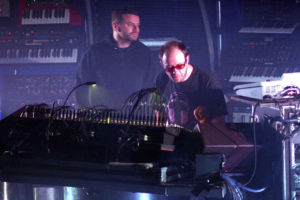
Autechre, the duo of Sean Booth and Rob Brown from Rochdale, represented a different approach: increasingly mathematical and systematic. Amber (1994) was their most accessible work. By Confield (2001), the music had become so rhythmically complex and texturally dense that it moved beyond conventional musical categories. Boards of Canada, the Edinburgh duo of Mike Sandison and Marcus Eoin, represented the opposite direction, with Music Has the Right to Children (1998) sounding like it had been created in the 1970s, using obsolete synthesis and recording techniques.
By 2026, IDM as a category is essentially obsolete, but the practices and aesthetics that emerged from the Warp Records world remain vital. What endured was the recognition that electronic music could explore multiple aesthetic territories simultaneously. Artists continued to resist categorization, to work across multiple styles, to insist that consistency is less important than artistic integrity.
Stay in the Loop
New writing on DJ culture, electronic music, and the Seoul underground — delivered when it matters.