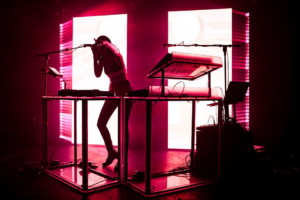
Bangkok’s club scene serves two populations simultaneously: the tourists who come for the party, and the locals who built one worth coming to. Keeping both happy requires different rooms, different music, and different hours, and the space between those two economies is where the city’s most interesting nightlife lives.
The Two Economies
The tourist tier is the one the world knows: the Khao San buckets, the rooftop bars, and the big-production floors like Onyx at RCA, which runs the full spectacle model, large-format EDM, Thai celebrity culture, dress codes and bottle service, essentially the Gangnam formula with better weather. It is professionally executed and utterly interchangeable with its equivalents in any capital. The domestic and expat-underground tier is smaller, later, and harder to find, and it is the reason DJs talk about Bangkok with respect.
Studio Lam and the Thai Sound
The room that defines that second tier is Studio Lam, opened in Ekkamai in 2013 by Chris Menist and the ZudRangMa Records crew, whose label and shop spent years digging Thai funk, luk thung and molam records back into circulation. The venue reflects the obsession: a programme that moves between Thai country music, soul, dub and club music without the genre anxiety that defines most Western programming, on one of the city’s best-tuned small sound systems. It is a bar that sometimes functions as a club, a record shop that sometimes functions as a venue, and the clearest proof anywhere in Asia that a local sound can anchor an international room, the same lesson Cakeshop taught Seoul with imported music inverted.
The Underground Between
Around those poles sits a genuinely vital middle: the curated small floors like Silom’s club-bars, warehouse one-offs on the city’s industrial edges, and a rotating cast of collectives throwing parties wherever licensing tolerance allows this year. Bangkok’s regulatory environment is stricter than its reputation suggests, official closing times are early and enforcement is cyclical, so the scene has learned the same semi-visible choreography as Seoul’s underground: unadvertised venues, messaging-app promotion, and a professional relationship with impermanence. Sound systems matter disproportionately here too, the Jamaican-descended system culture arriving via reggae and dub crews who built some of Southeast Asia’s best rigs.
Why Bangkok Matters to the Region
In the Asian circuit I map in the four-city essay, Bangkok is the tourism-tempered scene: bigger visitor flows than Seoul or Tokyo, which funds infrastructure but constantly threatens to flatten programming into crowd-pleasing. The reason it has not is the ZudRangMa lesson: the city’s strongest export is its own archive, and the venues that treat Thai music as source material rather than novelty have built the scene’s international reputation. Wonderfruit’s rise as the region’s tasteful festival flagship runs on the same insight. Bangkok is what a scene looks like when it stops apologising for where it is from, and starts programming it.
Written from Seoul, by someone who has been in the booth for 25 years. More on the site, or book a DJ.
Stay in the Loop
New writing on DJ culture, electronic music, and the Seoul underground — delivered when it matters.