It was a Saturday, I was about sixteen, and I’d saved enough for one album. I stood in the shop for twenty minutes before committing, took it home, put it on, and listened to the whole thing twice without doing anything else. That wasn’t discipline. It was forty minutes long, it had cost me an afternoon’s work, and I was going to hear every second of it.
That link between cost, attention and depth of listening feels quaint now that streaming is how most of the world hears music. Albums still matter because they build something across time that a single track can’t, and for a DJ that skill is the job: a set is an album you sequence live. Streaming is useful. Letting it do your listening for you isn’t.
Streaming Made Attention Cheap
A streaming subscription gives you more than a hundred million tracks for what one album used to cost. Nothing pushes you to stay with any of them. When the next song is free and instant, the cheapest thing to do is skip.
A Quarter of Songs Are Skipped in Five Seconds
Share of streamed songs, from Spotify’s own researchers
스트리밍 곡의 4분의 1은 5초 안에 넘겨진다
How to read itSpotify researchers found that roughly half of all songs are heard to the end. Skips also spike just after a song changes section.
Spotify’s own researchers measured it. In a 2020 study in PLOS ONE, they found that a quarter of all streamed songs are skipped within the first five seconds, and only about half are listened to all the way through. Skips surge just after a song moves from one section to the next. Over time, if you let the platform decide, your listening history becomes a record of your reflexes rather than your taste.
None of this means streaming is the villain. It has opened up discovery and reached artists who never would have found listeners under the old economics. The numbers say it won: in 2025, streaming brought in more than $22 billion, 69.6% of all recorded music revenue, and paid subscription accounts reached 837 million worldwide. But it has changed how a lot of people listen, and that matters most if your job depends on a deep relationship with recorded music.
An Album Is an Argument Made Over Time
The album became a form in its own right in the mid to late 1960s, when artists stopped treating the long playing record as singles padded with filler. The Beatles moving toward albums with a theme and a sound, the concept albums of progressive rock, and later the DJ mix album all used the format’s limits, about forty minutes, two sides and a sleeve you could stare at, as structure rather than a container.
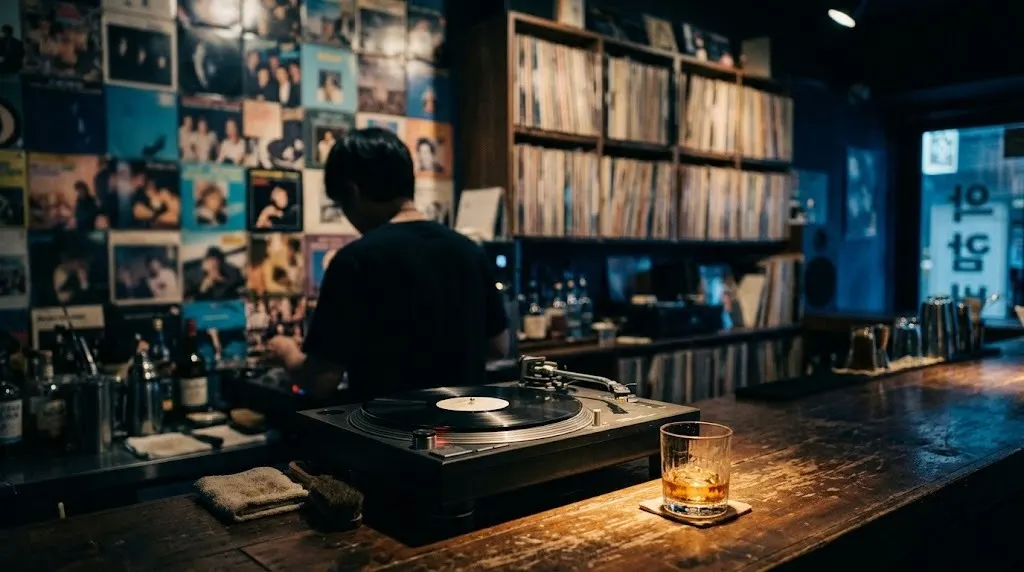
A great album builds a cumulative experience that a great track can’t build alone. Side one sets you up for side two. Track order creates an expectation, then meets it or turns it. Something early changes how you hear something late. Those are narrative tools that need duration to work, and a format where any track can be pulled out on its own partly dissolves them.
Marvin Gaye’s What’s Going On needs all nine tracks in order to do what it does. Kind of Blue has a logic that unfolds across its running time. Plenty of electronic albums work the same way: Burial’s Untrue, Four Tet’s back catalogue, various DJ Koze records. On shuffle they’re a different and lesser thing than the artists intended.
A DJ Set Is an Album You Build Live
A set is an album length composition. You sequence sixty to a hundred and twenty minutes of music into an arc with its own logic of energy and mood, where early choices have later consequences. The skills that make a set work are the same ones sustained album listening trains: knowing how context shapes what people hear, sensing what the last twenty minutes have prepared a room for, and feeling the difference between a track that lands at the right moment and one that lands slightly wrong.
A DJ who only listens to shuffled playlists, or only to the new releases platforms surface by algorithm, is training for something else: enjoying isolated moments rather than sustained structures. That’s a fine thing to enjoy. It’s poor preparation for holding a floor for two hours.
So I listen to albums on purpose now, in a way I didn’t when I was younger. One album, beginning to end, at least twice a week, and not while doing something else. Sometimes it’s a classic I haven’t spent enough time with, sometimes something recent I’m trying to work out, sometimes a genre next to mine that I want to absorb without mapping it straight onto a set.
Use Streaming to Find Music, Not to Choose It
To be fair to the platforms, the discovery function is useful. Hearing something before you buy it beats the alternative, and nothing is more efficient for keeping up with what’s coming out in your genre and the ones around it.
The risk is letting the platform’s judgement stand in for yours. Release radars and genre playlists are built for the average listener’s taste for the familiar with a little novelty. A DJ’s collection should reflect a specific, odd, personal taste built through real attention. Building a serious library from purchased, properly mastered files is still the right way to hold the tracks you’ll play, with streaming for discovery alongside.
Full mixes are the other place to listen. Mixcloud remains an important home for full DJ sets, and hearing how experienced DJs build an hour across time is one of the most direct ways to sharpen your own sense of structure.
The Vinyl Comeback Is About Attention
The vinyl revival has kept growing for well over a decade, and the 2025 numbers show it hasn’t peaked. Vinyl revenue grew 13.7% worldwide in 2025, its 19th straight year of growth, faster than streaming.
Vinyl Grew Faster Than Streaming
Year on year revenue growth worldwide, 2025
2025년, 바이닐 매출 성장률이 스트리밍을 앞섰다
How to read itStreaming is still about 70% of the money. Vinyl is small, but it’s the format people are choosing to spend more on, for the 19th year in a row. Canada’s market grew 5.6%.
Part of that is sound, and part is ritual. Placing a record, committing to a side and getting up to flip it are small frictions, and each one is a prompt to stay with the music. Deliberate inconvenience turns out to have value when access is unlimited.
You don’t need a turntable to get the same thing. Treat music as something you do rather than something that runs underneath other things. The attention is the point, not the format it comes through.
How to Bring Album Listening Back
If you’ve mostly listened on playlists and shuffle, the change is simpler than it sounds. Pick one album a week and play it in full, start to finish, with no interruptions. Choose records in your genre, high points in the genres next to it, or classics you’ve been meaning to spend time with, and make the list in advance so choosing doesn’t become a reason to put it off.
On the second listen, pay attention to the order. What does the opening track do? What would change if the last two tracks swapped places? Where does the energy peak, and why there? How does the second half answer the first? Those are the questions you face building a set, and an album is a finished, studied example of how someone else answered them.
Then carry it into the booth. Keep one to buy playlist in your streaming app and clear it on Bandcamp, Beatport or Traxsource before you prepare each set.
Frequently Asked Questions
Is the album format still relevant in the streaming era?
Yes. Albums create an emotional and narrative experience across time that individual tracks can’t replicate in isolation. Track order, running time and the relationship between pieces still count even though streaming makes them easy to ignore. For DJs, understanding album length structure applies directly to building a set.
How has streaming changed the way people listen to music?
It removed the friction between any song and any listener, which opened up access and discovery. It also lowered the cost of attention. Spotify’s own researchers found that a quarter of streamed songs are skipped in the first five seconds and only about half are played to the end, so listening has become broader and shallower.
Should DJs build their library from streaming or downloads?
Both, for different jobs. Streaming is for discovery: hearing what’s new and following artists through their catalogues. The tracks you play at gigs should be properly mastered files you’ve bought, not streamed audio that depends on compression and a connection. Keep one to buy playlist and clear it on Bandcamp, Beatport or Traxsource before each set.
Why is vinyl making a comeback when streaming is so convenient?
Partly sound, but mostly the listening context. Placing a record and flipping it are small prompts to stay with the music. Vinyl revenue grew 13.7% worldwide in 2025, its 19th straight year of growth, according to the IFPI.
Further Reading
- Wikipedia: the album era and how the long player shaped listening
- Wikipedia: the 1971 Marvin Gaye album that works only as a whole
- Wikipedia: Kind of Blue by Miles Davis and its unfolding structure
- Wikipedia: Untrue by Burial, an electronic album built to be heard in full
- Wikipedia: the vinyl revival and why physical records returned
- Vinyl vs Digital DJing: An Honest Comparison
- Who Controls Music Discovery?
Sources
IFPI, Global Music Report 2026: global recorded music revenues grow 6.4%
Music Business Worldwide, 10 quick (and crucial) takeaways from IFPI’s Global Music Report 2026
The Guardian, review of Burial’s Untrue, October 2007
Billboard, UK recorded music, streaming and vinyl sales in 2025 (BPI report)
Written from Seoul, by someone who has been in the booth for more than twenty years. More on the site, or book a DJ.
Stay in the Loop
New writing on DJ culture, electronic music, and the Seoul underground, delivered when it matters.
More From The DJ Diaries
Play with the history
Four tools built from the same research as this site.