Around 2017 I came off a set in Itaewon (이태원) that worked. The room had been impossible at midnight, half curious regulars and a handful of tourists who kept asking for songs I don’t play, and by 2am the floor was doing that thing where you stop needing to ask for hands. In the cab home I opened my laptop and posted six things in two hours: a boomerang of the CDJ jogwheel, a crowd shot, a close shot of the mixer, a selfie with the promoter, a caption about staying humble, and an ID for the peak time edit that turned out to be wrong, which I didn’t correct until morning.
The likes came fast. The bookings didn’t. The people who book DJs weren’t scrolling my feed at three in the morning trying to work out whether I could hold a room. They were asking a resident whether my 1am set was worth the slot next Friday, and that answer was going to come from a mix, a room I’d played recently and whoever vouched for me. For a DJ, social media earns bookings by building trust, and most of what we post does nothing for it. Once I understood that, I stopped making half my old posts and started paying attention to the ones doing a job.
Posting Every Set Got Me Likes, Not Bookings
The overposting came from a fear a lot of working DJs share: if you stop feeding the feed, you disappear. So you post the set. You post last weekend’s set. You post a throwback to a set from two years ago that was better than the one you just played, the track you’re practising at home, a meme about sync and a rant about rider requests. None of it is bad on its own. All of it together is noise.
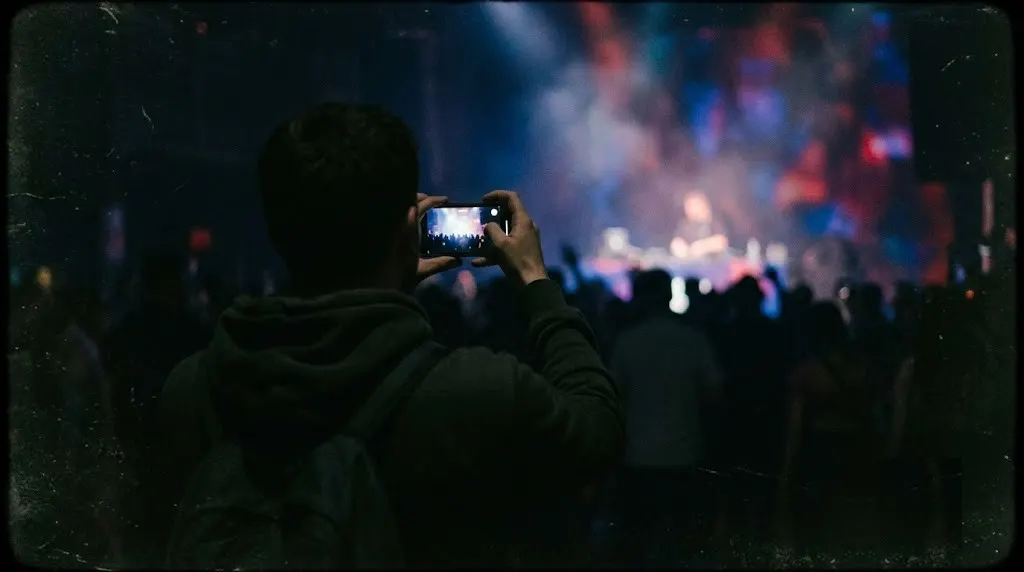
What I missed for years is that audience growth and booking growth are different curves. You can add two thousand followers in a month and get zero new bookings from them if none of those people program music for a living. Around 2019 I forced myself to cut posting by two thirds for a full quarter. Engagement on individual posts went up. DMs from promoters stayed exactly the same. What had been growing all those years was my anxiety about looking inactive, not my career.
The version of social media that made a real difference, eventually, was slower and more boring. A mix uploaded properly every few weeks. A decent crowd shot from a gig I was proud of. A caption that sounded like me, because I wrote it. Nothing scheduled, nothing batched, no separate content week away from the decks. The discipline it took was surprisingly small, and the return on it was real.
The Mix Is Still the Asset
For a DJ, the recorded mix is the song you release, and everything else is packaging. One well hosted sixty minute mix that shows what you do on a Friday will do more for your bookings over two years than fifty reels. Promoters who care about what they’re booking listen to mixes. They want the first ten minutes, because that tells them whether you can open, and a transition somewhere in the second half, because that tells them whether you can cope when the room is full.
What Each Platform Does for a DJ
The job each one does in 2026, and what to know
DJ에게 플랫폼별 역할
| Platform | Its job | Know this |
|---|---|---|
| The front door; where DMs arrive | Five hashtags per post, rolling out since December 2025 | |
| Mixcloud | Licensed long mixes | Clears publishing; few new listeners |
| YouTube | Full mixes, as video | Content ID can block, monetise or track a set |
| SoundCloud | Edits and original production | Rewrote its AI terms in May 2025 after a backlash |
| Resident Advisor | Your dates and venues | Keep upcoming dates current |
The ruleInstagram is the front desk. The mix platforms and RA are the portfolio. Both need to be in order.
A booker will respect a few homes for a mix. Mixcloud has long been the standard for anything longer than fifteen minutes, because it clears publishing and the audio quality is honest, though I’ve stopped uploading new mixes there because so few listeners find them. YouTube is now a serious home for full length mixes: discovery is far stronger, but a Content ID claim from a rights holder can block a set, run ads on it or simply track it, and the outcome can differ from country to country. SoundCloud is still useful if you put out edits or original production, though it spent May 2025 walking back terms of use that many artists read as permission to train AI on their uploads. Your own site is the home I weight most heavily for anyone serious, because no platform policy change can take it down.
The mix also has to show you at your best. If you played a two hour peak set last month and you have the recording, clean it up and put it up. If all you have is a bedroom mix recorded on headphones through Rekordbox, label it that way and keep looking for better material. My guide to mastering the mix covers how to build a set that survives this kind of public listening.
Show the Room You Played, Not the Outfit You Wore
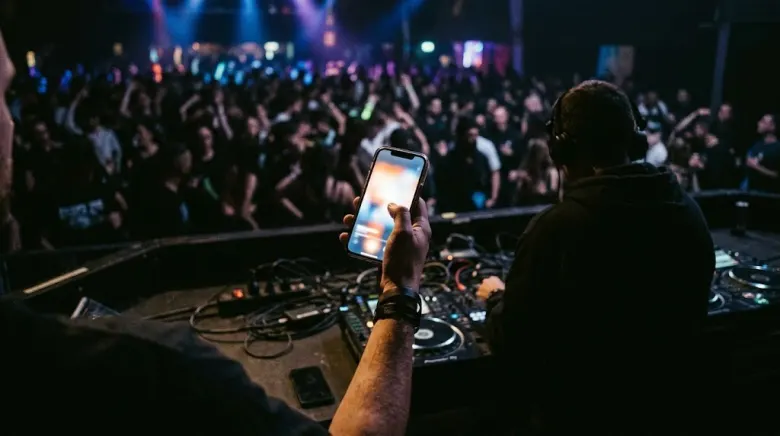
Bookers look for evidence that you can control a room. When I scroll through the feed of a DJ I’m thinking about putting on a bill, I skip past the booth selfie almost automatically. What I stop for is a shot of the floor when the drop landed: a grainy video from the front of the booth showing people losing composure in the second row, or a boomerang taken at ninety degrees from the CDJs showing the back of the crowd jumping together. Those aren’t flattering images of the DJ, which is exactly why they’re trusted.
Seoul Club Goers Want More Local DJs
Share asking for each change, multiple choices allowed
서울 클러버가 원하는 것: 로컬 DJ
How to read itNearly half of our respondents asked for more local DJs, ahead of imported headliners. The local room you held is worth showing.
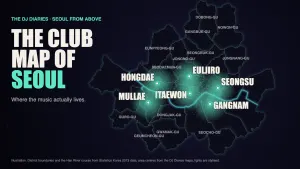
This is where knowing your local scene matters. A DJ posting from a Hongdae (홍대) basement at 1am on a Friday, with a decent crowd clearly in the frame, is doing something more valuable than one posting a glossy rooftop set where half the guests are on their phones. Context signals quality. If you play in Seoul and want promoters elsewhere to know which rooms you’re holding, name them and tag the resident crews. My Seoul nightlife guide breaks down where those rooms are, and the same logic applies wherever you play. Place the room first. Place yourself second.
Instagram Is the Front Door, and TikTok Is a Gamble
Instagram is still the front door, for better and worse. Most working promoters will click on your profile before they open a DM, and if your grid looks like it belongs to someone who cares about what they do, you’re already ahead of most of the competition.
TikTok is real, but it’s a time sink that doesn’t pay back evenly. I know DJs who grew there and landed bookings because of it, mostly in EDM and open format, and I know underground DJs who burned six months trying to game the algorithm and came back to find their SoundCloud play counts unchanged. Decide which kind of DJ you are before you commit the hours.
Resident Advisor is a separate beast, and your RA profile matters more than your posts. An accurate upcoming dates section, with venues a local promoter recognises, does more quiet work for your reputation than a year of social media effort, and a recent RA review or DJ Mag feature belongs on your page if either ever happens. X, which used to be Twitter, is no longer a meaningful place for electronic music conversation for most of us, and you can probably skip it. Facebook matters only where the local scene still uses it, which, oddly, includes some pockets of the Korean drum and bass community.
Teach From Fresh Playing, Not the Other Way Round
Educational posts cut both ways. When they’re good, they show depth of thought, which the market is short on. A short explanation of why you chose a particular transition, or how you structured a warm up, is the kind of post a booker remembers, because it shows you think about what you do. I’ve booked DJs I didn’t know personally because something they wrote about programming made me curious enough to pull up their mix.
The risk is that teaching quietly replaces practice. I watched a DJ friend back home in Canada turn into a full time DJ educator on Instagram while his own DJing plateaued. He was making two reels a week explaining technique to beginners, and his Friday sets started to feel rehearsed and a little tired, because he was playing the material he’d been teaching on video. Keep teaching, but make sure the teaching draws on fresh playing. My guide to starting out as a DJ walks through what that hands on foundation looks like.
Five Habits That Quietly Wreck an Account
The fastest way to lose the trust of the few people who matter is to turn your feed into a promo loop. If every post is a gig flyer, you’re telling people you have nothing else to say, and they’ll stop looking. Mix in craft, room footage and the occasional piece of writing, and your gig posts become more credible because the feed around them looks like a real person’s.
Subtweeting other DJs is the second, and it’s almost always a mistake. The scene is small. The DJ you’re vaguely throwing shade at probably knows the resident at the night you want to play, and the resident will see the post. Keep your frustrations for the cab home. Posting drunk is the third. Nothing posted at 4am after a set has ever improved anybody’s career, including mine. Set a rule that you don’t post after the second drink.
The fourth is ignoring DMs from real promoters. Plenty of booking inquiries still arrive in Instagram DMs, and they don’t always look important: three lines with no signature, from an account with eight hundred followers, for an event worth more than the last three you played. Check DMs once a day and answer the genuine ones within forty eight hours. The fifth is hashtag spam. Instagram announced in December 2025 that it would cap posts and Reels at five hashtags, rolling the limit out gradually, and it has said for years that a few targeted tags beat a long list. Two or three specific ones, if any, is the right number.
What has worked for me over the past few years takes the least of my time and the most of my attention. Post less, mean it more, host your mixes somewhere respectable, and trust that the people you want to reach are quieter and slower than the algorithm would have you believe. The DJs I know who are still getting booked a decade in have mostly stopped performing for the feed and started documenting the work.
Frequently Asked Questions
How often should a DJ post on Instagram or TikTok?
There’s no universal number, but three to five posts a week on Instagram and a couple of TikToks, if you use it at all, is a comfortable upper bound for most working DJs. More than that usually eats into time you should spend on music. Less than one a week and you start to drift off the radar of casual promoters. Quality beats frequency, and a slow week is fine if the next post is strong.
Is SoundCloud still worth using in 2026?
Yes, especially if you release edits, bootlegs or original material alongside your mixes and your audience is underground electronic, where a lot of discovery still happens on SoundCloud. For long mixes, Mixcloud is the cleaner licensed host, but read why I stopped uploading new mixes there before you commit; YouTube is where more listeners are.
Which platform is best for landing DJ bookings?
Instagram DMs are still where most booking conversations happen, but the decision to reach out usually comes after a promoter has heard a mix or read your Resident Advisor page. Treat Instagram as the front desk and the mix platforms as the portfolio.
Should I use AI tools to write captions or edit my reels?
Editing tools that speed up the grunt work are fine, and almost everyone uses some version of them now. Be careful with captions. If a caption doesn’t sound like you, the people who know you can usually tell within a line, and for a DJ whose value is partly taste and point of view, that’s a cost. Use AI for cleanup and write the sentences yourself.
Further Reading
- How to Get Booked: The DJ Booking Ecosystem
- How to Get DJ Bookings
- Why I’m Leaving Mixcloud
- Mastering the Mix: A DJ Set Guide
- Going Out in Seoul: A Nightlife Guide by Neighbourhood
- How to Start DJing: A Beginner’s Guide
Sources
Dancecult: Journal of Electronic Dance Music Culture 16(1), 2024
Mixcloud blog: What is Mixcloud?, March 2025
TechCrunch: SoundCloud backtracks on AI related terms of use updates, 14 May 2025
YouTube Help: How Content ID works
CNN: Twitter rebrands as X, July 2023
Social Media Today: Instagram implements new limits on hashtag use, December 2025
Business Insider: Instagram gives some influencers recommendations on how much to post, 2021
Written from Seoul, by someone who has been in the booth for more than twenty years. More on the site, or book a DJ.
Stay in the Loop
New writing on DJ culture, electronic music, and the Seoul underground, delivered when it matters.
More From The DJ Diaries

Play with the history
Four tools built from the same research as this site.